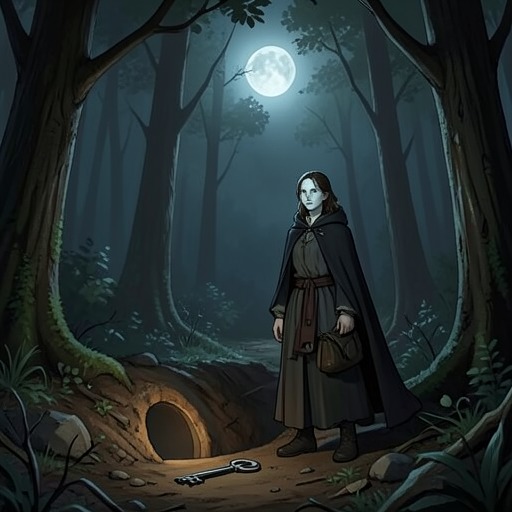
Forest of Chantilly
JustineThe Forest of Chantilly is a temporary refuge for Dubois and her band after a robbery in which they kill three travelers. The forest provides a pause in their flight, but not a moral retreat: over supper, the gang counts its modest gains, and Dubois turns the killings into an argument for crime as calculated self-interest.
Setting and Role in the Plot
After the attack, Dubois orders the group to leave because the bodies on the road make the band’s position unsafe. They travel on and, the next day, reach the Forest of Chantilly, where they are out of immediate danger. The forest is therefore a stop in the gang’s movement away from the crime scene, not a permanent base or a destination in its own right.
The Gang’s Accounting
At supper, the men calculate that the robbery has brought them no more than two hundred louis. One of them questions whether that sum justified three murders. The exchange makes the forest scene a reckoning: the band weighs the small material return against the violence used to secure its escape.
Dubois’s Argument
Dubois rejects the idea that the murders should be measured against the value of the stolen money. She claims the gang killed the travelers for security, then blames the law: because theft and murder receive equal punishment, she argues, a thief has little reason to refrain from killing if murder can conceal theft. She extends this reasoning into a broader defense of treating other people’s lives and interests as negligible beside one’s own welfare and pleasure.
The forest episode gives that doctrine a concrete setting. The gang has escaped immediate danger, but the pause exposes the reasoning by which its members justify the violence that made their flight necessary. Chantilly is a brief refuge in the action and the scene of Dubois’s argument that crime can be made to appear rational when self-interest is taken as the only measure.