Conciergerie
JustineThe Conciergerie is the prison that gives two decisive turns to Thérèse’s narrated life: first, her confinement there after a false theft conviction brings her to the edge of execution; later, Dubois’s deliberately set fire opens an escape at terrible human cost. The prison returns in the outer narrative as the place where Thérèse, now called Justine by her guards, is encountered on the way to a sentence imposed for crimes she denies committing. Its function is therefore more than custodial: it marks the repeated collision between her innocence and institutions that take accusation for proof, while also furnishing the setting for the testimony that exposes that pattern to sympathetic listeners.
Imprisonment and the First Sentence
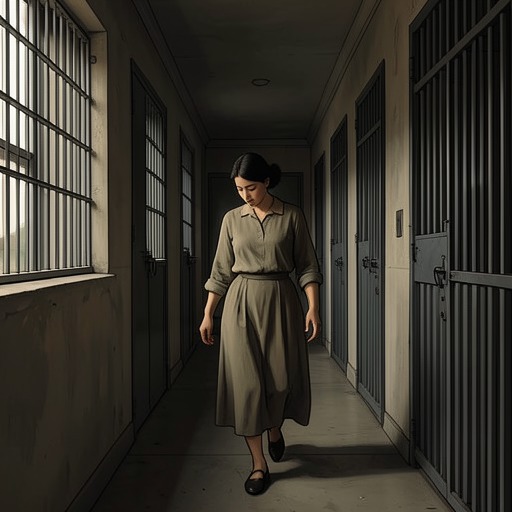
After refusing to help her employer, Du Harpin, steal a diamond, Thérèse is herself accused of stealing one. Du Harpin has the stone placed in her mattress, and the discovery is treated as decisive evidence. Her account of his earlier attempt to recruit her into crime is dismissed as slander: he has long been regarded as a man of integrity, while she has neither influence nor protection. The court’s assumptions about poverty turn the planted object into a verdict, and Thérèse is seized and taken to the Conciergerie, unable to make the authorities hear her defense.
Her confinement is the consequence not of an established crime but of the refusal that made her employer her enemy. As she tells Madame de Lorsange, she faces the prospect of paying with her life for having declined to participate in wrongdoing. The episode establishes a grim reversal that recurs throughout her story: an honest act exposes her to danger, while the people who manipulate evidence and wield social standing retain credibility. The Conciergerie is where that reversal becomes immediate and physical, as a wrongful judgment brings her within reach of execution.
The Fire and Escape
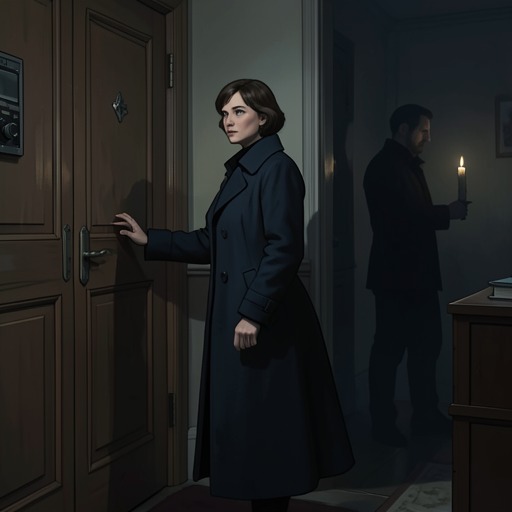
Two days before the scheduled execution, Dubois approaches Thérèse at night and tells her not to sleep. She has arranged for the Conciergerie to catch fire between seven and eight, and has positioned the escape around four male confederates who will join the women. Dubois presents the plan as a matter of survival, dismissing the fate of others when her own life is at stake. Thérèse is not a willing accomplice in the crime; in her later account, she describes the fire as the crime through which Providence protects her after the law has endangered her.
The blaze spreads, and twenty-one people are consumed. Amid that destruction, Thérèse and Dubois make their escape. The women reach the cottage of a poacher, an intimate friend of Dubois’s band, in the Forest of Bondy. There Dubois urges Thérèse to abandon virtue, arguing that her scruples led her toward the scaffold while a crime has rescued her. Thérèse acknowledges that Dubois saved her life but rejects the bargain: she says she would rather suffer the dangers of virtue than accept the perilous favors attached to crime, and holds to her religious principles and hope of compensation in another world. The escape thus frees her from the prison without resolving the conflict that brought her there; Dubois’s rescue becomes an invitation to criminality that Thérèse refuses.
The Prison in the Framed Account
Years later, the Conciergerie enters the story again through the encounter that frames Thérèse’s life narrative. At Montargis, Madame de Lorsange and Monsieur de Corville see her in the custody of guards, bound hand and foot and weakened enough to need their support. The officers explain that she has been accused of murder, theft, and arson, tried at Lyon, and is being taken to Paris for confirmation of the sentence before being returned to Lyon for execution. Moved by her condition, the couple arranges to remain overnight; Corville takes responsibility for the prisoner, and she is unbound and given food.
Once she has recovered somewhat, Madame de Lorsange asks Thérèse to tell how she came to such a plight. Thérèse hesitates because recounting her life feels like a complaint against Heaven’s will, then begins by concealing her name and birth. Her testimony takes the reader back to the Conciergerie and the fire, transforming the prison from a location in a chain of misfortunes into the subject’s own remembered evidence. The narrative presents her past not as impersonal report but as a first-person account delivered to listeners who can respond to it.
Recognition and Rescue
At the conclusion of Thérèse’s account, the resemblance between the prisoner and Madame de Lorsange leads to recognition: the two discover that they are sisters, Juliette and Justine. Juliette identifies the prisoner as the girl she saved from the Conciergerie ten years earlier, recalling the earlier escape as the start of a bond she had not understood at their present meeting. The prison thus anchors both an escape from custody and a later recognition of kinship, linking the women’s separated lives across the years.
Monsieur de Corville responds by moving to an adjoining room and writing to the Lord Chancellor. He takes responsibility for Thérèse’s innocence, offers to guarantee it under oath, and asks that she be held at his château rather than another prison until her case is clarified; he also promises to produce her in court when required. He makes himself known to her guards, entrusts them with his letter, and assumes responsibility for the prisoner. His intervention changes the immediate prospect of another transfer toward execution into protection and a chance for legal review. In the framed narrative, the Conciergerie is consequently associated with both the first escape wrought through catastrophe and the later effort to rescue Thérèse through testimony, advocacy, and recognition.