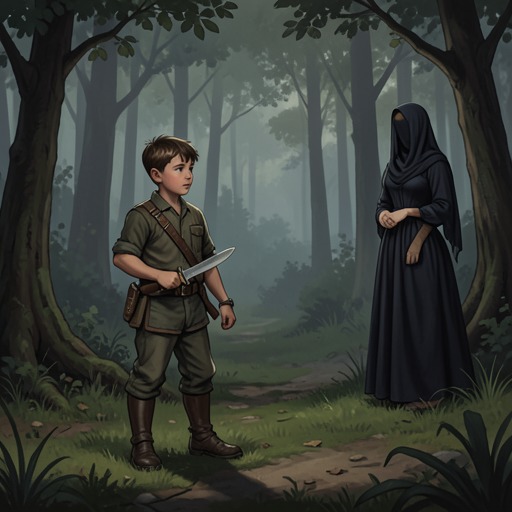
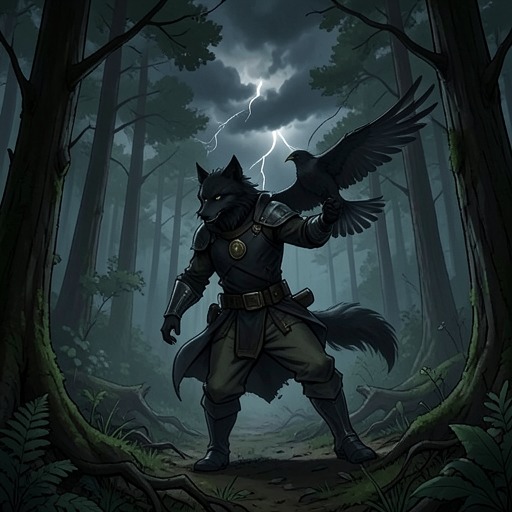
Bear
KalevalaBear occupies a double place in Finnish myth and in the Kalevala: Otso is a being of celestial and woodland origins, honored through affectionate names, yet bears also appear as threats to be mastered and as instruments of revenge. That tension makes Bear more than a test of physical strength. The stories place the animal within a world of sacred obligations, human danger, and the uneasy distinction between reverence and destruction.
Mythic identity and reverence
The book describes traces of bear-worship, or arctolatry, among the traditions represented in the Kalevala. Otso’s birth is placed far from an ordinary den: he comes into being on the shoulders of Otava, in the regions of the sun and moon. A goddess of the woodlands nurses him in a cradle suspended by golden bands between the bending branches of budding fir-trees. This origin joins the bear to both celestial space and the living forest, presenting him as a being with a mythic history rather than simply an animal encountered by hunters.
Otso’s nurse initially withholds his teeth and claws. She grants them only after he promises never to take part in bloody strife or violent deeds. The pledge gives the bear a moral condition: the danger represented by his claws is set against an expectation of restraint. Yet the account says Otso does not always keep his word. The tradition thus makes his later vulnerability to hunters compatible with his sacred standing; the failure of the pledge offers people a way to reconcile their consciences to killing him.
The runes address Otso through endearing names that associate him with honey, light, the forest, and fur. Among them are Honey-Eater, Golden Light-Foot, Forest-Apple, Honey-Paw of the Mountains, Pride of the Thicket, and Fur-robed Forest-Friend. These titles frame the bear through habitat, appearance, and food, but their affectionate tone also registers respect. Their accumulation contrasts with the practical language of capture and pursuit in other episodes: the same creature can be honored in song and treated as dangerous quarry.
A trial in the forests of Tuoni
A bear also figures in the courtship trials set by Louhi. She makes the muzzling of Tuoni’s bear a condition of granting her daughter in marriage, placing the task in the forests of the Death-land. When another test is demanded, Ilmarinen says that he must go to Tuonela and bridle the bear of Mana, then lead it from Tuoni’s forests. The different names in these demands locate the animal within the perilous realm of the dead; the task is not presented as an ordinary hunt.
Ilmarinen responds by forging a magic bridle of steel on a rock beneath the water. He also prays for concealment from the bear. Terhenetar hears him and settles fog and snowflakes over the beasts’ hiding places. Under that cover, Ilmarinen safely bridles the bear and fetters it with magic chains in the forests of Tuoni. The scene makes success depend not only on the blacksmith’s craft but on aid that alters the conditions of approach. The bear remains a formidable trial, while the means of mastering it are distinctly magical.
Bears in Kullervo’s revenge
In another episode, bears become part of Kullervo’s retaliation. Ordered to tend the herds in the woodlands, he changes the cattle into wolves and bears and drives them home against his mistress. The act follows a grievance rooted in his only keepsake: she had baked a stone into the centre of his oat-loaf, causing him to break his knife. The text presents the transformed animals as the means by which Kullervo answers that injury, not as companions or independent agents with a separate account of their own.
This use differs sharply from Otso’s mythic identity. The bears here belong to a magically altered herd and carry out Kullervo’s destructive response to the broken knife. Their presence connects animal transformation with the consequences of cruel treatment, while also showing how the bear’s force can enter human conflict without the sacred biography given to Otso. The account does not describe the attack in detail; its emphasis is on the sequence from the damaged keepsake to Kullervo’s retaliation.
Otso’s hunt and remembered origin
The bear returns as the centre of a communal encounter in the story of Wainamoinen’s hunt and feast. Wainamoinen announces that he will drive the bear before him from the heather and mountain, and from the fen and forest. He finds the mighty animal waiting at the cavern doors of Otso, on the border of the woodlands, and lifts the golden covers. The setting at the edge of the forest and the naming of Otso’s cavern give the encounter a definite place within the bear’s landscape.
Afterward, the people ask about Otso’s birth, wondering whether he was born in a manger or nurtured in a bath-room. The question turns a hunt into a telling of origins: the bear’s capture and the community’s feast lead back to the story of what kind of being Otso is and where he came from. The account identifies him as the Honey-Eater of the Northlands and says that this is the origin of the sacred booty. It closes with Otso wrapped in fur robes with juniper and willow, retaining the language of honor even as the bear is remembered as the object of the hunt.
Meaning across the episodes
The bear’s appearances repeatedly set sacred regard beside human use. Otso’s celestial birth, woodland nurse, and vow make him worthy of reverence; the broken vow helps explain why hunters can nevertheless destroy him. In the courtship trial, a bear in the forests of Tuoni must be subdued through a steel bridle, magic, and concealment. In Kullervo’s story, bears are transformed into agents of retaliation. In Wainamoinen’s hunt, the animal becomes the focus of a feast and a communal account of origin.
These episodes do not reduce Bear to one stable role. The bear may be a mythic person with a pledge, a dangerous creature that a hero must master, or part of a magically reshaped herd. The movement between those roles preserves a central contrast in the book’s treatment of animals: reverence does not prevent capture, and power may be honored even when it is put to human purposes. Otso’s names and remembered origin keep that tension visible, giving the hunted bear a history that the acts of pursuit alone would erase.