Hare
KalevalaHare is a small but vivid presence in the Kalevala, appearing both in a captive woman’s wistful response to an animal crossing her path and in descriptions of winter whiteness. The animal does not speak or drive the action; its significance comes from the contrast between its unimpeded movement through the woods and the Maiden of Pohyola’s confinement, and from the place it occupies in the poem’s recurring images of snow and frost.
A passerby on the highway
As Ilmarinen and the stolen Maiden of Pohyola travel through snow, footprints prompt him to ask who has crossed their highway. He answers that the tracks belong to a timid hare. The animal is introduced through this brief exchange as a creature moving across the travelers’ route, not as a participant in their journey.
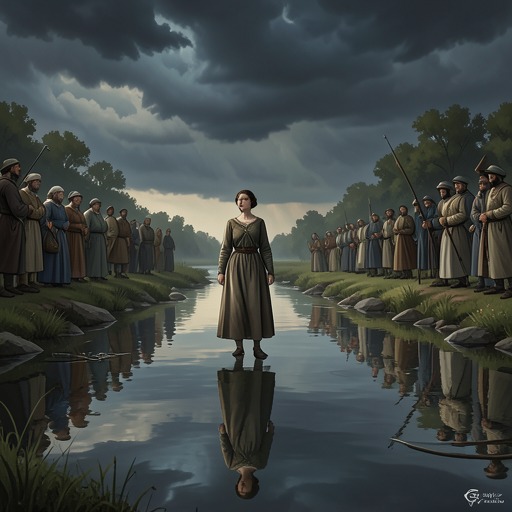
The Maiden of Pohyola responds with sobs and sorrow. She imagines that her life would be happier if she could follow the hare to its burrow in the woodlands, and calls attention to the value of its fur. Her longing turns an ordinary animal passage into a sharp contrast: the hare can choose a path toward shelter, while she has been stolen and travels with Ilmarinen. The burrow is not a destination she reaches; it belongs to the freedom she can only imagine in that moment.
Hare in the winter landscape
Elsewhere, the poem uses Hare as a comparison in a description of snow. After snow falls, the flocks are made white like ermine or Hare in winter. The image places the animal among the visible signs by which the poem renders a transformed landscape, where snow changes the appearance of both animals and the world around them.
A further winter passage gives the hare a frosted fur robe as it bounds over snowy mountains, beside an image of a bear moving in icy raiment. The verb gives Hare motion within this cold landscape: it bounds across the terrain rather than remaining a static measure of whiteness. Together, the passages associate the animal with winter’s snow-covered appearance and with movement through it.
Narrative significance
The poem gives Hare no biography or sustained independent storyline. Its importance instead lies in how a few concrete details gather meaning across distinct passages: footprints on the highway, a burrow in the woods, winter fur, and bounding over snowy mountains. In the encounter with the Maiden of Pohyola, its freedom is felt through her wish to follow; in the seasonal descriptions, its coat helps make the whiteness of winter legible. These brief appearances keep the animal grounded in the natural world while allowing it to sharpen the poem’s contrast between free movement and captivity.