Wolves
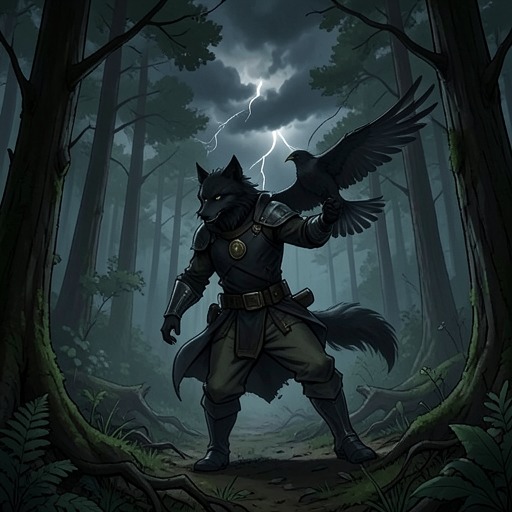
KalevalaWolves are a recurring creature in the Kalevala, appearing as a menace at Pohyola’s gates and, later, as one of the forms into which a herd of Cattle is magically changed. The contrast gives them two roles: they threaten those approaching the northern stronghold, but can also be summoned as part of an act of transformation.
At the Gates of Pohyola
An approaching figure is warned that Wolves will rise to meet him at Pohyola’s narrowest gateway, where a black bear will also lurk. The warning fixes the creatures at a point of passage: the danger lies not in an unspecified wilderness but at the entrance to Pohyola.
A later glimpse confirms the threat in the same setting. At the high gate, Wolves stand at the portals while a black bear occupies the passageway. The repeated pairing makes the gate feel guarded by hostile animals, and turns the earlier warning into an encounter with creatures already in place.
Wolves Made by Magic
In another episode, a herd is driven across lowlands and marsh quicksands. Half is directed toward the Wolves and half toward bear dens; the spell then calls the Wolves as little children and the bears as standard-bearers, before changing the whole herd of Cattle into Wolves and bears by magic.
The transformation makes Wolves more than an external hazard. They are also a form that cattle can be made to assume, joining the herd’s fate to the spellcaster’s magical command. The passage’s sequence—from dividing the herd, to calling the animals, to changing the cattle—presents that change as a deliberate act rather than a natural occurrence.
Narrative Function
Across these appearances, Wolves mark both peril and transformation. At Pohyola they make the threshold dangerous; in the marshland episode they emerge from the conversion of domesticated Cattle into wild creatures. Their significance lies in that double use: the same kind of animal that threatens a traveler can also be produced by magic as part of a commanded herd.