Cattle
KalevalaCattle appear as a herd under the care of Ilmarinen’s wife, first sent out to pasture and guarded through prayer, then transformed by Kullervo into wolves and bears. Their changing role—from ordinary livestock needing protection to a magically altered force—marks the episode’s shift from household routine to violence and revenge.
Herd and Pasture
Ilmarinen’s wife sends the cattle to pasture and addresses Kullervo as she does so. The herd is part of the household’s daily work, entrusted to a herdsman and sent into the landscape rather than kept continuously within the yards and stables.
The pastoral setting is described through golden pine-tree forests and silver-laden thickets. These rich surroundings place the cattle in a world of natural plenty, but their exposure beyond the household also makes their safety a concern.
Protection and Vulnerability
Ilmarinen’s wife calls on the Creator and Ukko to guard and shelter the herd from danger. Her appeal presents the cattle as dependent creatures whose security requires protection beyond ordinary human care.
In a later passage, she asks that dogs be chained in forest-caverns so they will not injure the herd. She then opens the yards and stables. The episode thus gives the cattle a practical place in household management as well as a ritual one: their safety depends on both the handling of domestic animals and the invocation of divine guardians.
Magical Transformation
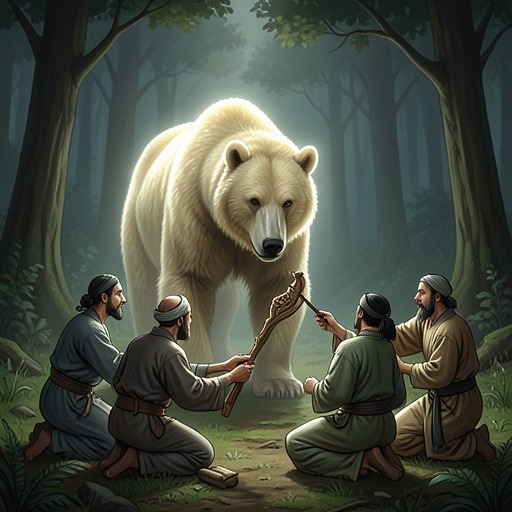
Kullervo changes the cattle into wolves and bears by magic. The transformation reverses their familiar role: the herd that had been sent out for care becomes a threatening force. In the sequence associated with Kullervo’s retaliation against Ilmarinen’s wife, the animals are no longer simply livestock to be protected; their altered forms make them instruments of harm.
Narrative Significance
The cattle connect the episode’s everyday pastoral detail with its supernatural violence. Their first appearance establishes the work of tending and guarding a herd; their transformation overturns that order. The change is significant not because the cattle act independently in the account, but because magic makes the household’s own livestock part of the danger that care and prayer had sought to prevent.