Northern pike
KalevalaThe Northern pike is a consequential fish in the Kalevala: its body supplies the bones from which Wainamoinen fashions his first harp, and a fire-bearing pike later appears among the fish brought ashore during the recovery of fire. In both episodes, the fish stands at a threshold between the natural world and human use, carrying something that can be transformed into a source of communal pleasure or recovered from danger.
Identity and appearances
The Northern pike is associated with two distinct sequences. In the harp episode, the fish is represented through its jaws, teeth, and bones, which prompt Wainamoinen to consider making an instrument. The evidence does not develop the pike as an individual with a name or sustained personality; its presence is registered through the remains that survive it and the work those remains make possible.
A later appearance belongs to the recovery of fire. A gray pike swallows a lake Trout and the Fire-fish; when Wainamoinen’s catch is brought ashore, the fire-bearing pike is among the fish. The chain of swallowing gives the pike a specific narrative function: it becomes the enclosing body through which the Fire-fish can be found again. The fish is therefore not merely a catch, but part of the means by which a lost element returns to the human world.
From fish bones to Wainamoinen’s first harp
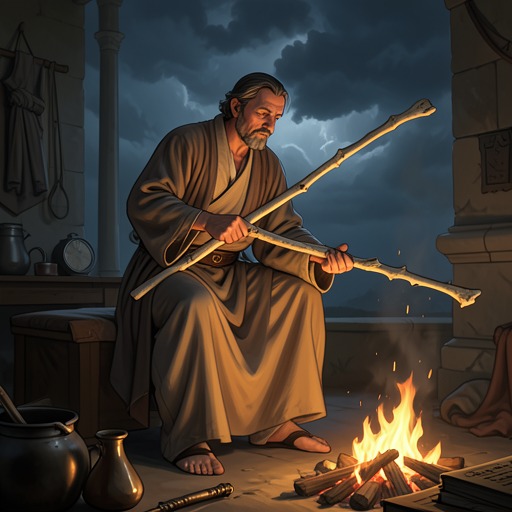
The pike’s most enduring consequence follows from its physical remains. Wainamoinen identifies the possibility of making a magical harp from jaws, teeth, and fish bones. The change from animal body to musical instrument gives the pike an indirect but foundational place in the episode: what was once part of a fish becomes a crafted object capable of producing music.
Wainamoinen presents the harp to others as well as playing it himself. He lets older players try its strings and gives it to young magicians, making the instrument part of a shared musical encounter rather than a private possession. Its sound brings gladness and harmony across the hills and mountains. Yet the music also provokes grief: Wainamoinen’s tears flow as he plays and sings. The harp made from the pike’s bones thus carries more than one emotional register, joining communal pleasure with the minstrel’s sorrow.
That first harp does not endure. A storm tosses the war-ship high and casts the fish-bone harp away. The loss breaks the connection between the pike’s remains and the music produced from them, although it does not end the story’s investment in the harp. Wainamoinen later finishes a sacred harp described as a source of enduring pleasure for the people of Wainola. The pike’s bones belong to the first making, not to that later instrument; the contrast makes the first harp both a remarkable creation and a vulnerable one.
The fire-bearing pike
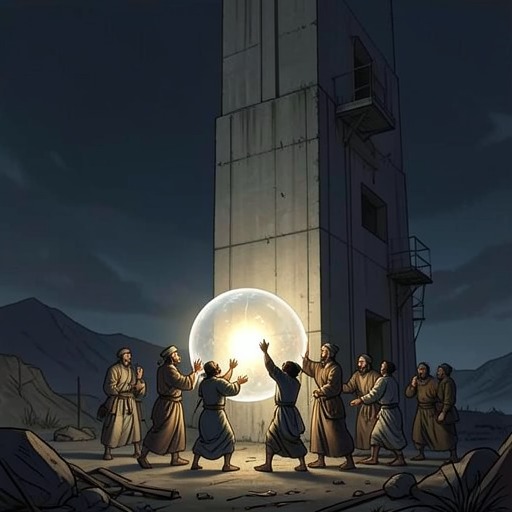
In the fire-recovery sequence, the Northern pike participates in a progression of swallowing. The gray pike darts forward and swallows the lake Trout, then quickly eats the tortured Fire-fish. When Wainamoinen lands his catch, the fire-bearing pike is among the fish cast upon the shore, while the others are returned to the water. This distinction marks the pike as the significant catch within a larger haul.
The episode gives the fish a role in bringing hidden fire within reach, but the evidence does not make the pike its source. Rather, the Fire-fish has been swallowed and carried inside it. The pike’s body conceals the object being sought and, through capture and landing, makes its recovery possible. The same broad pattern appears in the harp episode: material contained in, or left by, an animal becomes available for human action. In one case the result is an instrument; in the other, the fish is the container through which fire can be recovered.
Narrative significance
Across these episodes the Northern pike connects living nature to acts of making and retrieval. Its bones become the physical basis of music, while its swallowing of the Fire-fish places it within a sequence that leads from concealment to recovery. The fish does not speak or direct events; its significance lies in what its body bears and what happens when that body enters human hands.
The two outcomes are deliberately different. The first pike is remembered through a crafted harp whose music gathers listeners, moves its maker to tears, and is eventually lost in a storm. The fire-bearing pike, by contrast, appears as a catch singled out from the others. Together these appearances place the fish at the meeting point of natural substance and magical possibility: bones can be fashioned into an instrument, and a body that has swallowed fire can carry what the community needs back into reach.