The Catholic Modernist Controversy
LeilaThe Catholic Modernist Controversy is the novel’s conflict over religious reform, institutional authority, and the meaning of fidelity. It is not presented as a simple division between belief and unbelief: Massimo Alberti argues that reforming ideas might better serve the Church if advanced without rebellion, yet the resulting pressure deepens his doubts about whether the Church can endure as a religious form. The controversy reaches beyond debate into reputation, friendship, discipline, and the painful question of what can honestly be said at Benedetto’s grave.
The question of reform and obedience
A month before traveling to Velo d’Astico, Massimo gave two lectures at the Popular University on Italian reformers of the sixteenth century. He praised some of them for their intelligence and virtue, but argued that their ideas would have made greater progress, to the Church’s benefit, had they not rebelled against its authority. The position joins intellectual sympathy for reform with a rejection of rupture. It unsettles listeners who expect him either to endorse the reformers without reservation or to condemn them outright.
That refusal to choose a camp has a history in Massimo’s own religious life. In Milano, he has faced hostility both from people who condemn him for remaining faithful to Church law and from people who call him a heretic for thinking and writing as a modern man. The controversy therefore places him between incompatible demands: obedience can look like weakness to reformers and insufficient orthodoxy to conservatives. His argument is not that disagreement is harmless, but that opposition to authority may prevent ideas from changing the institution they seek to improve.
A public figure caught between camps
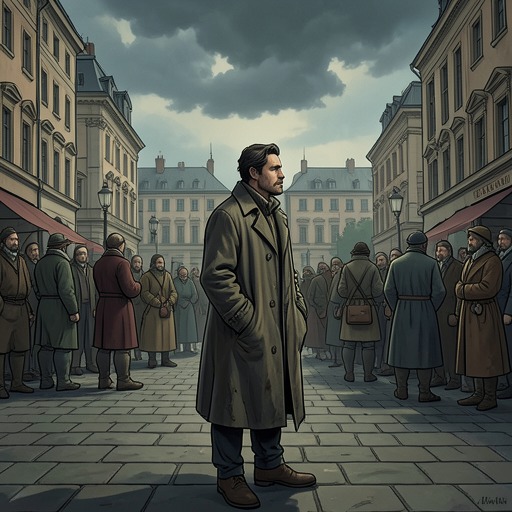
The lectures provoke condemnation from conservative Catholics, while radicals and socialists also join in denouncing Massimo. To the former, he appears a hypocritical heretic; to the latter, a weak or almost cowardly figure. The attacks expose how little room the public debate leaves for his position. Each side judges him by its own test of consistency, treating his effort to hold reform and obedience together as evidence of bad faith.
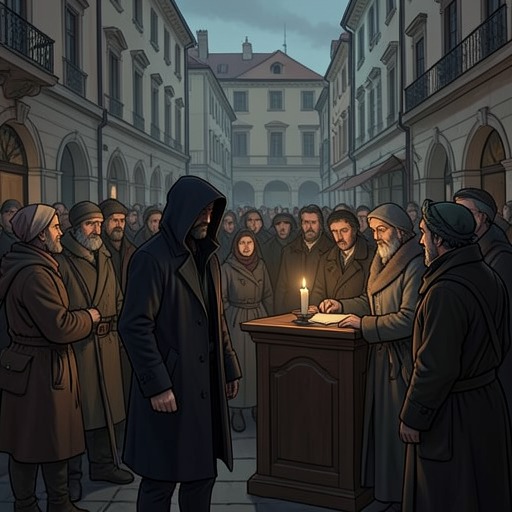
The hostility is not limited to public criticism. A letter Massimo receives reports that the Society of Saint Vincent de Paul has decided to expel him because he had nearly become an apologist for Italian heretics. Catholic booksellers have been forbidden to sell his lectures. In clerical circles, a rumor claims that he and Don Aurelio intend to publish a Modernist periodical; a preacher is said to have described Massimo’s work as more dangerous than openly blasphemous books. Modernists, for their part, ridicule him as timid, outdated, and still constrained by tradition. The same report includes gossip about a woman, which Massimo finds absurd rather than alarming. The controversy thus operates through institutions and rumor as well as argument, turning a dispute about religious ideas into a judgment on character and private life.
Massimo’s return to Milano makes the accumulated hostility immediate again. He had left during the storm and did not expect to find it so intensified. The attacks do not simply drive him from public life: they rekindle his pride and make him determined to stand more firmly on his chosen path. His response is neither the patient forgiveness associated with Don Aurelio nor a conversion to the opposing camp. It is a renewed resolve, sharpened by the sense that both sides have mistaken his position.
Private doubt and its deeper stakes
The public controversy also bears on Massimo’s relationship with his uncle, Luigi Alberti. Luigi is not a clerical politician: he wants priests confined to church and sacristy, yet reveres their authority within religious life. Modernism and religious reform trouble him more than socialism or radicalism. Because he is reluctant to discuss such matters directly with his nephew, he consults priests about Massimo’s views and receives conflicting reassurances and warnings. One calm, plainly orthodox reply from Massimo reassures him, but only for a time. Their estrangement is therefore not merely a difference in temperament; it reflects the difficulty of speaking across incompatible understandings of religious authority and modern thought.
Massimo’s own crisis reaches further than the criticisms of particular doctrines or forms of worship. In a letter to Donna Fedele Vayla di Brea, he traces his uncertainty back to doubts from his youth and to the years when his devotion to his Roman teacher gave him a firm sense of faith. After the teacher’s death, Massimo says, accusations against that teacher and hostility toward his disciples combined with the corrosive influence of negative critics to unsettle his beliefs. He distinguishes this process from a shallow rejection of Catholicism based on disliked customs or apparently absurd doctrines. What troubles him is the possibility that Catholicism, like the religion of Moses before it, might be a divine stage in religious history from which a higher form will emerge.
That possibility turns the controversy into a question of vocation and honesty. Massimo wonders whether he should become one of the precursors who sacrifice themselves to proclaim a new religious word. At the same time, his friends want him to speak at Benedetto’s burial in Oria. He fears that he cannot do so without hypocrisy if he no longer shares Benedetto’s unwavering belief in the Church’s permanence and the duty of obedience. Don Aurelio, he writes, is himself a powerful argument for the Catholic Church, but not a conclusive one: noble and convinced souls exist in other churches and outside them. The controversy has thus unsettled both Massimo’s convictions and the public role he can truthfully perform.
Institutional consequences and competing testimony
The novel places this intellectual conflict alongside concrete acts of ecclesiastical authority. Don Aurelio receives a letter from the Vicenza diocesan curia dismissing him from his parish at Lago di Velo within fifteen days and requiring the house to be cleared for his successor’s family. The notice does not state its grounds, so it does not establish that the controversy caused his removal. Its formal, administrative language nevertheless stands in sharp contrast to the personal and spiritual consequences that religious disputes have for those caught within them.
At Benedetto’s funeral, Don Aurelio offers a public account that counters the accusations surrounding the dead man. He concedes that Benedetto may have erred in theological propositions, but identifies the central work of his life as calling believers back to the spirit of the Gospel as embodied in human conduct and good works. Don Aurelio presents Benedetto as having professed obedience to Church authority and the Holy See, and insists that he rejected the errors for which private Catholics had condemned him. This is a defense delivered by a friend, not a neutral adjudication of the dispute; its importance lies in how directly it answers the charges and restores obedience to the story of Benedetto’s life.
Don Aurelio’s appeal does not end in counter-accusation. He asks Benedetto’s friends to forgive those who condemned, mocked, or insulted him, arguing that people know too little to judge one another’s ignorance. His image of people traveling through darkness, calling to one another and seeking the way without judging those who cannot follow, offers a markedly different answer to the controversy’s polarized verdicts. Where public factions demand a decisive label, the funeral speech makes humility, forgiveness, and shared uncertainty part of religious fidelity. The dispute remains unresolved in Massimo’s mind, but its human stakes are made plain: argument can defend or injure a person, while the demand for obedience may itself be entangled with the search for truth.