BBC
LimonovThe BBC is presented through two documentary projects that record sharply different encounters with post-Soviet history: a film featuring Eduard Limonov alongside Radovan Karadžić during the siege of Sarajevo, and footage of Aleksandr Solzhenitsyn returning to Russia by train. In both cases, the organization’s presence makes political figures and events visible to audiences beyond the scenes themselves.
Documentary Production
The BBC produced Serbian Epics, a documentary built around filmed encounters rather than offscreen commentary or an interviewer holding a microphone. The film includes the famous Russian writer Eduard Limonov talking with Radovan Karadžić, identified in the film as a psychiatrist, poet, and leader of the Bosnian Serbs. It was subsequently showered in prizes and screened widely.
Filming at Sarajevo
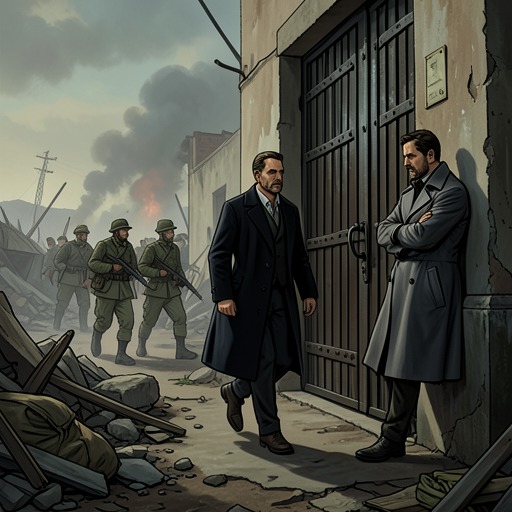
One scene takes place on the heights from which Serb forces bombard Sarajevo. Mortar fire is nearly continuous as soldiers surround Limonov and Karadžić. Their conversation moves from Karadžić’s claim that the Serbs are seeking to reclaim territory to poetry: Karadžić recites an ode about Sarajevo engulfed in flames. The camera also records the scene’s interruptions and surrounding details, including Karadžić taking a telephone call from his wife and a soldier playing with a small dog. Limonov then approaches another soldier, who is greasing a machine gun. The documentary thus places the political conversation within the immediate setting of the bombardment.
Solzhenitsyn’s Return Journey
The BBC also filmed Solzhenitsyn’s return to Russia in 1994. Rather than fly directly to Moscow, he travelled from Vladivostok by rail, spending a month on a special train and stopping in villages to listen to people’s grievances. The journey was presented as a historic homecoming after twenty years abroad, but the account emphasizes the contrast between the scale of the filmed return and its reception: Moscow met Solzhenitsyn with indifference and irony.
Role in the Narrative
These appearances give the BBC a documentary role in two distinct historical settings. In Sarajevo, its production records Limonov’s on-camera proximity to Karadžić amid the siege; on Solzhenitsyn’s journey, its filming follows a celebrated exile’s return across the country. The book uses the resulting images not as neutral background but as material through which the public performance of political and literary figures can be examined.