Limonka
LimonovLimonka was the newspaper Eduard Limonov created for the National Bolshevik Party, and it became more than a party bulletin: its unruly design and punk-inflected literary identity gave a scattered provincial youth culture a name, an object to pass around, and a figure to follow. First issued in the fall of 1994, it joined political provocation to rock and roll, literature, and a defiant style that its young readers could recognize as their own.
Founding and First Issue
The newspaper took shape alongside the National Bolshevik Party. Limonov devised its title, Limonka, meaning the grenade, while the party’s name remained a contested piece of authorship. After Limonov and Alexander Dugin later separated, each would claim to have invented the party name; when both sought respectability, each would instead attribute it to the other. The newspaper title, by contrast, was credited to Limonov without dispute. A painter friend designed the flag at a kitchen table: a white circle on red, recalling the Nazi flag, but with a black hammer and sickle in place of the swastika. A Ukrainian student, Taras Rabko, was the party’s first member. The founders had a name, a flag, a newspaper, and one recruit; money remained the immediate obstacle.
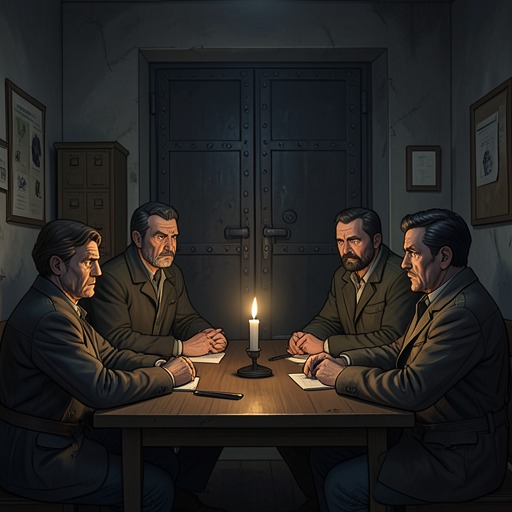
Limonov returned to Paris hoping to raise funds, but the first issue eventually appeared through a more precarious route. With no other revenue available, he used his meager royalties to publish it. The project’s beginnings were later recounted by Limonov as an epic of a small band of founders. The group included Dugin, Limonov’s wife Natasha, who wrote under the pseudonym Margot Führer, Siberian punks, Dugin’s students, and Rabko, responsible for logistics. They found a printer in Tver, Rabko’s hometown. Limonov and Rabko drove there in an old Moldavian car and collected five thousand copies.
The paper’s first distribution network was improvised rather than institutional. Copies were sold on the roadside and carried through Moscow railway stations, where the founders placed them on trains bound for major provincial cities. They did not expect a large readership; the hope was that someone would open a copy after it washed into reach. That image captures the paper’s uncertain beginnings: a deliberately conspicuous object sent outward without assurance that anyone would take it up.
Style, Content, and Political Identity
Limonka’s appearance was part of its argument. Its gaudy layout, vulgar drawings, and provocative headlines looked unlike the newspapers its young readers knew. Although it served a political party, it dealt less with formal politics than with rock music, literature, and style. Its posture was punk: openly insolent, anti-respectable, and designed to offend the habits of conventional public life. National Bolshevik identity was therefore communicated not only through a party name and flag, but through the paper’s look, subjects, and tone.
The blend was deliberately unstable. The newspaper drew on influences that included the French publication L'Idiot international and the American underground press, but its effect in Russia arose from the contrast between those influences and the confined prospects of provincial life. In Zakhar Prilepin’s account, a single issue arriving by train could reach a bored young person in a small town and become the focus of a local circle. Limonka spoke to youths who felt they had no future, and for whom mainstream respectability offered neither excitement nor belonging. They passed copies among themselves, began reading Limonov’s books, and made him both a favorite author and a real-life hero.
Prilepin presents the paper and its readers as a Russian counterculture, while also showing the movement’s rougher and more contradictory edges. The party included skinheads and other militants drawn to confrontation, as well as self-taught cartoonists, aspiring musicians, amateur video enthusiasts, and unpublished poets. In the novel SANKYA, Prilepin represents militants tagging trains, unfurling banners on hard-to-reach monuments, and throwing tomatoes at a governor during official events. The actions are treated there as both youthful provocations and courageous challenges to a state in which disturbing public order could bring prison sentences. This literary account conveys the risks and meanings attached to the movement’s repertoire; it does not make every episode a direct account of the newspaper’s own activity.
Audience and the Making of a Leader
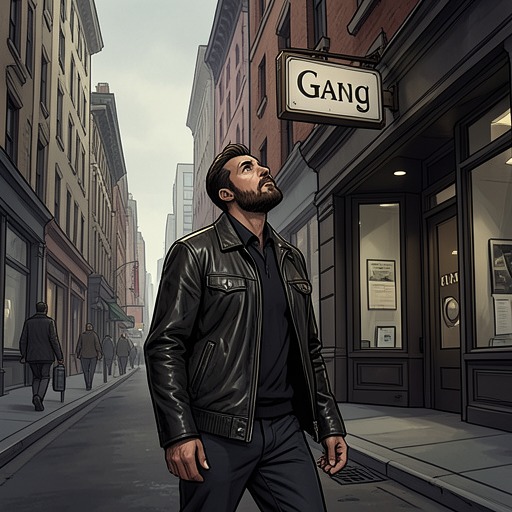
The newspaper’s reach depended on readers turning distribution into identification. Prilepin recalls first encountering a copy when he was twenty, bored in a small town in the Ryazan region. A friend had brought the strange paper from Moscow on a train. Its design and headlines seemed unlike anything the two young men had seen. Their group began to circulate the paper and read Limonov, whose age did not prevent him from becoming their model. In Prilepin’s account, Limonov offered an image of adult life sharply unlike that of their fathers: fearless, adventurous, rebellious, and unwilling to settle for an ordinary existence defined by money or conformity.
The paper thus carried a personal mythology as well as party material. For its provincial readers, Limonov embodied the life of risk and defiance that the newspaper’s style promised. The connection was not merely between an organization and its readership: Limonka made the leader legible to young people who had not met him, while their enthusiasm gave the publication a constituency beyond the founders’ immediate circle. Its cultural appeal could gather people with very different capacities and tastes under one rebellious label, even when they did not share an equally developed interest in political theory.
Internal Divisions and Significance
That breadth also exposed a fault line. Over time, the followers associated with Dugin’s office increasingly looked down on the common recruits drawn to Limonov: fans of rock music and street fights who cared little for the movement’s grand history of fascism and could be repelled by its paramilitary references. Prilepin, among the more sensitive readers, disliked references to the Freikorps and was uncomfortable with Limonov’s affectionate nickname for Dugin, Dr. Goebbels. As disputes sharpened, Dugin left to establish a center for geostrategic studies. In Prilepin’s telling, the departure left Limonov’s followers to themselves. The ideological division was also a division of cultural constituency: an elite, doctrinal circle set against the unruly subculture gathered around the newspaper.
Limonka’s significance lies in that capacity to make politics circulate as style, literature, and shared provocation. Its first issue was assembled by a tiny group, printed in an edition of five thousand, and sent out through railway stations rather than a secure commercial network. Yet copies could be passed from hand to hand until a provincial newspaper reader became a devoted reader of Limonov and a supporter of the National Bolshevik movement. The paper did not erase the tensions within that movement; its mixed readership made them visible. It offered a countercultural point of entry, but the factions that formed around it and Dugin’s rival intellectual project showed how differently that entry could be understood.