Federal Security Service
LimonovThe Federal Security Service is presented as a powerful organ of the Russian state, one that monitors political activity, conducts raids and arrests, and shapes the public account of those it prosecutes. Its role in the story of Eduard Limonov and the National Bolshevik Party is not simply that of a distant intelligence agency: it intrudes into the activists’ travel, takes them from a remote camp, and supplies the official narrative used to justify severe charges. The book also sets this modern apparatus against a longer history of Soviet political control, while leaving some of its most serious allegations explicitly unresolved.
Institutional reach and inherited methods
The Federal Security Service is identified in the account as the institution then called the Committee for State Security under a new name. That brief equation places it within a continuity of state security, though the narrative does not treat every practice of the earlier system as proof of a direct institutional policy in the present. Its broader historical frame is the Soviet principle of double administration: one person performs a task while another supervises and reports on him, with further layers of supervision multiplying upward. The book traces that principle from political commissars overseeing military specialists to the wider society. It offers this as a way to understand a culture of control, not as a detailed organizational chart of the Federal Security Service.
The account also links the agency’s reach to the everyday choices of National Bolshevik Party members. As repression grew more frequent, provincial activists travelling to Moscow were warned away from express trains, where identity documents had to be shown at ticket counters and their details might enter a Federal Security Service database. They instead took slow suburban trains, breaking the journey into stages and spending two days travelling. The passage describes this precaution as a response to surveillance risk: the possibility of being recorded was enough to reshape how young party members moved through the country.
Raids, arrests, and political prosecution
The agency’s power becomes immediate in the 2001 raid on the party’s camp in the Altai. A meticulous search involving dogs and metal detectors finds only two hunting rifles. The narrator stresses that weapons could easily have been planted, but none are discovered. Six party members are loaded roughly into an army truck, while Limonov is placed in a sedan with Colonel Kuznetsov, an officer who has been drinking vodka and eating snacks from a small refrigerator as the convoy drives toward the Federal Security Service base at Gorno-Altaysk. A special plane is waiting there to transport the prisoners.
During the drive, Kuznetsov tells Limonov that he personally oversaw earlier crackdowns, including one connected to filmmaker Nikita Mikhalkov, and the arrest of National Bolshevik Party members travelling to Riga. Limonov raises the Riga case as a setup involving drugs; Kuznetsov agrees that the arrested activists did not have drugs and laughs about the deception. The disclosure turns an abstract charge of political repression into an exchange between the prisoner and an officer who admits, in conversation, that an operation had been fabricated. Limonov condemns the officer and invokes Felix Dzerzhinsky, whom he calls the founder of the Chekists. Kuznetsov, rather than using his rank to silence him, becomes sheepish and asks why Limonov does not like the security services and why someone like him is not on their side.
The prosecution that follows places the arrested activists under grave accusations. The charges include terrorism, organizing or participating in an illegal armed group, illicit firearms acquisition or storage, and incitement to extremist activity. Limonov is caught between pride in being treated as a major political enemy and the need to refute the state’s case. The account emphasizes the disparity between the allegations and the circumstances as he understands them: a handful of men in a log cabin in the Altai, near the Kazakh border, with only a couple of hunting rifles. The judge nevertheless adheres to the Federal Security Service’s presentation of the group as a serious danger to national security.
Secret detention and the official story
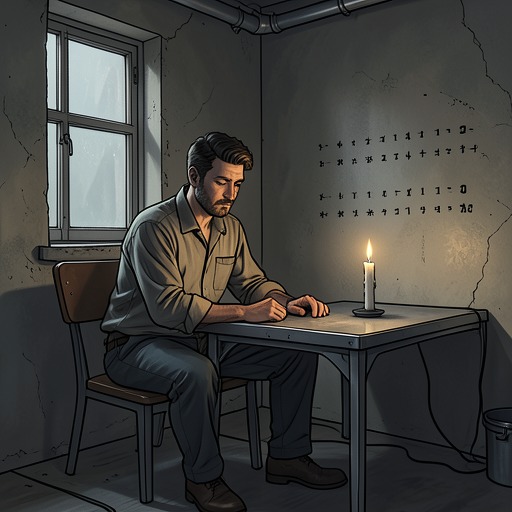
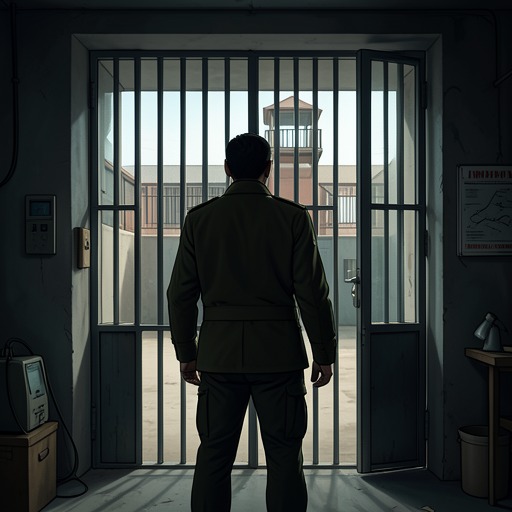
Limonov is held at Lefortovo, described as a former Committee for State Security fortress near Moscow, concealed from maps and surrounded by secrecy. At first, he does not know precisely what he and his companions are accused of. He has not seen a lawyer and is denied visitors; he cannot tell when the trial will begin, what is being said about the arrest outside, or whether people close to him know where he is. These details establish the isolation surrounding a high-profile political case, although the narrative does not say that the Federal Security Service itself operates every feature of the prison.
The book contrasts Lefortovo’s sterile cells and enforced isolation with the overcrowded prison in Saratov. In Saratov, Limonov is placed in a cell built for four but often occupied by seven or eight. When every bed is taken, he unrolls his mattress on the floor without protest. His conduct among fellow prisoners—sharing what he receives, doing chores, reading and writing instead of playing cards, and helping others with letters—complicates the public image of the dangerous political conspirator. The contrast matters because the prosecution’s story follows him into prison, while his daily conduct there is observed by people living alongside him rather than presented through the agency’s accusations.
The state’s version also reaches television. A film called The Ghost Hunt airs as Limonov arrives in Saratov, depicting the National Bolshevik Party as an offshoot of Al-Qaeda and the Altai hut as a secret training camp for hundreds of fanatical fighters. The narrative calls that picture far removed from reality, even as it notes that the imagined scale of the camp resembles Limonov’s own dream of what the party might become. Other inmates have seen the film and call him bin Laden. Public representation thus enlarges the alleged threat beyond the small group and rudimentary weapons found at the camp.
Political power and contested allegations
The Federal Security Service also enters the book’s account of Vladimir Putin’s rise through a disputed theory about the 1999 apartment bombings. The attacks in Moscow’s suburbs killed more than three hundred civilians and were blamed on Chechen terrorists. The narrative states that no proof was offered for the theory that the Federal Security Service had carried them out, and presents that claim as an allegation voiced by General Alexander Lebed, journalist Artyom Borovik, former officer Alexander Litvinenko, and Paul Klebnikov. All four later died violent deaths, in circumstances the book recounts, but their deaths do not establish the theory as fact.
The allegation nevertheless remained widespread, according to the account, and the political paradox is that many Russians could believe Putin guilty, or capable, of such a crime while voting for him repeatedly. The passage does not resolve the bombing controversy; it uses the persistence of suspicion to show how fear and political support can coexist. In that climate, the Federal Security Service signifies more than a body that conducts arrests. It stands at the meeting point of surveillance, coercive power, secrecy, and competing accounts of reality: an institution whose authority is felt in the journeys activists avoid, the camp raid they cannot prevent, and the official narrative that follows them into court and prison.