Eduard Limonov and Jenny's romance
LimonovEduard Limonov and Jenny’s romance grows out of a mistaken reading of class and becomes an uneasy domestic refuge. Limonov first imagines that he has gained access to the world of the wealthy; in fact, Jenny is the housekeeper who makes that world run. Their relationship gives him comfort and care, but also exposes his dependence on a life he would rather describe as beneath him. When Jenny leaves, his surprise at his own pain shows what the relationship had quietly supplied: not only a lover, but a place to belong.
A mistaken entrance into luxury
For weeks, Limonov takes Jenny for a rich heiress. The book offers no dramatic scene of discovery: as the narrator observes, Jenny did nothing to conceal her position, and may not even have understood the extent of his misunderstanding. The reversal is quietly comic and socially pointed. Limonov does enter the wealthy household’s inner world, but as the housekeeper’s lover, not as the privileged man he imagines himself to be.
Their first sexual encounter follows a Sunday visit to Jenny’s home. She is alone, and after the rain stops they drink coffee in a small private garden overlooking the river. Limonov tries to move her by recounting painful episodes from his life: his first marriage, the wife who left because he had no money, and his mother’s having him confined in a psychiatric ward. Jenny is moved, and they sleep together. The intimacy begins not with a grand declaration but with the stories he chooses to tell and her response to them.
The domestic scene that follows unsettles his expectations. Jenny’s room is smaller than he had imagined, and he compares her unfavorably with Tanya. She makes love with a placidity he finds surprising, and tells him matter-of-factly that she had turned him down because she had a urinary tract infection, not because she found him unattractive. In the morning, however, she prepares a lavish breakfast: freshly squeezed orange juice, pancakes with maple syrup, bacon, and eggs. Limonov imagines the appeal of waking beside a loving wife in a warm bed, with ironed sheets, Vivaldi, and toast coming from the kitchen. The fantasy is less about passion than the security and everyday tenderness he has rarely known.
The comforts and humiliations of Sutton Place
Once Jenny considers him her boyfriend, she introduces him to her employer, Steven Gray. Jenny lives full-time in Steven’s Sutton Place apartment while he and his family occupy a large Connecticut home and travel; a secretary and a Haitian cleaning lady help with the New York household. Limonov now more or less lives there too. Jenny regards her position as an enviable arrangement: she enjoys luxury, can invite people over, and pays nothing, while avoiding the worries she associates with the rich.
Limonov can see the attraction, but cannot accept the status on which it rests. One day he throws the truth at Jenny as an insult: “Except for Christ’s sake, Jenny, you’re the maid! And I’m the maid’s lover!” He means to provoke her. She is more puzzled than wounded and answers, “No one’s forcing you to stay, Ed.” The retort leaves the choice with him. Although he could return to the Embassy Hotel and spend his days in Central Park, he has acquired a taste for comfort and does not want to give it up. His contempt for the arrangement therefore coexists with his reliance on it.
That dependence is also visible when he falls ill. After walking through the wealthy neighborhood judging the men he passes, he returns to Sutton Place and goes to bed sick. Jenny cares for him like a child for two weeks, willingly. When he recovers, she says, “It was like you were human.” The remark registers both her sustained care and the change in his behavior that she has witnessed: for a time, he has been someone to look after rather than the hard, self-dramatizing figure he presents to the world.
Separation and the loss of refuge
A year after writing his book on the grass in Central Park, Limonov accepts Jenny’s invitation to travel to the West Coast. His reasons are mixed: curiosity, but also cowardice, since he cannot live at Sutton Place when she is away and does not want to spend August at the Embassy Hotel. The trip puts him among Jenny’s brother and two friends, whom he cannot stand; as soon as they leave the plane and get into a rented car, he expects the vacation to be a nightmare. His acceptance makes plain how closely his access to comfort is tied to Jenny herself.
After she returns, Jenny tells him that she is moving to California to be with another man, whom she plans to marry and have children with. She is already pregnant. Jenny gently describes their relationship as a close friendship rather than love, and says there is no reason they cannot remain friends across the country. Limonov performs understanding and wishes her well, but the news devastates him. He had expected to be the one to leave. Though he says he did not love her, he had been certain she loved him; that certainty meant someone was waiting for him and that he had a refuge. Now, as the account puts it, he faces the hostile world and the cold wind again.
The aftermath of the romance
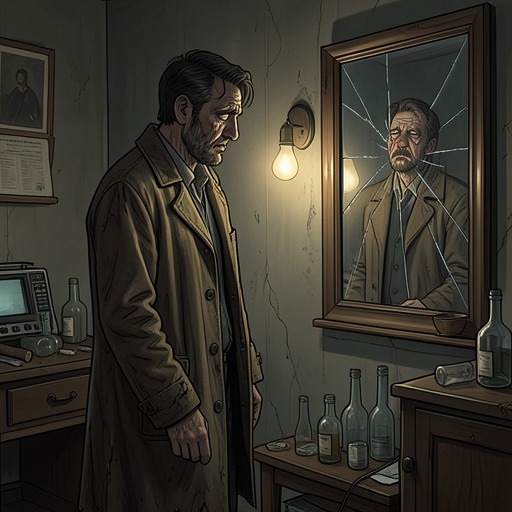
Jenny still welcomes Limonov to Sutton Place for coffee, but no longer as a partner. Steven’s consoling pat on the shoulder and offer of paid work lead Limonov to spend two months on Long Island doing manual labor for four dollars an hour. He sleeps on a foam mattress protected from a damp floor by a tarp, makes instant soup on a hot plate, and piles on sweaters in an unheated, unfurnished house. On wet walks back from the village bar, he returns cold and dreams of Jenny and her new partner. The contrast with the warm household she had once shared with him makes the material loss of the relationship concrete.
The romance ends without a reconciliation or a return to domestic security. Its consequence is not simply that Jenny chooses another life: Limonov discovers that his confidence in her attachment had been sustaining him, even when he dismissed the relationship and imagined himself capable of leaving first. The man who can picture himself leading society’s outcasts in revolt is also someone who, after Jenny’s departure, is left with the loss of a bed, a welcome, and the knowledge that someone had been waiting for him.