Soviet criminal liability from age twelve
LimonovSoviet criminal liability from age twelve is presented in the book as a stark feature of the postwar world confronting children in the young Eduard Savenko’s surroundings: the age of criminal responsibility, identified in the passage with exposure to the death penalty, had been lowered to twelve. The rule’s force in the narrative comes from its collision with the children’s vulnerability and the dangers of their daily lives.
The Rule and Its Stated Threshold
The passage states that criminal responsibility had been lowered to twelve. It describes the threshold in its most severe terms, equating it with the age at which the death penalty could apply. The account does not identify a particular statute or specify the offenses covered; its emphasis is the age itself and the severity attached to it.
Children in the Postwar Landscape
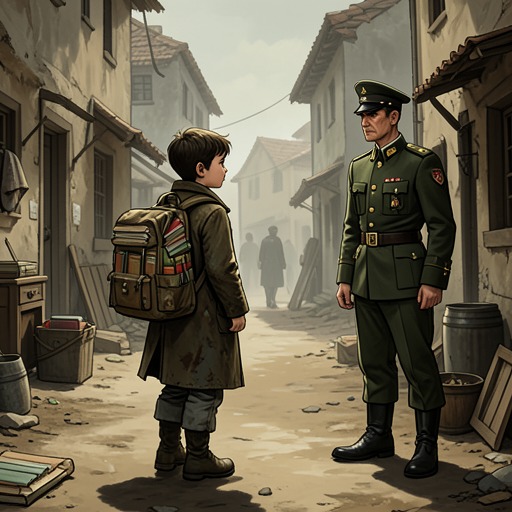
The rule appears amid a portrait of children deprived of ordinary protection. The narrative says that most children had lost their fathers, while many surviving men were disabled. Across the streets were gangs of children left to fend for themselves: some had lost parents in the war, while others had parents imprisoned as public enemies. Hunger was widespread, and the passage characterizes these children as thieves and murderers moving in dangerous groups.
The scale of deprivation is set against two figures: twenty million Russians had died in the war, and another twenty million people faced the postwar period without a roof over their heads. These details make the age threshold part of a larger social landscape in which childhood had been exposed to hunger, abandonment, and violence. The passage places the law alongside those conditions without claiming that they caused its adoption.
Narrative Significance
The lowered threshold sharpens the contrast between the children’s age and the severity of the state’s possible punishment. The surrounding description does not treat the gangs simply as individual offenders: it shows children surviving amid bereavement, homelessness, and the imprisonment of parents. By bringing the threat of the death penalty into that setting, the narrative makes the boundary between childhood vulnerability and criminal liability feel perilously narrow. The rule is therefore both a concrete detail of the postwar account and a measure of how little protection the children described could rely on.