Russia’s law banning extremism and fascism
LimonovRussia’s law banning extremism and fascism becomes a decisive test of whether the National Bolshevik Party can continue to exist openly. The book describes a law that leaves the Ministry of Justice the right to define the terms it prohibits, then follows Eduard Limonov as he tries to persuade the minister not to apply it to his party. When authorization is refused, the dispute shifts from a question of labels to a stark choice between legal organization and the underground.
Scope and political setting
The account emphasizes the law’s discretionary structure: the Ministry of Justice bans extremism and fascism while reserving the right to define them. It does not supply the statute’s formal title, its exact legal definitions, or a list of prohibited conduct. Instead, the reader sees its operation through the ministry’s notice to the National Bolshevik Party that the decree concerns it directly, and through the subsequent refusal to authorize the party.
The political stakes are sharpened by an earlier case, which the narrator discovers in a collection of articles by Anna Politkovskaya. Two years before the events surrounding the law, forty National Bolshevik Party militants had been tried for occupying and vandalizing the presidential administration’s offices while shouting “Putin must go!” They received lengthy prison sentences, and Politkovskaya defended them as courageous young people of integrity. Her account complicates the narrator’s prior view of Limonov as a fascist leading skinheads: the party is also presented as a source of opposition and democratic hope. This earlier trial is context for the law’s political significance, not evidence that the law itself was used in that case.
Limonov’s appeal and the refusal
Before the presidential election, Limonov seeks a meeting with the minister in person. He dresses in a suit and tie and pleads that he is neither an extremist nor a fascist. The minister listens, expresses respect for his talent, and appears receptive. The book’s account gives the encounter an initially conciliatory surface, but no assurance that the party will be allowed to register.
Three months later, after the deadline for authorizations has passed, the answer is no: the National Bolshevik Party no longer has the right to exist. Limonov requests another audience, which is granted. This time he argues that Russia recognizes 130 political parties, including many with no real members, whereas his own has 7,000 adherents. The contrast makes the refusal appear not simply a judgment about the party’s size or existence, but an exercise of the state’s power to decide which organizations may operate legally.
The threatened underground
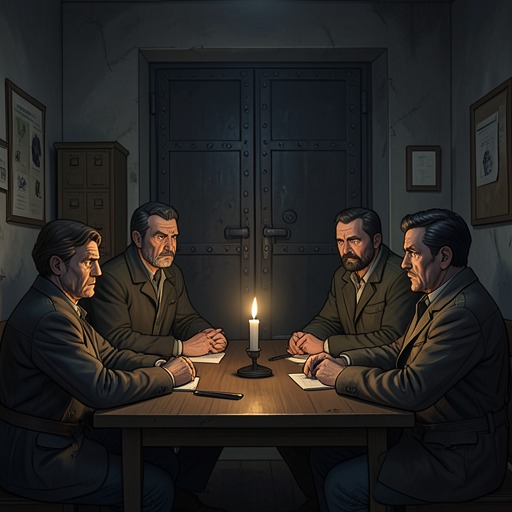
At the second meeting, Limonov warns that denying authorization will force the party to organize in secret. He says he will then be unable to control what happens if young people concerned about their country’s future are pushed toward extremism and terrorism. The minister raises his eyebrows and asks, “You’re telling me that if your party’s not authorized you’re going to start setting off bombs?” Limonov replies, “What I’m telling you is that if you stop us from going the legal route, we’ll take another.”
The exchange turns the question of legal status into a contest over interpretation. The minister recasts Limonov’s warning as a threat to bomb; Limonov frames it as a warning about what exclusion may produce, while stopping short of saying that the party will commit violence. The book does not establish that the party undertakes such violence. What it records is the risk invoked in the meeting: a prohibition intended to exclude extremism might, in Limonov’s argument, deprive a large and politically engaged membership of lawful organization and make its future harder to control.
Enforcement and significance
Not long afterward, an officer summons Limonov to the Lubyanka and says he is responsible for the dossier on him and his party. Pointing to the grenade in the party newspaper Limonka’s logo, he asks, “What’s this grenade supposed to mean?” and whether it is an incitement to murder. Limonov answers that the image depicts a model manufactured in a Russian weapons factory and that he knows of no law against reproducing it. The officer laughs, gives him his cell-phone number, and invites him to report any young party members who seem tempted by terrorism. The scene shows continued official scrutiny of the party’s symbols and members, although the account does not say that the officer’s questions were an enforcement action under the law described above.
The law’s significance in the narrative lies in this uncertainty about who defines extremism and how that definition affects political participation. Limonov’s appeal rests on the party’s membership and its claim to a legal route; the ministry’s refusal removes that route, while the threat of secret organization becomes part of the confrontation itself. The episode does not provide the statute’s text or a judicial ruling on its application. It instead presents the practical stakes through a registration decision, an argument between minister and party leader, and the subsequent attention paid to the party’s emblem and its young adherents.