Ana’s death
MayaAna’s death is disclosed not at the moment her body fails, but later, when José’s words in the Prado make the narrator understand that the woman he has known is also the woman in Goya’s La maja desnuda and La maja vestida. The first collapse at breakfast had ended in recovery; the later revelation turns that apparent reprieve into part of a story about mortality, recognition, and the living presence of the dead in memory and art.
Collapse and temporary recovery
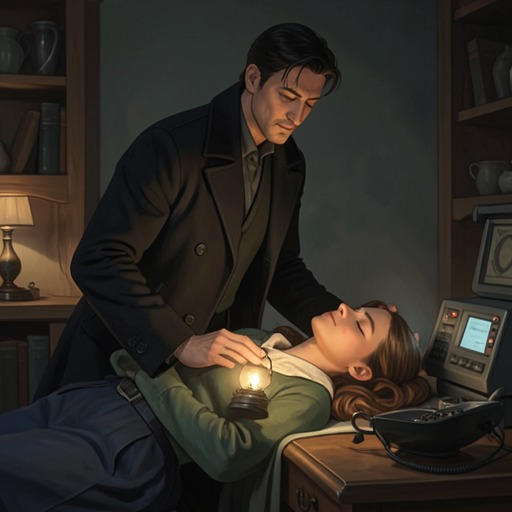
At breakfast on Taveuni, Ana is sitting with José and the narrator when her complexion suddenly drains of color. She puts down her egg cup; her skin turns gray, and she collapses across the table, knocking over a coffee cup. The physical sequence is abrupt and visible, before anyone can explain what is happening. José springs up and calls her name in a cry the narrator compares to Rodolfo calling for Mimì in the final scene of La Bohème.
José lifts Ana from her chair and slaps her twice, calling to her again. After several seconds, color returns to her face and she begins to cry. Leaning against José, she walks unsteadily away through the palm grove toward their cabin. The narrator later hears that a doctor has been to see her and that she seems much better. This apparent recovery is important to the later understanding of her death: the breakfast collapse is not presented as a fatal ending, but as an earlier warning whose meaning becomes clear only after the news in the Prado.
Death announced in the Prado
The announcement comes while the narrator is standing before El jardín de las delicias. José says that it takes billions of years to create a human being and only seconds to die. The narrator understands at once that José is not offering an interpretation of the painting: Ana has died. The compressed contrast between the long labor of life and the instant of death makes the news land as both a personal loss and a statement about the disproportion between becoming and vanishing.
The narrator connects the announcement with the earlier episodes he has witnessed: Ana’s refusal to say where he had seen her before, her reluctance to dance flamenco, her sudden collapse at breakfast, and her recent, heated wish to return to Seville. These details do not explain the cause of death. Instead, they gather around the fact of her absence, altering the significance of what had seemed like separate encounters and unexplained behavior.
Recognition beside Goya’s paintings
José guides the narrator through the museum to the Goya collection. When they reach La maja desnuda and La maja vestida, the narrator nearly faints; José grips his left arm. The recognition is immediate: Ana is the woman he had seen in the paintings, reclining on a chaise-longue in Goya’s studio and now hanging, naked and clothed, on the Prado’s wall. Curious tourists move around the paintings, an ordinary museum scene surrounding an extraordinary disclosure.
The narrator recalls having glimpsed Ana naked at Bouma Waterfall on Taveuni, where he had recognized her face without understanding the resemblance. She was notably slimmer than Goya’s maja, and that difference had kept him from identifying the two figures. When Ana first appeared in a red dress, he had felt both that he knew her and that something did not fit. In front of the paintings, those competing impressions resolve: her altered appearance had concealed a likeness that the narrator’s memory had registered before his conscious understanding could name it.
Grief, memory, and what remains
The book places Ana’s death among other experiences of bereavement without treating the losses as interchangeable. After Sheila’s death, the narrator struggles to sort her clothes for collection by the Salvation Army, comparing the task to removing a swallow’s nest that has been empty for years. He says he is beginning to adjust to widowhood and can look at Sheila’s large color photograph with less of his former shock. Yet he would still take Vera’s Magic Drink without hesitation, even without certainty that he could find someone to share its other half; for Sheila, he reflects, it is too late, after a final year spent receiving little beyond chemotherapy.
The narrator’s memories of Sonia show another form of continuing attachment. In Salamanca, he and Vera speak at length about their dead daughter; Vera tells him small stories about Sonia that he had never heard. Their shared memories allow Sonia to accompany them in a living sense, while the parents themselves grow older and continue to carry the child who died at four and a half. This account of bereavement gives context to the Prado revelation: death ends a life, but it does not erase the relationships, images, and memories through which the dead remain present to those who survive.
Sheila’s presence, too, persists through habits of speech, imagined conversation, and ordinary objects. The narrator says that he still answers aloud when he is upset by what she says in his remembered exchanges with her, and misses asking her to shuffle the cards for her solitaire games. He remembers that he could resent her eccentricities while she lived, including her long afternoons playing solitaire and her occasional cheating to make the game come out; after her death, he misses precisely those traits. These accounts do not offer a supernatural explanation for survival. They show how intimacy continues as memory, repeated language, and the painful revaluation of what once irritated.
Narrative significance
Ana’s death functions as the point at which two kinds of recognition meet. José’s indirect announcement confirms the loss, while the paintings disclose why the narrator has felt that Ana was familiar. The novel delays the full understanding until the narrator stands before the works themselves, so that knowledge arrives through seeing as well as through speech. The scene turns the Prado’s paintings from cultural objects into the site where a living encounter and an apparently impossible identity converge.
The episode also keeps its claims bounded. The narrator concludes that Ana has died and recognizes her in Goya’s two paintings, but the supplied account does not establish how she died or explain the circumstances between her recovery on Taveuni and the news in the museum. That gap preserves the shock of the disclosure. Against the immense time invoked by José’s words, the story sets a singular human life, a face preserved in art, and the memories by which the living continue to recognize the dead.