Taveuni Welcomes the Year 2000
MayaTaveuni Welcomes the Year 2000 is the anticipated passage of the island into the third millennium, an event whose geographical distinction makes it a global spectacle before it occurs. The narrator sees a double consequence in that distinction: Taveuni may be first to greet the new day, but the attention meant to celebrate the milestone risks damaging the ecological and cultural life that makes the island remarkable.
The island and the date line
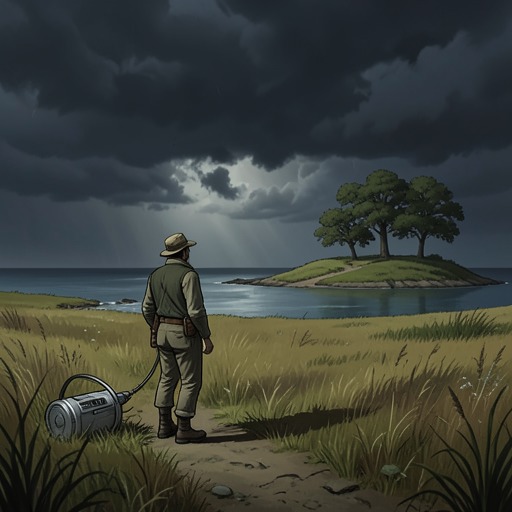
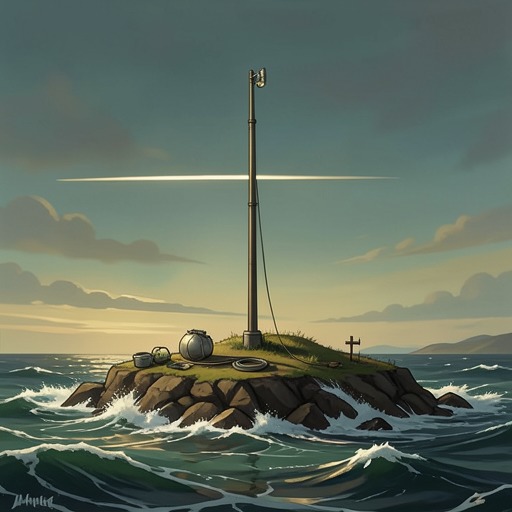
The event rests on Taveuni’s position on the 180th meridian, the line that divides the calendar day. The narrator describes the island as split between yesterday and today—or, from the other direction, today and tomorrow. Its location gives it a claim to be the first inhabited place on Earth to enter the third millennium, and the approaching change of date is presented as a fact that will not go unnoticed.
The date line is more than an abstract cartographic boundary in the narrator’s account. At its monument, a map of Taveuni shows the line running north to south across the island, while the inscription identifies the place as where each new day begins. Standing there with one foot in each day leaves the narrator less moved by the physical gesture than by the thought that the third millennium will begin on that beach in only two years. The smallness of the monument contrasts with the immense calendar significance assigned to it.
The spectacle taking shape
Fiji’s Millennium Committee is already considering ways to celebrate the first moment of the year 2000. The narrator recalls its chairman’s declaration that Fiji, situated directly on the 180th meridian, will celebrate that first moment on Earth. In this context the claim belongs especially to Taveuni. The island’s chronological precedence becomes a resource to be promoted, and the narrator fears that the world will crush the vulnerable place in its effort to mark where and when the future begins.
The competition is not merely symbolic. Television reports and rehearsals are already being discussed, while tickets for the coming celebration have sold out and are expected to rise in price. The narrator anticipates crowds of so-called millennium tourists and adverts inviting people to celebrate the new millennium on three continents. Paying thousands of dollars to experience the change more than once becomes an emblem of a broader appetite to possess the spectacle and avoid the social embarrassment of celebrating it only once, on one continent.
José explains that he and Ana are studying conditions on the island and arranging interviews for a major report to be made later that year. Their programme will form part of a series about humanity’s challenges at the millennium. For them, the approaching event is both a subject of reporting and an unfolding local reality. The narrator, however, sees a tension in the very act of documenting the island: the report intended to bring the place before the world may help undo its separation from that world.
The cost of being first
The narrator imagines satellite dishes springing up on an island that still has almost no television. Reports sent from what he calls the frightened last periphery of a wounded planet will carry the outside world into Taveuni; the island’s paradisal innocence, he fears, will recoil under that exposure. His thought that a dream cannot be reported on without being broken makes the media event an ecological and cultural threat, not simply an inconvenience caused by crowds.
The unease is sharpened by the narrator’s account of Taveuni’s fragile environment. Introduced animals—from shipborne rats and insects to deliberately imported species—have disturbed island ecosystems elsewhere, while further introductions intended to control pests have sometimes created worse problems and damaged native birds and reptiles. Deforestation and the imprudent exploitation of plantations have also eroded soil and destroyed traditional habitats. Taveuni retains more than a hundred bird species, including the orange-breasted pigeon; the fact that the Indian mongoose was never brought to the island is identified as decisive to that richness. Its comparatively intact natural life is therefore not an inexhaustible backdrop for a global celebration.
The contrast extends to the island’s economy and everyday culture. The narrator describes a place with limited electricity, no television, and no modern hotel complexes, where oral storytelling still takes on a central role after nightfall. Yet tourism is growing, and the narrator’s wider account of Pacific islands links commercial development and introduced species to ecological loss. The millennium’s promise of attention consequently sits beside a longer history in which the outside world has treated island places and their natural resources as available for exploitation.
Colonial geography and environmental responsibility
The narrator connects the date line’s remoteness to colonial history. In his view, it was convenient in colonial times to place the boundary far from centers of civilization, on a distant Pacific island rather than in London or Paris. Now that same imposed geography makes a small island carry the weight of a planetary celebration. The apparent honor of being first thus has a history of unequal placement: the world’s attention arrives at a place that did not choose to become the symbolic threshold between millennia.
That history forms part of the book’s broader ecological indictment. European arrival in Fiji brought the removal of valuable sandalwood, imported plantation labor, and epidemics; across the Pacific, successive introductions of animals have often compounded ecological damage rather than repaired it. The narrator contrasts these consequences with the local people of Bouma, who rejected a lucrative offer to sell forest land for logging and chose instead to develop a protected national park, maintaining trails and visitor facilities themselves. The example makes conservation and tourism a complicated alternative to extraction, not proof that increasing visitor numbers are harmless.
Taveuni’s entry into 2000 is therefore charged with a reversal: the island is celebrated as the world’s first foothold in the new millennium precisely when global exposure threatens the relative isolation that has helped preserve its distinctive life. The calendar makes the boundary visible, but the narrator’s concern is what crosses it—cameras, tourists, commercial demands, and the possibility that a place valued as paradise will be altered by the very spectacle that proclaims its importance.