Sonia’s Death
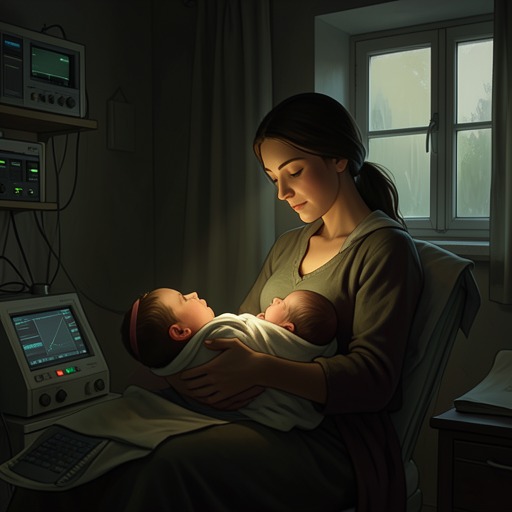
MayaSonia’s death at four and a half transforms Frank and Vera’s family life into a shared grief they cannot initially bear together. The accident itself is recounted as an ordinary sequence of actions with an irreversible outcome; its aftermath becomes a taboo, a source of guilt and mutual injury, and eventually a painful history the parents can revisit without mistaking remembrance for reconciliation or forgetting.
Loss and Its Immediate Aftermath
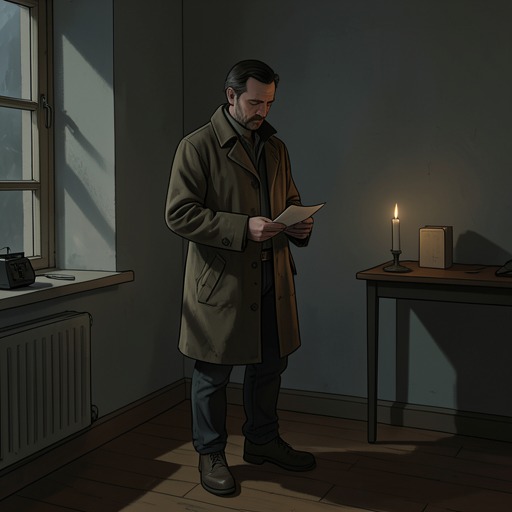
Frank first tells the narrator very little. After finishing a glass of beer, he says that he and Vera lost Sonia when she was four and a half, and that living together had become impossible afterward: there was too much pain under one roof. He falls silent and looks toward the palm grove. The conversation does not return to the subject despite the narrator’s discreet attempts, marking the loss at this point by the limits of what Frank can say.
The death also shapes Frank’s later reflections on meaning. Thinking back to his conversations with José, he recognizes that his repeated questions about why he and Vera had to lose Sonia have no answer of the kind a rational examination could supply. He says that people tend to ask for meaning where there is none. The question persists not because the narrative reveals a reason for the death, but because the parents’ grief presses them to seek one.
The Accident and the Burden of Guilt
Years later, during Frank and Vera’s walk in Salamanca, Frank reconstructs the event they had long referred to only as what happened. Vera had gone to collect Sonia from nursery and secured her in the car. After starting the engine, she remembered that Sonia’s shoes were still in the entrance lockers. She switched off the engine and removed the key but forgot to apply the handbrake; the car was in neutral. When she went back for the shoes, the car began to move. Vera had to watch it go and understand that she could do nothing. Frank refers to what happened at the bend three hundred metres farther on, and to what happened three days later, without supplying further detail about those moments.
The routine quality of the mistake makes the account more terrible to Frank, not less. Vera’s repeated explanation that she had forgotten the handbrake becomes part of the memory’s fixed wording, while the shoes remain the small, concrete object around which the fatal chain of events turned. Vera had consumed three or four glasses of champagne at a departmental end-of-year celebration; she would have registered 0.52 when she got into the car. The police did not charge her, saying she had already received enough punishment. Frank’s account makes clear that the judgment of the police was more humane than the treatment Vera received from people close to her.
Silence, Reproach, and Separation
After the accident, Vera had to make statements to the police two or three times. The account then became taboo between the couple, reduced to evasive phrases such as what happened. In Salamanca, both fear that describing the terrible scenes will reopen not only the wound of Sonia’s loss but also the wounds they inflicted on one another. The silence is therefore not an absence of memory: it is a way of avoiding a story that has become inseparable from blame.
Frank admits that, in desperation, he insulted and shouted at Vera, once telling her to go to hell before breaking down in tears. He apologized for the destructiveness of his grief, but continued to ask her the same questions the police had asked: why she had left Sonia in the car, failed to use the handbrake or put the car in gear, and gone back for the shoes. He says he repeatedly poured salt into Vera’s open wound, and did so deliberately. Though he had forgiven her long before, Vera eventually left because she could not endure living with his pain while carrying her own. Frank describes their separation as a way of dividing the pain after there had been too much of it in their home.
Memory as a Continuing Bond
The Salamanca walk alters the way the parents can speak about Sonia. They had gone to see the old university city, but spend much of the afternoon talking about their daughter amid buildings and traces of centuries past. Vera tells Frank small stories about Sonia that he had never heard. The stories hurt him because he regrets not having shared every minute of the child’s short life, yet they also give him a chance to know her better. He notices Vera wiping away tears and recognizes her not only as the woman from whom he had become estranged, but as Sonia’s mother; he remains the girl’s father.
Frank’s image of their daughter’s living presence is explicitly a matter of memory, not a denial that she has died. He says that only he and Vera can create a living space for their daughter’s memories and give those memories an ongoing sphere of influence. The child remains four and a half in her parents’ recollections even as they grow older. Their conversation lets Sonia accompany them to Salamanca in this remembered sense, making shared remembrance a form of connection that survives the loss.
Reconciliation and the Meaning of Loss
Frank and Vera eventually reconcile. Frank insists that Vera did not leave because he had failed to forgive her; she fled the pain he could not stop expressing, while carrying the same grief herself. During their later conversation, he considers asking whether they might begin again by taking a different path, rather than returning to the painful one that led to their separation. The possibility is framed not as undoing Sonia’s death but as changing what that death means within the parents’ shared history.
The event’s significance lies in the distinction between explanation and meaning. The accident is presented as a terrible mischance, not as a consequence that can be morally balanced or rationally justified. What can change is how Frank and Vera live with its aftermath: recrimination gives way, eventually, to forgiveness, conversation, and the recognition that their daughter remains part of the life they share through memory. The loss separates them, but it also becomes the ground on which they can find a new way to understand one another.