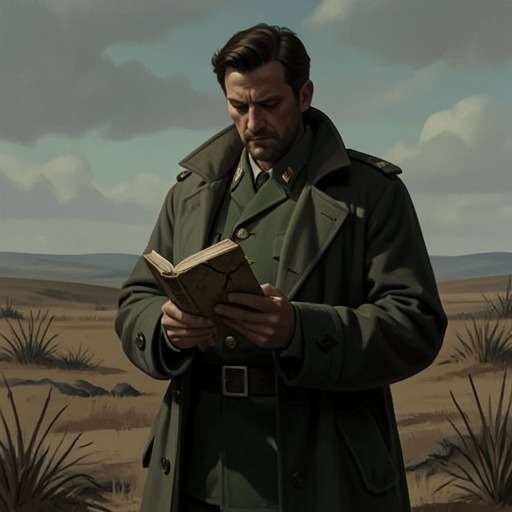
The Raina Csurik Murder and Silvy Vale Trial
MemoryThe Raina Csurik Murder and Silvy Vale Trial was a murder case in which Miles Vorkosigan, newly graduated from the Imperial Service Academy, investigated and judged the killing of an infant in Silvy Vale. Its meaning extends beyond the court proceedings: Raina became the enduring measure by which Miles tested the purpose of his service, while the community’s later memorial to her took the form of a school built by her sister, Harra Csurik.
Case and Assignment
When Miles was about the age of Harra’s younger brother, his father, the Count, assigned him as his Voice in a case before the Count’s Court. Miles was sent to Silvy Vale to investigate and judge a murder. He describes the killing as an infanticide committed in the old traditional manner: Raina Csurik, a four-day-old girl, had been killed because she was born with what Miles calls a cat’s mouth, a physical difference that marked her for rejection.
The case was more complicated than Miles had expected. He says that he eventually identified the right suspect, but that recognition did not make the matter simple. The evidence does not specify the full course of his investigation, the court’s precise findings, or any sentence imposed. It does establish that the case came before Silvy Vale publicly, and that the person responsible was Raina’s mother. Years later, Harra tells Miles that her mother killed her daughter and was judged for it in front of the community. The judgment therefore joined a private family loss to a public reckoning, without making the loss itself reversible.
Miles’s Measure of Service
Miles’s account of the case surfaces years afterward, while he is travelling with Martin Kosti toward Silvy Vale. Asked what there is to do there, Miles explains that he had once been sent to investigate a murder. He says he wants to talk to Raina, who would have been nearly ten if she had lived. The remark registers the continuing presence of a child he never knew as a living person, rather than a claim that he can literally speak with the dead.
Raina occupies a special place among the dead Miles has known. In his reflection, he sets aside the pomp of Imperial office, competition for promotion, military regulations, and the dark corners of service life. When the work ceased to feel like a game and lives and souls were at stake, Raina remained the symbol that made his service intelligible. He worries that, amid the disorder of his own life, he has lost touch with what she represented.
That worry is bound to Miles’s divided identity as Miles Vorkosigan and Admiral Naismith. He wonders whether he became so absorbed in playing Naismith and winning that he forgot what the game was for. The contrast is not simply between two names: Naismith stands for the extraordinary role Miles created and inhabited, while Raina recalls the human purpose that the role was meant to serve. Miles’s thought that Raina was a prisoner Naismith would never rescue makes the limit plain. This was not a rescue that could be accomplished by daring, strategy, or force; the child was already dead, and remembrance could not undo the crime.
The Grave and the School
On his later visit, Miles arrives intending to conduct a memorial burning at Raina’s grave. He has brought a tripod, brazier, and aromatic wood in the lightflyer. The plan meets a physical obstacle: the reservoir has flooded the old site, and he assumes he would need a boat to reach it. He asks whether the community moved the graveyard.
Harra explains that, before the flooding, some families chose to move graves to a new place on the ridge overlooking the old site. Raina’s grave was not among them. Because the ground beside the creek was damp and her coffin had been only a makeshift crate, the family could not find her remains to move. Harra accepts that Raina has returned to the soil and says she does not mind; to her, that outcome feels right. The record does not turn the missing grave into a recovered relic. Its absence is part of the memorial’s meaning.
Harra instead identifies the school as Raina’s best memorial. Each day she teaches there, she says, is like making an offering, but one that makes rather than destroys. The contrast gives remembrance a practical form: Raina cannot be restored, but the loss is carried forward in work that serves living children. Miles had come prepared for a ritual of burning; Harra offers him a continuing act of creation.
Judgment, Shame, and Continuance
Later, Harra reminds Miles that her mother killed her daughter and was judged before all Silvy Vale. She invokes her own knowledge of public shame and waste, connecting the case not only to Raina’s death but also to the lasting exposure and pain borne by the family. Her account does not erase the wrong or pretend that remembrance makes it easier. It places Miles’s grief beside the experience of those who continued to live with the event in the community where it happened.
Harra’s counsel to Miles is to go on: there is no trick that makes continuance easy. In the context of Raina’s murder, the advice does not promise repair or a satisfying resolution. It names what remains possible after judgment, after the grave has disappeared, and after the dead cannot be rescued. The event endures in Miles’s self-questioning and in Harra’s school, linking an early test of his authority as the Count’s Voice to a later understanding that service is answerable to real lives, not merely to the successful playing of a role.