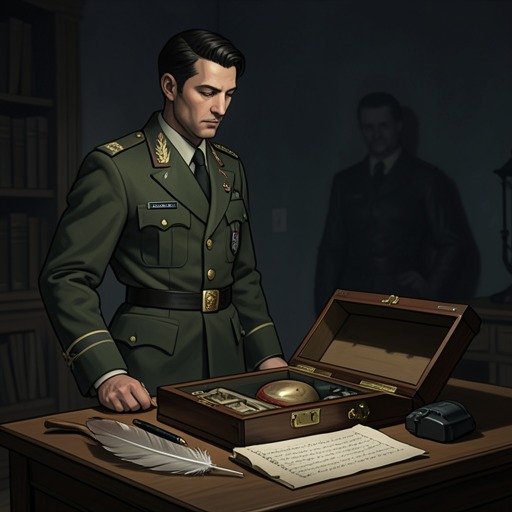
Miles Vorkosigan’s appointment as the eighth Imperial Auditor
MemoryMiles Vorkosigan’s appointment as the eighth Imperial Auditor transforms an urgent demand to investigate Simon Illyan’s breakdown into a permanent place among the Imperium’s most senior officials. The change is more than a promotion: Miles moves from seeking authority to examine one case to accepting an office whose work is defined by problems that routine institutions cannot resolve. His appointment follows his exposure of General Haroche, and brings together military expertise, personal loyalty, and the formal authority of the crown.
From access to authority
Miles’s route to the Auditors begins with his insistence on seeing Illyan. After Haroche blocks him from visiting, Miles argues that his claim is not merely that of Illyan’s former subordinate: he is also his father’s son, with a Vor obligation that, as Miles puts it, passes around ImpSec’s hierarchy. His concern is sharpened by his own experience of losing access to himself during cryo-amnesia. He recognizes how isolating such a collapse can be and argues that even if Haroche’s conduct arises from nerves and inexperience rather than deliberate sabotage, it still requires correction.
Miles soon asks for more than permission to visit. He wants oversight and access to every item of raw evidence, medical and otherwise, and concludes that informal support from Gregor will not suffice. Gregor appoints him acting Imperial Auditor, assigning him to evaluate Illyan’s breakdown. The temporary mandate carries broad authority but also boundaries: Miles’s actions must remain at least dimly connected to the assigned event, he cannot order executions, and any arrests should rest on evidence sufficient for prosecution. Gregor also expects traditional decorum and due care. The appointment thus gives Miles independence without making his powers unlimited.
The choice of Miles rests partly on the perspective he brings. Gregor describes an Auditor as an independent observer who can go where the Emperor cannot and report from an angle not controlled by ordinary chains of command. Miles’s experience inside ImpSec, along with his personal knowledge of Illyan’s condition, makes him suited to test the institution’s account rather than simply repeat it. His authority is therefore both personal and official: Gregor trusts his judgment, but gives that judgment force through a defined imperial office.
The investigation and its stakes
The inquiry places Miles between institutional loyalties that do not always align. He recognizes the tensions between military claims to merit and the hereditary Vor order, but maintains that both he and Haroche are sworn to uphold the existing system. He also portrays Illyan not as a merely obedient servant but as someone who had come to feel invested in the Imperium he helped maintain. That view informs the stakes of the investigation: a failure inside ImpSec threatens not only an individual but the reliability of an institution charged with protecting the state.
As the inquiry develops, Miles directs ImpSec work toward the source of the biological agent and the route by which it reached Barrayar. Haroche proposes alerting Galactic Affairs to investigate possible sources beyond Jackson’s Whole, including Escobar, and suggests reviewing Illyan’s movements during a period of roughly sixteen to five weeks before the relevant events. Miles approves the legwork, recognizing that ImpSec can conduct such searches more efficiently than he can alone, while retaining responsibility for checking the reports. The division illustrates the practical demands of the office: an Auditor may direct a broad investigation, but still depends on specialized staff and must scrutinize the information they return.
The provisional office also tests Miles’s independence from Haroche. Haroche obtains Miles’s neurological reports and raises the possibility of a controlled-seizure device, showing that the investigation has reached into the Auditor’s private medical circumstances. Later, Haroche offers him a return to the Dendarii Free Mercenary Fleet on terms comparable to his former service under Illyan, with a captaincy added. Miles discloses the offer rather than allowing it to shape his decisions in secret. The contrast matters: an official appointment gives him power, but does not remove the personal and professional inducements that could compromise its use.
Returning the chain and seal
After Haroche’s arrest on the capital charge of treason, Miles prepares to return his acting Auditor’s chain and seal to Gregor along with his report. He makes the return ceremonial rather than treating the insignia as objects to be handed over casually. Wearing his brown-and-silver House uniform, he considers attaching his military decorations, perhaps for the last time. He intends to ask Gregor for a personal favor and hopes the decorations will speak to his service without requiring him to plead for himself.
Gregor reads the report in person. He scans it quickly, returns to selected passages for closer examination, and handles the gold chain bearing the Vorbarra arms before telling Miles that appointing him had been a fortunate decision. Miles attributes his usefulness to chance and the expertise he happened to possess; Gregor counters that the appointment had been intentional. Their exchange makes clear that the report has not simply closed a case: it has given Gregor and the senior Auditors grounds to consider Miles for a lasting role.
The permanent eighth seat
The distinction between acting and permanent service is explicit. The position of ninth Auditor is traditionally left open for acting Auditors with specialized expertise, who are called upon when the Imperium needs them and released when their assignment is complete. Miles has just occupied that temporary place. Gregor now offers him the eighth Auditor’s seat, a permanent post, while noting that Auditors may resign, be dismissed or impeached, or leave office through death. The offer is therefore a commitment, not a continuation of the temporary assignment under another name.
The other Auditors’ judgment helps make the decision institutional rather than merely personal. Four are present as a quorum of sorts, with Vorlaisner absent but kept informed. Lord Vorhovis speaks for the group’s approval. He notes that Miles would be the youngest Imperial Auditor in post-Time of Isolation history, but also points to his ten years of distinctive ImpSec training and unusually wide experience beyond Barrayar. General Vorparadijs may object, as he objected when Vorhovis himself was appointed at fifty-eight, but Vorhovis treats that disapproval as no reason to withhold the office.
Gregor is candid about what membership will entail. As the most junior Auditor, Miles will probably receive the worst assignments; the work may be unrelated from one task to the next, unpredictable, and a matter of sinking or swimming. Auditors are sent in when routine solutions have failed or when rules have not been devised, and their investigations may concern disturbing or bizarre matters. The case against Haroche has also shown that such work can involve crises critical to the Imperium’s future. The permanent appointment accordingly promises neither regularity nor safety, but a continuing responsibility to confront what ordinary procedures cannot settle.
Before accepting, Miles asks for something he had intended to request as his personal favor: retroactive retirement from the Imperial Service as a captain rather than a lieutenant. He does not seek the additional half-pay; he wants the title, which he believes should reflect earned service rather than a favor begged after the fact. Gregor grants the captaincy and has the records updated. Only then does Miles accept the eighth Auditor’s office. The order of these decisions preserves a distinction important to him: he accepts the new role, but also claims recognition for the military career he has already completed.
Significance
Miles’s appointment joins personal trust to formal imperial power. Gregor values his independent judgment, while the collective approval of the Auditors establishes that he is being admitted to an office rather than merely retained as the Emperor’s favored investigator. The role’s limits and traditions matter as much as its reach: Miles is authorized to pursue a crisis, expected to exercise restraint, and required to work from evidence rather than personal certainty.
The ending also recasts the case against Haroche as the beginning of a new career. Miles returns the temporary chain and seal with his report, but Gregor offers a place that does not expire with the investigation. The captaincy settles an old question about how Miles’s service will be remembered; the Auditor’s appointment opens a different, less predictable future. His authority now comes not only from his history with ImpSec or his relationship with Gregor, but from an office designed to act when existing rules and routines prove inadequate.