Midgard
Mickey7Midgard is the third-generation colony world that Mickey Barnes leaves aboard the Drakkar, a comparatively comfortable and orderly home whose prosperity cannot give him a place in its society. Its mild conditions and automated economy set it apart from the hazardous frontier destinations in the novel, but that apparent security is not the same as belonging: Mickey sees little future for someone without a specialized skill, and Nasha’s family history reveals how readily Midgard’s inhabitants mark newcomers as outsiders. The planet is both a refuge from harsher worlds and the source of the discontent that sends its characters away.
Setting and physical character
Midgard occupies the center of the habitable zone around a red giant that has already consumed its inner system. Its first colonists had to terraform it, but by the time of the Drakkar’s departure, the planet is described as a pleasant place to live. Almost no axial tilt means little seasonal change; the equator is warm and the poles cold. Its surface includes a couple of broad, shallow, low-salinity oceans, divided by a single continent that girdles the planet. The beaches are attractive, the cities clean, and crowding is not a pressing concern: the whole population is smaller than that of a single megacity on Old Earth before the Great Diaspora.
Compared with Niflheim, Midgard also seems unusually forgiving. It has been habitable long enough for a settled human society, but not long enough to have developed sophisticated indigenous life that the colonists must confront. Mickey contrasts its relative ease with the prospect of dealing with local organisms on Niflheim, where even growing crops inside the dome proves difficult. The contrast matters to the expedition’s expectations: Midgard is not merely the place the crew leaves behind, but the comfortable standard against which the new world’s dangers are measured.
Prosperity and social limits
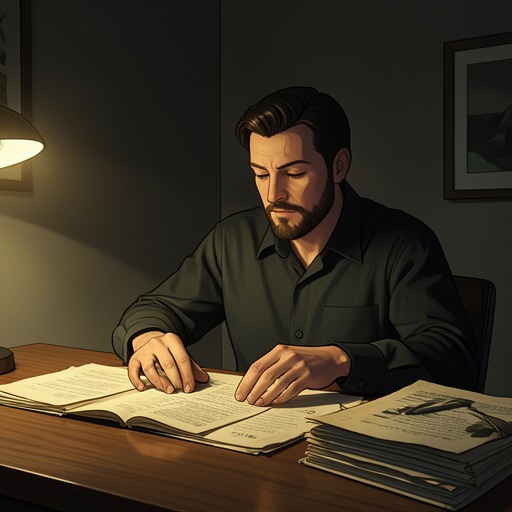
Midgard’s prosperity rests on a highly automated industrial and agricultural base. As on nearly every world in the Union, the government distributes the returns from automated production to citizens, making serious money problems uncommon. Its elected government mostly concerns itself with managing the economy. To Mickey, the planet can appear close to a paradise by the usual measures, yet those arrangements do not solve the question of what an individual is for. Knowledge is readily available through an ocular or tablet, and Mickey imagines that in an earlier age he might have become a low-level academic; on Midgard, he sees no equivalent niche for himself.
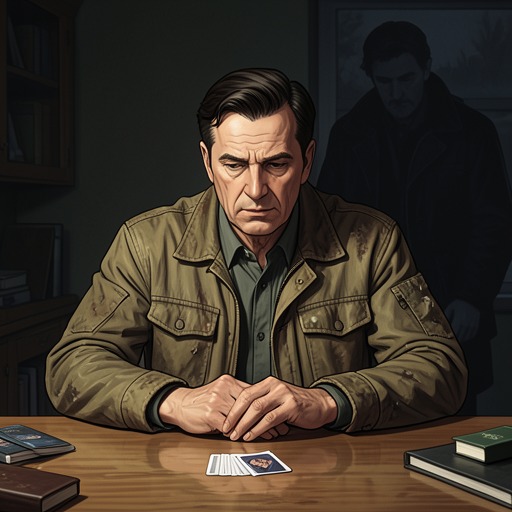
That mismatch helps explain why he signs up as an Expendable on the Drakkar. Mickey has no practical expertise that would secure him passage as a pilot, medic, scientist, or other specialist, and the colony ship is the first one chartered since Midgard’s own landfall roughly two centuries earlier. He needs to leave quickly, and the Expendable contract is the only route he can see. The work is presented as a form of immortality, but its practical meaning is repeated exposure to lethal tasks, from external repairs in transit to dangerous experiments and contact with unfamiliar environments. Midgard’s automated abundance thus has a sharp underside for Mickey: it offers security in general while leaving him with no useful position in particular.
Refugees and belonging
Midgard’s image of tolerance is complicated by the arrival of refugees from New Hope. Nasha’s parents reached the planet about thirty years before the Drakkar’s departure aboard the Lost Hope, after New Hope’s inhabitants had turned on one another. Although Midgard had the room and resources to receive a few hundred people, the newcomers’ accents and darker skin made them conspicuous. Anonymous feed articles cast them as potential carriers of the violence that had devastated their former home, and finding meaningful work proved difficult despite government stipends and housing.
Two years after the refugees arrived, a sit-in grew into a protest and then a minor riot. Afterward, even their children had trouble entering the general schools. Nasha was born around this period, and her later determination to join the expedition is bound up with her sense that Midgard was never truly her home. She could not enter the academic route to a doctorate in exobiology or obtain connections to Security or Command, so she learned to pilot a combat skimmer instead. Her path shows that Midgard’s resources and formal opportunities do not erase the social barriers that determine who can claim them.
Departures, memory, and expectation
The Drakkar’s mission begins with limited knowledge. From Midgard, observers knew that the destination star was a G-type main-sequence star, that it had at least three small rocky planets, and that the target lay near the outer edge of its habitable zone. Water vapor and some free oxygen in the atmosphere suggested that the planet supported life, but the crew could not know what kind. The physics and cost of antimatter propulsion made advance scouting by multiple probes impractical, so the expedition had to depart with an incomplete picture.
That uncertainty becomes especially consequential when Mickey discovers that Midgard’s planners had observed periodic changes in Niflheim’s stellar output for nearly thirty years. They did not attribute the pattern to the star, lacking a workable theory for such variation, and instead blamed dust clouds in interstellar space. The colony therefore expected conditions that the changing star did not guarantee. Midgard’s advanced observation did not prevent a consequential error; the information existed, but its interpretation produced false confidence.
Midgard also remains a point of personal and relational reference after departure. Mickey recalls Berto Gomez in Kiruna, where the two sat in a café while Berto considered returning to competitive play before joining the Drakkar’s crew. Mickey’s memories of the planet reach back further still: after one incarnation dies during a hull breach in transit, the next wakes with memories of having been born on Midgard. Mickey cannot resolve whether that continuity makes the new incarnation the same person, and wonders whether the first Mickey Barnes might have been the original. Midgard anchors those memories without settling the question of who, exactly, carries them.
Narrative significance
As a setting, Midgard is a contrast rather than a simple ideal. Its relative comfort makes the dangers of frontier settlement legible, while its automated economy and exclusion of newcomers expose different kinds of vulnerability: Mickey is economically unnecessary, and Nasha’s family is socially suspect. The planet’s apparent stability also supplies the assumptions behind the expedition’s plans, including the mistaken reading of Niflheim’s changing star. Midgard can send people outward with resources, technical knowledge, and confidence, but neither prosperity nor observation ensures that they understand the worlds they are entering—or that everyone has a reason to feel at home in the world they leave.