New Hope Civil War
Mickey7New Hope Civil War was a short, brutal conflict between the colony’s original settlers and its first New Hope-born generation. Its immediate dispute was whether a native corvid-like bird was a sentient being entitled to protection or an edible animal. The war destroyed much of the infrastructure New Hope still needed to survive, and the refugees who escaped carried the consequences of its collapse with them. For Mickey Barnes, learning what the fighting was actually about unsettles the familiar shorthand of a colony that simply tore itself apart: the question at the center of the conflict was also a question about how settlers regard life already present on the world they have occupied.
Background and cause
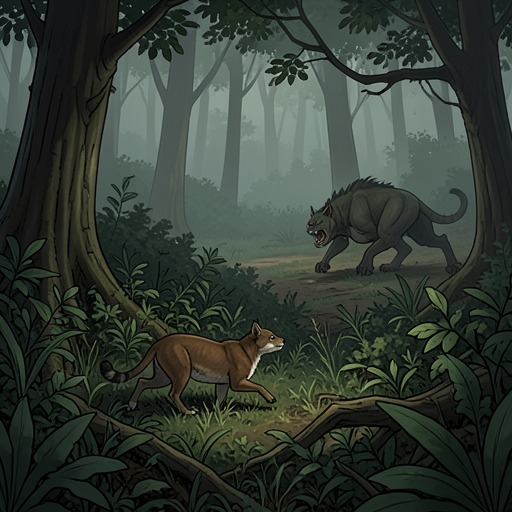
New Hope had been established as a beachhead colony, and it failed about twenty-five years after its founding. The surviving original colonists and the first generation born there became opposing sides in a civil war. The account Mickey reads characterizes the fighting as brief and brutal, but identifies no particular battles, leaders, or sequence of military actions. Its emphasis instead falls on the issue that the combatants treated as a casus belli: whether the native corvid-like species counted as sentient, and therefore merited protection and respect, or could be regarded as food.
That disagreement makes the war’s stakes larger than a conventional contest over resources or political control. The colonists were deciding how to classify another species whose world they had come to settle. In the competing terms recorded in the article, recognition of sentience implied an obligation; denying it made the birds available for consumption. The colony’s conflict thus turns on the boundary its human inhabitants drew between beings to be respected and beings to be used. The evidence gives the dispute’s terms, but does not establish which side ultimately prevailed in that argument or what happened to the birds during the war.
Destruction and escape
The fighting wrecked most of the infrastructure New Hope still depended on to remain viable on a semi-hostile planet. The account presents that destruction as the direct material catastrophe of the war: whatever the political dispute meant to those involved, the damage left the colony’s survivors facing the loss of systems they needed in order to live there. New Hope did not simply lose a political argument; its ability to sustain a settlement was gravely compromised.
A group of refugees from the younger cohort escaped by reaching the original colony ship, which remained mostly in orbit around the planet. To make the journey, they stripped it down to what was needed for a five-year hop to Midgard. They removed the embryos, terraforming equipment, and Agriculture Section, retaining life support, a cycler, and a bare minimum of feedstock. They also cut away most of the remaining living space. Once prepared, the ship weighed less than ten percent of the Drakkar’s mass when the Drakkar boosted out. Its remaining fuel, supplemented by antimatter salvaged from New Hope’s wrecked power plant, gave the refugees just enough power to limp across the gap.
Aftermath on Midgard
The escape brought a group of younger New Hope refugees to Midgard, where they arrived on the Lost Hope about thirty years before Mickey’s conversation with Nasha. The physical conditions of their flight show how little of the failed colony they could carry: no embryos, no agricultural equipment, and very limited living space, but the basic systems and supplies required to keep the survivors alive in transit. Their arrival was not a continuation of New Hope’s settlement so much as a precarious attempt to begin again elsewhere.
On Midgard, Nasha’s parents were among the immigrants from New Hope. Their refugee status did not spare them from suspicion or exclusion: anonymous feeds portrayed them as carriers of the disorder that had engulfed their former world, and they struggled to find work. Government stipends and housing provided basic support, but the refugees’ children later faced difficulty gaining admission to general schools. These consequences belong to the refugees’ experience after the war, rather than to the fighting itself; they show how the stigma attached to New Hope’s collapse followed survivors into the society that received them.
Historical meaning in Mickey’s account
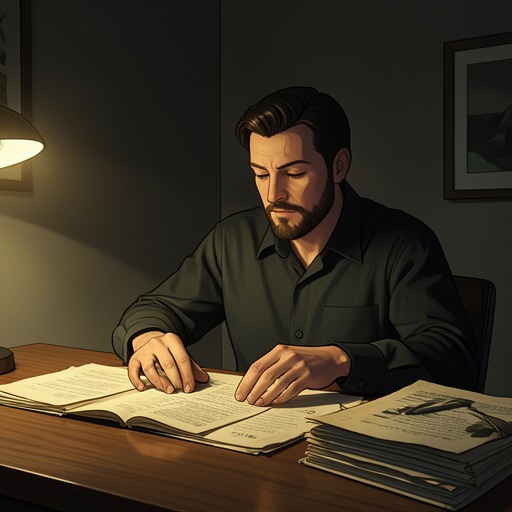
Mickey initially recognizes the broad outline of New Hope’s failure, having heard about the war in school, but expects its causes to resemble familiar civil-war disputes over race, religion, resources, or political philosophy. Reading the archived account changes that understanding: the stated cause was the status of a native species and whether it should be respected or eaten. He also recognizes why this explanation might receive little emphasis in a simplified account of the colony’s history. If a settlement could come apart over such a dispute, then the security of any beachhead could seem less assured than its institutions suggest.
The episode links the politics of survival to the values used to define survival’s limits. New Hope’s infrastructure was essential to human life on a semi-hostile world, yet preserving that infrastructure did not resolve whether the colonists owed recognition to the life already there. The refugees’ stripped-down passage to Midgard makes the material cost of the collapse visible, while the contested birds reveal a moral question that the practical story of evacuation cannot settle. For Mickey, the record offers no simple lesson beyond the difficulty of reversing a crisis once it begins to spiral.