Asher’s World expedition failure
Mickey7The Asher’s World expedition failure is a remembered account of how uncertainty at the far edge of human settlement can turn an apparent destination into a death sentence. Its target world seemed promising from afar, but the evidence that had guided the expedition proved dangerously incomplete; by the time the colonists understood the mismatch, their damaged ship had left them almost no time to respond.
Mission and Constraints
Launched from Asher’s World more than a century before the events on Niflheim, the expedition faced an unusually long journey: its target lay more than twenty light-years away, near the outer limit of what a colony ship could manage. The adult colonists arrived old, exhausted, and hungry, aboard a ship that was practically falling apart. Their circumstances made the expedition’s failure more than a question of whether the planet could eventually support life: the crew had to judge whether it could become habitable before their remaining time and resources ran out.
The account also places the expedition within a broader problem of interstellar colonization. Antimatter drives were costly and difficult to produce, so prospective colonies could not simply send probes ahead to inspect likely worlds. They had to make do with observations from their home system. A distant target could therefore be selected on limited evidence, with decisive conditions left unknown until the colonists arrived.
The Planetary Miscalculation
The target was not in the orbit the expedition had expected. It was slightly too close to its star, and its surface temperature was too high for liquid water. Oxygen absorption spectra had led the colonists to infer that the planet might be habitable, but the atmosphere’s oxygen did not mean that the surface could sustain them.
The colonists’ best explanation was that the planet might once have been habitable, perhaps even inhabited by life capable of splitting carbon from carbon dioxide and releasing oxygen. A runaway greenhouse effect may then have sterilized it relatively recently. If so, the oxygen signal was a remnant: there had not yet been enough time for that oxygen to bind out of the atmosphere. What looked like evidence of a living world was instead a clue to a catastrophe that had already made the surface uninhabitable.
The Decision to Die
A century of terraforming might have made the planet viable, but the expedition did not have a century. Given the state of their ship, the colonists probably did not have ten years. The distinction between a theoretically recoverable world and a usable refuge was therefore decisive: conditions that might have been overcome by a better-supplied mission offered no practical way forward to this crew.
The colonists transmitted their findings home, placed the ship in a stable orbit, and gave drugs to those who wanted them. They then opened the air locks. The account presents the choice as a deliberate response to an impossible timetable: rather than remain aboard a failing ship with no realistic prospect of reaching a viable settlement, they made the end rapid. The report survived; the expedition did not establish a colony.
Narrative Significance
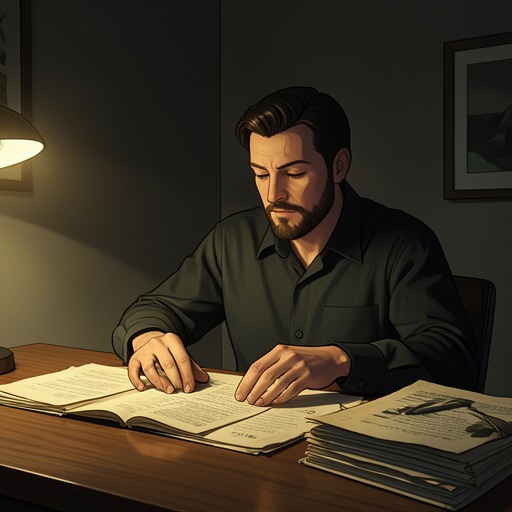
Mickey Barnes encounters the expedition’s account while researching failed colonies, a history largely absent from the success-oriented version of human expansion taught in school. The episode gives concrete form to the risks behind that history: sparse advance knowledge, a destination that cannot be exchanged for another, and a ship too damaged to buy its passengers time. Its failure is not attributed to a single act of incompetence, but to the convergence of uncertain observations and conditions that became clear only after arrival.
The reading also turns Mickey’s attention toward Two and draws him into a spiral that lasts much of a month; Nasha is what pulls him back out. The expedition’s ending thus matters both as a record of colonial failure and as a prompt in Mickey’s own reflections on death and the lives of expendable copies.