Ching Shih expedition failure
Mickey7The Ching Shih expedition failure was humanity’s first attempt to carry a settlement beyond the heliopause, and its slow collapse exposed how much survival in interstellar space depended on the fragile systems that fed and sustained a crew. The ship was almost twelve years into a planned twenty-one-year voyage to Eden when its crops began to fail. With its agricultural system deteriorating and no adequate way to replace what it could no longer produce, the mission eventually ended with the last twelve crew members stepping out of the main air lock without suits, still four years from their destination.
Origins and Mission Plan
Eden became the first colony successfully established by Old Earth, but the expedition that planted its beachhead was not the first attempt. The Ching Shih had set out almost forty years before the story’s present, around twenty years after the Bubble War. Its mission was an early, desperate effort to send people beyond the heliopause; the later mission to Eden followed after that first effort failed.
The Ching Shih’s crew expected a journey of twenty-one years. They planned to sustain themselves throughout it with shipboard agriculture, but the ship had no Biological recycler, and its engines were much less efficient than those on later colony ships. The distance from Earth to Eden was already formidable even by the standards of the later era. The plan therefore depended not just on the crops producing food, but on a biological system continuing to function through a long passage across interstellar space.
Crops Fail in Transit
The crops began failing when the ship was almost twelve years out. The transmissions preserved no clear account of what had gone wrong: as far as anyone could tell, the crew never fully understood the cause. The best explanation available afterward was cumulative radiation damage. Mutations may have accumulated over successive generations of plants until the crops could no longer remain viable.
The ship’s layout compounded the risk. Its field generators were less efficient than those on later ships, while the Agriculture Section was placed in the front third of the vessel. That arrangement appears to have reflected the belief that shielding was chiefly needed for the human occupants. The plants, however, were left taking the brunt of the radiation. Their failure was not a single sudden catastrophe but a progressive breakdown in the living system on which the voyage relied.
Rationing and the Cost of Delay
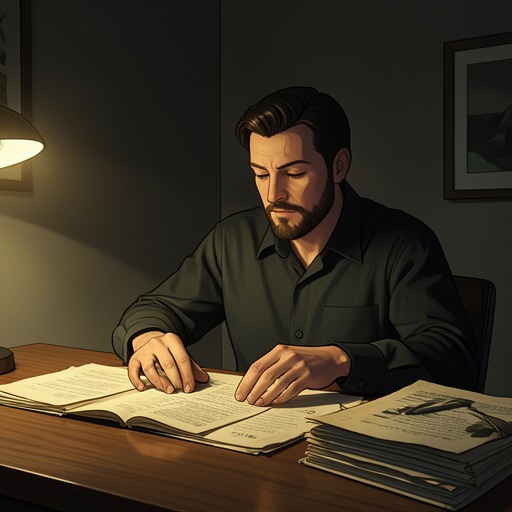
The crew documented the deterioration even after the mission’s prospects had become hopeless, intending their record to help prevent the next expedition from repeating the same mistakes. They first tried to buy time by cutting rations, a strategy that lasted through most of another year. When reduced consumption could no longer make the supplies last, the mission commander issued a standing request for volunteers to be converted from consumers of calories into sources of them. Despite the suffering starvation entailed, a surprising number volunteered.
The sacrifices did not restore the ship’s ability to sustain its crew. The Ching Shih’s agricultural output eventually dwindled to almost nothing. Because the mission plan relied on crops not only for food but also for a substantial part of carbon cycling, the agricultural failure destabilized more than the menu: essential functions of the ship’s life-support system were failing together. The crew had to confront a worsening crisis even as their destination remained years away.
The Last Twelve
Three more years passed before the commander finally accepted that the remaining crew could not reach Eden. Even reducing their number to the minimum needed to operate the ship—and perhaps preserve the possibility of unpacking stored embryos at journey’s end—would not make the supplies last. The ship was still four years from Eden when its last twelve crew members powered it down, stripped to their underwear, and stepped through the main air lock.
Their departure leaves the expedition with a stark endpoint: the crew abandoned the voyage because continued life aboard was no longer possible, and the account presents their exposure without suits as the end of the would-be colonists. The ship itself did not arrive or stop at Eden. It continued through the void at roughly 0.6 times the speed of light, with the bodies of the last twelve aboard. Its onward motion makes the failed mission feel less like a concluded journey than a disaster still crossing the dark, carrying both its evidence and its dead.
Legacy and Narrative Function
The Ching Shih’s failure is recalled as a story about starvation while the later colony faces its own difficulties surviving on a new world. The comparison gives the old disaster practical force: it is not merely an account of an earlier generation’s deaths, but a record of what happens when food production and life support fail during a journey with no easy rescue. The later colony’s Biological recycler can break waste down into atoms and reassemble them as needed, while its antimatter-driven power plant supplies abundant energy for that process. Those systems mark a technological difference from the Ching Shih, which had no recycler, but they do not erase the colony’s own food and agricultural problems.
The expedition’s record also makes its failure an act of instruction. Its crew continued documenting the collapse so that those who followed might learn from errors they had little chance to correct themselves. Their account preserves the cumulative character of the disaster: first weakened crops, then ration cuts, then volunteer sacrifice, and finally a ship whose remaining crew could not survive the distance still ahead. The Ching Shih thus stands as both a failed predecessor to the Eden settlement and a warning that a colony mission’s survival depends on interlocking systems, not on propulsion or destination alone.