Union ban on multiples
Mickey7The Union ban on multiples is a prohibition against allowing multiple instances of the same person to exist at once, and the novel presents it as a powerful social taboo. Its force becomes tangible in Marshall’s confrontation with Mickey8: the question is not simply whether one copy will be removed, but whether the person’s identity and capacity to return will be erased altogether.
The Ban and Its Cultural Weight
The narrative identifies a ban on multiples as a deeply rooted norm in Union society. It distinguishes that norm from the Union’s prohibition on antimatter weapons, describing the latter as even more deeply ingrained in the Union’s collective psyche. The comparison establishes the ban’s cultural significance without suggesting that the two rules carry identical consequences: the specific threat of a Bullet is attached to breaking the antimatter rule, not to the existence of multiples.
The Colony’s Enforcement Threat
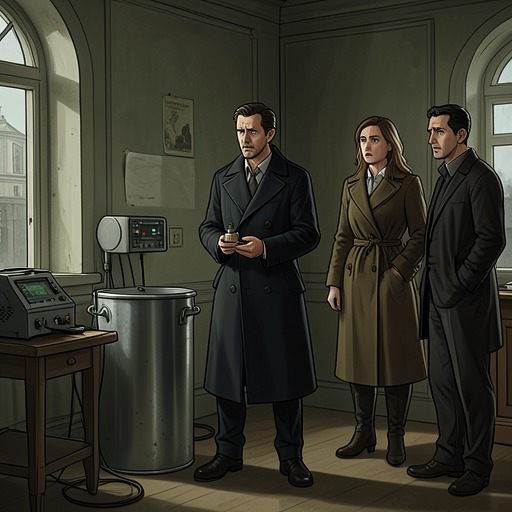
During the confrontation, Mickey8 tells Marshall that he has spent nine years getting himself killed for him and argues that Marshall need not treat the situation as a performance of villainy. Mickey8 offers stark alternatives: Marshall can kill one instance and put the body in the hole, or kill both and have another instance produced. His blunt proposal treats death and replacement as familiar parts of being an Expendable, but Marshall rejects that framing.
Marshall clarifies that if Mickey8 and Mickey Barnes are sent down the hole that day, there will be no further instance. He says their personalities will be wiped from the server and their body template erased; Mickey8 is facing a death sentence, not a trip to the tank. The distinction exposes the ban’s immediate personal stakes: under Marshall’s threat, the usual possibility of regeneration is withdrawn, turning the elimination of a multiple into the permanent destruction of the person.
Scarcity, Leverage, and the Stakes of Replacement
Mickey8 counters that only 176 colonists remain and that the colony is moving onto a war footing, so it needs every available body, especially its only Expendable. Marshall concedes the scarcity but disputes that Mickey8 is indispensable, explaining that Corporal Chen has volunteered to take the berth if necessary. The exchange makes replacement a tool of pressure: even as the colony needs bodies, Marshall asserts that the role—and therefore Mickey8’s place in it—can be reassigned. The threat of permanent erasure shows how a prohibition framed as a social norm can become entangled with institutional control over who may continue to exist.