The Shrubs
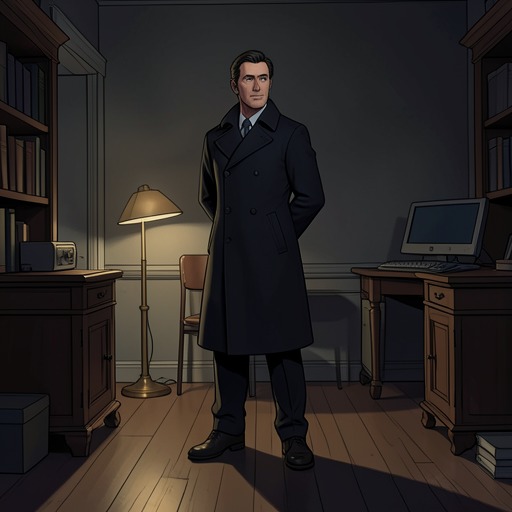
MiddlemarchThe Shrubs, Nicholas Bulstrode’s retired residence on the London Road at the edge of Middlemarch, is both a private home and a shelter for the secrets that threaten its owner. Near the New Hospital and the auction grounds where Will Ladislaw is asked to judge a painting for Bulstrode’s wife, it becomes the site of Bulstrode’s attempted restitution to Will, John Raffles’s return, and the banker’s mounting fear of exposure. Its privacy offers temporary protection, but cannot keep the past from entering the household or shaping its future.
Setting and Place in Middlemarch
The Shrubs stands just beyond the town, along the pleasant stretch of the London Road that also leads to the New Hospital. Its retired setting places Bulstrode’s home close to both the public life of Middlemarch and the institutions through which he exercises influence. The house is not merely an isolated retreat: its connection to the hospital and the road makes it part of the town’s social and commercial geography even as Bulstrode tries to keep its rooms private.
The house’s relation to the town is also established through the Larcher sale, a large auction held nearby. The sale draws people from different social groups and has the air of a fair, with food, drink, and competitive bidding. Though Bulstrode does not attend, his wife wants a painting from the sale, and he approaches Will at the office of the Pioneer to ask him to assess it. Will’s imminent departure makes the request especially charged: the painting provides the immediate pretext for contact, while the encounter foreshadows the private appeal Bulstrode will make at home.
A Private Appeal to Will Ladislaw
After seeing Raffles depart on the Brassing coach, Bulstrode experiences only temporary relief. His fear of what the past may bring has not ended, and he seeks a means of restitution that he hopes might avert its consequences. He writes to Will asking him to come to The Shrubs for a private interview at nine in the evening. Will expects the meeting may concern new proposals about the Pioneer, but is struck by Bulstrode’s worn appearance when he enters the banker’s private room.
Bulstrode tells Will that their histories are connected by important ties in the past and stresses the confidential nature of his communication. For Will, the disclosure is startling: he has already been unsettled by another man’s revelations about his family history, and Bulstrode’s formal, subdued manner makes the new approach more disturbing rather than reassuring. The Shrubs thus becomes the setting for an attempted act of restitution, but the meeting also brings Will into contact with the secret Bulstrode has been trying to contain. The house’s privacy allows the banker to speak to him alone; it does not resolve the moral and personal consequences of what is disclosed.
Raffles’s Return and the Limits of Secrecy
On Christmas Eve, Raffles returns to The Shrubs. Bulstrode receives him and tries to prevent him from communicating with the rest of the household. Raffles insists on staying, and Bulstrode decides that keeping him in the house is less dangerous than letting him go into Middlemarch. He confines the visit to his own rooms, attends to Raffles himself, and takes him to bed, while Raffles makes a show of joking about the inconvenience and hints that he expects payment for leaving.
Bulstrode tells his wife that he is caring for a helpless man who had once been employed and aided by him. He implies a family connection without stating a direct falsehood and presents Raffles’s condition as a reason for caution. He also promises to drive him away the next morning. These explanations are meant to account for the visitor and for Bulstrode’s insistence that no one else enter the room, but they do not quiet his fear that Raffles may be overheard referring plainly to their shared past. Bulstrode is especially anxious that his wife might listen at the door; her honest habits make that possibility unlikely, yet his dread overrides his estimate of what she would do.
The effort to manage the visit turns the house’s private rooms into a fragile barrier between Bulstrode and discovery. Raffles’s inability to be controlled makes Bulstrode feel that defiance is his only remaining choice. By early morning Bulstrode is dressed and preparing to leave with him, while spending part of his distress in prayer. His alarm is sharpened by the difference between a direct lie, which he fears, and the indirect evasions by which he has pursued his aims. At The Shrubs, secrecy is not a settled condition but a continual, exhausting effort to control who may enter, hear, and understand.
Retreat, Household Anxiety, and Stone Court
Bulstrode’s fear of public disgrace eventually leads him to prepare, conditionally, to quit Middlemarch. He considers transferring his management of the Bank and withdrawing from active control of other local commercial affairs, while leaving open the possibility of returning. The Shrubs itself would be shut for several months while he and his wife took a house on the Southern Coast. He postpones final decisions, hoping that circumstances might change and that departure will prove unnecessary; leaving would also be painful for his wife, who wishes to remain where she has made her home.
His secrecy affects Harriet Bulstrode even before she knows its cause. Since Raffles’s previous visit, she has carried an uneasiness that she accepts as a concern for a degraded man her husband once employed and helped. When Bulstrode later brings Lydgate home ill from the meeting, his assurances do not persuade her that his trouble is bodily alone. He keeps to his private room, will scarcely let her read to him or sit with him, and says that sounds and movement make him nervous. She suspects he wants to work among his papers and wonders whether he has suffered a serious financial loss, but does not dare question him directly. On the fifth day after the meeting, she asks Lydgate to tell her openly whether anything has happened to her husband.
The household’s future is also linked to the fortunes of Fred Vincy. Bulstrode considers telling Harriet, when he explains his plan to leave, that he has arranged for her nephew to benefit. He has already assured Caleb Garth that if Bulstrode leaves Middlemarch indefinitely, Fred may have the tenancy of Stone Court on the proposed terms. Caleb is delighted and privately inspects the land and stock, keeping the visits from Fred so that the prospect can remain a surprise. The Shrubs is therefore more than the setting of a private crisis: decisions made by its owner can affect the livelihood of another family, even while his own household remains uncertain about what has happened.
Narrative Significance
The Shrubs concentrates the tension between public standing and private knowledge. Bulstrode’s prosperous position in Middlemarch depends on the respect he receives, yet at home he fears that a visitor, a loose remark, or his wife’s questions may expose the past he has concealed. The residence’s privacy gives him room to negotiate with Will, shelter Raffles, and plan a possible departure; each use of that privacy also shows how little control it can offer once other people and old events cross its threshold.
The house’s different roles connect otherwise separate strands of the story. Its proximity to the Larcher auction brings Will into Bulstrode’s orbit through the request to assess the Supper at Emmaus painting; the later private interview turns that contact toward family history and restitution. Raffles’s Christmas Eve return then makes the household itself a site of danger and suspicion. Finally, Bulstrode’s conditional plan to leave The Shrubs intersects with Caleb’s hope for Fred’s tenancy of Stone Court. Private concealment, public reputation, and other people’s prospects meet at this residence, where an attempted refuge repeatedly becomes a place from which consequences spread.