Lowick Manor
MiddlemarchLowick Manor is both a family residence and an estate carrying practical responsibilities: its farms, tenements, papers, and attached right to appoint a clergyman repeatedly draw private feeling into public action. Under Edward Casaubon, the house is a place of guarded authority; after his death, Dorothea returns to it as a widow and owner, confronting the claims his will and unfinished scholarship continue to exert over her life. Its library and desks hold the material traces of his designs, while its rooms become the setting for Dorothea’s effort to distinguish fidelity from submission and inheritance from moral obligation.
House, Estate, and Authority
Casaubon’s authority at Lowick extends beyond the domestic household. His prohibition against Will Ladislaw’s further visits makes the Manor a boundary in their strained family relationship: Will’s proposed local employment would bring him into the neighborhood and, in Casaubon’s view, too near his own position. Casaubon considers appealing to Mr. Brooke or Sir James Chettam to frustrate the proposal, but distrust and wounded pride keep him from doing so. Instead, he remains silent while preparing other measures. The house thus represents not simply shelter but the reach of Casaubon’s power to regulate who may enter and what place a younger relative may occupy in the district.
That authority is tied to the estate’s property and institutions. Dorothea knows that Casaubon’s will makes her responsible for Lowick Manor and for the patronage of the living attached to it. As soon as she is sufficiently conscious after his death, she turns her attention to deciding who should succeed him as rector. She asks to have the keys and to inspect his papers, reasoning that they might disclose his wishes. The question is more than a domestic errand: the owner of the Manor must exercise a local responsibility, and Dorothea understands that she cannot treat the estate as wealth without duties.
Casaubon’s Lasting Imprint
During Casaubon’s life, the Manor’s library is closely associated with his scholarship and his plan for the work he called the Key to all Mythologies. He had begun a “Synoptical Tabulation” intended for Dorothea’s use, but his efforts to transmit his research were hesitant. He distrusted her ability to arrange the material, yet also distrusted any other editor; at last he relied on her capacity to carry out what she resolved to do. His intended bequest of labor would have bound her to the project through the pledge he sought from her, preserving his influence beyond his death.
After the funeral, Sir James and Mr. Brooke discuss how to keep business from Dorothea while she is unwell and how to remove Will from the neighborhood. Their plans recognize her legal and practical authority even as they try to delay her exercise of it. Mr. Brooke expects that, as executrix, she will want to act, particularly in matters of property and land. Once Dorothea is recovering at Freshitt Hall, she does indeed insist on returning to the questions assigned to her: first the Lowick living, then the papers and affairs of the Manor.
The Papers and the Widow’s Decision
At Lowick, Dorothea searches Casaubon’s desks and drawers for private writing. She finds no letter addressed especially to her, only the “Synoptical Tabulation,” which appears to be the beginning of the directions he had meant to leave. The absence matters as much as the document. The desks and drawers contain business papers, but no personal words offering explanation or excuse; Dorothea returns to Freshitt with the sense that silence still surrounds Casaubon’s last demand and his final assertion of power.
That silence changes what the scholarly bequest means to her. While Casaubon was alive, pity and a promise could have led her to undertake work she believed useless, because faithfulness itself might have made the effort worthwhile. Looking back, however, she understands that secrecy and suspicion had been hidden within their marriage. The living husband who might have awakened her pity is gone; what remains is the memory of subjection to a man whose self-protective demands compromised even his concern for his own reputation. She cannot simply disregard the property, because ownership carries duties, but neither can she accept its terms without confronting the moral injury attached to them.
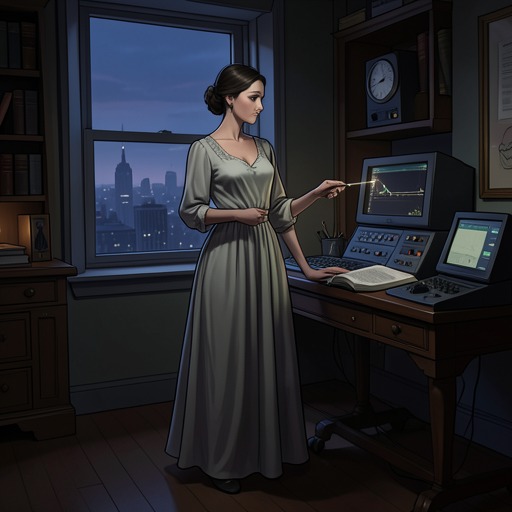
The library becomes the place where this inward reckoning takes material form. When Dorothea returns to live at Lowick, she walks through its rooms as if addressing Casaubon in thought, questioning the months of their marriage. In the library she carefully arranges his notebooks as she imagines he would have wished. Pity still clings to his image even as she inwardly remonstrates with him and calls him unjust. She seals the “Synoptical Tabulation” in an envelope and keeps it in her own desk, marking her refusal to surrender her judgment to a work in which she has no belief. The document remains present, but no longer governs her as a promise to complete it.
A Working Estate and a Changed Home
Lowick is not only a repository of Casaubon’s papers. Dorothea’s confidence in Caleb Garth grows from their shared interest in practical improvement. On rides over the estates with Sir James and Caleb, she discusses improving land and building good cottages; Caleb recognizes in her an uncommon capacity for business, meaning the skilful application of labor rather than money dealing. Dorothea asks him to manage business connected with the three farms and the many tenements belonging to the Manor. The estate therefore becomes a field for useful work, bringing her ideals into contact with the needs of tenants and the organization of land.
That work is soon affected by a projected railway through Lowick parish. A line cutting across land where cattle had grazed undisturbed brings the new railway system into Caleb’s affairs and makes the claims and anxieties of landholders part of the local story. The projected change shows the Manor’s land to be neither an isolated possession nor a static inheritance: its use is exposed to wider economic development and disputes over access, damage, and compensation. Through Dorothea’s connection with Caleb, the estate’s responsibilities extend beyond the family’s private history.
Meetings, Return, and Narrative Significance
Lowick also structures Dorothea’s changing relation to Will. After returning to the Manor, she hopes to see him, although she cannot identify any practical good that a meeting can bring and believes herself unable to repair the unfairness of his position. She expects that he may come to visit the Farebrothers, and remembers seeing him alone in the clergyman’s pew at church before he disappears from view. The Manor and its neighborhood thus hold together longing and restraint: the house is a place where Casaubon barred Will, but also where Dorothea’s desire to see him persists after Casaubon’s death.
Later, when Will has resolved to leave Middlemarch, he writes to ask Dorothea’s permission to call at Lowick once more. He seeks a direct interview rather than disguising his purpose as chance, because their previous farewell took place before he understood the facts that altered their relationship. Lowick remains the necessary setting for that request, even though the supplied scenes do not show the visit itself. The house’s importance lies in this repeated tension between access and exclusion: Casaubon’s rule once made it a site of prohibition, while Dorothea’s ownership and choices make it a possible meeting place.
The Manor’s narrative function changes with its occupants and uses. Under Casaubon, the library and locked papers embody an unfinished intellectual project and a husband’s attempt to extend control into the future. Under Dorothea, the same rooms become places of examination, refusal, and practical stewardship. Her return to the Manor does not erase grief or settle every conflict: she can honor the duties attached to the estate while rejecting a scholarly obligation she cannot sincerely perform. Lowick therefore joins the novel’s domestic and public concerns, making inheritance visible not merely as property but as a continuing test of judgment, responsibility, and freedom.