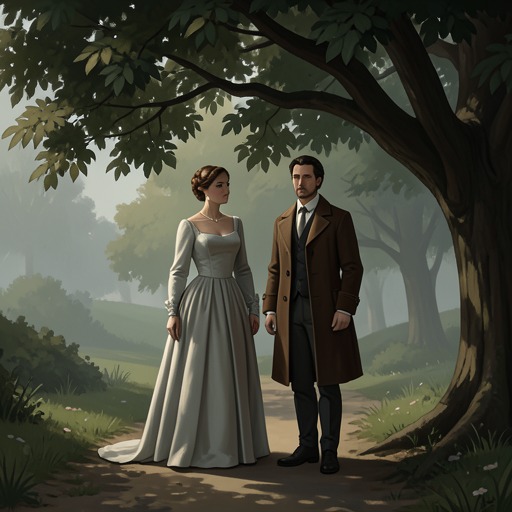
Rome
MiddlemarchRome is the destination of Dorothea Brooke and Edward Casaubon’s extended wedding journey, a place Casaubon wants to visit for the Vatican manuscripts and Dorothea initially imagines as part of a shared intellectual life. Instead, the city becomes an early measure of their incompatibility: Casaubon expects to devote himself to research, while Dorothea’s gratitude and willingness to accommodate him cannot supply the companionship and instruction she had hoped to find. Rome’s distance also gives scale to Will Ladislaw’s later separation from her. The novel ultimately suggests that social prejudice and altered feeling can divide people more decisively than the distance between Rome and Britain.
The Wedding Journey and Casaubon’s Work
The journey is extended to Rome because the mild season makes the plan practicable and Casaubon wishes to inspect manuscripts in the Vatican. The destination therefore carries both a romantic promise and a scholarly purpose, but those purposes are not equally shared. Dorothea’s expectation of marriage has been shaped by her desire for learning; she supposes that learned men possess the intellectual illumination she lacks, and that Casaubon will guide her toward it. Rome brings that expectation into contact with the practical demands of his work.
Casaubon anticipates that research will occupy him during their stay. He regrets that Celia Brooke will not accompany them, telling Dorothea that she will have many lonely hours while he makes the utmost use of his time in Rome. He says a companion for Dorothea would leave him feeling more at liberty. That phrase grates on her, and for the first time she blushes in annoyance while speaking to him. Her answer is not a refusal to accept his scholarly purpose: she insists that she understands the value of his time and would willingly give up anything that interfered with his using it well. The scene establishes a painful distinction between her readiness to support his work and his apparent need to be freed from her presence in order to pursue it.
A Changed Understanding of Marriage
Dorothea’s early patience should not be mistaken for an absence of feeling. In the weeks before the journey, her expectation remains joyful and grateful; Casaubon cannot interpret her affection as slackening. But Rome exposes how little emotional reciprocity that devotion guarantees. She can recognize the importance he assigns to scholarship and offer to accommodate it, yet the prospect of being left alone reveals the gap between her hoped-for intellectual partnership and the marriage as it is taking shape.
When Will later criticizes Casaubon’s work and says that Casaubon dislikes him for disagreeing with him, Dorothea responds differently than she had in Rome. She is quiet rather than immediately indignant. Her understanding of her husband has changed: she is no longer struggling against the perception of facts, but adjusting herself to them, including the possibility that Casaubon is conscious of his own failure. She can see that his dislike of Will must seem harsh, yet her perception of Casaubon’s vulnerability makes her more inclined to tenderness than judgment. The contrast with her earlier response in Rome gives that city a retrospective significance: it marks a stage before she could face the full difficulty of her husband’s intellectual disappointment.
Rome and the Distance Between Dorothea and Will
Rome also belongs to the history of Dorothea and Will’s mutual understanding. Will does not fantasize about Casaubon’s death as a route to marriage. The prospect has no tempting power over him; he values Dorothea as she is, and does not want a change that would somehow alter the person he admires. His feeling is sustained not by a practical expectation of possession but by the meaning he finds in loving her, even when that love appears futile.
Later, when Will lives in Middlemarch, he feels the first chill of a distance between them. Dorothea has seen him among the town’s ordinary social circles, and he fears that she has acquired a sense of unfitness in being entirely free with him. Differences of rank and status, which had seemed easier to resist when expressed through Casaubon’s tyrannical letter, now work more subtly through habit and social feeling. The narrator measures these barriers against the literal distance between Rome and Britain: the distance across countries had not been the greatest obstacle. What threatens the relationship is the quieter pressure of social prejudice and the possibility that Dorothea’s perception of Will has changed.
A Recollection Reversed
When Will tells Dorothea that he intends to go to London, eat his dinners as a barrister, and seek an honorable position through public work, her response recalls the confidence of their earlier encounter in Rome. She praises his talents, his ability to speak and explain matters clearly, and his concern that justice be done. She admits that in Rome she had thought he cared only for poetry, art, and the adornments of life available to the wealthy; she now understands that he also thinks about the wider world. Her embarrassment falls away as she speaks, and she looks at him with delighted confidence.
At their later meeting before Will’s departure, the narrator again evokes Rome through Dorothea’s face: Will thinks she looks as she did when she first shook hands with him there. She has been crying, but the anger and agitation she carried into the meeting have vanished at the sight of him. Their familiar confidence returns, suggesting that other people’s judgments have not erased the understanding they recognize between them. In this way Rome remains more than the place where their story began to take shape. It is a point of comparison: the earlier openness they shared makes later estrangement visible, while the memory of that openness helps disclose that their connection persists beneath it.