Frick
MiddlemarchFrick is a remote hamlet in Lowick parish, a small center of rural industry where a water-mill and stone-pits shaped local working life. Its role in the novel is to show how large changes—especially railway construction—arrive not as abstractions but as immediate questions about land, work, and who can be trusted.
Setting and local outlook
The houses of working people on this side of Lowick were scattered in isolated cottages or gathered in Frick. The community had little precise knowledge of what railways involved, and its prevailing suspicion rested on the expectation that unfamiliar schemes would disadvantage the poor. Even Reform, without a promise of some definite local benefit, struck residents as much like a pedlar’s boast. This outlook is presented as practical mistrust rather than enthusiasm for political or religious causes.
Railway rumors and resistance
A railway was projected through Lowick parish, where cattle had previously grazed without such disturbance. Across the district, railway expansion was a contentious topic alongside the Reform Bill and fears of cholera. Landowners worried about losing land and sought high payments, while some residents focused on the prospect of fields divided by the track. Solomon Featherstone, who owned land and served as road overseer, cultivated the hamlet’s existing mistrust: on his rounds he spoke cautiously with workers and suggested that railway agents’ purpose was to cut up the parish and harm both land and poor people. His insinuations helped turn uncertainty into local opposition.
The confrontation with railway agents
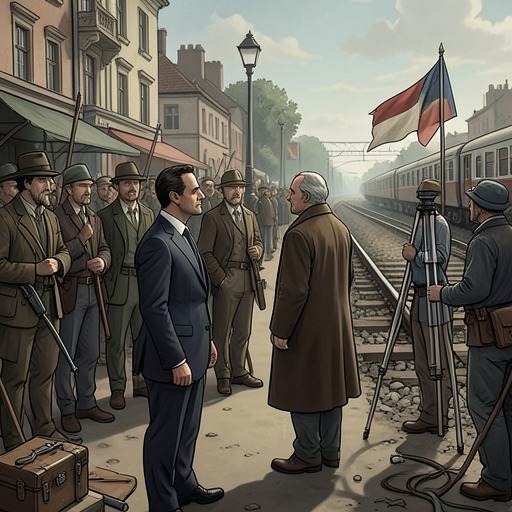
The dispute became a physical confrontation when company agents came to survey land near Frick. Caleb Garth had gone to measure and value an outlying piece belonging to Lowick Manor, expecting to negotiate favorable terms for Dorothea. Fred Vincy, riding nearby while troubled about what work he could pursue, saw laborers approach the agents with hay-forks. He reached the group after the agents had been driven back and Garth’s young assistant had been knocked down. Fred intervened on horseback, scattering the laborers’ pursuit and enabling the agents to retreat; he later remembered his threats to the men with amusement. The scene connects railway resistance to Fred’s own turning point: he is present by chance while still uncertain about his future, but acts decisively when the surveyors are threatened.
Place in the wider social landscape
Frick’s isolation does not make it separate from the novel’s wider changes. The projected railway draws a remote parish into disputes over property, compensation, labor, and the meaning of progress. Through the hamlet, the novel shows how public developments become local conflicts, mediated by landowners’ interests and rumors among working people. Its episode also belongs to a larger pattern in which provincial society is reshaped by new connections: town and parish, professional and agricultural work, and established households and changing economic arrangements become increasingly interdependent.