Bouville
NauseaBouville is the fictional French port where Antoine Roquentin settles to finish his historical research on the Marquis de Rollebon and where the novel’s crisis of existence takes shape. The city is at once a working, stratified community and the ground of Roquentin’s unsettling encounters with existence: its public routines promise order, while its streets, park, and objects lose their familiar meanings. When he prepares to depart, Bouville seems to have abandoned him before he has physically left it.
Definition and Setting
After travelling through Central Europe, North Africa, and the Far East, Roquentin settles in Bouville for three years to conclude his research on Rollebon. Its name and details establish a provincial French port with a working waterfront, freight facilities, factories, commercial streets, and neighborhoods that Roquentin observes as he moves through the city. The novel’s setting is not a neutral backdrop: Bouville’s places become stages where he measures social habits against his increasingly difficult sense of existence.
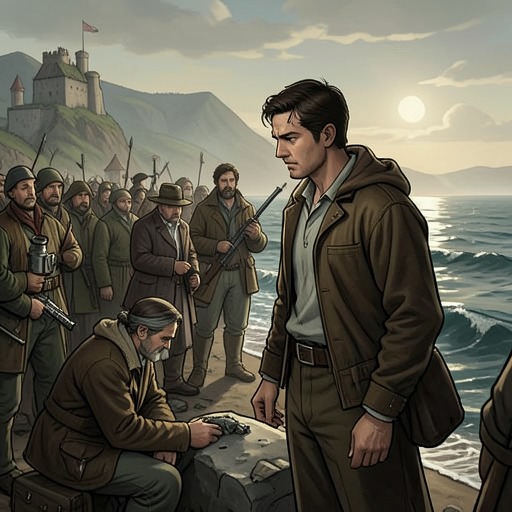
The city’s geography brings together work, leisure, and civic display. From its industrial outskirts, Sunday processions advance towards the centre; Rue Tournebride draws spectators into a conspicuous public scene, while the Jetty Promenade offers a route from residential streets to the sea. The museum and library, meanwhile, house the images and historical materials through which Roquentin pursues knowledge. Bouville connects these different settings without making them resolve into a single, reassuring order.
Research and Everyday Life
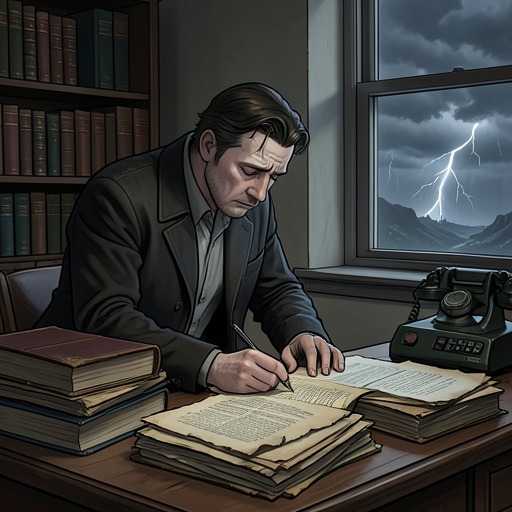
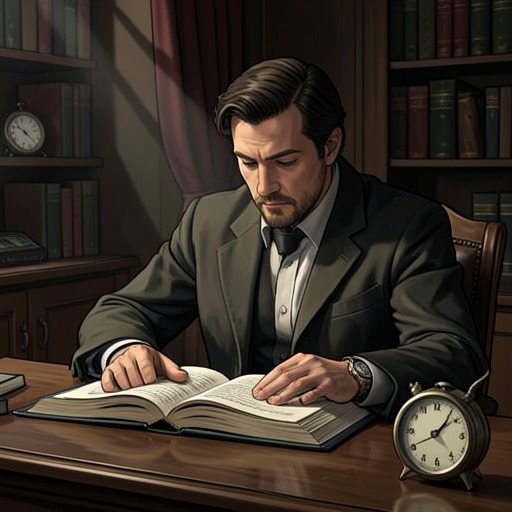
Roquentin’s three-year stay is organized in part by his work on Rollebon. At the Bouville library, he begins Chapter XII, covering Rollebon’s time in Russia up to the death of Paul I, and regards the chapter as complete pending final revision. The research gives his days a concrete occupation, but its apparent progress does not settle the questions raised by his experience of the present.
The Café Mably supplies another repeated setting. Roquentin has breakfast there, eats there, and observes its manager, M. Fasquelle, whose decisive manner reassures the customers. The café’s regular rhythms—the manager’s afternoon sleep, the waiters putting out the lights, and the remaining patrons drinking coffee or playing dice—make ordinary social life appear stable through repetition. Their routines contrast with Roquentin’s growing recognition that familiar surroundings do not guarantee a stable meaning beneath them.
Bouville’s museum likewise becomes important through repeated visits. Roquentin is troubled by the portrait of Olivier Blevigne, a deputy whose figure seems incorrectly proportioned or positioned on the canvas. He resists the possibility that its painter, Bordurin, has simply made a mistake. Later, while turning through an old collection of the Satirique Bouvillois, he catches sight of what he takes to be the explanation and goes straight from the library to the museum. The episode makes the city’s institutions part of his effort to interpret what he sees, even as the larger crisis unsettles his confidence in interpretation itself.
Social Ritual and Public Space
On Sunday morning, Bouville gathers its inhabitants into a public spectacle. Workers from surrounding districts and factories stream towards the centre, and Roquentin sets out at half past ten to watch the city’s fine show before too long after High Mass. The Rue Tournebride, whose inhabitants call it the Little Prado, becomes a destination where people take their places among their fellows and raise their hats in greeting. The scene presents sociability as something visibly rehearsed: a crowd forms, moves, and recognizes its own conventions.
Roquentin’s account of this Sunday world also sets contemporary custom against the city’s history. Rue Tournebride was absent from an 1847 map and, in his imagining of the earlier street, had been a dark, foul passage. Its later transformation into a fashionable public scene is tied to civic and religious ambition: a church project, a vision experienced by the mayor’s wife, and the desire to give Bouville’s elite a place to attend mass apart from shopkeepers. The contrast makes the city’s polished rituals look historically constructed rather than timeless.
Later in the day, the crowd on the route to the sea appears less sharply divided by rank. Businessmen and officials walk alongside shabby employees, while the distinctions among aristocrats, elites, and professional groups seem to dissolve in the press of the warm crowd. Bouville’s public spaces thus show both the display of hierarchy and a temporary weakening of it. Roquentin’s freedom to take the walk marks him as an observer of these collective habits, not simply a participant in them.
The City and Roquentin’s Crisis
The park becomes the setting for the most decisive change in Roquentin’s understanding. On the tram, the closeness of things becomes unbearable; he pushes past the conductor, jumps off, enters the park, and drops onto a bench among the black tree-trunks. There, looking at a chestnut root beneath his feet, he can no longer hold on to the word or familiar use that had made it seem merely an ordinary object. His discovery does not relieve him: the Nausea remains, but he understands it not as a passing illness but as something inseparable from himself.
This experience alters the meaning of Bouville’s familiar landscape. Places that had supported everyday recognition no longer guarantee that the world will remain intelligible, and even the city’s ordinary streets can be encountered as mere buildings rather than as reassuringly named or classified surroundings. The change is not a change in Bouville’s physical layout; it is a break in the meanings Roquentin had attached to it. The city’s recognizable order and the stubborn presence of things now stand in uncomfortable contrast.
Departure and Narrative Significance
As Roquentin makes plans to leave, Bouville becomes the object of a farewell that is also a judgment on memory. He expects to return from Paris, pack his belongings, settle his bank accounts, and return the books he borrowed from the library. Looking down over the city, he sees that his life there will soon be reduced to a name and that the afternoon’s sunlight will leave no lasting trace. His account of three years in Bouville is not a story of triumph: the work and hope with which he arrived have not delivered the victory he sought.
On his last day, he searches the town for the Self-Taught Man and imagines the man’s shame and solitude after his expulsion from the library. The city’s library, once a place of study and culture, is now remembered through the loss of access and community. Roquentin’s concern for the other man places two experiences of isolation alongside one another, without making them identical.
In the final hours before his train leaves, Roquentin walks down Rue Boulibet and recognizes its name without recognizing the street as he used to experience it. The houses remain, but their former rural character has fallen away. He feels that Bouville has abandoned him before he has left: the city has already become silent and indifferent, arranging itself for new arrivals. This departure completes the setting’s central role in the novel. Bouville begins as the place where Roquentin undertakes a historical project; it ends as a city he can no longer inhabit through the familiar meanings that once made its streets, institutions, and routines seem secure.