Perfect moments
NauseaPerfect moments are Anny’s method of turning exceptional circumstances into scenes shaped by prescribed gestures, words, and roles. For her, this was not merely an aesthetic game: it was a duty, a way of making a situation yield its fullest meaning. For Antoine Roquentin, the method exposed the strain between a designed, meaningful experience and the awkwardness of living through one. Their later recognition that the practice has ended marks not a restoration of their former intimacy, but a shared change in how they understand love, passion, and the possibility of exceptional moments.
Anny’s Practice and Its Rules
Anny wanted life to contain “perfect moments,” and she could withdraw from everything when the circumstances did not suit her. If the time was wrong, her eyes became lifeless and she dragged along lazily; at other times she picked quarrels with Roquentin over his ordinary, bourgeois gestures. The contrast between her indifference and her sudden intensity shows how completely the value of an encounter depended, for her, on whether it could be made to meet the moment’s exacting conditions.
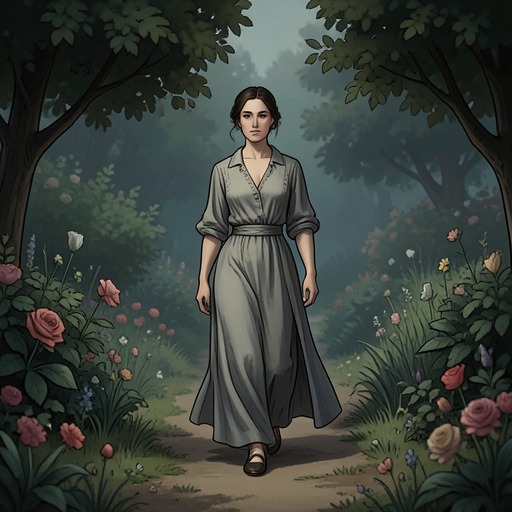
When the conditions seemed promising, Anny took command. She might shudder, straighten herself, hum while looking around, and then shake Roquentin by the shoulders. In a low, rapid voice she explained what she expected from him. Her instructions joined the setting to performance: she directed him to notice the sky and the sunlight on a carpet, and pointed to her green dress and unmade, pale face as elements of the scene. The surroundings and the participants were not incidental; they were material to be arranged.
The method required more than admiration of a beautiful setting. Anny expected Roquentin to make an effort, speak to her, and take up the position she had assigned. She could rebuke him as stupid when he failed to understand what the moment demanded. The scene thus depended on a choreography of permitted acts and words, as well as on an atmosphere that had to be recognized before it passed.
The Burden of Making a Moment
Roquentin experienced Anny’s project as a responsibility placed in his hands. He felt that the moment had an obscure meaning that needed trimming and perfecting, and that particular movements and words had to be supplied. Instead of simply inhabiting the scene, he became conscious of its rules and of the risk of failing them. His attention could not produce the understanding Anny wanted: he stared and saw nothing.
The mismatch became a recurrent source of conflict. Anny invented rites on the spot, while Roquentin, with his clumsy strength, tore them to shreds; in those moments, she hated him. Her expectations made the encounter feel like a fragile construction, but the pressure to perform its prescribed meaning could itself defeat it. The more Roquentin understood that success depended on him, the heavier the obligation became, and the less naturally he could answer her.
Even the couple’s teasing registered the gap between an ideal role and the person expected to play it. Anny blamed Roquentin’s red hair for spoiling everything and wondered what could be done with a red-headed man. He later says he might have resigned himself to that clumsiness, but the deeper change was that he had never truly understood or sincerely tried to help her. The failure was therefore not simply a matter of appearance or temperament: he had not grasped the work Anny believed the moment required.
Privileged Situations and Moral Work
At their later meeting, Roquentin asks Anny to explain how privileged situations related to perfect moments. Her account sets out a sequence: first come annunciatory signs; then a privileged situation enters a person’s life; only afterward comes the question of whether to make a perfect moment from it. An exceptional situation provides the material, but it does not automatically become meaningful. Someone must recognize and exploit its possibilities.
Roquentin describes the process as requiring particular acts and attitudes, with other attitudes and words strictly prohibited. Anny agrees that a situation had to be entered and felt as though it were being put in order. If all the conditions were realized, the moment would be perfect. Their exchange makes the practice at once formal and active: the participants were not only moved by an event but responsible for shaping their conduct within it.
Roquentin calls the result a kind of work of art. Anny objects to that formulation and insists that making perfect moments was a duty, a moral question. The difference matters. His phrase emphasizes composition; hers emphasizes obligation. For Anny, the privileged situation imposed a task: it had to be transformed rather than merely experienced. The ideal promised order and significance, but it also bound the lovers to roles and standards whose failure could turn intimacy into reproach.
The End of the Moments
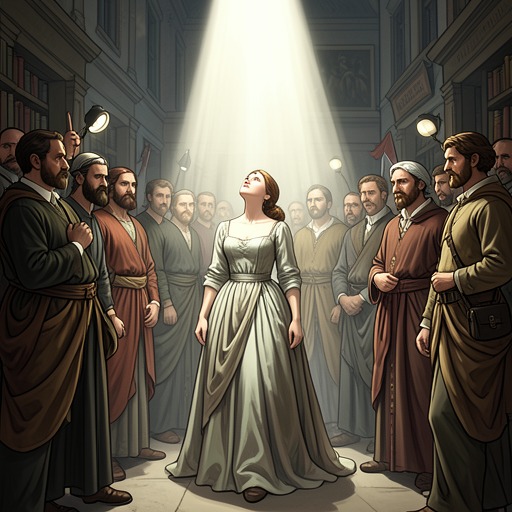
When Roquentin asks whether there are any perfect moments left, Anny answers that there are none. He recalls their former scenes as instantaneous tragedies in which masks, shawls, furniture, and the lovers themselves each played a part, with Anny in the leading role. Her smile accompanies his recollection, but she confirms that this dramatic practice is finished. She also remarks that she sometimes gave him greater roles than her own, though he never realized it.
Anny’s account of the past reaches beyond the loss of a technique. She once imagined that hatred, love, or death could descend on people like tongues of fire on Good Friday, raising them above themselves. She now calls that belief a mistake. Hatred and love do not arrive as independent forces that transform a person from outside; she recognizes that she herself is the one who hates or loves. As everything comes to resemble everything else, the grand distinctions that once seemed to name exceptional states lose their force.
Roquentin recognizes that Anny has changed in the same direction he has. He is pleased that they meet at this point of arrival rather than finding her still moving away from him, leaving him fixed forever as her point of departure. Their agreement does not revive the perfect moments or repair their old relationship. Instead, it gives their reunion a different significance: they can recognize a common disillusionment without pretending that the former ideal remains available.
Memory, Love, and Absence
The perfect moments also shape Roquentin’s memory of Anny. He recalls that six years earlier, after they had separated by mutual agreement, he left for Tokyo and wrote to her using a formal salutation rather than calling her his dear love. Anny rebuked him for assuming a possessive intimacy, insisting that neither belonged to the other in that way and that he should use no name if he did not know what to call her. Her attachment to exact forms thus appeared not only in staged scenes but in the language with which the former lovers addressed one another.
In the later letter summoning him to meet, Roquentin finds no affectionate salutation or sign that would let him infer Anny’s feelings. He recognizes her taste for perfection in that restraint. His memories of their life together likewise return through particulars: her lifelessness when a moment did not suit her, her sudden authority when she began arranging one, and the reproaches that followed when he failed to play his part. These recollections make the practice both a shared history and a measure of their incompatibility.
Roquentin’s memory of Anny’s face has itself faded in stages. He first lost the memory of her eyes, then of her long body, and finally, three years earlier, the memory of her smile. Taking her letter from the landlady’s hands briefly brings that smile back to him, along with the tenderness he hopes to feel. Yet he cannot recover it by deliberate effort: the smile does not return, and he remains empty. The failed recollection echoes the larger ending of the perfect moments. A scene once thought capable of being preserved through exact form cannot be summoned simply because he wants it again.