Clotilde Bradbury-Scott’s death
NemesisClotilde Bradbury-Scott’s death is the terminal reversal in the confrontation between Clotilde and Miss Marple: the poison intended to silence the investigator becomes the means of Clotilde’s own escape and punishment. It follows the exposure of Clotilde’s murder of Verity Hunt, her concealment of the body beneath the collapsed greenhouse, and the revelation that her possessive love has become a life of fear, guilt, and cultivated evil.
Causes and Background
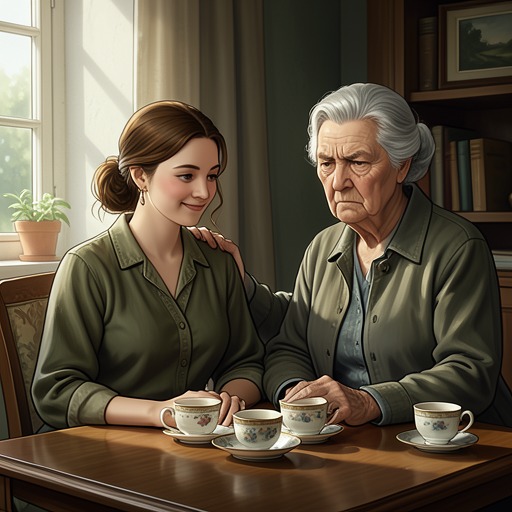
The death grows out of Clotilde’s inability to release Verity Hunt. Clotilde explains her suffering as the agony of losing the person she loved most to a “miserable, depraved delinquent,” Michael Rafiel, whom she considered unworthy of her “beautiful, splendid girl.” Her claim that she had to stop the relationship supplies the emotional logic of the crime: she presents murder as an act of protection, but Miss Marple identifies the contradiction at its centre. Clotilde killed Verity because she loved her, converting devotion into possession and protection into destruction.
Clotilde’s earlier violence had not taken the form she imagines when she denies the accusation. She insists that she could never strangle Verity, bash her face in, or crush her head, because only a vicious, depraved man would commit such an act. Miss Marple agrees that Clotilde would not have killed the girl in that manner. The distinction is decisive: the woman Clotilde loved was not the victim of a visibly brutal attack, but of a method chosen to preserve Clotilde’s self-image as a loving guardian.
The Poisoned Milk
Miss Marple reconstructs the murder as a quiet, deliberate poisoning. Clotilde gave Verity coffee or milk containing a painless overdose of sleeping medication. After Verity died, Clotilde carried her into the garden, moved aside the fallen bricks of the greenhouse, made a vault beneath the floor, covered the body, and planted Polygonum baldschuanicum over the site. The plant’s continuing growth becomes a physical sign of the concealment: Verity has remained in the garden, and, in Miss Marple’s interpretation, Clotilde has never truly let her go.
The same pattern is repeated in the bedroom confrontation. Clotilde offers Miss Marple milk, but Miss Marple refuses it, first saying that she has not drunk it because she did not think it would be good for her. When Clotilde says that the milk is cold and offers to replace it with hot milk, she takes the glass from the bedside. Miss Marple makes clear that she would not drink it even if it were brought back. The exchange turns an apparently domestic gesture into a test of intention and transforms the glass into the central object of the impending death.
The Confrontation and Reversal
Miss Marple names the concealed crime with precise physical detail: Verity was drugged, buried beneath the greenhouse floor, and covered by the growing polygonum. Clotilde responds not with confession but with fury, calling Miss Marple a foolish and crazy old woman and threatening to prevent her from escaping to tell the story. The threat exposes the immediate stakes. Once the truth has been spoken, Clotilde’s survival depends on stopping its witness.
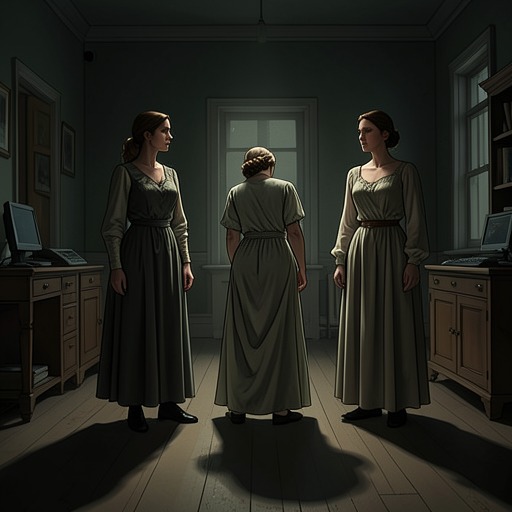
Clotilde advances towards the bed, but Miss Marple has anticipated the danger. Her hand slips beneath the pillow and returns with a high-powered whistle whose shrill sound could attract a policeman from the end of a street. When she blows it, the door opens and Miss Barrow appears; simultaneously, Miss Cooke emerges from the large wardrobe hanging cupboard. Their professional readiness contrasts with their earlier pleasant social behaviour and reveals that Miss Marple has not been left unprotected. She calls them two guardian angels and links their intervention to Mr Rafiel’s lavishly arranged protection.
The reversal is completed after Miss Marple has been removed from the room. Professor Wanstead later asks whether she has been told what happened that night. Miss Marple remembers that Clotilde had picked up the glass of milk and was still holding it when Miss Cooke took her away. Clotilde drank the milk and died. The poisoned drink therefore produces the opposite of its apparent purpose: it does not kill the person who has uncovered the crime, but the criminal who handles the prepared danger.
Consequences and Retribution
Miss Marple does not claim that Clotilde’s death was a fully calculated act of self-destruction. She says that she had not thought, at the moment, that Clotilde might drink the milk, although she could perhaps have known it if she had reflected. The death arises from Clotilde’s own rapid, instinctive decision. The poison’s operation is thus both accidental in its final direction and causally prepared by Clotilde herself.
Miss Marple regards Clotilde’s choice as an escape from the life she had been forced to endure and compares it with Verity’s earlier desire to escape from the life she was living at the house. The resemblance creates the event’s bitter symmetry: Verity is killed so that Clotilde can keep her, while Clotilde dies after having created the very poisoned situation through which she seeks release. Miss Marple sees this as a retribution that fits closely with the original cause, because the suffering returns in a form shaped by the perpetrator’s own actions.
Yet Miss Marple distinguishes pity for Clotilde from pity for Verity. She is sorry for Verity because Verity lost the love, devotion, and service she had been close to obtaining with the man she had chosen and truly loved. Nothing can restore that unlived future. Clotilde, by contrast, had lived with sorrow, frustrated love, fear, suspicion from her sisters, and the continuing presence of the girl she had kept there. Her death ends that existence, but it cannot erase the years during which she cultivated and absorbed evil.
Narrative Significance
The death closes the movement from hidden crime to disclosed truth. The buried body beneath the collapsed greenhouse supplies the material secret; the milk supplies its recurring method; and the guardian angels ensure that disclosure is not interrupted by a second murder. Clotilde’s death is consequently not an isolated medical or accidental incident but the final convergence of motive, method, concealment, and consequence.
Its irony lies in the distance between Clotilde’s language of love and the reality of what she has done. She could not imagine herself as someone who violently destroyed the girl she loved, yet she had already killed Verity through a painless overdose and preserved her remains in the garden. At the end, the same preference for a quiet, apparently natural-looking poison turns back upon Clotilde. The death exposes the destructive structure of her love more completely than a confession could: possession has kept Verity with her, and guilt has finally made escape seem natural.