Henry Dorsett Case
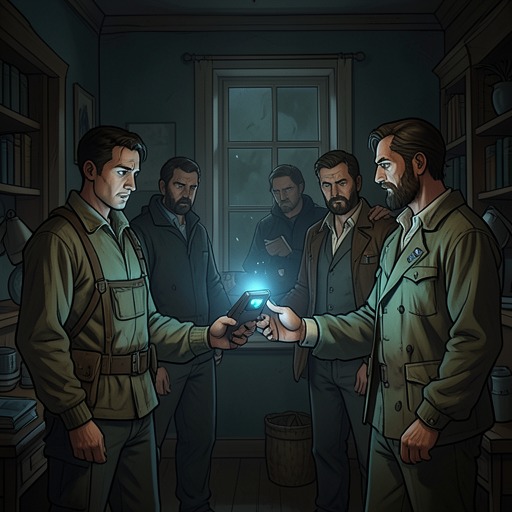
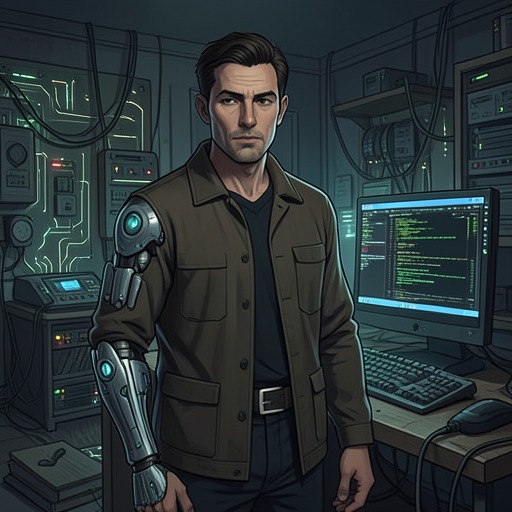
NeuromancerHenry Dorsett Case is the novel’s central console cowboy and its clearest embodiment of the conflict between disembodied freedom and the imprisoning vulnerability of the flesh. At twenty-four, he is already a former prodigy, a drug user, a thief, and a man who has converted despair into a style of living. His decisive movement is not a clean heroic ascent but a damaged return: after losing cyberspace, he repeatedly risks the body he despises until an enforced mission gives him another chance to enter the matrix.## Identity and Background At twenty-two, Case was one of the best cowboys in the Sprawl, trained by McCoy Pauley and Bobby Quine, figures remembered as legends in the business. He operated in a state of near-permanent adrenaline, using a custom cyberspace deck to project his consciousness into the matrix, a consensual hallucination in which data appeared as an inhabitable landscape. His work consisted of penetrating corporate systems for wealthier thieves, whose exotic software opened windows into valuable fields of information. Case’s talent was therefore both technical and experiential: he did not merely manipulate machines but treated cyberspace as the environment in which his most complete self existed.
His fall began when he committed the classic professional betrayal. He stole from his employers, kept part of the material, and tried to move it through a fence in Amsterdam. The employers did not kill him. Instead, they damaged his nervous system with a wartime Russian mycotoxin, leaving him strapped to a bed in a Memphis hotel while his ability burned away micron by micron. He hallucinated for thirty hours, and the injury was sufficiently subtle to be effective without destroying him outright. For Case, whose life had been organized around bodiless exhilaration, this was the Fall: the body he had dismissed as meat became his prison.
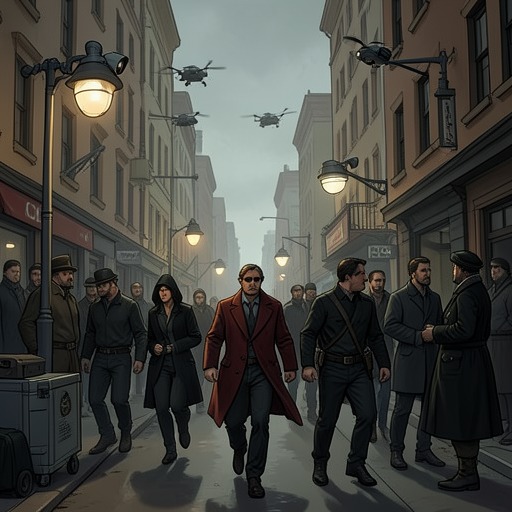
Case took his remaining assets to Japan, converting them into New Yen and spending the money on examinations and consultations in Chiba. The city’s registered clinics and black medical practices drew the techno-criminal subcultures of the Sprawl because of their expertise in implants, nerve-splicing, and microbionics. Yet the clinics admired the precision of his mutilation and then rejected him. With his money disappearing and legitimate transactions difficult for a man carrying cash, he descended into the cheapest hotels and increasingly dangerous street dealings.## Self-Destruction in Night City In Chiba, Case answered hopelessness with acceleration. During his first month he killed two men and a woman over sums that would previously have seemed absurdly small. In Ninsei, the street became the external form of a death wish he had not known he carried. Its black market demanded constant motion: stopping meant sinking without a trace, while moving too fast risked breaking the delicate rules that sustained business. Death was treated as the ordinary penalty for laziness, carelessness, and failed technique, and even a dead person’s organs might continue circulating through clinic tanks to a buyer with New Yen.
Case’s own behavior follows that logic. He no longer carries a weapon or takes basic precautions; instead, he runs the fastest and loosest deals on the street and cultivates a reputation for obtaining almost anything. His customers steadily diminish, and he recognizes that the arc of his destruction is obvious to them. At the same time, part of him takes satisfaction in the expectation that death is only a matter of time. The contradiction is central to his character: he is reckless because he wants the end, yet the part of him that expects death most confidently is also the part that cannot stop thinking about Linda Lee.
His attachment to Linda Lee exposes the emotional cost hidden beneath his contempt for the body. He first saw her in an arcade, her face broken into changing colors by holograms of Wizard’s Castle, Tank War Europa, and the New York skyline. Their first night extended into travel across the Bay, rain along Harajuku, a pachinko parlor, and the intimacy of her holding his hand like a child. Case then watched drugs and tension transform her startled eyes into reflexive need. He saw her personality fragment and her addiction become a consuming pursuit of the next hit. His memory preserves her through illuminated surfaces and artificial images, but the memory is not detached; it is precisely what interrupts his planned self-erasure.## Weapons, Aliases, and the Return to Action When Case believes he is being followed, he responds not with caution but with the exhilaration of a chase. He buys a cobra, a compact steel weapon whose leather-thonged handle conceals three oiled, telescoping spring segments and a bronze pyramidal striking tip. He carries it awkwardly across his body beneath his windbreaker, yet its presence makes him feel safer. The weapon marks a temporary change in his posture: the man who had stopped taking precautions deliberately arms himself and turns pursuit into a tactical game.
The episode also shows how quickly Case converts reality into the form he once inhabited in cyberspace. While moving through Ninsei, he imagines the district as a field of data, with information interacting and becoming flesh in the mazes of the black market. A pursuit resembles a run in the matrix because it allows him to move at high speed while remaining strangely detached from the consequences. He enters the arcade where he first met Linda Lee, breaks through office doors, and returns to a site associated with an earlier deal. The physical world becomes temporarily legible to him only when it can be treated as a system of routes, obstacles, and tactical feedback.
His aliases reinforce the instability of this identity. At a weapons shop he uses a bank chip identifying him as Charles Derek May, a name preferable to Truman Starr, the best passport identity he had previously managed to obtain. Neither alias restores a stable self; each is a disposable instrument for moving through a criminal environment. Even his capacity for action depends on borrowed or improvised structures: other people’s software, false names, rented or purchased weapons, and the remembered rules of the matrix.## Recruitment, Arrest, and the Mission Case’s knowledge and damaged condition make him valuable to a larger operation. Molly identifies Armitage’s suspicious history, including the absence of any record that a person named Armitage took part in Screaming Fist, and suggests that Case investigate him. She also points to Peter Riviera as a certified psychopath and presents the emerging group as a partnership in which Case has little real choice. The recruitment therefore combines opportunity with coercion: Case is wanted because he is exceptionally skilled, but he is also vulnerable enough to be compelled.
The matrix is the conceptual center of his restored purpose. A program describes its origins in arcade games, graphics research, and military experimentation with cranial jacks, then defines cyberspace as a daily hallucination shared by billions of legitimate operators. For Case, this public explanation cannot contain the personal intensity of the medium. The matrix is the place where his consciousness once escaped the body, where data could become architecture, speed, and sensation. His desire to return is consequently more than professional ambition; it is an attempt to recover the identity destroyed by his neural injury.
His mission eventually places him under Turing arrest. The agents identify him by his birth information, BAMA Single Identification Number, and former aliases, then charge him with conspiracy to augment an artificial intelligence. They also reveal that Armitage is already in custody and use the name Corto, which Case recognizes before pretending to forget it. This encounter makes the larger stakes explicit: Case’s criminal expertise has drawn him into a conflict involving artificial intelligence and the legal restrictions placed upon it, while the man who recruited him has already been captured.
Action in the Matrix and Final Trajectory
Case’s return to cyberspace reaches its most intense form during the assault carried by the Kuang Grade Mark Eleven. With Dixie Flatline as his construct companion, he enters a program moving at a speed beyond anything he has previously known in cyberspace. The Tessier-Ashpool ice shatters under the Chinese program’s thrust, exposing an immense neon cityscape formed from the artificial intelligence’s cores. The architecture is both beautiful and dangerous: towers resemble repeated blue replicas of the RCA Building, and the resolution exceeds even the construct’s experience of intrusion.
The operation immediately turns into a contest with an artificial intelligence defense system. A shadow mass rises from the data floor, spreads across the city, and obscures the cores. Dixie identifies it as an AI defense system and warns that, if it is Wintermute, the entity is not friendly. Case responds by trusting the construct’s speed and ordering him to attack. The Kuang reverses, breaks the illusion of being a physical vehicle, climbs above the darkened city, and then dives directly into the defense. Case’s sensory experience becomes unstable under the velocity, but the disorientation does not eject him from the action. His professional identity, once destroyed by the loss of cyberspace, is temporarily restored through command, perception, and collaboration inside the matrix.
The ending grants Case material recovery without resolving his emotional losses. He spends most of his Swiss account on a new pancreas and liver, uses the remainder for a new Ono-Sendai and a ticket back to the Sprawl, and finds work. He also finds a girl who calls herself Michael, suggesting that his life has resumed its capacity for ordinary attachment even though its previous bonds remain unsettled. One October night, while moving through the data structures of the Eastern Seaboard Fission Authority, he sees three small figures at the edge of the data: a boy with Riviera’s long gray eyes, Linda Lee still wearing Case’s jacket, and a third figure who is himself with an arm around her shoulders. The image joins memory, lost companionship, and divided identity in cyberspace rather than restoring them in the flesh.
Case never sees Molly again. His return is therefore deliberately incomplete. He recovers his body through replacement organs, recovers work through a new deck, and recovers access to the matrix, but he does not recover the people who made his earlier life meaningful. The final vision leaves him surrounded by versions, echoes, and impossible intimacies: a self that can stand beside Linda Lee only as an image, and a laughter that is not quite laughter. His trajectory transforms survival into a compromised form of freedom, where the body continues, cyberspace remains available, and loss persists as the price of both.