Event 1
Valentín Esparza asesina a su hija
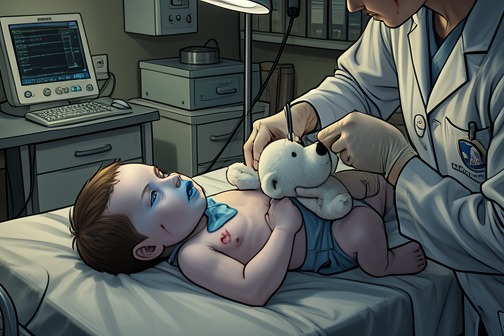
[Valentín Esparza asesina a su hija](entity:event-recall-event-valent-n-esparza-asesin-24602d4e0640) is the killing of [Valentín Esparza](entity:character-recall-character-valent-n-esparza-cb7018222bd8)’s baby daughter, later established as an asphyxia death. The scene’s central object, an [Osito polar](entity:object-recall-object-osito-polar-50671ee32d7b), first appears as the means used in the killing and later becomes a key piece of forensic evidence linking Esparza to it.
## The Killing and Its Forensic Confirmation
The narration shows Esparza placing the Osito polar over the baby’s nose and mouth and holding it there. The child’s movements then cease, and the scene presents her as having fallen into what appears to be deep sleep. That contrast between the appearance of rest and the actual fatal outcome shapes the event’s starkest irony: the apparent calm is not recovery, but the end of the child’s life.
When [Iriarte](entity:character-recall-character-iriarte-888adecf0207) and Amaia examine the child, Doctor [San Martín](entity:character-recall-character-san-mart-n-20513bced19c) removes makeup someone had applied clumsily across the bridge of her nose. Beneath it, he identifies a pressure mark, which had become clearly visible as the post-mortem lividity developed. San Martín’s examination gives the death a medical explanation and exposes the attempted concealment of evidence.
The forensic report later confirms asphyxia as the cause of death. The shape and measurements of the Osito polar’s nose match the pressure mark on the baby’s forehead, while white fibers found at the corner of her lips belong to the toy. Saliva traces on the child and on the toy are attributed respectively to the baby and Esparza. A third trace accounts for the toy’s strong odor, but its origin has not yet been established at this point. Together, these findings turn the toy from a disturbing object at the scene into material evidence connecting Esparza with the killing.
## The Examination as a Turning Point
At the roadside examination, Iriarte set the umbrella on the ground as a screen before opening the bag and loosening its plastic fastener. The child’s partly open lips and the color they retained briefly gave the scene a misleading appearance of life; [Forensic Doctor San Martín](entity:character-recall-character-san-mart-n-387de1ef4b18) broke that impression by beginning a careful examination. Iriarte relayed what he had already told [Amaia Salazar](entity:character-recall-character-amaia-salazar-99849e02d251), and San Martín used a cotton swab to remove the makeup from the child’s nose. The sequence shifts the event from a concealed private act to a documented investigation: a hastily altered appearance is tested against physical evidence, and the apparent calm gives way to the recognition of a death.
## The Final Gesture and the Limits of the Evidence
The baby’s brief touch against the intruder’s wrist is the scene’s only physical contact between them described apart from the killing itself. It ends as her hands relax, an image that the narration frames as sleep even as the later examination establishes death. That contrast makes the apparent stillness a false resolution: the scene’s surface offers rest, while the forensic record corrects it. The evidence identifies Esparza through the toy and its traces, but it does not yet explain the origin of the third trace found on the Osito polar, leaving one detail unresolved.
## Delayed Identification
The scene first withholds the killer’s name, presenting him only as an intruder; later examination and the forensic report place Valentín Esparza within that initially anonymous act. This shift in identification changes how the scene is read: what begins as an act witnessed without a named perpetrator becomes part of a case reconstructed through physical traces. The event’s narrative movement therefore runs from concealed identity toward evidentiary attribution, while leaving one laboratory finding unresolved.
Event 2
Valentín Esparza’s Attempt to Take His Daughter’s Body
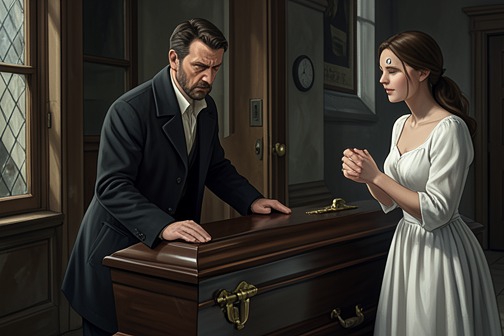
[Valentín Esparza](entity:character-recall-character-valent-n-esparza-cb7018222bd8)’s attempt to take his daughter’s body from a funeral home begins as an apparent act of bereavement and becomes a crucial clue to the novel’s infant-sacrifice investigation. The episode turns on the gap between the medical explanation for the four-month-old’s death and Esparza’s insistence that he had to complete something with her body; his later admission that he delivered her to [Inguma](entity:character-recall-character-inguma-efe674e92e4c) gives that insistence a ritual meaning, without definitively establishing how the child died.
## Circumstances and Suspicion
The investigation initially had a credible medical account of the baby’s death. She had been born prematurely, with immature lungs, and had spent two of her four months in hospital. Although discharged, she had recently been seen by a pediatrician for a minor cold. [Iriarte](entity:character-recall-character-iriarte-888adecf0207) told [Amaia Salazar](entity:character-recall-character-amaia-salazar-99849e02d251) that the doctor had no doubt the child had died from sudden infant death syndrome. The baby’s grandmother, who had been caring for her for the first time, was devastated and searching for an explanation, but she also reported a detail that troubled her: a small, button-like circle on the child’s forehead. When she raised it with her son-in-law, he abruptly ordered the coffin closed.
Iriarte accompanied the grandmother to the funeral home after she returned to the police station. There, they encountered Esparza leaving with a backpack. The way he held it struck Iriarte as wrong; its wet, misshapen bulk seemed unlike an ordinary bag. When Esparza saw the officer, he turned pale and ran. Iriarte caught him by his car, where Esparza shouted that they should leave him alone and that he had to finish what he had started. Iriarte initially understood this as a possible threat of suicide and wondered whether the backpack contained a weapon. The encounter’s first ambiguity was therefore practical as well as emotional: the police did not yet know what Esparza had taken or what he meant to finish.
## Interrogation and the Body
When Amaia questioned him, Esparza did not describe his daughter as a child he was carrying away. He said he had been taking her body. Amaia noticed the distinction: a bereaved relative would more commonly speak of the baby or the girl, whereas Esparza’s wording made the dead child sound like an object. He offered little explanation of where he was going. Asked directly, he appeared confused and said he was going nowhere; he had only wanted to have her a little longer. When Amaia pressed him on why he had taken the body and been stopped beside his car, he fell silent.
His repeated demand that the child not be cremated sharpened the mystery. He said that the body must not be cremated and that he had to finish. The insistence was not presented as a simple request about funeral arrangements: it echoed the unfinished purpose he had mentioned during his arrest. Amaia connected the statements and asked what he meant by finishing. The body’s intended destination remained undisclosed, and Esparza’s silence left the immediate plan unresolved.
## Admission and Ritual Meaning
Amaia eventually accused Esparza of killing his daughter. He shouted that he had not killed her, then supplied a different and more disturbing account: he had delivered her. The wording shifts the question from what he did to the child’s body to whom he gave it and for what purpose. Later, [Zabalza](entity:character-recall-character-zabalza-12fb8d3243c0) reported that he had sent recordings from the cells to someone able to read lips. Although the audio was inaudible, the lip-reader was certain that Esparza had said he had delivered her to Inguma, like many other sacrifices. A search of the police system found no person or alias under that name, leaving the reference unexplained at the time.
Subsequent accounts of the cult’s beliefs provide a framework for understanding the admission, but do not settle every fact about this particular death. A witness describes a ritual in which a child was to be sacrificed to Inguma by being deprived of air, after which the body was to be ceded as an offering. The stated rules required a girl under two years old who had not been baptized; the group regarded the soul in the first two years of life as being in transition, and therefore especially suitable for an offering. Esparza’s daughter was four months old and female, but the evidence here does not establish whether she was baptized or prove that the ritual account describes precisely how she died. The doctor’s diagnosis and Esparza’s confession remain distinct parts of the case rather than a fully reconciled explanation.
## Consequences and Significance
The episode makes the body itself the point of conflict. Esparza’s wish to keep his daughter longer sounds, at first, like grief; his insistence against cremation and his need to finish suggest that the body also has a purpose beyond private mourning. His admission that he delivered her to Inguma turns the attempted removal into evidence of a wider sacrificial practice, while preserving an important uncertainty: he denies killing the child, and the scene does not conclusively disprove the medical account of her death.
That uncertainty gives the incident its investigative force. The grandmother’s observation, Esparza’s odd handling of the backpack, his language about the body, and the lip-read confession accumulate into clues that cannot be explained by bereavement alone. The attempt is not simply a failed effort to take a daughter home; it opens a path from an apparently ordinary infant death to the novel’s concealed system of ritual offerings.
Event 3
Berasategui’s Death in Prison
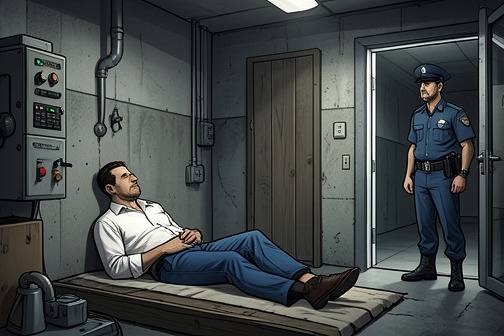
[Berasategui’s Death in Prison](entity:event-recall-event-berasategui-e91752be2631) begins as an apparent medical event and becomes a murder-adjacent investigation into assistance, concealment, and the dead man’s control over his final image. Found in his cell at Pamplona prison, [Berasategui](entity:character-recall-character-berasategui-41d5fed3f8c7) appears untouched and almost ceremonially arranged. [Amaia Salazar](entity:character-recall-character-amaia-salazar-99849e02d251) rejects the initial impression of natural death: the evidence eventually indicates that he took a powerful tranquilizer himself, but that a prison worker helped make the act possible.
## Discovery and the apparent natural death
Amaia learns of the death in the morning, when [Inspector Iriarte](entity:character-recall-character-inspector-iriarte-f7159785492e) calls to report that Berasategui has been found dead in his cell at Pamplona prison. The prison director is waiting at the entrance, visibly agitated, and offers to take the investigators to his office. Amaia declines the detour and asks to see the body immediately. A prison officer leads them through successive security checkpoints to the isolation area, where a guard stands outside Berasategui’s heavy cell door.
The director explains that the prison doctor has found no sign of violence. Berasategui was isolated at the judge’s request and had spoken to no one since the previous day. A prison officer noticed that he was motionless and raised the alarm; only the prison doctor and director had entered before the investigators were called. The director therefore believes the death may have been natural. The cell offers little to suggest a struggle: it is clean, orderly, and stripped of personal belongings. Berasategui lies fully dressed, shoes on, on a bed whose covers are stretched taut. His hands are crossed over his chest, his eyes closed, and his face relaxed. His perfume still lingers in the cell, while the precision of his posture makes him look less like a man who has simply died than a body arranged for viewing.
The physical appearance complicates the natural-death explanation. Berasategui was thirty-six, fit, and had a gym at home; as a doctor, Amaia reasons, he would likely have recognized signs of serious illness. The prison doctor notes that the apparent signs point toward heart failure and that the body shows no defensive injuries, petechiae, or visible suffering. [Fermín Montes](entity:character-recall-character-ferm-n-montes-423177b3d428) observes that there is nothing in the cell with which Berasategui could have injured himself. These findings explain why the first assessment leans toward a quiet death, but they do not satisfy Amaia.
## A death staged as an image
Amaia reads the bed and body as a deliberately composed scene. Berasategui lies at the exact center of the bunk; his clothes are smooth, his shoes remain on and clean, and his hands have been placed where they would be seen. To her, the arrangement is consistent with his vanity and narcissism: he would not allow others to discover him in a humiliating or undignified state. His apparent serenity is therefore not proof of a natural death but part of the problem to be explained.
[Jonan Etxaide](entity:character-recall-character-jonan-etxaide-e04928c45e0f) points out that suicide does not ordinarily fit a narcissistic personality. Amaia accepts the contradiction rather than resolving it too quickly. Suicide seems at odds with Berasategui’s self-regard, yet the deliberate presentation of his body also seems precisely like something such a man might control. She concludes that he lay down and died, but insists that he must have had help. Her inference shifts the investigation from how he arranged himself to how the means of death reached a sealed, monitored cell.
A closer examination supplies another detail beneath the polished appearance. Under a flashlight, Amaia notices pale tracks on Berasategui’s tanned skin, running through the emerging lines beside his eyes. [Forensic Doctor San Martín](entity:character-recall-character-san-mart-n-387de1ef4b18) identifies them as tears. The pillow is darker with moisture, and Amaia interprets the traces as evidence that Berasategui cried extensively while lying there: his self-pity, in her reading, did not cancel his decision to die. The wet pillow makes the scene less like an effortless, peaceful passing and more like a final act accompanied by grief and self-absorption.
## Forensic evidence and the method
The initial inspection cannot settle the cause, so the autopsy provides the next turn in the reconstruction. When Amaia and Jonan arrive, Forensic Doctor San Martín is working among a room crowded with medical students and is already weighing the internal organs. Toxicology has revealed an excessive quantity of a very potent tranquilizer. [San Martín](entity:character-recall-character-san-mart-n-20513bced19c) has identified its active ingredient but is not yet prepared to name the product. Because Berasategui was a psychiatrist and a doctor, he would have known which tranquilizer to use and in what quantity.
The examination also suggests how he took it. Such drugs are commonly injected, but tiny abrasions along the sides of the tongue point to oral ingestion. Amaia inspects the small blisters through a magnifying glass as San Martín draws out the tongue with flat forceps. She notices a sweet, acidic odor. San Martín finds remnants of the medication in the stomach and infers that Berasategui reduced his intake of food and water to accelerate absorption; contact between the liquid and the mucous membrane had also prompted a considerable production of stomach acid. San Martín proposes opening the stomach, trachea, and esophagus to examine the effects of the fluid, but Amaia must return to [Elizondo](entity:location-recall-location-elizondo-4e0690247b99). She asks him to communicate the product’s brand once it is established, explaining that its source could clarify both how it was obtained and who helped deliver it.
## The prison worker and the investigation
Security footage turns Amaia’s suspicion of outside assistance into a specific lead. It shows a prison worker approaching Berasategui’s cell and slipping something through the hatch. The object cannot be made out in the image, but investigators believe it may have been what Berasategui used to kill himself. By the time the footage is reviewed, the worker’s shift has ended and he cannot be found at home; the patrol sent there fails to locate him. The possibility that he has fled becomes part of the investigation even before the drug’s precise product has been identified.
Amaia later explains the inquiry’s progress to [Markina](entity:character-recall-character-markina-7852f893b7e2). The missing worker was not one of the officers who had accompanied Berasategui during Amaia’s earlier meeting with him; those personnel had already been suspended. The worker lived with his parents, who allowed investigators to search his room. They found nothing incriminating there apart from a plastic bag from a pharmacy far from his home. That purchase seemed suspicious. When shown the worker’s photograph, the pharmacist remembered him because he had requested an unusual tranquilizer in ampoules. The prescription and medical registration number appeared valid—the registration had not yet been cancelled—so the pharmacist had been obliged to dispense the drug.
The recording shows the worker remaining by the cell door for about a minute. Investigators suspect that he waited for Berasategui to drink the vial’s contents, then took the ampoule away to dispose of it. The worker is placed under search, and investigators check the homes of his relatives without finding him. France or Portugal are suggested as possible destinations, not confirmed locations. The evidence thus distinguishes Berasategui’s own act from the assistance that enabled it: he administered the poison, while another person obtained and brought it into the prison, waited outside the cell, and apparently removed the container.
The event’s significance lies in that unresolved boundary between choice and complicity. The immaculate bed, the crossed hands, the tears, and the hidden vial each alter the meaning of the same death: what first looked natural becomes a controlled suicide, and what looked solitary proves to have depended on another person’s intervention. Amaia’s attention to the staged body exposes the concealment, while the autopsy and pharmacy trail give her intuition a material basis. The worker’s disappearance leaves the practical details of the assistance unfinished, but the investigation has already established that Berasategui did not die through a simple, unassisted collapse.
Event 4
Rosario’s Escape from the Clinic and Disappearance After the Storm
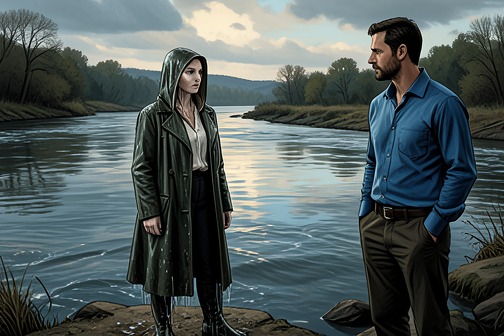
[Rosario](entity:character-recall-character-rosario-381ff2a9040d)’s escape from the clinic and disappearance after the storm is a turning point because it leaves her fate uncertain while exposing how much of the night may have been prepared in advance. The river offers an apparently conclusive explanation: her coat is found there, and a large search supports the belief that she was swept away. Amaia, however, insists that what she witnessed does not fit the image of a frail older woman overcome by the elements. Her refusal to accept the official conclusion turns a presumed death into an unresolved pursuit.
## Background and the Escape Plan
Amaia’s reconstruction begins with Rosario’s departure from the clinic alongside [Doctor Berasategui](entity:character-recall-character-doctor-berasategui-f71c7aa55639). In questioning him, she argues that the escape was not an improvised flight. A gap separates Rosario’s exit from the hospital and her later appearance at [Engrasi](entity:character-recall-character-engrasi-a3e51d66f12b)’s house; Amaia says Rosario did not change clothes either at Doctor Berasategui’s father’s house or in his car. To her, that interval means the pair went somewhere else, and the detour points to a prepared safe house in [Baztán](entity:location-recall-location-bazt-n-b5321a4399fc).
Amaia’s theory gives the otherwise unexplained pause a practical purpose. The hidden house could provide a place to keep objects that Doctor Berasategui could not discard, shelter Rosario, and allow a change of clothes before they continued. Amaia further suspects that he took Rosario there that night and may have returned there after the cave. Doctor Berasategui denies knowing what she means, but his answer does not resolve the missing interval or identify an alternative place where Rosario could have changed.
[Sarasola](entity:character-recall-character-sarasola-4a4a102d3175) later offers a broader interpretation of Doctor Berasategui’s role. He believes [Berasategui](entity:character-recall-character-berasategui-41d5fed3f8c7) had spent years encouraging men to commit murders, had constructed a plot implicating Amaia by leaving her ancestors’ bones in a church, and had planned Rosario’s departure from [Clínica Santa María de las Nieves](entity:location-recall-location-53d6264cc750) and her escape from the clinic. In Sarasola’s view, the arrangements for that night were meticulous enough to account for contingencies. This remains an assessment, not a confirmed account of every step, but it strengthens the possibility that Rosario’s disappearance was the outcome of planning rather than a sudden decision.
## The Night, the Cave, and the River
Amaia’s defense of Rosario rests on what she says she saw. She recalls that Rosario left the hospital on her own feet, came to the house where Amaia was, and took [Ibai](entity:character-recall-character-ibai-8322a92bd103). From the place where the car had been left, Rosario then walked hundreds of metres through the mountain to the cave. Amaia emphasizes the contrast between the older woman others might imagine and the Rosario she encountered: determined and sure-footed. In her account, Rosario’s actions that night demonstrate capacity and resolve, not helplessness.
The conditions nevertheless make the escape difficult to explain. It took place at night, during a storm, with the river in flood. [James](entity:character-recall-character-james-b40e84036a54) challenges Amaia’s assumption that Rosario could have managed such a journey, pointing out that she was an elderly woman who would have had to ford the swollen water. His objection is practical: the weather, terrain, and river all make survival seem unlikely. Amaia’s answer is experiential rather than statistical; she had been there and had seen Rosario move through the night.
The cave is also central to Amaia’s theory of the separation between Rosario and Doctor Berasategui. She believes the hidden house provided a staging point, and that after leaving the cave Rosario may have returned to it, leaving him behind. The proposed route is not established as fact, but it explains why Amaia questions the assumption that the river was the final destination. She asks where Rosario went after the cave and where she is now, directing attention away from the coat and toward the unaccounted-for movements of the people involved.
## Search and Competing Explanations
The evidence for drowning is substantial within the account. More than two hundred people searched for Rosario for hours; her coat appeared in the river; and the Spanish National Guard, Civil Protection, [Inspector Iriarte](entity:character-recall-character-inspector-iriarte-f7159785492e), and a judge agreed that the water had carried her away. James invokes this consensus against Amaia, treating the search and the recovered coat as a conclusion supported by both the physical evidence and the authorities’ judgment.
Amaia does not deny that the river explanation is plausible. She rejects it. As she rocks Ibai, who has begun to whimper in response to the tension, she shakes her head and maintains that Rosario was not swept away. The scene places an official account built from traces and a search against Amaia’s personal witness to Rosario’s actions. Her certainty cannot establish where Rosario went, but it prevents the evidence of the coat from closing the question.
## Investigation and Unresolved Fate
The later questioning of Doctor Berasategui makes the disappearance an investigative problem rather than merely a search for a body. Amaia presses him about the house, the unaccounted time, and whether Rosario is alive. His evasive responses do not confirm her theory, yet she reads his apparent preparation as evidence that he had planned for the escape and that Rosario followed the plan. His refusal to identify the place leaves the proposed safe house as a lead rather than a discovery.
[Jonan Etxaide](entity:character-recall-character-jonan-etxaide-e04928c45e0f) also asks Sarasola whether Doctor Berasategui discussed Rosario’s escape and the events of that night during prison visits. Sarasola says their conversations were technical and abstract, focused on Berasategui’s own behavior; he does not provide a firsthand account of Rosario’s route. He warns that people who have approached evil lie, so their words should not be trusted. Despite that limitation, Sarasola concludes that Rosario may still be somewhere outside. Her survival remains unverified, and the event ends not with a recovered body or confirmed refuge, but with competing interpretations of an absence that Amaia refuses to call a death.
Event 5
Attempted Ritual Sacrifice of Ibai
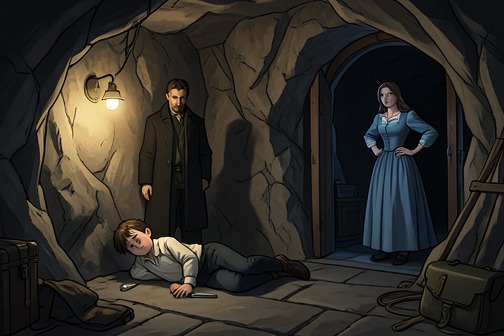
The [Attempted Ritual Sacrifice of Ibai](entity:event-recall-event-ibai-cad8e61af84d) is the point where the investigation’s clues become an immediate threat to [Amaia Salazar](entity:character-recall-character-amaia-salazar-99849e02d251)’s family: [Rosario Salazar](entity:character-recall-character-rosario-salazar-f6de4b66c7ed) and [Doctor Berasategui](entity:character-recall-character-doctor-berasategui-f71c7aa55639) brought [Ibai](entity:character-recall-character-ibai-8322a92bd103) to a cave intending to kill him in a human sacrifice. Amaia was present, and Ibai survived. The episode also gives the desecrations at [Arizkun](entity:location-recall-location-17ad7e278ae3) a more alarming possible meaning, as [Sarasola](entity:character-recall-character-sarasola-4a4a102d3175) interprets the cave and the use of children’s bones through the history and ritual logic of witchcraft.
## Background and Discovery
Amaia explains the danger to Sarasola by showing him a photograph of the cave interior. She identifies it as the place where Doctor Berasategui and Rosario Salazar had been preparing to kill her son. She suspects the conspicuous [Tarttalo](entity:creature-recall-creature-tarttalo-d759d60c6a50) murders may have drawn attention away from something more important: the profanations, the use of bones from children in her family, and the reason Ibai had been marked for death. To her, the planned sacrifice and the desecrated remains belong to the same investigation, though the precise connection still needs to be established.
Sarasola reads the photograph as the setting for a human sacrifice, describing the planned killing as both a witchcraft practice and an offering to the Malign. He connects the use of human remains, especially those of children, to the profanations at Arizkun, while distinguishing the use of remains from the killing of a child as an offering. His interpretation places the cave episode within a much older religious history: accounts investigated during the [Spanish Inquisition](entity:organization-recall-organization-6c92825ae14b) included unresolved crimes against young children and the subsequent disappearance of their bodies, although those reports were later dismissed as false.
## The Journey to the Cave
Afterward, [James](entity:character-recall-character-james-b40e84036a54) questions whether [Rosario](entity:character-recall-character-rosario-381ff2a9040d) could really have managed the journey Amaia describes. He points to her advanced age, the storm, the flooded river, and the large search that followed her disappearance. More than two hundred people looked for her; her coat was found in the river, and the [Guardia Civil](entity:organization-recall-organization-guardia-civil-268ba482c33f), Civil Protection, [Iriarte](entity:character-recall-character-iriarte-888adecf0207), and the judge all accepted that the water had carried her away.
Amaia rejects the idea that Rosario was too frail to act. She insists that Rosario left the hospital on foot, came to the house, took Ibai, and travelled on through the mountain. From where the car was left, Rosario walked hundreds of metres to the cave. Amaia says that she was there and saw Rosario emerge as a determined, assured woman rather than the helpless old woman James imagines. The dispute does not establish where Rosario went afterward, but it leaves her fate unresolved and exposes the gap between the official explanation and Amaia’s direct experience.
## The Ritual Logic
Sarasola’s explanation gives the intended killing a ritual framework, while [Jonan Etxaide](entity:character-recall-character-jonan-etxaide-e04928c45e0f) describes the belief that children younger than two occupy a transitional state between worlds and can therefore serve as vehicles for communication with spiritual realms. Sarasola adds that a child’s remains could be valued for ritual use, naming bones, teeth, nails, hair, and the powder made from small bones. He notes that the long bones called mairu-beso had been used in the Arizkun desecration.
A later account of the cult’s rules makes the violence more specific. The child was to be sacrificed to [Inguma](entity:character-recall-character-inguma-efe674e92e4c) by deprivation of air, after which the body would be ceded as an offering. The account says that the victim had to be a girl younger than two and unbaptized; baptism would itself constitute an offering and commitment to another god. It also explains the age rule through the belief that the soul remains in transition until the second year. These statements describe the group’s ritual requirements, not independently verified supernatural effects, and they do not establish that every condition applied to Ibai’s attempted sacrifice.
## Consequences and Significance
The attempt makes Amaia’s investigation inseparable from her responsibility to protect her child. In a later confrontation, a witness describes the ritual as something parents themselves were required to carry out, and Amaia thinks of Ibai lying on the cave floor. The account’s requirements—age, manner of death, and the child’s status—show how the group turned killing into a system of rules and obligations, while the evidence at Arizkun suggests that children’s remains were also incorporated into its practices.
The episode also changes the meaning of Rosario’s disappearance. James treats the river and the search as persuasive evidence that she drowned; Amaia’s memory of Rosario’s purposeful movement to the cave keeps open the possibility that the accepted account is incomplete. The unresolved question of Rosario’s fate shadows the survival of Ibai: the immediate sacrifice failed, but the danger it revealed reaches beyond one cave, linking the family’s ordeal to the investigation of ritual crimes and missing children’s bodies.
## Aftermath
When a bereaved witness later tells Amaia that the opening of a family tomb was stopped and that a child’s body was missing, she explains that a successful inspection might have confirmed the other children were present while leaving the missing girl undiscovered. Her words illuminate the wider stakes of the cave episode: a child’s absence can be dismissed as grief or delusion until physical evidence forces the question into the open.
Amaia’s response remains active rather than consoling. She promises a grieving partner that she will catch the person responsible, even as he tells her that catching the culprit cannot restore the dead. At the end of the investigation, after learning that the dangerous group has been stopped, Amaia breaks down in [Engrasi](entity:character-recall-character-engrasi-a3e51d66f12b)’s arms, grieving the deaths, the violated remains, and what has been lost. The attempted sacrifice is thus not only a rescue from immediate danger; it is part of the violence that leaves Amaia exhausted and bereaved even after the threat has been confronted.
Event 6
Amaia’s Twin Sister’s Death and the Discovery of Her Empty Grave
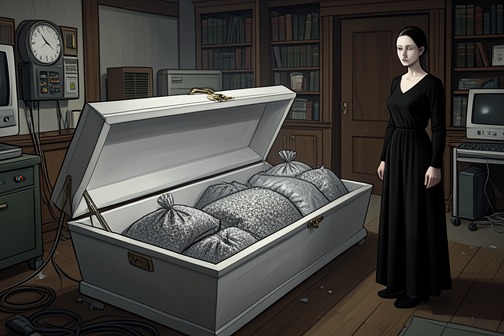
[Amaia Salazar](entity:character-recall-character-amaia-salazar-99849e02d251)’s twin sister was officially said to have died of crib death, yet the coffin supposedly holding her remains was empty. When Amaia opened it, she found bags of gravel arranged to make it seem weighted with a body. The discovery unsettled the accepted account of her sister’s death and became an early, intimate instance of the empty-coffin mystery that recurs in the investigation.
## The Official Account
Amaia tells Elena that she was born beside a twin sister who officially died of crib death. The evidence gives no further details about the sister’s death or the circumstances of her burial; its force lies in the gap between the accepted record and what Amaia later found. A death treated as settled had left behind a grave that could not verify the story attached to it.
## The Empty Coffin
About a month before Amaia recounts the discovery to Elena, she opened a white coffin in the family tomb in a cemetery in [San Sebastián](entity:location-recall-location-ad5350645bef). Instead of her sister’s remains, she found bags of gravel placed at the bottom to pass for a body. The substitution was not merely an empty space: the weight had been deliberately simulated, making the coffin appear to contain what was missing.
That detail takes on added significance when Amaia later encounters another empty coffin. In [Valentín Esparza](entity:character-recall-character-valent-n-esparza-cb7018222bd8)’s case, bags had likewise been placed inside an empty coffin to imitate a body. The parallel does not establish who removed Amaia’s sister or explain why; it does make the earlier discovery part of a recurring investigative pattern rather than an isolated family anomaly.
## What the Discovery Changes
When Amaia tells Elena that she located the grave but found the coffin empty, Elena’s reaction is immediate and physical: she asks where the sister is buried, breaks down, and orders Amaia out of her house. The discovery brings the unresolved absence into the present, but it offers no answer about the missing remains or the sister’s actual fate.
The empty-grave question also matters beyond Amaia’s family. [Yolanda Berrueta](entity:character-recall-character-yolanda-berrueta-a229211a5262) later reflects that, had the twins’ tomb been opened and appeared to confirm the expected account, no one might have noticed that her baby was missing; she fears that people would have continued to dismiss her as delusional. Her reflection places the search for absent infant remains against the danger of treating maternal grief as proof of madness rather than as a claim that must be investigated.
## Narrative Significance
The event joins bereavement to forensic uncertainty. A grave ordinarily stands as material confirmation of death and a place where the living can locate the lost; here, the coffin’s contents undermine that assurance. The gravel bags make the absence tangible while also showing how an appearance of burial could be manufactured.
The evidence does not identify who emptied the coffin, establish the manner of the twin’s death, or confirm what became of her remains. That unresolved boundary is central to the event: Amaia’s discovery does not close a childhood loss but exposes how little the official account can prove, and why apparently settled infant deaths and burials require scrutiny.
Event 7
Desecration of the Arizkun Graves
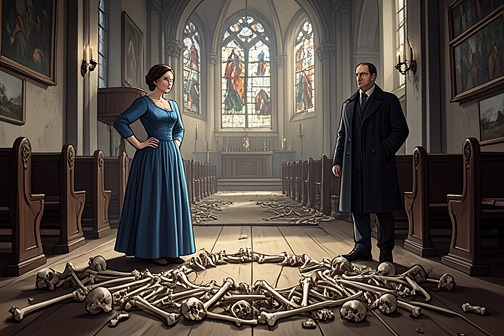
The [Desecration of the Arizkun Graves](entity:event-recall-event-arizkun-81f2ca2927fb) is the investigation’s pivot from an apparent act of grave desecration to evidence of a wider system of ritual violence. The unusual bones left in a church point [Amaia Salazar](entity:character-recall-character-amaia-salazar-99849e02d251) toward [Rosario](entity:character-recall-character-rosario-381ff2a9040d) as the only person who could have supplied the knowledge needed to locate her family’s [Mairu-beso Bones](entity:object-recall-object-mairu-beso-a2b0fb7e1a6d); the discovery also helps her connect the desecrations to the attempt to sacrifice her son and to a secret group’s use of children’s remains.
## The Bones and the Question of Access
Among the bones abandoned in the church, Amaia identifies some as different from the others. She reasons that Garrido could not have known where to find them, and that no one else would have known either unless they had spoken with Rosario. The bones therefore raise two linked questions: who had access to her information, and where was the body—or the grave—from which the remains had come? Amaia puts those questions directly to [Doctor Berasategui](entity:character-recall-character-doctor-berasategui-f71c7aa55639), whose composure and faint, self-satisfied smile offer no immediate resolution.
That exchange makes the desecration more than damage to a burial place. The remains are evidence of knowledge being transferred, and of a body or grave whose location is still in dispute. Amaia’s suspicion is sharpened by the particularity of the bones: their significance depends on the family history and on information she believes Rosario alone could have provided.
## From Desecration to a Larger Pattern
When Amaia later shows [Sarasola](entity:character-recall-character-sarasola-4a4a102d3175) a photograph of the cave where Doctor Berasategui and Rosario had intended to kill her son, she argues that the [Tarttalo](entity:creature-recall-creature-tarttalo-d759d60c6a50) murders are a conspicuous distraction from something more important. In her reading, the profanations, the unmistakable use of her family’s children’s bones, and the reason her son was targeted—and ultimately not killed—belong to the same pattern. She also suspects that an initially less alarming act of desecration caused alarm within the [Iglesia católica](entity:organization-recall-organization-iglesia-cat-lica-8e7279ea77a7).
Sarasola interprets the photograph as the setting for a human sacrifice and places the [Arizkun](entity:location-recall-location-17ad7e278ae3) remains within the practices he associates with witchcraft and offerings to evil. He distinguishes the use of human remains, especially those of children, from the killing of a child as the offering itself, which he describes as the most extreme form of that practice. His account gives the desecrated remains a ritual meaning, while Amaia’s investigation supplies the practical question of who knew where to find them and why they were used.
## Historical Precedent and Ritual Rules
To explain why such evidence could be overlooked, Sarasola recalls the seventeenth-century investigations of Salazar and Frías into the presence of evil in the valley and across the French border. As he recounts it, the investigator found local magical practices deeply rooted in older cultural beliefs, interwoven with Christianity. Sarasola also points to unresolved declarations concerning the deaths of children under two and adolescent girls, and the later disappearance of their bodies. Once confessions extracted during the Inquisition were judged wholly false, those accounts were left without resolution.
The novel does not establish that the Arizkun desecrations were simply a continuation of those historical crimes. Rather, Sarasola’s history offers a precedent for treating the bones and the missing bodies as a pattern worth investigating, rather than dismissing them as isolated or incredible claims. His explanation also makes clear how institutional judgments about unreliable testimony could erase evidence of violence against children.
The ritual logic described later supplies more specific criteria. [Jonan Etxaide](entity:character-recall-character-jonan-etxaide-e04928c45e0f) explains the belief that children remain between two worlds until the age of two and can therefore serve as intermediaries with spiritual worlds. A witness adds that a child offered to [Inguma](entity:character-recall-character-inguma-efe674e92e4c) had to be a girl, under two, and unbaptized; baptism was understood as an offering and commitment to another god. The same account says that the child’s body was to be surrendered after death and that victims were selected in cycles by sex, age group, and circumstance. These are the group’s beliefs and rules, not independently verified supernatural facts, but they help explain why the Arizkun bones become central to Amaia’s inquiry.
## Consequences for the Investigation
The grave desecration gains further weight beside Amaia’s concern that her son had been selected for sacrifice. She sees the remains not as an incidental trace of the Tarttalo murders but as part of the same hidden structure that made the attempted killing possible. Sarasola’s interpretation and the later testimony about the group’s rules give her a framework for connecting the use of children’s bones with the group’s ritual aims, while the unresolved question of the body’s location keeps the evidence concrete and investigative.
The novel also places this uncertainty alongside [Yolanda Berrueta](entity:character-recall-character-yolanda-berrueta-a229211a5262)’s insistence that her children’s bodies are not all in their grave. After a judge stops the proposed opening, Yolanda explains that, had the tomb been opened merely to confirm the presence of the other children, no one might have discovered that one baby’s body was missing—or listened to another mother in [Elizondo](entity:location-recall-location-elizondo-4e0690247b99) who had also lost a child. Her account is not proof that the Arizkun remains and the missing infant bodies share a single origin, but it reinforces the danger of accepting a grave’s apparent contents as conclusive.
## Resolution and Significance
The desecration’s decisive significance lies in the way it changes the meaning of the remains. What first appears to be the disturbance of graves becomes a clue to hidden access, missing bodies, and a ritual system whose rules reach into the attempted sacrifice of Amaia’s son. It also joins present-day investigation to older, suppressed accounts without reducing the historical gap between them to a proven unbroken tradition.
After the group is stopped, Amaia tells [Elena Ochoa](entity:character-recall-character-elena-ochoa-92478c49edc9)’s daughter that her mother did not die by suicide and that her letter helped bring the child-killing sect to a halt. That aftermath confirms the wider investigative stakes surrounding the desecrations: the bones were part of a case in which concealed information and dismissed warnings had allowed danger to persist. Amaia’s later grief, which she releases in [Engrasi](entity:character-recall-character-engrasi-a3e51d66f12b)’s arms before preparing to act, registers the human cost of confronting the deaths, the remains, and the secrets attached to them.
Event 8
Multiple Suspicious Sudden Infant Deaths in Baztán
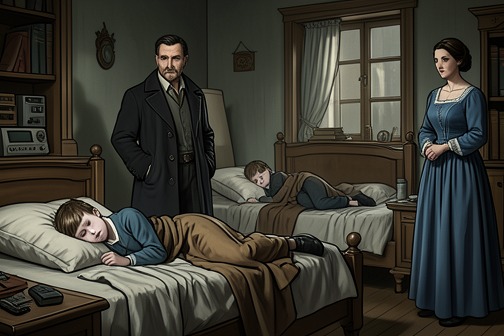
[Multiple Suspicious Sudden Infant Deaths in Baztán](entity:event-recall-event-bazt-n-cabd2922eedf) is the pattern [Amaia Salazar](entity:character-recall-character-amaia-salazar-99849e02d251) begins to discern behind a set of infant deaths certified as sudden infant death syndrome. The cases matter not because the diagnosis alone proves wrongdoing, but because the medical uncertainty surrounding it, combined with irregular details in several families’ circumstances, gives Amaia reasons to look again at deaths that had been treated as closed.
## Medical Classification and Early Anomalies
[Sudden infant death syndrome](entity:state-recall-state-88e8829aec73) describes the unexpected death of a child, usually under one year old, while asleep and without apparent symptoms of distress. The diagnosis is made by exclusion: if an autopsy finds no other cause that explains the death, the case may be classified as sudden infant death syndrome. The category’s uncertainty is therefore built into its method. It identifies what remains after other explanations have not been found, rather than establishing a single cause that can be positively demonstrated.
The scale of the problem initially appears consistent with ordinary medical statistics. Across Europe, two in every thousand children die this way, and more than ninety percent of those deaths occur during the first six months of life. It is the leading cause of death among healthy infants after their first month. In [Navarra](entity:location-recall-location-4f91a2876b8d), seventeen such deaths were recorded over five years, four of them in the [Baztán Valley](entity:location-recall-location-bazt-n-valley-3903924b71ef); those figures matched the European average. Risk and protective factors cited in the medical document ranged widely, from prenatal care and sleeping position to breastfeeding and whether adults smoked in the home. Winter was the only factor singled out as a more apparent pattern, with most cases occurring in that season.
The review nonetheless uncovered a small institutional trace that invited closer scrutiny. Every infant in the relevant group had undergone an autopsy and been declared a sudden infant death, but social services had opened follow-up investigations into two families. The records offered no further details, and both inquiries appeared to have ended without developments. That quiet closure did not establish that either family had caused a death; it did mean that the original files preserved concerns that the later summary could not explain.
When Amaia contacted the forensic pathologist who had examined two of the infants, the autopsies themselves appeared ordinary: both children were apparently healthy girls, and neither examination disclosed evidence that their deaths were unnatural. One baby had slept face down; the other had not. The pathologist’s doubts arose instead from the parents’ behavior, an unsettling contrast to the absence of physical findings.
In one family, the father requested a meeting and nearly threatened the pathologist over whether his daughter’s organs would remain inside her body. He spoke of the black market not in donated organs but in the trade in corpses, and seemed to know what a dead child’s body might fetch. His wife repeatedly tried to quiet him and apologized, attributing his conduct to grief. The pathologist nevertheless believed his comments sounded informed. She contacted social services partly because the couple’s older child had sat nearby listening to the conversation; a worker later reported that the children were being cared for, and the inquiry ended without further action.
## Grief, Suspicion, and the Family Left Behind
A second family unsettled the forensic pathologist for the opposite reason. After the autopsy, the parents waited at the Institute of Legal Medicine not in visible grief but in an apparent state of exhilaration. As she left the room, she heard the father quietly tell his wife that everything would be all right from then on. Their smiles seemed genuine, not an effort to console one another. The pathologist had seen many forms of response to death, including the calm of religious conviction, but this seemed unlike resignation. She alerted social services because two other children, aged two and three, remained in the household. The family was poor, living in an unheated ground-floor flat lent by a relative, and the father had been unemployed for years; a social worker later reported that the children were nevertheless well cared for, and the inquiry ended there.
The pathologist also recalled a third case, from March 1997, when a train derailment at Huarte Arakil killed eighteen people and overwhelmed the forensic service. In the middle of that disaster, parents insisted on speaking with her about their dead infant and pressed for the body to be released quickly. The mother was suffering from advanced cancer, and the couple had no other children. Even in a room full of devastated relatives, their haste and apparent lack of sorrow struck the pathologist as anomalous: they seemed to be waiting for a car to come back from a repair shop rather than to receive a child’s body. She had kept notes and offered Amaia the file and the social worker’s contact details, leaving the meaning of the parents’ behavior unresolved rather than treating it as proof.
The investigation’s uncertainty also finds a personal echo in [Judge Markina](entity:character-recall-character-judge-markina-f914c84921ae)’s childhood. When he was twelve, his parents’ three-week-old son died after being fed and put back to bed; around midday, his mother found him and tried to breathe life into him. [Markina](entity:character-recall-character-markina-7852f893b7e2) remembered his father struggling to pull her away from the baby’s body and his own helpless witness to the scene. His mother’s grief then hardened into a lasting rupture: after hours of screams came silence, and she would speak only to ask where her baby was. She stopped addressing or touching her husband and surviving son, blamed herself, attempted suicide, and was admitted to a psychiatric clinic. The death had no explanation she could accept, and the loss consumed the family that remained. In the larger pattern of infant deaths, the case shows how a classification can leave both cause and consequence unsettled: the absence of an identified cause did not make the bereavement any less devastating, while unusual behavior could raise questions without resolving them.
## Forensic Evidence and the Limits of the Pattern
The investigation’s most concrete turn came from the examination of [Valentín Esparza](entity:character-recall-character-valent-n-esparza-cb7018222bd8)’s daughter. [Forensic Doctor San Martín](entity:character-recall-character-san-mart-n-387de1ef4b18) told Amaia Salazar that the findings pointed to suffocation while the child slept, with a soft object such as a pillow or cushion pressed over her face. A pressure mark crossed the bridge of her nose, and soft white fibers were found in the folds of her lips. The initial results also included several traces of saliva on the child’s face; most appeared to be hers, but at least one sample came from another source.
The follow-up findings tied the physical marks to the stuffed bear associated with the child. Its nose matched the shape and dimensions of the pressure mark, and the white fibers belonged to the toy. Saliva on the baby and the bear came from the child and Valentín Esparza, but a third trace remained unexplained. The bear’s penetrating, nauseating odor was traced to that sample, whose unusually high bacterial content led the examiner to conclude that the saliva-like fluid was not human. He could offer only a tentative zoological possibility: it might have come from a Komodo dragon. That strange result did not identify who had handled the toy, but it made the evidence harder to dismiss as an ordinary residue from a parent’s farewell kiss.
Amaia also questioned that innocent explanation on practical grounds. The child’s grandmother had bathed her before putting her to bed; Amaia reasoned that this would have removed saliva left by either parent. The forensic results therefore sharpened the difference between the broader cluster of deaths, where autopsies had failed to disclose another cause, and this child’s case, where a specific mechanism and matching object emerged. The pattern prompted renewed scrutiny, but each death still had to be assessed through its own evidence rather than treated as proof of a common cause.
## Unresolved Deaths, Missing Bodies, and the Cost of Closure
The uncertainty surrounding infant deaths extends beyond the cases whose autopsies were formally classified as sudden infant death syndrome. Amaia Salazar found that the official account of [Ainara Martínez Bayón](entity:character-recall-character-ainara-mart-nez-bay-566bf69a02c3)’s death in England lacked the records it should have left behind. Her birth certificate placed her birth at home at [Argi Beltz](entity:location-recall-location-argi-beltz-35d3971db8b9), in [Orabidea](entity:location-recall-location-orabidea-7f84bf336a72), and bore Doctor [Hidalgo](entity:character-recall-character-hidalgo-95bf9ff01150)’s signature; but no English hospital recorded her death, no autopsy could be found, and the Spanish civil register contained no death entry. The family’s account therefore could not be verified through the ordinary documentary trail. The absence of those records did not itself establish what had happened to Ainara, but it made a presumed death impossible to treat as securely documented.
The case of [Yolanda Berrueta](entity:character-recall-character-yolanda-berrueta-a229211a5262)’s children exposed another kind of uncertainty: not an unexplained autopsy, but an examination that had never taken place. [Lisa Tremond](entity:character-recall-character-lisa-tremond-c0e3bd8f7545), the children’s paternal grandmother and head of pediatrics at the hospital where they died, said they had suffered from pulmonary deficiencies from birth and that their deaths were not sudden infant death syndrome. She acknowledged that she had not ordered autopsies, explaining that Yolanda had pleaded for the children not to be cut open and that she had chosen, as both doctor and grandmother, to spare her daughter-in-law further suffering. The decision left the official explanation resting on clinical judgment rather than post-mortem examination, while Yolanda later described the deaths as sudden infant deaths.
Yolanda’s conviction that the bodies were no longer in the grave was initially treated as part of her distress. A priest who had conducted the funeral confirmed that he had seen the coffins lowered into the ground, yet Yolanda returned to him week after week, insisting that her children were not there and that a mother could feel their absence. After the grave was opened, she acknowledged that medication and confusion had led her to mix up the coffins, but maintained that the baby’s body had been stolen. She also recognized the consequence of the halted inspection: had the grave been checked only to confirm that the other children were present, the missing baby might have remained undiscovered, and another bereaved mother in [Elizondo](entity:location-recall-location-elizondo-4e0690247b99) might not have been heard.
These cases do not turn every sudden infant death into evidence of a shared crime. Instead, they show how different kinds of gaps—an unexplained death, a missing certificate, an omitted autopsy, or a coffin that does not contain the expected body—can make a seemingly settled account vulnerable to reconsideration. Amaia’s inquiry depends on keeping those distinctions intact: suspicion begins where records and explanations fail to agree, but what happened to each child must still be established through the evidence specific to that case.
Event 9
Elena Ochoa’s Death and the Anomalous Autopsy
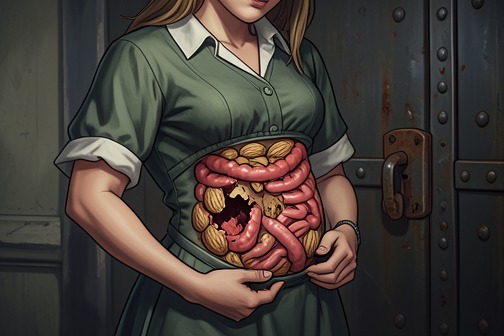
[Elena Ochoa](entity:character-recall-character-elena-ochoa-92478c49edc9)’s death was ruled a suicide by ingestion of sharp objects, yet her autopsy revealed an extraordinary quantity of walnut shells inside her digestive tract. The findings made the official classification difficult to reconcile with the physical evidence and turned the examination into a source of new uncertainty for [Amaia Salazar](entity:character-recall-character-amaia-salazar-99849e02d251)’s investigation.
## The autopsy ruling
[Inspector Iriarte](entity:character-recall-character-inspector-iriarte-f7159785492e) called Amaia after the autopsy was complete. [Forensic Doctor San Martín](entity:character-recall-character-san-mart-n-387de1ef4b18) had classified the death as suicide by ingestion of sharp objects. [Iriarte](entity:character-recall-character-iriarte-888adecf0207) described the examination as the most impressive he had witnessed, and said the conclusion had been troubling even for the forensic doctor. The ruling named a cause and manner of death, but the findings Iriarte relayed immediately complicated that account.
## The walnut shells
Walnut shells were visible in Ochoa’s vomit, and some remained in her stomach. The more startling discovery was farther along: her intestines were packed with shells, with no pieces of walnut fruit among them. Iriarte described the intestinal contents as if they had been forced inside mechanically. The shells had torn the tissue in places, perforating the intestinal wall and reaching surrounding organs.
The extent of the damage gave the finding a precise, disturbing scale. Seven metres of small intestine and another metre and a half of large intestine were filled with shells; the intestines had expanded to roughly twice their size. The forensic doctor reportedly found it remarkable that the intestinal walls had not ruptured completely. These details established the severity of the physical condition, but did not explain how the shells had entered the body.
## Amaia’s response and the unresolved method
As Iriarte described the autopsy, Amaia felt a migraine strike and connected her reaction with the letter from Ochoa that she had been holding. The letter slipped from her hands into the footwell of the car during the call. She asked whether the shells could have been implanted or packed into Ochoa’s body, but the account of the call provides no confirmed answer. The distinction matters: the autopsy exposed an abnormality on a massive scale, while the available findings did not establish the method by which it had been produced.
## Forensic uncertainty in the wider inquiry
Elsewhere in Amaia’s investigation, sudden infant death syndrome is described as a diagnosis made when an autopsy finds no other cause for an unexpected death during sleep. Historical cases in [Navarra](entity:location-recall-location-4f91a2876b8d) included four deaths in [Baztán](entity:location-recall-location-bazt-n-b5321a4399fc) over five years; all had been classified as sudden infant death after autopsy, although two prompted later social-services inquiries that apparently closed without further developments. A forensic doctor also recalled two apparently healthy girls whose autopsies had not disclosed evidence of unnatural death, while noting that the parents’ conduct had raised concerns. These cases are not identified as findings from Ochoa’s autopsy; they show the wider inquiry’s recurring tension between formal classifications and troubling details that those classifications did not resolve.
Event 10
Elena’s Warning Letter to Amaia
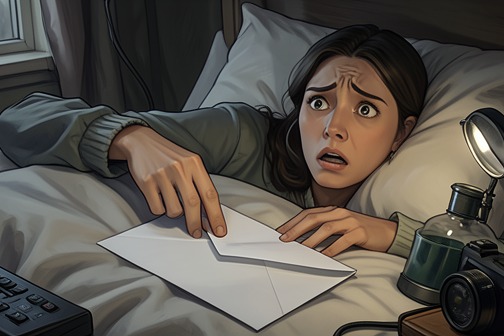
[Elena’s Warning Letter to Amaia](entity:event-recall-event-fa0bec39728c) is the message [Elena Ochoa](entity:character-recall-character-elena-ochoa-92478c49edc9) leaves for [Amaia Salazar](entity:character-recall-character-amaia-salazar-99849e02d251) shortly before her death. Found beneath a pillow and delivered unopened, it changes the meaning of Elena’s apparent suicide: rather than a farewell to her family, the letter is a warning about a group that has found her and may also be pursuing Amaia.
## Discovery and Delivery
Elena’s daughter calls Amaia in [Elizondo](entity:location-recall-location-elizondo-4e0690247b99) after finding the letter beneath her mother’s pillow. The family had decided to stay overnight, and the daughter discovers the envelope as she prepares for bed. She tells Amaia that her mother has apparently committed suicide, then breaks down: despite trying to follow the doctors’ advice and not reinforce Elena’s fears, she has found a letter addressed not to her but to the inspector.
Elena’s boyfriend, Luis, takes over the call and asks Amaia to collect it. He hands her a long, white envelope that has not been opened; Amaia’s name is written on its front. She puts it in her coat pocket, and his visible relief at seeing it taken away contrasts with his warning that Elena’s family has already suffered enough to be spared an obvious conclusion.
## The Warning
In the letter, Elena says that the group knows and that she had warned they would find out. She had tried to be careful, but believes they have made their presence known and that something is now inside her, gnawing at her entrails. What she first mistook for heartburn has continued for hours; she is convinced it is devouring and killing her. She therefore sees no point in concealing the situation any longer. The letter records Elena’s experience and conviction, not an independently established explanation for her symptoms.
Elena then identifies a house on the road to [Orabidea](entity:location-recall-location-orabidea-7f84bf336a72): an old, dilapidated farmhouse with biscuit-colored walls and a dark roof, standing in the region’s only flat meadow. There are no trees around it, and it is difficult to see from above; a bend in the road brings it suddenly into view. Elena calls it a black house not because of its exterior color, but because of what is inside. She expects Amaia to seek it out despite her request that she not go, and says that if Amaia is who Elena believes her to be, and survived the fate intended for her, avoiding the group will not keep it away.
## Reading and Narrative Significance
Amaia cannot wait to read the letter, but does not want to do so at home. In the wind, she searches for somewhere private, tries an old key to a store, and discovers that its lock has been changed. She eventually sits in her car and switches on the light. The sequence makes the envelope a physical object of mounting urgency before its contents disclose the danger: the failed key and the closed store briefly interrupt, rather than relieve, her need to read.
The letter’s first-person account brings Elena’s fear close to the moment of reading, while leaving the identity and nature of the group unexplained. Its warning connects Elena’s death to the threat around Amaia and gives the investigation a specific place to pursue. The final appeal to God offers no reassurance; it closes a message whose central force is the claim that the danger cannot be avoided simply by refusing to look for it.
Event 11
Amaia Discovers the Link Between Argi Beltz House and the Old Group
[Amaia Salazar](entity:character-recall-character-amaia-salazar-99849e02d251)’s search for the house described by [Elena Ochoa](entity:character-recall-character-elena-ochoa-92478c49edc9) brings her to [Argi Beltz](entity:location-recall-location-argi-beltz-35d3971db8b9), a secluded property whose present-day appearance conceals a history of violence, communal life, and a child’s death. The discovery turns an uncertain resemblance into an investigative lead: the house’s owners knew [Doctor Berasategui](entity:character-recall-character-doctor-berasategui-f71c7aa55639), and their daughter Ainara died in infancy.
## Locating the House and Recovering Its History
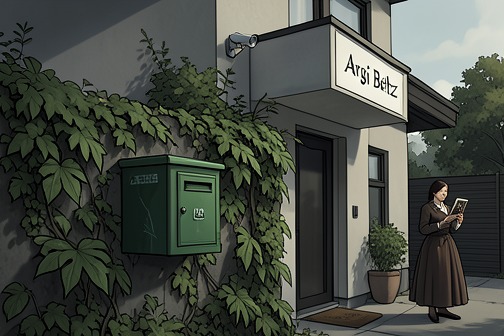
After searching roads and tracks through the morning, Amaia spots a broad, unusually level meadow around a modern house. An old, overgrown wall hides much of the entrance; a green iron mailbox bears the name Martínez Bayón, and a security camera watches the gate beneath a sign identifying the property as Argi Beltz. Elena’s description of a similar meadow makes the place seem promising, but the new house does not match the old one she had in mind. Amaia considers whether the original building might have been rebuilt or the ground reshaped, and continues along the road rather than treating the first resemblance as proof.
A woman at the neighboring property, [Lau Haizeta](entity:location-recall-location-lau-haizeta-66637d20b54d), supplies the confirmation Amaia needs. She produces an old photograph kept in a tin cocoa box: taken roughly fifty years earlier, it shows the farmhouse behind a man standing on a roof beside a large chimney. The old building stands in a flat meadow matching Elena’s description. Although the house has since been extensively altered, the neighbor is certain it is the same one.
The woman’s account gives the house a longer and darker past. According to stories passed down by her grandmother, the original owners were two brothers and their sister. After their mother died, their father became mentally ill and was chained to a bed in the attic. The brothers mistreated their sister and prevented her from marrying, until she became involved with a horse trader. When he came to take her away, one brother showed him her dismembered body in a barrel. A fight followed; one brother died from a knife wound, the other hanged himself, and the father’s mummified corpse was found upstairs. The farmhouse was shut up for more than seventy years, while local people said the family’s spirits remained trapped inside.
In the 1970s, the abandoned house became a gathering place for a loosely organized community. The neighbor recalls as many as twenty young men and women living there, with visitors coming and going, and describes cultural and spiritual meetings. Their way of life seemed disorderly to her: the garden was neglected, animals roamed freely, and the property was filthy. She declined invitations to join them, but her testimony establishes that the house Elena remembered had later served as a communal home before its present owners arrived.
The neighbor also remembers the couple’s young daughter, who died at about a year old. She says the child appeared neglected: once, after wandering across the field, the little girl was dirty, in a soiled diaper, and desperately hungry. The neighbor and her daughter washed her and fed her softened anise pastry. Later, the neighbor saw her outside the house, poorly clothed and alone among the animals. When she went to offer the child some used clothes, the father told her that the girl had died. The neighbor says the child had not been baptized and had no funeral; decades later, she still grieved that she had never learned the girl’s name.
When Amaia returns to Argi Beltz, a BMW enters through the concealed approach. She follows it to the gate and identifies herself, with one hand instinctively near her Glock. The man and woman inside are visibly surprised when she tells them that their friend Doctor Berasategui is dead. Their exchanged glance suggests that they are deciding whether to acknowledge knowing him; the man then accepts the connection and asks whether [Berasategui](entity:character-recall-character-berasategui-41d5fed3f8c7) died in an accident. Amaia conceals that the cause has not been established and questions them about their relationship with him.
The conversation sharpens the connection between the house’s past and the investigation. Amaia raises the couple’s daughter’s death while asking about infant deaths in the valley. The woman reacts with alarm, and the man answers that Ainara died of a cerebral stroke when she was fourteen months old. The name and age give the previously unnamed child in the neighbor’s account a specific identity. The encounter does not by itself establish the cause of Ainara’s death, but it places her story, the old communal house, and Berasategui within the same line of inquiry.
## The Question of Ainara’s Death
Amaia’s question to the couple is framed as part of a broader inquiry: the police are compiling statistics on infant deaths in the valley and checking whether deaths attributed to sudden infant death syndrome fit that pattern. She asks specifically whether their daughter’s death might have been sudden infant death. The wife reacts with alarm, reaching toward her husband; he replies tersely that Ainara died of a cerebral stroke at fourteen months. The exchange gives Amaia a definite age and an asserted cause of death, but it does not independently verify that explanation.
The two accounts now stand beside one another without resolving into proof. The neighbor remembers a hungry, poorly cared-for child and says the father later announced her death; the parents provide a name and a medical explanation. Their answer narrows the inquiry, while their alarm and guarded manner make the exchange consequential without establishing wrongdoing. In this scene, Argi Beltz becomes more than a recovered location or a house with a disturbing past: it is a place where testimony about an unnamed child meets a family’s account of her death, and where Amaia must distinguish an investigative lead from a conclusion.
## Fear, Recognition, and the Limits of a Clue
Before she found the meadow, the search had already unsettled Amaia. A shadow she mistook for an invisible guardian retreated into the darkness when she drew her weapon; she ran to her car, drove until she reached another cluster of farmhouses, and stopped with her hands still trembling. She tried to explain the disturbance away as a wild boar and a shepherd calling his dog, but her reflection seemed to reject the reassurance. That moment of fear did not identify the house or prove anything about it. It does, however, frame the search as an encounter with uncertainty: Amaia has to keep moving through a landscape where apprehension can suggest danger without serving as evidence.
At the concealed gate, the name Argi Beltz gives Elena Ochoa’s remembered description a sharper, but still provisional, force. Amaia understands the name as black light and recalls that Elena had described a black house. Yet the modern property does not look like the place in Elena’s account, and the echo of a name cannot settle whether the building is the same one. Amaia rings repeatedly, hears what may be a small click from the intercom, and leaves feeling watched and irritated rather than reassured. The house thus enters the investigation twice over: first as a possible match assembled from a name and a landscape, then as a question that demands corroboration. The photograph from the neighboring farmhouse supplies that confirmation; the older building visible in it occupies the meadow Elena described.
## From a Hidden Property to the Wider Case
The eventual significance of Amaia’s visit to Argi Beltz lies not in the house alone, but in how its history and the account of Ainara’s death enlarge an inquiry already shaped by Elena Ochoa’s warning. The evidence at the property remains uneven: an old photograph confirms the farmhouse’s location, a neighbor recalls the child’s neglect and death, and Ainara’s parents give a different, specific account of her final illness. Those details create a lead, not a verdict. The distinction matters because the neighbor’s painful memories, the parents’ guarded response, and the house’s violent reputation carry very different evidentiary weight.
The investigation’s later outcome shows how consequential Elena’s warning proved. After returning home, Amaia calls Elena’s daughter to tell her that Elena had not taken her own life; the letter she left had helped bring down members of a dangerous sect of child killers, a case then dominating the news. The novel does not make the Argi Beltz encounter, by itself, the cause of that dismantling. Instead, the visit gives the larger investigation a concrete setting where a vanished communal past, an infant’s death, and a present-day connection to Doctor Berasategui can be examined together. A secluded house first recognized through a meadow and an old photograph thus becomes one point in a case whose consequences reach far beyond its walls.
## The Neighbor as a Witness
Before confronting the owners, Amaia tested what the neighbor could recognize. Shown photographs of Doctor Berasategui’s car and [Rosario](entity:character-recall-character-rosario-381ff2a9040d), the woman identified the car, which she had seen on the road to Argi Beltz a couple of times; its doctor’s sticker, she noted, made it conspicuous. She had never seen Rosario. The distinction gives Amaia a limited but concrete connection between Berasategui and the property while setting a boundary around the neighbor’s knowledge: she can place his vehicle there, but cannot place Rosario there or confirm who traveled in it.
## The Present Occupants and the House’s Successive Lives
The neighbor placed the couple’s arrival around the period when the communal group was living at Argi Beltz, but she did not establish that they belonged to it. She was careful about what she knew: she would not call them husband and wife, and took their absence from church as a sign that they were not Christian. Her account therefore traces successive lives at the farmhouse without proving a continuous association between its occupants.
The neighbor’s attempt to help the couple’s daughter brought her to the threshold of the house. After gathering used clothes from her own children, she found a crowd inside celebrating; the father did not invite her in, and she had no wish to enter. Instead, he told her that the child had died. The scene sharpens the limits of her testimony: she had witnessed the girl’s neglect and later learned of her death from her father, but did not see what happened inside the house. Her recollection of the child’s unbaptized status and lack of a funeral gives the loss a further local and religious dimension, without settling its cause.
## Protection, Reputation, and Evidence
The neighbor’s certainty about Argi Beltz was not only a judgment on its occupants. She said that nothing good had ever come from the house, yet insisted she was not afraid: this was her land, and she was protected there. As she spoke, Amaia thought of the great crosses standing guard at the entrance. The contrast makes the landscape part of the testimony without turning local belief into proof. The crosses register a felt boundary around the property; the neighbor’s stories of trapped spirits and successive unsettling residents explain its reputation, but Amaia still has to test what can be established.
That distinction shapes the discovery. A remembered meadow and the name Argi Beltz first offer suggestive correspondences; the old photograph confirms the house’s identity, while the neighbor’s recollections and the owners’ guarded answers supply separate, uneven strands of testimony. The site gathers legend, visible traces, and personal memory in one place, but none can simply stand in for another. Its significance in the investigation lies precisely in that tension: the house feels burdened by its past, yet the case must proceed through what witnesses saw, what they were told, and what Amaia can corroborate.
## Later Confirmation and the Weight of Maternal Testimony
The uncertainty surrounding Ainara’s death belongs to a wider pattern in which a mother’s account can be dismissed as grief or confusion before the evidence is understood. Later, [Yolanda Berrueta](entity:character-recall-character-yolanda-berrueta-a229211a5262) insists that her children’s bodies are missing from their grave, despite a priest’s certainty that he witnessed their coffins being buried. After Amaia’s mistake delays the inspection, Yolanda explains that opening the tomb could have confirmed that her children were there while leaving another missing child undiscovered; the woman from [Elizondo](entity:location-recall-location-elizondo-4e0690247b99) might otherwise have continued to be treated as delusional. Yolanda then states that her own baby’s body was stolen and that she intends to search for her. This later case does not establish what happened to Ainara, but it gives the Argi Beltz encounter added resonance: accounts of infant death and maternal alarm are not interchangeable with proof, yet dismissing them can keep an actual disappearance hidden.
Event 12
Amaia Links Several Suspicious Infant Deaths to Fina Hidalgo
[Amaia Salazar](entity:character-recall-character-amaia-salazar-99849e02d251)’s investigation shifts from isolated infant deaths to the possibility of a shared human cause when she links several families to an old secret group and to the midwife [Fina Hidalgo](entity:character-recall-character-fina-hidalgo-0b74a6a75163). The connection is not established by a single decisive proof: it emerges through a cluster of suspicious circumstances, missing records, professional access to births, and a disturbing statement attributed to Fina. The distinction between a medical label and a proven explanation becomes central as Amaia tests what the families have been told against what the records and witnesses can support.
## From a medical diagnosis to a pattern
The inquiry begins against the background of sudden infant death syndrome, a diagnosis applied to the unexpected death of a child, usually under one year old, during sleep and without apparent signs of distress. Amaia learns that it is an exclusionary classification: it is used when an autopsy finds no other cause that explains the death. The diagnosis therefore describes what the examination has failed to establish, rather than identifying a precise mechanism. In [Navarra](entity:location-recall-location-4f91a2876b8d), seventeen children had died under that classification during the previous five years, four of them in the local valley; the figures were consistent with the broader European average. The numbers alone do not prove a crime, but they show why a death recorded as sudden infant death could pass without attracting unusual attention.
A review of earlier cases adds a more specific warning sign. Every case had received an autopsy and the same classification, yet social services had later investigated two of the families. Those inquiries appeared to have ended without further action. That history does not establish that the deaths were connected, but it gives Amaia a reason to look beyond the official diagnosis and compare the families’ circumstances rather than treating each death as a closed medical event.
The death of [Valentín Esparza](entity:character-recall-character-valent-n-esparza-cb7018222bd8)’s daughter supplies a concrete forensic contrast. Doctor [San Martín](entity:character-recall-character-san-mart-n-20513bced19c) found that the child had been suffocated while asleep: the pressure mark on her face matched the nose of a teddy bear, and white fibers at her lips came from the toy. Saliva on the child and the bear included a trace attributed to Valentín. These findings concern that particular death, not proof of Fina Hidalgo’s involvement. Their importance to the wider inquiry is that they demonstrate how a death associated with sleep can require close examination of physical evidence, even when other infant deaths have been routinely classified as sudden.
## The old group and Ainara’s missing records
Amaia’s account to her colleagues brings the investigation back to [Elena Ochoa](entity:character-recall-character-elena-ochoa-92478c49edc9), a family friend who had described a group based at a farmhouse in [Orabidea](entity:location-recall-location-orabidea-7f84bf336a72) in the late 1970s and early 1980s. The group had begun as a commune holding cultural and spiritual gatherings before moving toward occult practices and animal sacrifice. Elena left after the rites became more violent; the possibility of human sacrifice had also been raised. Amaia believes the group’s history may explain why [Rosario Salazar](entity:character-recall-character-rosario-salazar-f6de4b66c7ed) and [Doctor Berasategui](entity:character-recall-character-doctor-berasategui-f71c7aa55639) disappeared together for a period before the attack on her family, and why [Berasategui](entity:character-recall-character-berasategui-41d5fed3f8c7) had been seen at the renovated farmhouse occupied by two former members.
The couple’s daughter, [Ainara Martínez Bayón](entity:character-recall-character-ainara-mart-nez-bay-566bf69a02c3), gives that suspicion a documentary test. Her parents said that she had died of a stroke at fourteen months while the family was travelling in the United Kingdom, and that she was buried there. But the inquiry found no British hospital record, death certificate, or autopsy record for her. Amaia’s colleague also found no evidence that the child had been taken out of Spain or that her death abroad had been reported to the Spanish embassy. The absence of those records does not by itself establish what happened to Ainara; it does undermine the account her parents gave and makes the family’s earlier infant death relevant to the pattern.
The connection to the former group is supported by testimony as well as by the family history. A neighbor identified Berasategui’s car at the property on more than one occasion, and the couple acknowledged knowing him, although they would not explain the relationship. When Amaia asked about their dead daughter, their reaction was markedly different from their response to questions about the doctor. She therefore asks her team to establish whether the families connect through the lawyers, Berasategui, or the couple, and assigns [Jonan Etxaide](entity:character-recall-character-jonan-etxaide-e04928c45e0f) to pursue the records concerning Ainara.
## Fina Hidalgo becomes the suspected link
Amaia’s next step is to search for a person who could connect births across families. She identifies Fina Hidalgo, a private midwife and the sister of Doctor [Hidalgo](entity:character-recall-character-hidalgo-95bf9ff01150), a rural physician who had served families throughout the valley. Fina had attended Amaia’s own birth and the birth of her twin sister, who died in infancy. Her brother signed the death certificate. Amaia also suspects that Fina attended the other births under scrutiny, including the births of children whose deaths had been classified as sudden infant death.
The Esparza case complicates, but does not eliminate, that theory. Fina was retired from hospital work, yet she continued to practise privately. Valentín had brought her to his home and tried to persuade his wife to give birth there; she was therefore connected to the family without having attended the child’s hospital birth. Amaia stresses that she cannot yet confirm Fina’s presence at every relevant birth. She would need authorization to examine Doctor Hidalgo’s private records and the death records in order to establish whether Fina had attended them. Her proposed connection remains an investigative hypothesis, not a conclusion already demonstrated by the available documents.
Amaia’s strongest indication of Fina’s possible motive comes from a conversation the two women had previously held. Fina had acknowledged that, when children were not healthy or normal, families sometimes had to be helped to free themselves from the burden of raising them. Amaia hears in that remark the rationale associated with an [Angel of Death](entity:concept-recall-concept-b5f65d1cca1c): a caregiver who regards killing as a benevolent service. Yet the remark has no independent witness, and Amaia says no one else heard it. Its force in the investigation comes from the way it fits the access and family connections she is tracing, not from its being corroborated testimony.
## What the connection changes
The emerging pattern joins cases that had initially appeared to be separate tragedies: Amaia’s twin sister’s death, other infant deaths in families associated with the farmhouse and its former group, and the death of Esparza’s daughter. The parents’ conduct and the social-services follow-up in some cases had already attracted notice, but the common links make those details newly consequential. The investigation also raises the possibility that a familiar medical classification could conceal very different circumstances from one family to another. Amaia does not treat the classification itself as evidence of murder; she treats it as a reason to ask what the autopsies, records, and relationships do—and do not—show.
The later testimony of [Yolanda Berrueta](entity:character-recall-character-yolanda-berrueta-a229211a5262) sharpens the stakes of that distinction. A priest who knew her family had believed her children were buried in their cemetery because he had officiated at the funeral and watched the coffins lowered into the grave. Yolanda continued to insist that their bodies were gone. After Amaia’s error led to the order to open the tomb being stopped, Yolanda explained that proving her children were present would have left the missing girl undiscovered and her own warnings dismissed as madness. Her account makes the search for physical confirmation more than a procedural issue: an apparently settled burial can preserve a false explanation and silence the person who senses that something is wrong.
The suspicion around Fina thus grows through cumulative links rather than a single revelation: repeated attendance at births, a physician’s records that may clarify who was present, families connected to the old group, an account of Ainara’s death unsupported by the expected records, and Fina’s own disturbing statement. The later discovery that a baby’s body had indeed been stolen from a grave confirms that at least one family’s fear of missing remains was not delusion. By the time the dangerous group is exposed, Elena Ochoa’s warning has helped direct attention toward a network rather than a succession of isolated bereavements. The event’s significance lies in that change of scale: infant deaths once recorded as separate misfortunes become questions about access, concealment, and the possibility of organized violence.
Event 13
Fina Hidalgo Burns the Files Before the Search
[Fina Hidalgo Burns the Files Before the Search](entity:event-recall-event-e24573acaf73) is the destruction of records discovered during a police search of [Fina Hidalgo](entity:character-recall-character-fina-hidalgo-0b74a6a75163)’s house in [Irurita](entity:location-recall-location-64acea63e9ce). The search was meant to secure papers kept by her brother, but the boxes were empty: Fina had burned their contents the day before. Her composed welcome and the hurried fire’s surviving fragments make the scene a struggle over evidence as much as a search of a house. The records have been destroyed, yet the investigators’ recovery of pieces leaves open the possibility that the fire has not erased everything.
## The search and its purpose
[Amaia Salazar](entity:character-recall-character-amaia-salazar-99849e02d251) set out early for Irurita with a search order ready to show Fina Hidalgo. At seven o’clock she was already at the police station garage; she waited until the rest of the team had settled into their cars, then joined the convoy last. At the house, there were no lights or signs of movement behind the windows, though the entrance gate remained open. Amaia expected that arriving unannounced would catch Fina off guard.
Instead, Fina opened the door immediately, dressed and ready to receive the officers. [Zabalza](entity:character-recall-character-zabalza-12fb8d3243c0) handed her the printed order and explained how the search would proceed. She let the team in and directed them toward the office they were looking for. Amaia recognized at once that the visit had not taken Fina by surprise. That impression sharpened the scene’s tension: the officers had legal authority to search, but the apparent ease of their entry did not mean the evidence was still there.
## Empty boxes and Fina’s account
The office retained the masculine character it had had when Fina’s brother used it. Cardboard boxes, each marked with dates, stood on the table. Amaia could see without touching them that they were empty; their lids had been thrown aside in haste. Fina came in behind her, pretending to read the search order while Amaia confronted the missing papers.
Fina presented the loss as an unfortunate coincidence. She said her brother had kept the files for sentimental reasons and that she, too, had preserved them almost as souvenirs. According to her account, someone had recently reminded her that the boxes existed; she had then decided to clean the dusty, mite-ridden office and began with that pile of papers the day before the search. Her explanation supplied a domestic reason for their disappearance, while the timing and the empty, dated boxes gave the investigators grounds to suspect that the destruction was not simply routine housecleaning. The scene establishes the discrepancy without proving who warned Fina or what she knew about the search in advance.
## The fire and the recovery effort
When Amaia demanded to know what had happened to the files, Fina indicated the office window and said that the only thing to do with a pile of paper was to make a good fire. The officers rushed to the window. In the back garden, the remains of a bonfire were still smoking. Amaia stood motionless with anger, while Etxaide and Zabalza ran outside and stamped on the ashes, apparently putting out any remaining embers.
The fire had consumed much of the material, but it had not reduced everything to ash. Etxaide called Amaia over: several fragments appeared to be largely intact, and the forensic team might be able to recover something from them. Burned paper required exceptionally careful handling. The technician had to collect it layer by layer, separating the sheets and isolating each between protective plastic films. That work took a little more than three hours. The detail matters: recovery was not immediate or guaranteed, but the fragments made it possible to preserve material that a hurried disposal had failed to destroy completely.
## Consequences and significance
The search therefore ended in neither a clean seizure nor a complete evidentiary void. The dated boxes could not provide the files in their original form, and Fina’s account did not settle why the papers had been burned. Yet the surviving pieces gave the forensic team something to examine. The event leaves a crucial distinction between records that are missing and records that have been shown never to exist: here, investigators knew the papers had been present and that a fire had damaged them, while the extent of what could still be recovered remained uncertain.
Before leaving, Amaia went back into the house. Fina was seated at the table in her magnificent kitchen, where she had set out hot coffee, toast, butter, several kinds of jam, and a bowl of walnuts, and offered the officers coffee. The generous domestic spread followed the smoking garden and the painstaking collection of burned documents. That contrast does not resolve Fina’s intentions; it makes the encounter more disquieting, as the destruction of potential evidence and the ordinary rituals of hospitality occupy the same visit. The search has exposed both the loss of the files and the limits of what the investigators can yet conclude from their remains.
Event 14
Yolanda Berrueta Reveals Her Twins' Bodies May Be Missing
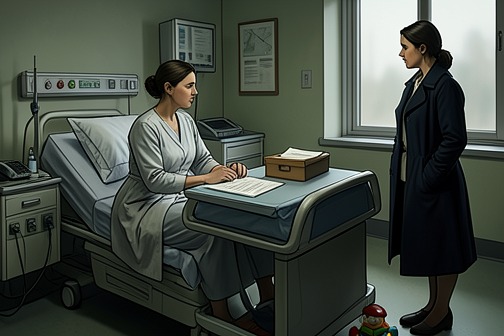
[Yolanda Berrueta](entity:character-recall-character-yolanda-berrueta-a229211a5262)’s revelation that her children’s bodies may have been removed from their coffins transforms a mother’s insistence, readily dismissed as a product of grief, into a line of investigation supported by precise claims and photographs. Her account joins two kinds of evidence: what she says she saw in a hospital box, and what she recorded while following her ex-husband. The possibility that the graves are empty changes the meaning of the family’s mourning rituals and gives [Amaia Salazar](entity:character-recall-character-amaia-salazar-99849e02d251) a reason to test Yolanda’s story rather than simply classify it as delusion.
## The loss and the accusation
Yolanda first tells Amaia that the people entering the house are not prospective buyers: she is interested in what she believes the killers are doing inside. She accuses them of killing her children and withholding their bodies, leaving her without even a place where she can properly mourn. Her certainty is striking, but Amaia recognizes the seriousness of the accusation and asks whether Yolanda has proof. Yolanda concedes that she did not witness anyone killing the children. Instead, she says her former husband, [Marcel Tremond](entity:character-recall-character-marcel-tremond-f933fb7d800f), became involved in the group’s dark offerings and handed the children over; she believes that their bodies were subsequently taken and that the family grave was left empty.
The children had died of sudden infant death syndrome, which Yolanda identifies as cot death. Her account does not claim that they survived: she says they stopped breathing at home and remained in cardiopulmonary arrest on the way to hospital, their faces and fingers turning blue. The distinction matters to the case. She is not proposing that the children were secretly alive, but that their bodies disappeared after their deaths.
Yolanda explains that after the loss she became mentally unwell and does not deny having received psychiatric treatment. She describes the pain of losing the children and her husband’s response as overwhelming her. According to her, Marcel reassured her that everything would be all right, and then the children were taken. He maintained a family mausoleum filled with flowers, she says, but its appearance of care concealed what she believed was an absence: the coffins were empty. She also recalls that she was not allowed to see the children during the wake or funeral. Marcel had the small coffins closed, telling her it would be better to preserve a good memory. For Yolanda, that protection becomes another reason to suspect that something had been hidden from her.
## From suspicion to specific evidence
When Yolanda returns to speak with Amaia’s colleagues, her appearance and behavior are carefully recorded alongside her claims. She arrives in a burgundy dress, carrying a cardboard folder marked by the visible traces of her sweaty hands. She holds it protectively against her hip when Amaia offers to take it. Amaia arranges the conversation in an office, introduces her to the others, and tells her that the interview will be recorded. She also cautions her colleagues that Yolanda is in psychiatric treatment and may seem scattered, but has been speaking clearly and sticking to concrete details. The team must check those details, Amaia warns, because a lawyer could use Yolanda’s condition to undermine the case.
Yolanda’s most specific account concerns a metal box at the hospital. Though weak, she says, she managed to enter the room where it was kept and open it. Inside she found a towel wrapped around bags of sugar, not her baby. When she told Marcel, he said that she must have gone into the wrong room. Yolanda admits that tranquilizers had made her doubt her own memory at the time; she now asks why anyone would put bags of sugar in a coffin for a dead child. The oddity of the substitute contents makes her allegation concrete without, by itself, establishing who put them there or why.
She also produces photographs from the folder. They show a vehicle parked outside a wooden fence that Amaia recognizes as belonging to the Martínez Bayón couple’s property; one image clearly shows the metal mailbox. Yolanda identifies the car as Marcel’s and says that the property was where he went. She has printed only some of the photographs, she says, and believes that more may be stored on her memory cards. She stopped obtaining clear images after the visitors began parking inside the estate. [Inspector Iriarte](entity:character-recall-character-inspector-iriarte-f7159785492e) points out that Marcel is a businessman and that the property owners are also businesspeople, leaving open the possibility of ordinary business meetings. The photographs establish a visit to investigate, not its purpose; Yolanda’s interpretation still needs corroboration.
## The grave, the witnesses, and the doubt
Other people’s accounts complicate the claim without resolving it. A priest who knows the family says Yolanda visits him weekly to insist that the children are not in their grave. He understands the force of a mother’s grief but rejects her conclusion: he officiated at the funeral and says he watched the coffins being lowered into the ground. A neighbor has also reported that Yolanda once tried to open the grave. These accounts confirm the persistence of her conviction and the public history of the burial, but neither establishes what the coffins contained.
The story places Yolanda’s anguish beside another account of infant death. As Amaia walks with [Judge Markina](entity:character-recall-character-judge-markina-f914c84921ae), he recalls that his three-week-old brother died when he was twelve. He remembers his mother trying to breathe life into the baby, then enduring hours of cries before retreating into silence and asking only where her child was. She blamed herself, attempted suicide, and was admitted to a psychiatric clinic. The parallel does not prove Yolanda’s allegations; it underscores how a parent’s grief can be both devastating and difficult for others to interpret. In Yolanda’s case, the fact that her mental health has suffered creates a reason to scrutinize her claims, but not a substitute for checking them.
## Consequences and confirmation
As the inquiry develops, the question of whether to open the grave becomes consequential. Yolanda later acknowledges that she was frightened and confused by medication and may have mixed up the coffins. Yet she also says that if the examination had found her children in the grave, investigators would never have discovered that the girl was missing; people would have continued to regard her as crazy and might not have listened to another bereaved mother from [Elizondo](entity:location-recall-location-elizondo-4e0690247b99). She concludes that her baby’s body was stolen and says that getting out is now her priority so she can search for her. This later statement sharpens the revelation: the suspected absence is no longer only a claim about an empty tomb but part of a wider pattern involving another missing girl.
The event’s force comes from the gap between the visible forms of mourning and the bodies they are meant to contain. Flowers, a funeral, sealed coffins, and a priest’s memory of the burial all appear to certify that the children have been laid to rest. Yolanda’s hospital-box account and photographs unsettle that apparent certainty, while her treatment history makes the people around her hesitate to believe her. The investigation must therefore hold two obligations together: recognize the vulnerability that shapes her testimony and verify its details rather than allowing that vulnerability to erase them.
Event 15
Flora and Fermín Montes Reconcile
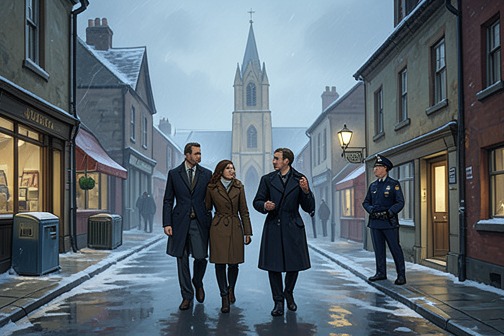
[Flora](entity:character-recall-character-flora-c1b11a6eb9e1) and [Fermín Montes](entity:character-recall-character-ferm-n-montes-423177b3d428) resume their relationship after a chance meeting, turning an old and damaging attachment into a present-tense choice. Fermín tells [Amaia Salazar](entity:character-recall-character-amaia-salazar-99849e02d251) that he is back with Flora and insists that he has never stopped loving her. Amaia sees the reunion not as a simple private romance but as a danger intertwined with Flora’s past conduct, Fermín’s police work, and the possibility that confidential case information could reach her sister.
## The Relationship Resumes
Fermín discloses the reconciliation to Amaia during a walk through a cold, nearly deserted town. He explains that, a few days earlier, while heading toward the police station, he encountered Flora’s car. They saw one another, Flora called to him, and they talked; now, he says, they are together. His account gives the renewed relationship a small, ordinary beginning, but the setting of the disclosure is tense: after crossing the plaza and the road, they reach the church, where Fermín stops and struggles to tell Amaia what has happened.
Amaia responds with disbelief and anger. She reminds Fermín of what Flora did to him and of what she nearly did, treating the reunion as a return to a danger he has already experienced rather than a fresh start. Her blunt warning that Flora will destroy him reflects her judgment of Flora, while Fermín’s response makes clear that he understands the risk and has chosen the relationship anyway.
He admits that he knows what Flora is like, but says he loves her and has been in love with her since they first met. Even through the months when he tried to persuade himself otherwise, he says, not a single day passed without his loving her. He describes Flora as his last opportunity. His declaration explains why warnings and remembered harm have not ended the attachment: for him, the relationship is not a sudden impulse, but a feeling that has endured through their separation.
## Amaia’s Warning and the Professional Stakes
The conversation does not resolve Amaia’s fear for Fermín. After he reveals the relationship, she places a separate and explicit boundary on their professional connection: nothing said or done in the police station, or outside it, concerning any case is ever to reach her sister. Fermín assents, and Amaia makes him repeat the promise. His assurance that he has learned his lesson acknowledges a previous breach or failure of judgment, although this scene does not specify its details.
Amaia makes the consequence unmistakable. If she suspects that case information has reached Flora, her affection for Fermín will not protect him; she will have him removed permanently, not merely from a particular case but from the police. The reconciliation therefore places personal feeling beside institutional trust. Fermín’s renewed intimacy with Flora does not change Amaia’s duty to protect investigations, and his promise becomes a condition of their continued working relationship.
## Amaia Challenges Flora
Amaia later confronts Flora directly. She takes her sister’s coat from the entryway, throws it at her feet, and follows her out, ignoring the questions of the others. Once they are outside, Amaia demands that Flora stop pretending to be an ordinary person and explain what she intends with Fermín. She frames the relationship through its history: Fermín is the man Flora nearly destroyed and the police officer who was suspended for almost a year because of her.
Amaia also claims special knowledge of the past. She says she was present on the night Víctor died and knows what really happened, including the reasons Flora became involved with Fermín then. Her challenge is thus not only that Flora may harm Fermín again; Amaia suspects that the relationship has an instrumental purpose and invokes the earlier episode as evidence that Flora’s conduct cannot be taken at face value.
Flora rejects that interpretation. She points out that Amaia has no proof of what happened on the night Víctor died and says Amaia does not know the full story. She concedes that she may not have been entirely honest with Fermín when they first met, but emphasizes that she was then a married woman and Fermín knew it. Circumstances have changed, she argues, and her interest in him is now honest. Her account distinguishes past deception from present intent, without erasing the history that makes Amaia suspicious.
## An Unsettled Reconciliation
Amaia refuses Flora’s claim of sincerity. She accepts that Flora is interested in Fermín but disputes that the interest is romantic, suggesting instead that Flora is drawn to someone young, blonde, and beautiful. The accusation gives the confrontation a further edge: Amaia believes Flora’s attention may be directed toward someone other than Fermín, though the supplied scene does not establish that suspicion as fact.
The reunion consequently remains unresolved. Fermín’s declaration establishes the depth and persistence of his love, and Flora calls her current interest honest; Amaia, remembering the near-destruction of Fermín’s career and asserting knowledge of Flora’s earlier motives, sees the same relationship as a potential threat. The scene ends with Flora’s habitual disdain giving way to visible fury, while Amaia’s own anger mirrors it. Rather than confirming which sister is right, the encounter leaves the renewed relationship under pressure from the very history it is supposed to have overcome.
Event 16
Order to Inspect the Tremond Family Tomb Revoked
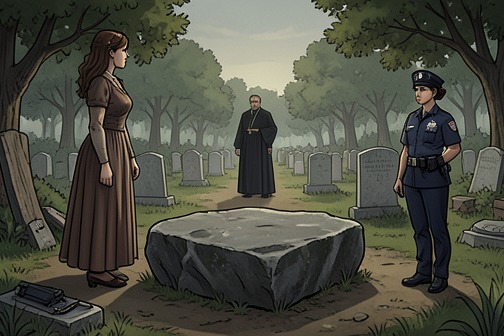
The revocation of the order to inspect the [Trémouin Family Tomb](entity:object-recall-object-578a0d5b9036) halted an examination that might have tested [Yolanda Berrueta](entity:character-recall-character-yolanda-berrueta-a229211a5262)’s insistence that her children’s bodies were missing. It came at the instant the cemetery crew began raising the heavy slab, leaving the question unresolved and turning an already painful search into a confrontation over jurisdiction and the limits of [Amaia Salazar](entity:character-recall-character-amaia-salazar-99849e02d251)’s authority.
## The question behind the inspection
Yolanda had repeatedly come to the priest to say that her children were not in their grave. She believed that someone had taken their bodies, and that her instinct as their mother told her they were absent. The priest understood the force of her grief but could not confirm her suspicion: he had conducted the funeral and said he had watched the coffins being lowered into the grave. His testimony offered an account of the burial, not a present-day inspection of what the coffins contained.
The authorization was deliberately narrow. [Jueza De Gouvenain](entity:character-recall-character-jueza-de-gouvenain-016940c18f8d) limited it to removing the slab, descending into the tomb, and opening only the children’s coffins to check that their bodies were inside. The bodies could not be brought to the surface or handled. Yolanda was permitted to look down from above and see for herself whether they were where they should be. The order therefore offered a way to test her claim without authorizing a full forensic examination.
## The inspection begins
Rain had returned after a brief lull. Yolanda waited beneath the church’s small entrance porch with the priest, who held her as she leaned against his shoulder. Gendarmes and municipal officials were present to ensure that the limits of the order were observed. The wet stone, moss, and lichens darkened the cemetery; the weather also kept potential onlookers indoors.
Even before the coffins could be reached, the work became slow and delicate. Officials removed the many flowers covering the tomb and found the slab in such poor condition that they feared it would break if slid aside. They called for a small hydraulic crane instead. After the equipment arrived, workers spent another quarter of an hour setting its supports on the cemetery’s uneven ground. They passed lifting straps beneath the slab and began to raise it slowly.
## Revocation and confrontation
The chief of the gendarmes received a telephone call while the slab was being lifted and ran towards the workers, ordering them to stop. He then told Amaia that Jueza De Gouvenain had revoked the authorization and directed that the slab be put back. Amaia was taken to speak with the judge, who demanded to know why an unnamed Spanish judge had called to say that he handled the case and had explicitly refused permission to open children’s graves. The call had placed Jueza De Gouvenain in the position of having to apologize to her colleague; she reproached Amaia for exceeding the limits of her authority.
Amaia answered that the Spanish judge’s refusal concerned another case, which at that point had no apparent connection to this matter. The interruption came before the permitted inspection could establish whether the children were in their coffins. The crew had begun the most consequential part of the operation, but no finding about the contents of the tomb was made during the attempt.
## Consequences and significance
The halted inspection did not settle the dispute between Yolanda’s certainty and the priest’s memory of the funeral. Later, Yolanda acknowledged that fear and medication had confused her about the coffins, but maintained that she had been right about the missing baby’s body. She also recognized the cost of the stopped inspection: had she been able to verify that her children were there, the child’s absence might have remained undiscovered, and another bereaved mother might not have been believed. The reversal thus obstructed one immediate check while leaving open a larger question about missing infant remains.
That distinction matters in a case where the investigative account connects the use of children’s bodies to ritual beliefs. A witness describes children under two as being considered in transition between worlds and therefore suitable as a spiritual medium; another describes an offering that required a girl under two who had not been baptized. These are the group’s beliefs, not independently established supernatural facts, but they give the suspected removal of a child’s body grave significance within the investigation. By preventing the inspection, the revocation preserved uncertainty at precisely the point where a physical check might have clarified what had happened.
Event 17
Ainhoa Tomb Explosion
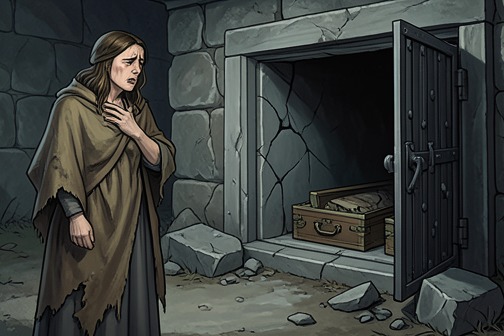
The [Ainhoa Tomb Explosion](entity:event-recall-event-f2390490b4fd) is the failed nighttime attempt by [Yolanda Berrueta](entity:character-recall-character-yolanda-berrueta-a229211a5262) to open her children’s grave with explosives. It left her gravely injured, shattered the tomb and neighboring monuments, and brought investigators to the damaged coffins inside. What began as an act driven by grief and a belief that her children’s bodies had been taken became a physical examination of the grave—and a turning point in the investigation.
## Causes and Background
Yolanda had repeatedly told the priest who knew her family that her children were not in their tomb. She came to the churchyard each week, insisting that a mother could feel the absence of her children’s bodies. The priest understood the depth of her grief but rejected her claim: he had officiated at the funeral and watched the coffins lowered into the grave. To him, the burial was witnessed and settled; to Yolanda, the grave concealed an intolerable uncertainty.
The scene carries an earlier account of infant loss that sharpens the stakes without resolving them. [Judge Markina](entity:character-recall-character-judge-markina-f914c84921ae) had described how, when he was twelve, his three-week-old brother died unexpectedly. He remembered his mother trying to revive the baby, then grieving so intensely that she withdrew from her husband and surviving son and was admitted to a psychiatric clinic after attempting suicide. His story makes the force of bereavement legible, while the explosion shows how grief can be dismissed as delusion even when the grave itself has not been examined.
When [Iriarte](entity:character-recall-character-iriarte-888adecf0207) called [Amaia Salazar](entity:character-recall-character-amaia-salazar-99849e02d251), Yolanda was already in critical condition. She had tried to open the tomb of her children in [Ainhoa](entity:location-recall-location-7667df1f7cdc) with some kind of explosive, losing several fingers and an eye. The call interrupted Amaia’s rare, peaceful evening at home with [James](entity:character-recall-character-james-b40e84036a54). She ordered Etxaide to collect her, and left to reach the cemetery.
## The Attempt and Its Failure
The charge was placed in a hollow in the tombstone and connected to a length of delay cord and an old manual detonator. Investigators estimated that it contained about two hundred grams of explosive, possibly Goma-2. The family’s ownership of a mine near [Almandoz](entity:location-recall-location-8ef2f54e7c9b) raised the possibility that the material had come from mining supplies, but routine controls made a recent theft difficult: since the [Madrid](entity:location-recall-location-3e9e114f48a7) attacks, explosives for each blast were transported under guard, and unused material was recorded and destroyed at the site. Investigators instead suspected that the packaging belonged to old explosives, perhaps retired before those controls and forgotten somewhere Yolanda could reach them. Their age mattered. Deterioration and moisture had made the charge unreliable, but Yolanda had no expert’s eye for signs such as lost malleability or a sweating surface.
After activating the detonator, Yolanda waited. When the explosion did not follow, she approached, apparently believing that the rain-soaked ground had dampened the cord or the explosives. The charge detonated as she came near. The blast cost her two fingers outright; two others were found stuck to the opposite mausoleum. She also suffered burns and damaged eardrums, and doctors doubted that her injured eye could be saved. Though conscious, she dragged herself to the edge of the grave to check whether her children were inside.
The blast’s damage spread beyond the target. It broke crosses and columns on neighboring graves and sent planters and flowerpots flying. The slab over the Tremond Berrueta tomb, already considered exceptionally brittle, collapsed into fragments; the largest piece was less than fifty centimeters across. Blood mixed with rainwater at the foot of the grave, while the scattered debris exposed the burial chamber to the investigators arriving at the scene.
## What the Open Grave Revealed
Under a blue tarpaulin, the damaged burial chamber offered a stark contrast between the orderly certainty of a funeral and the disorder left by the blast. Two old, dark adult coffins had been struck by falling stone. Nearby, a small metal-looking casket, apparently intended for ashes, lay overturned and ajar. The two small white coffins had suffered worse damage: rubble crushed one, splitting its side and exposing what investigators recognized as a baby’s hand; the other had overturned, leaving its contents displaced beside it.
The child still visible in the grave had been buried in white, but mold had darkened the clothing and blackened the baby’s face. The sight made the inspection more than a response to vandalism or an attempt to verify a burial. It placed the children’s remains directly before the investigators, while leaving open the question Yolanda had insisted upon: whether both bodies were there.
Amaia Salazar rejected the accusation that she should be satisfied by what the explosion had exposed. She told the priest that this was precisely what she had tried to prevent, and that those who claimed to care for Yolanda should have opened the grave earlier rather than leave her suffering with an unanswered fear. Her rebuke challenged the distinction the community had drawn between compassion for a grieving mother and taking her claim seriously enough to investigate.
The later evidence transformed the meaning of the blast. Recovering in hospital, Yolanda was alert and oriented despite her bandages. She acknowledged that fear and medication had led her to confuse the coffins, but maintained that she had been right about the essential fact: someone had taken one of her babies. She accepted that she herself had been responsible for the dangerous attempt, yet recognized that a peaceful inspection might have confirmed that some remains were present without revealing that the girl was missing. The explosion had cost her fingers and an eye, but the forced opening of the grave exposed a disappearance that could otherwise have remained hidden—and connected Yolanda’s claim to another mother in [Elizondo](entity:location-recall-location-elizondo-4e0690247b99) whose child was also gone.
## Aftermath and Narrative Significance
The explosion is not the investigation’s final image. Later, at [Muniartea Bridge](entity:location-recall-location-muniartea-4e6004574cf1), Amaia watches the [Baztán River](entity:location-recall-location-f9e8ffffb336) run quietly after its destructive rise and wonders whether it has been cleansed and the offense washed away. At home, she collapses into [Engrasi](entity:character-recall-character-engrasi-a3e51d66f12b)’s arms and weeps for what has been lost and violated, for death, bones, and blood. The sequence places Yolanda’s injured body and opened grave within the wider accumulation of the case’s damage: exposure brings answers, but does not undo what the search has cost.
Amaia eventually gathers herself to act again. Among the calls she makes is one to [Elena Ochoa](entity:character-recall-character-elena-ochoa-92478c49edc9)’s daughter, telling her that her mother did not die by suicide and that the letter she left helped bring the child-killing sect to the authorities’ attention. That broader resolution does not erase the explosion’s particular consequence: Yolanda’s claim was no longer only the grief-stricken assertion of a mother whom others had dismissed. The ruined tomb made the question of the missing child impossible to leave buried.
Event 18
Jonan Etxaide Murder Case
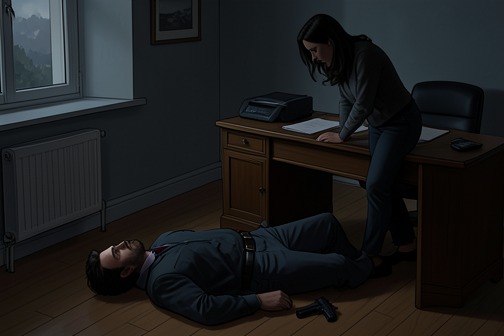
The [Jonan Etxaide Murder Case](entity:event-recall-event-8fb22af0b289) turns the investigation Jonan had been pursuing into a crime scene: he is found shot dead at home, and the materials he had collected on the case have been taken. His death devastates [Amaia Salazar](entity:character-recall-character-amaia-salazar-99849e02d251), his closest friend and colleague, but she responds by treating the murder as an active investigation, even as authority over it passes to another unit.
## The Investigation Before the Murder
Before his death, Jonan was working on the connection between several suspicious infant deaths and a group that had operated in [Baztán](entity:location-recall-location-bazt-n-b5321a4399fc) from the late 1970s into the early 1980s. Amaia’s inquiry had traced the group to a house in [Orabidea](entity:location-recall-location-orabidea-7f84bf336a72), where [Elena Ochoa](entity:character-recall-character-elena-ochoa-92478c49edc9) had once attended meetings with Amaia’s mother. The gatherings had shifted from cultural and spiritual activity toward occult practices, animal sacrifice, and discussion of human sacrifice; Ochoa left when the rites became too savage. The house’s present owners, a wealthy couple who had belonged to the original group, admitted knowing [Doctor Berasategui](entity:character-recall-character-doctor-berasategui-f71c7aa55639) but avoided explaining their relationship with him. A witness had repeatedly seen [Berasategui](entity:character-recall-character-berasategui-41d5fed3f8c7) and his car at the property.
Jonan had taken this broader inquiry further. Amaia told colleagues that he had established that [Ainara Martínez Bayón](entity:character-recall-character-ainara-mart-nez-bay-566bf69a02c3), the owners’ daughter, had probably never travelled to the United Kingdom, despite her parents’ account that she had died there. No death certificate, hospital record, autopsy report, or burial record supported the story. The case was not simply about a disputed family history: Amaia connected the house and its group to several infant deaths, including that of her own sister, and noted that the bereaved parents’ conduct had prompted concern from social services. Jonan was still pursuing these links when he was killed.
## Discovery and the Murder Scene
[Fermín Montes](entity:character-recall-character-ferm-n-montes-423177b3d428) called Amaia with the news: [Zabalza](entity:character-recall-character-zabalza-12fb8d3243c0) had gone to Jonan’s home, found the door ajar, and discovered that Jonan had been shot. Amaia immediately questioned what Zabalza had seen. He had rung the bell without an answer, then knocked; the door, which had seemed shut, gave way under the blows. From the entrance he saw Jonan lying on the floor. Amaia set off at once, with Montes beside her and [Iriarte](entity:character-recall-character-iriarte-888adecf0207) following in another car.
At the apartment, Zabalza tried to keep Amaia outside, pleading with her not to enter. Montes, who had reached the fourth floor, silently backed him up. Amaia stopped struggling only long enough to draw her pistol and press it against Zabalza’s side. When he stepped back, she went in. [San Martín](entity:character-recall-character-san-mart-n-20513bced19c) was kneeling beside Jonan, whose body lay face-up in a broad pool of blood. He had been shot twice: once in the chest, near the base of the neck, and once in the forehead. The chest wound had bled little; most of the blood had flowed from the exit wound in his back. The second shot had bloodied and matted the hair at the top of his head.
The sight broke through Amaia’s effort to hold herself together. She had entered with her gun still in her hand, scarcely aware of the alarm this caused among the officers. After drawing a deep breath, she could no longer contain her reaction: grief overwhelmed her, and she fell to her knees before Jonan. She recognized him not merely as a colleague but as her best friend and, in her judgment, the finest person she had known. Montes knelt beside her and carefully took the weapon from her hands.
## The Targeted Search and the Transfer of the Case
Once her first shock had passed, Amaia demanded an account of what had happened. At least fifteen minutes had elapsed since she entered the apartment, yet no one had briefed her. She acknowledged that the officers were shaken too, but refused to let grief send them home: Jonan had been an exceptionally professional, sensible, and loyal colleague, and his loss was a catastrophe; the immediate task, she insisted, was to find his killer. Zabalza explained that the door had looked closed but was only resting in its frame, and had yielded when he knocked. From the entrance he had seen the body in the living room.
The apartment showed no signs of an ordinary burglary. Amaia rejected that explanation and asked after Jonan’s phone, which had also disappeared. Her calls had gone straight to voicemail; when she tried again, there was no ringing signal, suggesting that the phone was switched off or out of coverage. Inside, the intruder had searched methodically rather than ransacking the rooms. Laptops, cameras, external hard drives, and Jonan’s collection of USB drives were gone. He had used those drives to keep case information and photographs, making the theft of his work materials central to the crime scene: someone had selected the devices that held his investigations, not merely whatever valuables happened to be at hand.
Amaia understood that the investigation might soon be taken from her team. Before that happened, she ordered the officers to photograph everything, even if they had to use their mobile phones, so the scene would be documented. A photograph on a shelf showed her and Jonan in formal police uniforms, alongside pictures of him with his parents and with an unidentified man on a boat. The images sharpened the gap between professional closeness and private knowledge: Jonan had been her best friend, yet she realized she knew little about his personal life. The silver emergency blanket covering his body caught the light as the duty judge arrived with a court clerk.
The transfer followed soon afterward. The commissioner informed Amaia that [Group Two of the Pamplona Homicide Unit](entity:organization-recall-organization-8e1a1af4f5e1) would take charge. She identified herself as head of Homicide, but the commissioner refused to leave her in command, saying that he could not do so and that she would have made the same decision in his position. Amaia claimed that her phone had no battery. Her authority over the case was removed just as the murder scene made plain that Jonan’s collected evidence might be part of what the killer wanted to suppress.
## The Evidence Jonan Left Behind
The murder’s investigative significance extends beyond the removal of Jonan’s equipment: his work had begun to connect the old group at Orabidea with a wider pattern of infant deaths and with people whose roles crossed family, medical, and ritual settings. Amaia reported that a reliable informant had described similar rites at a house in [Lesaka](entity:location-recall-location-19cc0c2883f7) and a single possible leader moving between the two groups. The suspected network included people who appeared, at first, to have met for bereavement support; the investigation instead uncovered links involving Doctor Berasategui, [Nurse Hidalgo](entity:character-recall-character-hidalgo-c6928099017b), [Yolanda Berrueta](entity:character-recall-character-yolanda-berrueta-a229211a5262)’s former husband, and [Valentín Esparza](entity:character-recall-character-valent-n-esparza-cb7018222bd8). These associations did not by themselves establish that every person shared the same purpose, but they made Jonan’s collected case information especially consequential.
His inquiry also reached into Doctor Berasategui’s private records. A minutely detailed encrypted file kept at the clinic reportedly covered every case he had handled there or in private practice, including the Esparza case. After Berasategui’s arrest for involvement in [Rosario](entity:character-recall-character-rosario-381ff2a9040d)’s release and the crimes associated with [Tarttalo](entity:creature-recall-creature-tarttalo-d759d60c6a50), high-ranking [Vatican](entity:organization-recall-organization-136cc7cc097a) authorities took an interest in the files. Their intervention placed the material beyond Amaia’s immediate reach, while the murder left Jonan’s own stored case information missing. The two losses of access are distinct: the doctor’s records had been taken into Vatican custody, whereas the laptops, drives, and other media disappeared from Jonan’s apartment after his killing.
The surviving clues show that Jonan’s research was not confined to the infant-death cases Amaia discussed at the scene. In a later conversation with [Sarasola](entity:character-recall-character-sarasola-4a4a102d3175), she referred to Jonan’s work on [Víctor Oyarzabal](entity:character-recall-character-v-ctor-oyarzabal-140be163c52c), known as [Basajaun](entity:character-recall-character-basajaun-8f4ba22b9697), and asked whether Berasategui’s file recorded that he had treated him. Sarasola’s response confirmed that he knew something about the matter, while Amaia realized he had not intended to tell her. The episode enlarges the field of Jonan’s investigations but does not, on its own, establish why he was killed or who selected the materials taken from his home.
The case therefore turns on a sharp contrast between what the crime scene reveals and what it withholds. Jonan’s body, the two gunshot wounds, and the deliberate removal of his investigative storage establish a murder accompanied by a targeted search; the missing devices point toward the value of his work without identifying the intruder or proving a motive. For Amaia, the death is at once a devastating personal loss and an urgent professional demand. She insists that her colleagues document the apartment before another unit takes control, preserving what she can of the scene even as the evidence Jonan had assembled is no longer there.
Event 19
Discovery of Jonan's Remote Access to Amaia's Computer

The discovery that [Jonan Etxaide](entity:character-recall-character-jonan-etxaide-e04928c45e0f) had secretly accessed [Amaia Salazar](entity:character-recall-character-amaia-salazar-99849e02d251)’s computer turns a trusted working relationship into a source of suspicion. Internal Affairs established that he had connected remotely as many as twenty times in a single month, reaching Amaia’s email and stored folders and copying files. Because the procedure required both authorization and access to the computer from within the police station, the activity could not easily be dismissed as an accidental technical intrusion. Its timing also placed Jonan in possession of information connected to a compromised search, although Amaia resisted the conclusion that his access meant betrayal.
## How the Access Was Discovered
Internal Affairs raised the matter during an interview with Amaia. Inspector [Clemos](entity:character-recall-character-clemos-5e1fe12c8ad8) was seated behind the desk, attempting to control the meeting, while Amaia chose to remain standing rather than accept the chair opposite him. The investigators first explained that Garrues, the computer specialist who examined Jonan’s computer from the [Elizondo](entity:location-recall-location-elizondo-4e0690247b99) station, had found evidence of the access. Their opening question concerned whether Jonan, as Amaia’s assistant and a capable computer user, might have helped her with technical matters. She acknowledged that he had done so regularly.
Amaia initially described only one specific instance: she had asked Jonan to create an email account. He did this in person and advised her to change the password, which she later did. That remembered, openly authorized assistance became an uneasy contrast with what the specialists had uncovered. Their examination showed that Jonan had accessed Amaia’s computer remotely up to twenty times during the preceding month.
## What the Technical Evidence Established
The connections were made through TeamViewer. Jonan had reached Amaia’s email and some of the folders where she kept it, and had copied files. The specialists stressed that this method required both computers to be switched on and the person at the computer being controlled to authorize the connection by entering a key. Since Jonan regularly worked in Amaia’s office, he had routine physical access to the setting in which the connection could be established; Amaia nevertheless said she had never seen him touch her computer.
That distinction mattered. The investigation did not describe a remote connection that could occur invisibly from anywhere, or a harmless operation that might happen by chance. The computer had to be prepared for remote control and the visit had to be accepted at the receiving machine. Amaia’s knowledge of Jonan’s technical competence and his normal presence in her office therefore explained how access might have been possible, but did not explain why he had used it without telling her. The repeated connections and copied material made the intrusion a pattern rather than a single ambiguous incident.
## The Connection to the Compromised Search
The computer discovery gained weight when Internal Affairs linked Jonan’s access to the advance knowledge that had undermined a search. Amaia had already suspected that someone from her Elizondo station, and specifically someone on her own team, had warned the person who was to be searched. The search order focused on a particular file, which was destroyed before the search in what its owner called a cleanup. The investigators stated that Jonan had accessed Amaia’s email the night before and again that morning. From those visits, they reasoned that he could have learned about the order.
Amaia did not accept that the timing proved his purpose. She suggested that Jonan might have accessed the computer to leave a file for her, perhaps photographs too large to send by ordinary means. The specialists answered that the remote-control procedure required deliberate installation and authorization, not an accidental connection. They also emphasized that Jonan had accessed the computer repeatedly and had never told her. Amaia denied that he had disclosed the activity. Her defense of him persisted even as the facts narrowed the room for an innocent explanation.
The episode’s force lies in the gap between what the evidence established and what it could not establish. The access gave Jonan the opportunity to see information about the search; the timing made that opportunity directly relevant to the leak. But Amaia did not know why he had entered the computer, what he had copied, or whether the search information explained all twenty connections. When [Inspector Iriarte](entity:character-recall-character-inspector-iriarte-f7159785492e) later observed that the timing fit the search order, Amaia still insisted that there might be another explanation and said she wanted the discovery to be an error.
## What the Discovery Leaves Behind
The later examination of Jonan’s files made the computer intrusion more consequential than a question of workplace privacy. In a folder bearing Amaia’s surname, she found images of her twin sister’s empty coffin and of the bones left after the desecration at the church in [Arizkun](entity:location-recall-location-17ad7e278ae3), including her sister’s remains. The same folder contained enlarged sections of a photograph of the coat [Rosario](entity:character-recall-character-rosario-381ff2a9040d) had worn when she fled, as well as maps marking possible escape routes on foot from the cave at Arri Zahar. Jonan’s stored material showed how closely he had followed several strands of Amaia’s investigation, though it did not by itself settle what he had intended by accessing her computer.
His scenario file also contained addresses for the infants who had died in suspected cases of sudden infant death that the team had investigated. Jonan had added Amaia’s sister but removed [Yolanda Berrueta](entity:character-recall-character-yolanda-berrueta-a229211a5262)’s children. When Amaia reconstructed the map, she found that the victim locations, considered alongside the river, suggested a pattern following the course of the [Baztán River](entity:location-recall-location-f9e8ffffb336) rather than simply a route along a major road. The discovery of the remote access thus frames a painful reversal: the trusted colleague whose computer expertise had helped the team also possessed, and had secretly gathered, information from Amaia’s own machine. Jonan was dead, and the evidence could reveal what he had accessed without giving Amaia a chance to ask him why.
Event 20
Vatican Transfer of the Berasategui Files
The [Vatican Transfer of the Berasategui Files](entity:event-recall-event-329911d82264) is the removal of [Doctor Berasategui](entity:character-recall-character-doctor-berasategui-f71c7aa55639)’s encrypted case records from police reach after his arrest. The files covered his clinic and private practice, including the Esparza case; [Vatican](entity:organization-recall-organization-136cc7cc097a) authorities separated them from the other records and sent them to Rome. Their transfer exposes a direct conflict between a criminal investigation and an ecclesiastical authority claiming jurisdiction over material it considers disturbing and beyond police control.
## The files and their reach
Doctor Berasategui had kept a detailed encrypted file on every case he had handled or was handling, both at the clinic and in his private work. The archive was therefore not described as a narrow dossier about one crime. Its stated scope extended across his professional caseload, and it included the Esparza case. That breadth matters to the disclosure: the missing material could not be treated simply as a single document or as an incidental record belonging to one investigation.
[Sarasola](entity:character-recall-character-sarasola-4a4a102d3175) tells Amaia that he does not possess the files. His account places their removal after Doctor Berasategui’s arrest for involvement in [Rosario](entity:character-recall-character-rosario-381ff2a9040d)’s release and in the crimes known as the [Tarttalo](entity:creature-recall-creature-tarttalo-d759d60c6a50) cases. The arrest, rather than a routine archival review, had drawn the attention of senior Vatican authorities. The sequence makes the transfer part of the aftermath of a criminal investigation, not an ordinary exchange between institutions.
## The Vatican’s stated rationale
Sarasola explains the Church’s interest through a particular understanding of psychiatry. In his account, psychiatric practice can provide a route to identifying cases marked by what he calls the special “[Matiz del mal](entity:concept-recall-concept-matiz-del-mal-6326d5a2b720),” a phenomenon the Church has pursued since its foundation. He says Doctor Berasategui had made important advances in this field, but had kept them hidden from the Church. The files thus carried two kinds of significance in Sarasola’s explanation: they were records of cases, and they contained work the Vatican regarded as relevant to its own pursuit of evil.
When the case became public, the Vatican authorities reviewed the archive and separated [Berasategui](entity:character-recall-character-berasategui-41d5fed3f8c7)’s files from the rest. Their stated grounds were that the files held no interest for the police investigation but were disturbing and difficult for the general public to assimilate. That justification draws a boundary around the same evidence: material can be deemed irrelevant to police while remaining important to the Church. The distinction is Sarasola’s account of the authorities’ decision; it does not establish that the files were in fact immaterial to the investigation.
## The transfer and the dispute over authority
Amaia challenges the account at its most consequential point, calling the removal of evidence from a case theft. Sarasola denies that description. He does not say the files remained available to investigators: he confirms that they were moved out of the country in a diplomatic pouch and insists that ecclesiastical authority stands above police authority in these matters. In his telling, that hierarchy leaves Amaia unable to act against the transfer.
The diplomatic pouch gives the removal a concrete institutional form. The files did not merely disappear from the clinic or become inaccessible through encryption; Sarasola says they were carried to Rome under diplomatic protection. His answer turns Amaia’s accusation into a dispute not only about what the files contained, but also about which institution had the power to retain them. The police inquiry could identify their absence, but, as Sarasola presents the situation, it could not compel their return.
## Disclosure and unresolved limits
Sarasola’s account comes in a conversation in which he presents himself as Amaia’s friend and says he is there to help, even as he reveals that the Vatican has taken material she regards as evidence. His disclosure gives Amaia knowledge of the files’ destination and of the stated reason for their removal, but no access to the archive and no practical means of recovering it. When she asks why he is telling her now, he looks out toward the exterior before turning back to her. The exchange ends with that question still open.
The episode therefore establishes a specific chain of custody as Sarasola describes it, while leaving important matters unsettled: the contents of the encrypted records, the full extent of Doctor Berasategui’s research, and what the Vatican’s review found are not disclosed here. The transfer’s consequence is nevertheless clear. Evidence connected to an investigation has passed beyond the reach of the police, and Amaia learns that the institution holding it answers to a different hierarchy of authority.
Event 21
Lesaka Ritual Infant Killing
The [Lesaka Ritual Infant Killing](entity:event-recall-event-5bb2ee34dca4) was a ritual murder committed by members of a secret group in [Navarra](entity:location-recall-location-4f91a2876b8d) in 1979. The child’s parents offered her to the group when she was only days old; after the killing, her body was taken away and never recovered. The case entered the investigation not through an ordinary homicide file but through a protected witness’s confession, and its account exposed how a community organized around spiritual promises could turn a child’s life into the price of its imagined power.
## The group and its hidden leader
In 1979, a group settled in a farmhouse in [Lesaka](entity:location-recall-location-19cc0c2883f7). Its eventual witness had arrived in Navarra at twenty-five, after finishing university, to spend [San Fermín](entity:time-recall-time-san-ferm-n-b536f0d196c4) with friends. A young woman invited them to the house she shared with others. At first, the place appeared to be an unconventional commune devoted to tradition, human nature, and the forces of the natural world. Its members grew marijuana, listened to the wind, danced around a fire, and held talks for possible recruits, including local people and tourists drawn by spirituality, witchcraft, and spiritism.
The group spoke often of a man called Tabese, but the witness did not meet him during that first summer. When most of the visitors left, the witness was invited to stay; in September, the commune’s more coercive and demanding character began to emerge. Tabese arrived unpredictably, did not live at the farmhouse, and left the members waiting for his return. He presented himself as a psychologist or psychiatrist, and the witness later recalled him as a wealthy, polished, and powerfully charismatic figure. The group’s attachment to him was bound up with the authority he claimed: he instructed them in what to do and how to do it, while promising access to power and knowledge. In the later investigation, the leader was identified as [Xabier Markina](entity:character-recall-character-xabier-markina-b7c88f44ecba), known to the group as Tabese.
Tabese taught the members to understand offerings as the means of restoring an ancient relationship with supernatural forces. He invoked forgotten religion, extraordinary beings associated with the region, prehistoric monuments, and ley lines, presenting sacrifice as an exchange through which the group could obtain what it wanted. The witness described the early animal sacrifices as part of this progression: the group believed it had received favors, and its sense of power grew as the demands for offerings increased. In that framework, ritual was not an isolated ceremony but a system of obligations, with the leader defining the rules and the group interpreting its supposed gains as confirmation that those rules worked.
The group’s early outward appearance and its later practices stood in stark contrast. Newcomers could be drawn by communal living, fireside dancing, and the promise of spiritual discovery; the witness’s account, however, traced how that invitation developed into submission to Tabese’s instructions and a willingness to participate in escalating sacrifices. After the infant’s death, the group dispersed across the country within months. Tabese did not return, and the witness said that the parents who had made the offering were the last people left at the farmhouse.
## The victim and the ritual
The group’s account of the killing rested on a set of rules that gave the child’s age, sex, and religious status a specific meaning. The witness said the victim had to be a girl, younger than two years old, and unbaptized. In the group’s reasoning, baptism constituted an offering and commitment to another god, so a baptized child could not serve their purpose. These were not incidental details: they distinguished the intended victim from other children and placed the killing within a claimed ritual order.
Age was explained through the idea of transition. The witness said that from birth until the second year, a child’s soul remained between states and was therefore considered especially suitable for an offering. The same account described another transition as children approached adulthood, but claimed that an infant’s death could more readily be explained as natural than an adolescent’s. Separately, [Jonan Etxaide](entity:character-recall-character-jonan-etxaide-e04928c45e0f) explained the broader belief that children under two moved between two worlds and could perceive both, making them, in the group’s mythology, effective intermediaries with spiritual forces. These explanations record the perpetrators’ asserted beliefs, not evidence that the supernatural claims were true.
The witness eventually stated the prescribed manner of death: the child was to be sacrificed to [Inguma](entity:character-recall-character-inguma-efe674e92e4c) by being deprived of air, and her body was then to be surrendered as an offering. He could not explain the purpose beyond repeating the ritual requirement, and he did not know what happened to the child’s body after it was taken. The group’s rule that sacrifices be made in same-sex, same-age cohorts further framed the killing as one instance in a cycle, rather than as an act directed only at an individual victim. The witness said Tabese had taught them that the cycle had to be completed, though he could not supply a reason for the sex-based rule.
The account also exposes the distance between the group’s ritual system and the human cost it demanded. The child’s parents, not the absent leader, were said to have offered and killed her; the witness insisted that this had to be done by them. He later described how some women were depressed after participating and were urged to have another child immediately, while some had not known what their husbands intended. Those details show how the group’s rules extended beyond the ceremony itself, shaping family life and treating the birth of another child as part of the aftermath.
## The confession and the sealed case
The killing came to light through a confession made years after the group had broken apart. Three years before [Sarasola](entity:character-recall-character-sarasola-4a4a102d3175) described the case to [Amaia Salazar](entity:character-recall-character-amaia-salazar-99849e02d251), a former member went with a lawyer to a police station in [Madrid](entity:location-recall-location-3e9e114f48a7), saying that remorse had become unbearable. His account concerned the group’s 1979 settlement in Lesaka, but it did not enter the ordinary channels through which Amaia knew the open homicide cases in her city. Because the alleged crime had taken place in Navarra, the matter was transferred to a court in Pamplona.
The judge imposed investigative secrecy because of the allegation’s sensitivity, the public alarm it might provoke, and the harm an unproven accusation could do to those implicated. Security was an additional concern: the man who reported the crime lived in hiding under police and ecclesiastical protection. Among the accused were lawyers, doctors, and an educator, many of them parents. The case therefore joined a concealed infant killing to a network of apparently established people, while the procedure intended to protect the investigation also kept its existence from the local detective whose work it most closely resembled.
When Sarasola disclosed the case, Amaia initially rejected the possibility that a homicide in the area could have escaped her notice. The sealed proceedings and the Madrid origin of the confession explained how it had remained outside her files. As she listened, she connected the Lesaka testimony to the missing infant’s grave, [Elena Ochoa](entity:character-recall-character-elena-ochoa-92478c49edc9)’s death, and the earlier suspicions surrounding the [Baztán](entity:location-recall-location-bazt-n-b5321a4399fc) cases. She asked whether the child’s body had been found. It had not: the witness knew only that it had been taken away and could not say whether it was buried in the forest or elsewhere.
The case’s unresolved physical evidence sharpened the parallel Amaia saw with a separate killing in a farmhouse in Baztán. The Lesaka witness could establish that a child had been taken, but not where her remains lay; the absence left the crime without the confirmation a recovered body might have supplied. For Amaia, the confession did more than reveal a hidden homicide: it made an apparently private local suspicion legible as part of a larger pattern, while leaving the central question of the victim’s final resting place unanswered.
## The killing within a wider pattern
Years later, the Lesaka testimony gave Amaia Salazar a framework for rereading crimes that had already unsettled her. At the police station, she placed the ritual account beside the profiles and autopsy photographs of [Ainhoa](entity:location-recall-location-7667df1f7cdc) Elizasu, Carla Huarte, and [Anne Arbizu](entity:character-recall-character-anne-arbizu-3c4ce536c47f). Their bodies had been strangled with a fine cord, carried to the [Baztán River](entity:location-recall-location-f9e8ffffb336), and arranged with their hands open, palms turned upward. Their clothing had been torn, their pubic hair shaved, and their hair parted into two halves. Amaia understood these gestures as an attempt to make the victims appear offered, innocent, and returned to childhood. The resemblance to the Lesaka witness’s language of transition and offering sharpened her interpretation, but it did not establish that the same people committed both crimes.
The connection lay in a ritual vocabulary that made childhood itself a claimed source of power: in Lesaka, the group selected an unbaptized infant and demanded her body; in Amaia’s reconstruction of the later murders, the killer staged older girls as if forcing them backward into a state of purity. The distinction matters as much as the echo. The Lesaka case was a confession to a specific killing whose victim’s remains remained missing, while the riverbank murders were a separate series that Amaia examined through their repeated bodily arrangements. Together, they made the witness’s account more than a concealed case: it helped her recognize how sacrificial ideas could persist in different crimes without making their perpetrators or circumstances interchangeable.
Event 22
Amaia's Sister Suspected of Ritual Killing
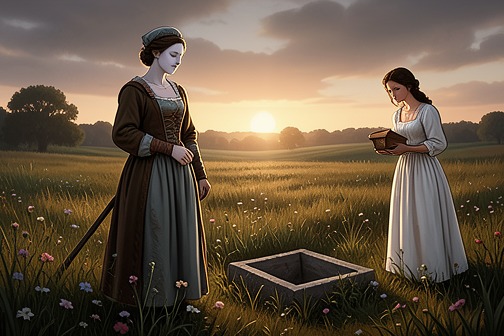
[Amaia Salazar](entity:character-recall-character-amaia-salazar-99849e02d251)’s suspicion that her twin sister was killed in a ritual emerges when a protected witness’s account of a missing girl converges with the empty grave and other buried clues from Amaia’s own past. The link is compelling but not conclusive: the witness identifies a closely similar case at a [Baztán](entity:location-recall-location-bazt-n-b5321a4399fc) caserío, and later explains the cult’s rules for sacrifice, yet the sister’s precise fate remains unverified.
## Discovery of a parallel case
While listening to [Sarasola](entity:character-recall-character-sarasola-4a4a102d3175) explain a separate homicide investigation, Amaia is struck by the images that gather in her mind: a child crossing the meadow between [Argi Beltz](entity:location-recall-location-argi-beltz-35d3971db8b9) and [Lau Haizeta](entity:location-recall-location-lau-haizeta-66637d20b54d), her mother leaving before dawn for meetings, her grandmother Juanita crying as she sang, forged death certificates associated with [Nurse Hidalgo](entity:character-recall-character-hidalgo-c6928099017b), and her sister’s empty grave. The montage also brings back [Elena Ochoa](entity:character-recall-character-elena-ochoa-92478c49edc9)’s bloodied body and the walnut shells found beside it. These recollections do not independently establish what happened to the sister; together, they make the witness’s account feel like part of the same concealed history.
The protected witness says that the girl in the case he knows was taken away, though he does not know whether her body was buried in the forest or elsewhere. Amaia recognizes a near-identical story from a caserío in Baztán, where the parents had prepared a better alibi and were never investigated. When Sarasola identifies the place as the caserío where [Doctor Berasategui](entity:character-recall-character-doctor-berasategui-f71c7aa55639) conducted grief therapies, Amaia completes the connection: the girl’s death occurred in the year she was born. The parallel turns an old family mystery into a possible homicide, while leaving the identity and fate of the missing child unresolved.
## The suspected ritual
A witness later describes the sacrifice as an act directed to [Inguma](entity:character-recall-character-inguma-efe674e92e4c). The victim was to be deprived of air, and afterward her body was to be ceded as an offering. The requirements included being a girl, being under two years old, and being unbaptized. In the witness’s account, baptism itself counted as an offering and commitment to another god, so it disqualified a child from the group’s intended rite.
The age rule was explained through a belief that the soul remained in transition from birth until the second year, making an infant especially suitable as an offering. The witness also said the cult selected victims in groups of the same sex and age, killed in identical circumstances until a cycle was complete. These statements describe the group’s claimed ritual logic, not independent proof that the same procedure was used against Amaia’s sister. They do, however, give specific form to the suspicion raised by the parallel case and the missing body.
## Family clues and the limits of proof
Amaia’s recollections place the suspected death amid a wider pattern of concealment: a supposedly empty grave, falsified certificates, clandestine meetings, and the memory of a child’s remains or belongings suggested by a dark, downy patch visible in a backpack. The details recur beside evidence from other investigations, including Elena Ochoa’s death. Their arrangement shows how the separate mysteries begin to illuminate one another, but the narrative does not present every image in Amaia’s mental sequence as direct forensic evidence about her sister.
The distinction matters. The witness cannot say where the girl’s body went, and Amaia’s own comparison establishes a striking resemblance rather than a confirmed identification. What becomes clearer is the possibility that her sister’s death was not the natural loss her family had been led to accept, but one episode in a concealed pattern of ritualized child killing.
## Consequences and significance
The revelation changes the meaning of Amaia’s empty-grave discovery: it is no longer only an unexplained absence, but a clue that may connect her family to the same practices exposed by the investigation. It also ties the case’s intimate history to the cult’s larger belief system, in which age, baptism, sex, manner of death, and the disposition of the body all determine whether a child can be offered.
The suspicion remains painful precisely because it does not settle into certainty. When Amaia later weeps in [Engrasi](entity:character-recall-character-engrasi-a3e51d66f12b)’s arms, she mourns what was lost and violated, including bones and blood, before gathering herself for what she must do. The episode thus makes the investigation both evidentiary and personal: the search for the truth about a missing child becomes inseparable from Amaia’s own family history, even while the surviving account cannot finally prove how her sister died.
Event 23
Jonan's Scheduled Posthumous Email
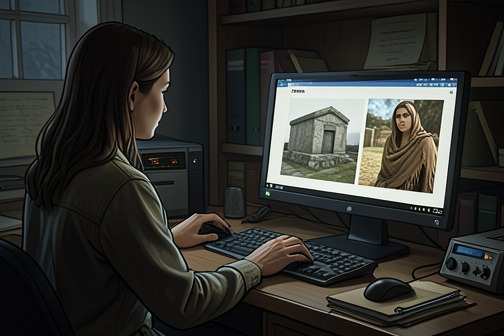
[Jonan Etxaide](entity:character-recall-character-jonan-etxaide-e04928c45e0f)’s scheduled posthumous email is a delayed message that converts his absence into a new source of evidence. [Amaia Salazar](entity:character-recall-character-amaia-salazar-99849e02d251) receives it on the afternoon of his funeral, more than a day after Jonan has died and been cremated; opening its cloud archive reveals a backup of case material that includes photographs of Amaia with [Judge Markina](entity:character-recall-character-judge-markina-f914c84921ae) and extensive images of the [Ainhoa](entity:location-recall-location-7667df1f7cdc) tomb. The message offers no explanation in Jonan’s own words. Instead, its folders and files leave Amaia to reconstruct what he had been examining.
## Discovery at Home
Amaia encounters the email while returning home to change clothes and prepare to speak personally with Inspector [Clemos](entity:character-recall-character-clemos-5e1fe12c8ad8). She has been unwilling to let the case narrow simply because the test results point in one direction, and is planning how to argue for other investigative lines. At home, she notices that the computer is still running: she had left it on while looking at maps the previous day. After closing the map pages, she sees a notification in an old email account, one she rarely uses because official mail goes to her work account and personal mail to an account she checks on her phone.
The sender’s name makes the notification startling; its date makes it disturbing. Amaia has never received work correspondence from Jonan at that address, and doubts that many people even knew the account existed. Yet the email was sent two days earlier, at the time of the funeral, when Jonan had already been dead for more than twenty-four hours. Its timing gives the ordinary act of opening a message the force of an encounter across death: Jonan cannot answer her, but something he prepared has arrived.
## Opening the Archive
The email contains no explanatory letter. It offers access to shared documents and images, but requires an account and password. Amaia pauses over the form, physically shaken: her heart is racing, her mouth is dry, and a tremor spreads from the finger held above the mouse. She goes to the kitchen for cold water, returns, rereads the brief message, and then enters her email address. The sequence slows the discovery into a threshold she must choose to cross; the archive will have to speak through what it contains rather than through a message from Jonan.
Once the drive opens, Amaia finds a dozen folders arranged alphabetically, with labels including Ainhoa, Escenarios, [Berasategui](entity:character-recall-character-berasategui-41d5fed3f8c7), [Hidalgo](entity:character-recall-character-hidalgo-95bf9ff01150), and Salazar. The documents inside are not arranged in a clear order, and the overall structure suggests a backup rather than a polished report. Opening one folder at random, she finds a search warrant for [Nurse Hidalgo](entity:character-recall-character-hidalgo-c6928099017b)’s home, an audio recording of [Yolanda Berrueta](entity:character-recall-character-yolanda-berrueta-a229211a5262)’s statement at the police station, and the nurse’s employment history. The spread of records shows that the archive reaches across several strands of the investigation, while its disorder leaves Amaia to make the connections herself.
## Photographs and Unanswered Questions
The folder titled [Markina](entity:character-recall-character-markina-7852f893b7e2) contains photographs of Amaia with Amaia’s Partner Markina on the plaza in front of the Baluarte auditorium. Their presence among Jonan’s case files changes the meaning of the archive: it preserves not only official documents but also images of Amaia in a personal setting with the judge. The photographs acquire an added unease because Markina has recently disclosed to Amaia the childhood loss that shaped his family. His account concerned the death of his three-week-old brother and the prolonged grief that followed; Jonan’s images do not explain why he recorded the pair, but show that he was watching their connection closely enough to document it.
The Ainhoa folder shifts the discovery from surveillance to the question of missing bodies. It contains more than twenty-five photographs from inside the tomb of Yolanda’s children, including close-ups of the coffins and their identifying initials: D. T. B. for Didier Tremond Berrueta and M. T. B. for Martín Tremond Berrueta. The images show a baby’s hands emerging from a box and the blackened face of the other child. Jonan has also photographed an overturned, fully open metal ash coffin. He enlarged and rotated the initials on its side, H. T. B., to make them legible, and the photographs include an enlargement of a visible corner of a bag. The images supply material details, not an explanation of what happened to the children or what the initials and bag signify.
## Meaning and Aftermath
The archive bears on a dispute that had been easy to dismiss as grief-stricken insistence. Yolanda repeatedly told a priest that her children were not in their grave and that someone had taken their bodies; he had officiated at the funeral and seen the coffins lowered into the ground, but could not verify their contents. Later, Yolanda acknowledges that the children’s bodies had been taken and insists that opening the tomb sooner would have exposed the missing girl and helped another bereaved mother in [Elizondo](entity:location-recall-location-elizondo-4e0690247b99). Against that background, Jonan’s many photographs make the tomb’s interior inspectable: they preserve what he saw and direct attention to the open ash coffin and its marked side.
The email’s method of revelation is as consequential as its contents. It gives Amaia no final interpretation to accept and no chance to ask its sender what he intended; instead, the account names, recordings, warrants, photographs, and details invite her to continue his unfinished examination. A message sent before Jonan’s death arrives when he can no longer explain it, turning the delay into part of the evidence. His absence is not resolved by the archive. It becomes the condition under which Amaia must read it.
Event 24
Yolanda Berrueta Blows Up Her Children's Grave
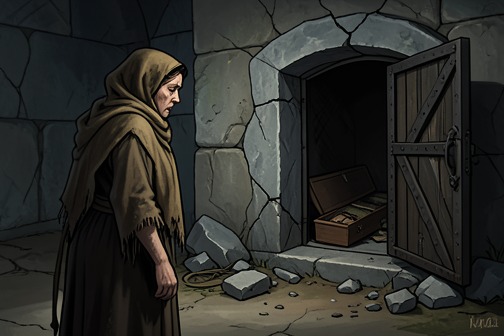
[Yolanda Berrueta Blows Up Her Children's Grave](entity:event-recall-event-yolanda-berrueta-bdf7cc493fd5) is the turning point at which Yolanda’s insistence that her children’s bodies are not all where they should be becomes testable evidence. Her act of breaking open the family tomb in [Ainhoa](entity:location-recall-location-7667df1f7cdc) confirms that the twins are there, yet the photographs made inside it reveal a third, smaller coffin containing sugar in place of the ashes attributed to her first daughter. What had been treated as a bereaved mother’s delusion becomes a lead in the investigation of stolen infant remains.
## Background and the Grave
Yolanda had lost her reason after the death of her children, in the account of a priest who knew the family. She came to him every week insisting that the children were not in their grave and that, as their mother, she could feel their absence. The priest understood the force of her grief but rejected her claim: he had officiated at the funeral and said he had seen the coffins lowered into the grave. A neighbor also reported that Yolanda had once tried to open it. Her conviction was therefore known, but it had been framed as part of her illness rather than treated as a possibility that the burial itself concealed something.
The family tomb held the remains of Yolanda’s children and other relatives. The later photographs distinguished three child-sized coffins, not just the two belonging to her twins. The twins, Didier Tremond Berrueta and Martín Tremond Berrueta, were confirmed to be inside. Their presence mattered: Yolanda’s belief was not simply a correct sense that the whole grave was empty. The discrepancy lay in the additional coffin, and in what it did—and did not—contain.
## The Breach and Its Photographic Record
Yolanda blew apart the tomb of her children. The explosion did not itself settle what had happened to every child buried there, but it left the interior open to examination. More than twenty-five photographs taken at Ainhoa recorded the coffins and their contents. Images showed a baby’s hands protruding from a box and another child’s blackened face; close-ups also documented the coffin initials, including D. T. B. and M. T. B. for the twins.
[Jonan Etxaide](entity:character-recall-character-jonan-etxaide-e04928c45e0f)’s attention had settled especially on a small metal casket meant to hold ashes. It lay overturned and completely open, marked with the initials H. T. B. One photograph showed the corner of a colorful plastic bag inside it. The bag looked wrong for human ashes, and comparison with French food packaging identified its blue-and-red logo: it matched a one-kilogram bag of sugar. Further photographs showed other food products—lentils, salt, flour, and sugar—in transparent bags with the same colors and style of logo. The close comparison transformed an odd detail in the wrecked tomb into a specific finding: the presumed ashes were sugar, not human remains.
## The Missing First Daughter
When [Amaia Salazar](entity:character-recall-character-amaia-salazar-99849e02d251) presented the enlarged photographs to the investigators, she identified the casket marked H. T. B. as belonging to Yolanda’s first daughter. The girl had been born a year before the twins and had died shortly after birth at Yolanda’s parents’ home in [Oieregi](entity:location-recall-location-8e76c5473d38). Her coffin had apparently been made to appear as though it contained ashes, while the body itself was absent. The grave thus held the twins whose absence Yolanda had been accused of imagining, alongside evidence that an earlier child’s remains had been removed.
The timing of the discovery gave the grave’s opened contents a consequence beyond the family’s private loss. Investigators were already considering the theft of an infant’s body and the possibility that the case could be reopened. Elsewhere in their inquiry, they learned of a ritual system in which a child had to be under two years old and unbaptized to qualify as an offering. The explanation offered for the age limit was that an infant’s soul remained in transition between worlds. These claims do not establish who took Yolanda’s daughter or what happened to her; the sugar-filled coffin instead establishes the concealed substitution and makes the missing body an investigative fact.
## Vindication and Consequences
Yolanda later acknowledged that fear and medication had confused her about which coffins were which. She accepted responsibility for the damage, but not the original accusation that her children’s absence was a delusion: the twins were in the tomb, she explained, while the baby was missing. Had the attempt to open the grave been allowed earlier, she would have seen that the twins were there, but no one would have noticed the first daughter’s absence. In her view, the inquiry might never have listened to another mother in [Elizondo](entity:location-recall-location-elizondo-4e0690247b99) whose child was also missing.
When Amaia saw her later, Yolanda appeared alert and oriented despite the conspicuous bandages. She said her immediate aim was to get out and search for her daughter. The tomb’s destruction had therefore produced no recovery or resolution for her; it had exposed the difference between the children who were buried there and the one whose body was not. Its force in the narrative lies in that reversal: an act taken as proof of madness opens a line of evidence, while the mother’s insistence preserves the question that a seemingly settled funeral had hidden.
Event 25
Discovery of the Sugar Bag in the Baby's Coffin
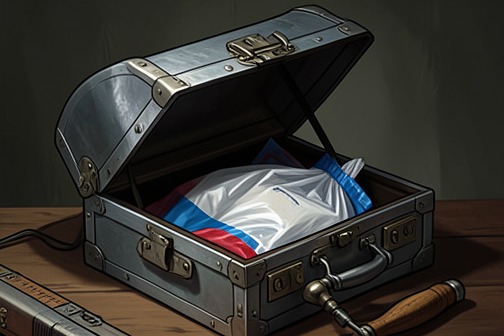
The Discovery of the Sugar Bag in the Baby’s Coffin turns an overlooked detail in [Jonan Etxaide](entity:character-recall-character-jonan-etxaide-e04928c45e0f)’s photographs into evidence that a child’s body is missing. A bag that had been accepted as the remains of an infant’s cremation proves to be a sugar package; the discovery redirects the investigation from [Yolanda Berrueta](entity:character-recall-character-yolanda-berrueta-a229211a5262)’s grief and suspicions to a concealed disappearance and a wider pattern of substituted burial contents.
## The photographs and the clue
[Amaia Salazar](entity:character-recall-character-amaia-salazar-99849e02d251) finds the evidence in Jonan Etxaide’s cloud files, which contain material gathered for several investigations. In the folder marked [Ainhoa](entity:location-recall-location-7667df1f7cdc), she opens a sequence of photographs showing the interior of the family tomb at [Ainhoa Church Cemetery](entity:location-recall-location-020a61ea2487). The pictures document the coffins of Yolanda Berrueta’s twin sons and a third, smaller coffin. Jonan has made more than twenty-five images, with close-ups that reveal the initials on the children’s coffins and details of the smaller one.
The third coffin is a metal casket intended for ashes. It appears overturned and open. A corner of a plastic bag is visible inside, and Jonan has enlarged the image until the blue-and-red edge of a logo can be examined. The color and placement make the bag look out of place among the expected contents of a burial. Rather than treating the image as an isolated oddity, Jonan has compared it with photographs of French food packaging: at least twelve containers of products including lentils, salt, flour, and sugar. In a further comparison, he places an enlargement of the bag’s corner beside a one-kilogram sugar package. The logos match.
That comparison changes what the small coffin means. Its contents are not a customary bag for human ashes, as investigators had assumed, but a food package for sugar. The discovery depends on the close attention given to an apparently minor object: Jonan’s photographs preserve the detail, and his comparisons make its identity legible to Amaia.
## Identifying the missing child
At a police briefing, Amaia presents the photographs as evidence relevant to the homicide investigation, despite concerns about the proper handling of material from Jonan’s files. She explains that the tomb contained the twins’ coffins and a third small casket; the bag inside that casket was sugar packaging, not an ashes container. The coffin bears the initials H. T. B., identifying it with [Haizea Tremond Berrueta](entity:character-recall-character-haizea-tremond-berr-ea37823b1e8d).
Haizea was Yolanda and [Marcel Tremond](entity:character-recall-character-marcel-tremond-f933fb7d800f)’s first daughter, born a year before the twins. She died shortly after birth at Yolanda’s parents’ home in [Oieregi](entity:location-recall-location-8e76c5473d38). Her death had been recorded as cot death. The identification of the sugar bag now conflicts with the family’s account of what happened to her body: the small coffin was supposed to contain it, yet the coffin holds a substitute instead.
Amaia adds testimony that makes the discrepancy harder to dismiss as a mistake in the photographs. Yolanda’s father and the funeral director who handled the wake and the transfer to Ainhoa Church Cemetery are prepared to swear that Haizea was not cremated and that her body was placed in the coffin. The bag therefore points not simply to an unusual burial container but to the absence of a body that witnesses say was there.
## From suspicion to corroboration
Before presenting the clue, Amaia recognizes its significance through details from other cases. The bag recalls the gravel found in the coffin of her own sister and the bags of sugar [Valentín Esparza](entity:character-recall-character-valent-n-esparza-cb7018222bd8) had used to cover the bottom of his daughter’s coffin. It also brings back the question Yolanda had asked about why anyone would put sugar in a child’s coffin. What had seemed an inexplicable detail now joins separate instances in which ordinary materials stand in for expected remains.
The photographs also complicate the earlier dispute over Yolanda’s insistence that bodies had been removed from the tomb. A priest had told the investigators that she visited weekly, convinced that her children were not there; he had resisted encouraging her belief, saying that he had officiated at the funeral and watched the coffins lowered into the grave. The images establish that the twins were in their coffins, but they expose a different absence in the same tomb: the coffin for Haizea contains sugar, while witnesses say her body was placed there.
Yolanda later acknowledges that fear, confusion, and medication had led her to mistake the coffins, but maintains that she was right about her daughter’s body being stolen. She also explains the consequence of the interrupted tomb inquiry: confirming that the twins were present would not, by itself, have revealed that Haizea was missing. Her account reframes her repeated visits and insistence not as proof that every coffin was empty, but as an imperfect warning about a real absence.
## Investigative and thematic significance
The sugar bag provides a material link between a particular family’s loss and the investigation into infant deaths and ritual sacrifice. In the group’s stated beliefs, children under two were considered to be in a transitional state and especially suitable as offerings; one witness describes the required victim as a girl under two who had not been baptized, and speaks of depriving her of air before yielding her body. These are the group’s ritual claims, not proof that the bag itself was part of a rite. What the photographs establish is more concrete: an infant’s coffin was used to conceal a substitution, and the child whose remains it was meant to hold was missing.
The clue also reveals how grief can be discounted when it arrives in a disordered form. Yolanda’s certainty had been treated as the product of mental illness, while the priest’s memories and the family’s funeral history seemed to settle the question. The photograph does not simply confirm her version wholesale: it distinguishes the twins’ presence from Haizea’s absence. That precision turns a suspected empty grave into an evidentiary lead, and makes the sugar package a small but decisive object in the search for the missing child and the people responsible.
Event 26
Discovery of a Pattern of Infant Deaths Along the Baztán–Bidasoa Rivers
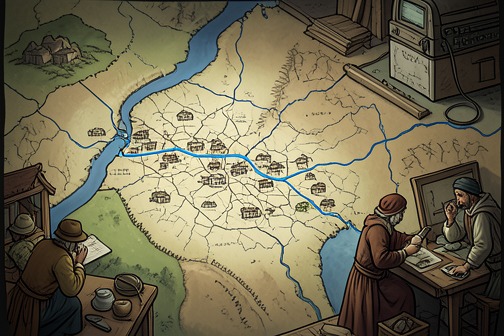
The discovery of a pattern of infant deaths along the [Baztán](entity:location-recall-location-bazt-n-b5321a4399fc)–Bidasoa rivers turns scattered family tragedies into a connected investigative problem. When [Amaia Salazar](entity:character-recall-character-amaia-salazar-99849e02d251) plots the victims’ towns rather than treating each death as an isolated case, the marks align with the river; recognizing that the waterway continues under another name beyond [Navarra](entity:location-recall-location-4f91a2876b8d) leads her to widen the search into [Guipúzcoa](entity:location-recall-location-ff0ce04d40b9). The map does not establish a cause or identify a perpetrator, but it gives the inquiry a new geography and a way to test its suspicions.
## From separate files to a map
Amaia’s first map grows out of [Jonan Etxaide](entity:character-recall-character-jonan-etxaide-e04928c45e0f)’s case files. His scenario list contained addresses for babies whose deaths had already been investigated, and he had added Amaia’s twin sister while leaving out the children of [Yolanda Berrueta](entity:character-recall-character-yolanda-berrueta-a229211a5262). Amaia marks the towns on a map, includes her sister’s death in [Elizondo](entity:location-recall-location-elizondo-4e0690247b99), and initially avoids marking [Ainhoa](entity:location-recall-location-7667df1f7cdc). The line made by the remaining points does not follow the N-121, as might be expected if a serial offender were using a major road to move between crime scenes. A new map, with the river’s fine blue trace visible, supplies a more persuasive alignment: the cases run from [Erratzu](entity:location-recall-location-d66f35a619db) through [Elbete](entity:location-recall-location-9d8780bc7421) and Elizondo, continuing toward [Oieregi](entity:location-recall-location-8e76c5473d38).
The river also connects this discovery to earlier clues without making them conclusive. The remembered instruction to clean the river resonates with the mapped pattern, as do images of white flowers and empty coffins from Amaia’s dreams. She sees the cases alongside material on sacrificial practices and the dangers of [Berasategui](entity:character-recall-character-berasategui-41d5fed3f8c7)’s files. Those associations sharpen the question the map raises, but the spatial correspondence is a lead, not proof that every death has the same explanation.
## A recurring profile—and its limits
When Amaia presents the developing map to her colleagues, she describes the cases as predominantly involving girls who died in infancy or very early childhood. The families were in poor financial circumstances when the children died; in the years that followed, every family identified in the profile experienced improved prosperity. In at least four cases, including those of the Berrueta family and [Valentín Esparza](entity:character-recall-character-valent-n-esparza-cb7018222bd8), investigators knew that the parents had said at the time of the child’s death that things would be better from then on. These details give the investigation a behavioral and social profile to compare against the geography, while remaining circumstantial rather than proof of a shared act.
The cases themselves were not all equally established. For Esparza’s daughter, the forensic findings confirmed asphyxiation: the pressure mark on her face matched the nose of the teddy bear, and white fibers at her lips belonged to the toy. By contrast, investigators had no means to confirm their suspicion that Yolanda’s baby was missing from the family tomb, and a renewed judicial inspection of the grave was ruled out. Amaia’s map therefore gathered deaths supported by different kinds and degrees of evidence. Its force came from the recurrence of locations and circumstances, not from pretending that every entry had already been verified in the same way.
## The river crosses the boundary
A crucial correction comes when Amaia revisits Jonan’s files on [Nurse Hidalgo](entity:character-recall-character-hidalgo-c6928099017b). Her employment history showed that she had worked as a midwife at hospitals and clinics in [Irún](entity:location-recall-location-103d157e046d) and [Hondarribia](entity:location-recall-location-25f547eb9fce), including the Hospital Comarcal de Irún, Virgen de la Manzana, and Clínica Río Bidasoa. The latter name makes Amaia reconsider the map: the [Baztán River](entity:location-recall-location-f9e8ffffb336) is called the Bidasoa farther along its course, after leaving Navarra and entering Guipúzcoa, before reaching the Cantabrian Sea. The change of name had helped conceal the continuity of the route under investigation.
Amaia proposes that, if Nurse Hidalgo was involved in the practices and recruited parents, her activity might have extended to places where she had worked. She orders the search widened beyond infant deaths in Navarra to include Guipúzcoa, with particular attention to towns near the Bidasoa. This is framed as a hypothesis about the nurse’s possible reach, not as an established account of her conduct. The geographic correction matters because it prevents an administrative boundary—and a river’s change of name—from prematurely delimiting the inquiry.
## A longer line of deaths
The expanded search produces a more specific set of cases. After reducing possible matches through baptism records, investigators identify deaths in Elizondo and [Oronoz-Mugaire](entity:location-recall-location-06a64593c917), one in [Narbarte](entity:location-recall-location-97465c9b98c7), two in [Doneztebe](entity:location-recall-location-c38e31d7e89d), and two in Hondarribia. The baptism check is slow: researchers must identify each child’s parish and consult records held by individual priests. In Hondarribia, it reduces four initial cases to two; one excluded child was German and had died while her parents were on holiday, while another had been baptized.
Amaia then asks for older cases to be added in a different color, including the child associated with [Argi Beltz](entity:location-recall-location-argi-beltz-35d3971db8b9), her own sister, the [Lesaka](entity:location-recall-location-19cc0c2883f7) child, the daughter of the lawyers Lejarreta and Andía in Elbete, and the child whose father confronted the forensic doctor in Erratzu. The resulting chain follows the watercourse from its source toward its mouth, through towns where it is known first as the Baztán and later as the Bidasoa. The pattern is no longer simply a cluster within one valley: it is a cross-regional sequence that can direct further record searches.
## What the discovery changes
The map converts an intuition into a working investigative method. Amaia and her team can compare cases by location, age, sex, family circumstances, and relevant professional connections, while seeking records that may confirm or exclude individual entries. The map’s changing colors distinguish older cases from the current set; the parish inquiries and the search for historical records add checks that geography by itself cannot supply.
The discovery also gives renewed significance to accounts of missing bodies. Yolanda Berrueta had repeatedly insisted that her children were not in their grave; she later tells Amaia that although her own confusion and medication had led her to mix up the coffins, her conviction that her baby’s body had been stolen was right. She worries that, had the grave been opened and the other children found, nobody might ever have noticed the missing girl—or listened to another mother whose child was gone. Her statement makes the investigation’s pattern more than a distribution of deaths on paper, while leaving the evidence and circumstances of each family’s case to be established separately.
Event 27
Theft of an Infant's Body from the Esparza Family Tomb
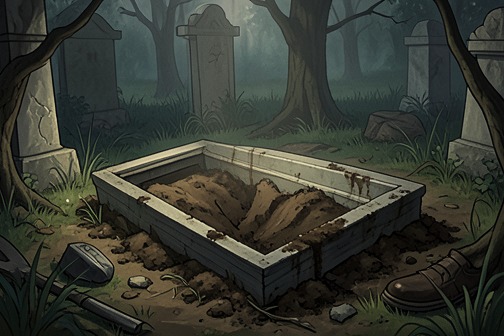
The [Theft of an Infant's Body from the Esparza Family Tomb](entity:event-recall-event-esparza-ce8d95e8d99a) is revealed when a family visit to the cemetery uncovers a disturbed grave and an empty coffin. The discovery transforms suspicion into physical evidence: the child’s body is no longer where it was buried, and the grave has been opened despite the burial site’s appearance as a family tomb. The scene also unsettles the distinction between grief-driven fear and an actual crime, giving the missing body a material presence in the investigation.
## Background and the Grave’s Significance
The child’s death had already been investigated. The forensic report established asphyxia as the cause, and the pressure mark on her forehead matched the shape and measurements of the nose of a teddy bear. White fibers found at the corner of her mouth came from the toy. Saliva traces on the child’s face and on the bear’s fur corresponded to the child and to [Valentín Esparza](entity:character-recall-character-valent-n-esparza-cb7018222bd8); a third trace was associated with the bear’s powerful, nauseating odor, but its origin had not yet been established. These details place the later discovery in the aftermath of a death examined forensically, not an unexplained absence from an unmarked burial.
The earlier investigation had also documented that Valentín Esparza took his daughter’s body from a coffin. Photographs of the child, the bear, and the empty coffin formed part of the evidence assembled in the police office. The later discovery at the Esparza family tomb therefore extends an existing chain of disturbance around the child’s body: an earlier removal had been investigated, and now the coffin in the family grave is found open and empty. The supplied account establishes the theft from the tomb but does not identify who removed the body or explain how it was carried out.
## Discovery at the Cemetery
[Inés Ballarena](entity:character-recall-character-in-s-ballarena-ebbaae717409) and her daughter came to the cemetery to visit the child’s grave. The flowers placed at the burial had been gathered into a disorderly heap, as though someone had rummaged through them. The women alerted the gravedigger, who believed the grave had been forced and contacted the police. [Inspector Iriarte](entity:character-recall-character-inspector-iriarte-f7159785492e) called [Amaia Salazar](entity:character-recall-character-amaia-salazar-99849e02d251) and asked her to come to [Elizondo](entity:location-recall-location-elizondo-4e0690247b99); the call interrupted her as she was arriving at [Judge Markina](entity:character-recall-character-judge-markina-f914c84921ae)’s house.
When Amaia reached the cemetery at night, Inspector Iriarte, Montes, [Zabalza](entity:character-recall-character-zabalza-12fb8d3243c0), and municipal employees were already there with the three women: Inés, her daughter, and the child’s grandmother. Despite the cold and the late hour, they were calm and waited while the officers examined the tomb. The grandmother explained that they had come to leave candles so the child would have light. The small flames at the foot of the grave set the family’s act of remembrance beside the signs of a violation.
The gravedigger found that the heavy stone slab had shifted at least five centimeters from its position. He demonstrated the gap with his fingers and insisted it could not have been left that way after the burial: he made sure slabs fitted tightly to keep water out and reduce the risk of breakage. Amaia checked the opening herself before ordering the grave opened. The displaced stone was thus more than a sign of disturbance; it contradicted the gravedigger’s account of how the tomb had been secured.
## Opening the Tomb
The officers and workers moved the flowers aside and brought steel bars and a lever. The gravedigger’s method was to raise the slab slightly, place bars beneath it, and roll the stone across them. Once the opening was clear, everyone directed their lights into the tomb. Two old coffins lay at the bottom alongside the child’s. A metal ladder was lowered, and the gravedigger descended with a smaller lever, although he did not need it: the child’s coffin was already open.
The coffin contained nothing. The gravedigger called up to the others that it was empty, confirming that the disturbance was not merely displaced flowers or a shifted slab. The child’s mother cried out that the man had returned and taken their daughter, then [Sonia Ballarena](entity:character-recall-character-sonia-ballarena-b757a47ff278) collapsed to the ground. The discovery supplies a physical basis for the family’s shock: the coffin itself was open, and the body was gone.
## Immediate Consequences and Significance
The news reached Judge Markina while he was opening a bottle of wine. He told his caller that the Esparza family tomb appeared to have been violated and that the Foral Police were on their way. After listening to the response, he threw the telephone in anger; it struck the bottle, which shattered and spilled wine across the counter. His abrupt reaction provides a parallel image of the discovery’s disruptive force, while the account does not disclose what his caller told him or why he reacted in this way.
For the investigation, the empty coffin changes the status of the missing body. A disturbed arrangement of flowers and a displaced slab raise suspicion; the opened coffin confirms that a body has been removed. The event also makes the grave itself an evidentiary scene, with the condition of the stone, the flowers, the open coffin, and the presence of several witnesses establishing what was found. The discovery leaves the central questions unresolved—who took the child, when the coffin was opened, and where the body was taken—but makes those questions unavoidable.
Event 28
Takchenko's Suspected Hit-and-Run Silencing Attempt
[Doctor Takchenko](entity:character-recall-character-takchenko-04d464e483e3)’s suspected hit-and-run silencing attempt transforms a tissue sample into a dangerous link between forensic evidence and the person trying to suppress it. The collision left her gravely injured but alive; the apparent search of her car, followed by the discovery that she had sent the sample away for analysis, made the incident look less like an ordinary accident than an effort to find and remove a clue.
## The attack and the missing evidence
The news reached [Amaia Salazar](entity:character-recall-character-amaia-salazar-99849e02d251) through a call from Doctor Takchenko’s husband, who explained that a vehicle had struck his wife’s car and forced it off the road as she was travelling to see him. She survived, but sustained fractures to her pelvis, hip, leg, nose, and collarbone, as well as a serious cut to her head. Rescue crews took more than forty minutes to free her from the wreckage. She remained conscious and was being treated in intensive care, though her husband was not allowed to stay with her.
Witnesses described a second vehicle stopped on the roadside. Two men were seen climbing the slope, getting into that car, and driving away. The police later confirmed that the wrecked car had been searched: its contents had been scattered, the luggage opened, and the spaces beneath the seats, in the glove compartment, and elsewhere checked. The search suggested that the collision had been accompanied by a deliberate attempt to locate something, although the men’s identities and the precise circumstances of the crash were not established in the account.
## Why the sample mattered
Before the crash, Doctor Takchenko had been given a tissue sample to examine. She had sent it by courier from Pamplona, and the envelope arrived at her husband’s home just as police informed him of the collision. He came to believe that the men who searched the car had been looking for that envelope. When he told Doctor Takchenko about its arrival, she reminded him that she had been asked to have the sample analyzed; she had anticipated that the material might matter enough to place her in danger and arranged for it to travel separately from her car.
Amaia recognized the importance of that precaution only after learning what had happened. She reasoned that if the sample was a piece of evidence missed by the crime-scene team, and if no one had seen Doctor Takchenko collect it, then only the killer could have known it was there and understood its potential to point suspicion in his direction. The attempted search thus exposed a disturbing asymmetry: someone appeared to know the significance of a clue the investigators themselves had not fully appreciated.
## The diagnostic uncertainty behind the investigation
The tissue’s importance lay within an investigation where sudden infant death syndrome could function both as a legitimate medical diagnosis and as an endpoint that left questions unanswered. It applied to an unexpected death, usually before a child’s first birthday, occurring during sleep without apparent distress; it was assigned when an autopsy found no other cause. In [Navarra](entity:location-recall-location-4f91a2876b8d), seventeen children had died under that classification in five years, four in [Baztán](entity:location-recall-location-bazt-n-b5321a4399fc), figures described as consistent with the wider average. Yet two of the cases had prompted later social-services inquiries into the families, and the records available to investigators gave no account of how those inquiries ended. The diagnosis did not itself establish foul play, but its dependence on excluding other causes made the quality and completeness of the evidence consequential.
A forensic doctor recalled two autopsies of apparently healthy girls as normal, with nothing to suggest that their deaths were unnatural; the initial certificates had proposed sudden infant death syndrome. What unsettled her was not a finding in the bodies but the parents’ conduct. In one case, a father challenged her about whether his daughter’s organs would remain in the body and spoke of the black market in corpses, while his wife tried to restrain him. That account illustrates why an inconspicuous tissue trace could matter: where a death had been classified through the absence of an alternative explanation, a small piece of material overlooked at first could potentially redirect suspicion. Takchenko’s decision to send the sample for specialist analysis therefore belonged to an inquiry in which medical uncertainty and the preservation of physical evidence were tightly joined.
## Other limits of the record
The inquiry also encountered a different kind of evidentiary gap in the Tremond family’s case. [Lisa Tremond](entity:character-recall-character-lisa-tremond-c0e3bd8f7545), head of pediatrics at the hospital where the children had died, said they had suffered from pulmonary deficiency since birth and that this—not sudden infant death—had caused their deaths. No autopsies were performed. Lisa defended that decision as an effort to spare their mother, [Yolanda Berrueta](entity:character-recall-character-yolanda-berrueta-a229211a5262), further suffering, explaining that Yolanda had pleaded for the children not to be cut open. Lisa also acknowledged that she had been both their doctor and their paternal grandmother, a dual role that sharpened questions about how medical judgment and family loyalties had met.
Yolanda’s insistence that the children were not in their grave was initially treated as part of her grief: the priest who had conducted the funeral said he had watched the coffins lowered into the ground, and understood her anguish without accepting her claim. Later, Yolanda recognized that medication and confusion had led her to mistake the coffins, but maintained that she had been right about the missing baby’s body. She also grasped what the halted inspection would have meant: the absence might never have been discovered, and another bereaved mother’s account might have gone unheard. The case did not establish that every unexplained infant death concealed a crime; it showed how a classification, a forgone examination, or an unverified burial could leave a consequential fact beyond the reach of the record.
## Aftermath and investigative consequence
The incident changed Amaia’s understanding of both the evidence and her own part in protecting it. Doctor Takchenko had recognized the danger in the tissue and sent it away; Amaia, by contrast, had not considered how valuable the trace might be or how much risk her request for its analysis could create. She understood that the men who searched the car could have known about the clue only if they were connected to the crime and aware that it might direct suspicion toward them. The collision therefore sharpened the investigation while making its surviving witness and physical evidence more vulnerable.
Takchenko’s husband arranged for the sample to be examined by Andreas Santos, a specialist in forensic textiles whose work included identifying and dating fabrics recovered from a stork’s nest. Amaia, meanwhile, returned to [Jonan Etxaide](entity:character-recall-character-jonan-etxaide-e04928c45e0f)’s files on [Nurse Hidalgo](entity:character-recall-character-hidalgo-c6928099017b). She bought two USB drives and revisited the records, including [Hidalgo](entity:character-recall-character-hidalgo-95bf9ff01150)’s basic details, the search warrant, and her employment history: before retiring, she had worked at the Hospital Comarcal de [Irún](entity:location-recall-location-103d157e046d) and at private clinics in [Hondarribia](entity:location-recall-location-25f547eb9fce) and Irún. The sequence made the suspected attack more than a warning about one dangerous fragment: it pushed Amaia back toward the documentary trail Jonan had been following, while leaving the tissue’s analysis and the identity of the men unresolved.
Event 29
Lesaka Group Carries Out an Infant Sacrifice
The [Lesaka](entity:location-recall-location-19cc0c2883f7) group’s infant sacrifice is disclosed through the confession of a former member, who describes a young girl being offered and killed by her own parents under the group’s direction. The account links the crime to a belief system that treated a child’s age, sex, baptismal status, manner of death, and body as parts of a prescribed offering. It also shows how a community that first presented itself as a search for tradition and spiritual experience came to demand the life of a child—and then dissolved around the act it had committed.
## From Commune to Cult
The witness traces his involvement to a summer visit to Lesaka with friends during [San Fermín](entity:time-recall-time-san-ferm-n-b536f0d196c4). At twenty-five and newly graduated from university, he was invited to a house shared by a group that initially seemed to be exploring tradition, human nature, and the forces of the natural world. Its members grew marijuana, gathered to listen to the wind and the earth, danced around a fire, and held talks for potential recruits, including locals and tourists drawn by spirituality, witchcraft, and spiritualism associated with [Baztán](entity:location-recall-location-bazt-n-b5321a4399fc).
The group often spoke about Tabese and his supposed knowledge, although the witness did not meet him during the first part of that summer. When most of the visitors left at the end of the season, the witness was invited to remain. The change in the group’s character followed: in September he met Xabier Tabese, a wealthy-seeming and charismatic man whose authority rested as much on his powerful personal appeal as on his teachings. The witness recalled that the group loved him and believed he gave them power; its members were prepared to do what he asked.
Tabese presented the group’s practices as a return to an ancient religion rooted in the origins of the land. He taught that megalithic monuments and ley lines marked the presence of spirits, and that offerings could awaken those forces and secure favors. The first offerings were small animal sacrifices, performed according to instructions. The group felt powerful when it believed that its actions had produced results, but, in the witness’s account, each favor was followed by demands for more. He lived with the group for almost a year, gaining access to what he remembered as extraordinary knowledge, power, and experience before the human sacrifice took place.
## The Sacrifice and Its Rules
The witness refused to describe the sacrifice itself in detail. He nevertheless confirmed that it happened, that all the members participated, and that the child’s own parents offered her and put her to death. Afterward, the body was taken away. This distinction matters: the account establishes the killing and the group’s collective involvement, while withholding a fuller description of the act and leaving some details of what happened to the body uncertain.
In explaining the group’s ritual logic, the witness said that the child was to be sacrificed to evil, to [Inguma](entity:character-recall-character-inguma-efe674e92e4c), and deprived of air in a manner associated with that being. Her body was then to be surrendered as an offering. He also described the prescribed victim as a girl under two years old who had not been baptized. Baptism, in the group’s belief, constituted an offering and commitment to another god, so an unbaptized child was required for their rite. The testimony presents these conditions as the group’s rules, not as independently established supernatural facts.
Age was given a particular significance. The witness said that, from birth until the second year, a child’s soul was understood to be in transition and therefore especially suitable for an offering. The explanation shared by Jonan was that some cultures considered children under two to move between two worlds, able to perceive both and thus serve as a vehicle for communication with spiritual realms. The witness also described a later transition as children approached adulthood, but said that an infant’s death was easier to explain away than the death of an adolescent. The rules therefore combined a spiritual claim about transition with a practical advantage for concealing or rationalizing a death.
The group’s instructions also treated victims as belonging to cycles defined by sex, age, and supposedly identical circumstances. The witness said Tabese claimed that the offerings had to follow those patterns, though the witness did not know why. He recalled that men were generally the most committed participants; some women who took part fell into depression, and the group’s response was to urge them to have another child quickly. Some women, he added, may not have known what their husbands intended to do. His account makes clear that the ritual’s claimed order depended on coercion and secrecy within families as well as on the group’s collective belief.
## Dispersal and the Confession
The sacrifice did not consolidate the group. Within days, members began to leave, and in less than a month they had disappeared. Tabese never returned. The witness was among the last to go; eventually, only the couple who had made the offering remained. The sudden dispersal leaves the killing as both the group’s culminating act and the point after which its shared life came apart.
For years the witness did not see the other members again. He found work, started businesses, became wealthy, married, and had a son. When the boy developed cancer at eight, the witness encountered a former member working as a doctor during a hospital visit. The doctor said the illness could be resolved if the witness made a sacrifice. Faced with his son’s suffering, he considered the proposal, but his child died a few months later. A week afterward, the witness went to a police station and confessed. He said that after he reported what the group had done, he lost his work, money, wife, home, and friends, and had nowhere left to turn. His confession thus connects the original killing to a second moment of temptation: the old doctrine resurfaced when another parent confronted the possible loss of a child, but this time the witness disclosed the group’s crimes rather than repeating its offering.
## What the Testimony Reveals
The scene of disclosure changes the meaning of the group’s earlier language about tradition, nature, and spiritual power. The fire, the talk of ancient forces, and the promise that offerings would bring favors are not merely eccentric features of a commune in the witness’s account; they are the steps by which obedience to Tabese became a system demanding escalating sacrifices. The group’s abstract talk of transition is made brutally concrete by the victim’s age and the rules that required her to be a girl and unbaptized.
The testimony also places limits on what can be concluded. When asked whether the group had done the same to the girl from Lesaka, the witness said he did not know; he explained that following the ritual’s conditions was also the parents’ responsibility. His confession establishes the group’s killing of a girl and describes the doctrine surrounding it, but does not establish every connection between that sacrifice and other missing or dead children. That uncertainty is part of the revelation: the group’s practices are no longer only rumor, yet the fate of each child and the precise history of each offering must still be investigated.
Event 30
Yáñez Admits His Daughter Was Sacrificed
[Yáñez](entity:character-recall-character-y-ez-39fd5f669e0e)’s admission that he had an unnamed, unbaptized daughter who died only hours after birth turns a private family loss into evidence of the secret group’s sacrificial practice. [Amaia Salazar](entity:character-recall-character-amaia-salazar-99849e02d251) confronts him with the possibility that his wife rejected their later son because he replaced the daughter she had lost; Yáñez’s eventual disclosure, followed by Amaia’s accusation, connects the child’s death to the group’s belief that a sacrifice must be carried forward.
## The confrontation and the denial
Amaia raises the subject while visiting Yáñez at home. She recalls that another police officer had already spoken to him, then challenges his account of his wife’s condition: in Amaia’s view, the woman had been unwell before their son’s birth, and the baby’s arrival devastated her because she could not love a child who had taken the place of the daughter she had lost. Yáñez does not answer at first. Instead, he picks up the television remote and switches off the screen, a small act that marks the gravity of what Amaia has put before him.
He initially denies having had a daughter. Amaia counters that the earlier officer suspected otherwise and had come to question him about it. After a pause, Yáñez gives the child’s history: she had no name, had not been baptized, and died of crib death a few hours after she was born. The admission establishes the daughter’s existence and her brief life, but it does not itself provide a detailed account of what happened to her. Amaia’s immediate response is to accuse Yáñez of killing his own child, making explicit the conclusion she draws from the disclosure and the surrounding investigation.
## The group’s sacrificial rules
The revelation takes on its wider significance against the group’s ritual doctrine. In a separate account of its practices, a former participant explains that the intended victim had to be a girl younger than two and unbaptized. The group treated baptism as an offering and commitment to another god, and therefore incompatible with its own intended offering. Its rationale for the age limit was that a young child’s soul remained in transition: children under two were considered especially suitable as intermediaries between worlds, before the emergence of language marked a changed relation to their surroundings.
The same account describes sacrifice to [Inguma](entity:character-recall-character-inguma-efe674e92e4c) as involving deprivation of air and the subsequent surrender of the child’s body as an offering. The group’s victims were to be drawn from the same sex and age group and killed under identical circumstances until a cycle was complete. These rules supply the pattern against which Amaia reads Yáñez’s confession. His daughter’s age and unbaptized status match two of the group’s stated conditions; the evidence presented in the confrontation does not independently establish every detail of her death or the handling of her body.
## Grief, guilt, and resignation
Yáñez’s disclosure is followed by a bitter account of what remains of his life. His son is dead, his wife is dead, and he describes himself as wasting away alone in the house. He says that after his wife died, money, the house, and the family businesses ceased to matter to him. He presents himself as someone who has already renounced the life he once valued, and treats the possibility of punishment as largely irrelevant.
His resignation is not the same as a denial of the group’s reach. Yáñez refers to the possibility that members might send him walnuts, a threat associated elsewhere in the investigation with the group, and says he would swallow them and let evil enter his body. The image joins his fatalism to the group’s continuing power: even after claiming to have renounced everything, he speaks as though its threat can still reach him. His account also deepens the distinction between the ritual’s formal logic and its human cost. The group may describe a child as an offering within a cycle; the surviving family is left with bereavement, estrangement, and guilt that such explanations do not undo.
## The son as successor and the meaning of the admission
Amaia refuses to let Yáñez’s resignation close the matter. Remembering a witness hidden in an [Opus Dei](entity:organization-recall-organization-f6df9436611a) house, she applies the group’s rule that no one leaves without the group collecting its debt. She tells Yáñez that he may have renounced the group, but his son took up the role after him, and that a sacrifice of this kind could not simply be wasted. Her words connect the daughter’s death to a continuing obligation rather than treating it as an isolated tragedy. Yáñez responds by turning the television back on; as Amaia reaches the middle of the hallway, he calls after her, but the available scene does not disclose what he says next.
The admission therefore changes the meaning of the family’s history without making grief disappear. The daughter’s unrecorded, unbaptized life helps explain why Amaia sees Yáñez’s family as entangled in the group’s sacrificial system, while his later reference to his son suggests that the consequences continued into another generation. The scene also sets two forms of explanation against each other: the group’s rules make death appear organized and repeatable, whereas Yáñez’s losses and his wife’s suffering expose the devastation those rules leave behind.
Event 31
Mariano Sánchez Supplies Berasategui with Lethal Drugs
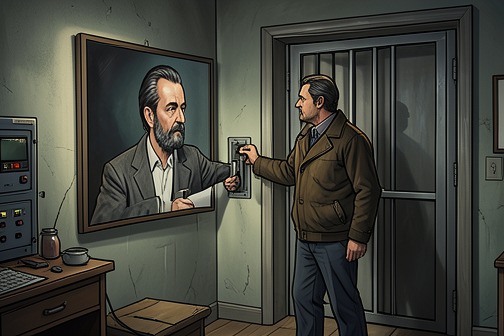
[Mariano Sánchez Supplies Berasategui with Lethal Drugs](entity:event-recall-event-mariano-s-nchez-berasat-5133a1dd6565) is the episode in which prison official [Mariano Sánchez](entity:character-recall-character-mariano-s-nchez-3582dd7ba6f5) is confronted with evidence that he delivered the tranquilizer used to kill [Berasategui](entity:character-recall-character-berasategui-41d5fed3f8c7). The confrontation establishes Sánchez’s role in getting the drug into the prisoner’s cell, but leaves his knowledge and intentions unsettled. His attempted explanation leads [Amaia Salazar](entity:character-recall-character-amaia-salazar-99849e02d251) to revisit the surveillance record and notice a discrepancy surrounding [Markina](entity:character-recall-character-markina-7852f893b7e2)’s visit to the prison.
## Evidence and the Interrogation
Sánchez enters the interview room in poor condition after a night of drinking: his eyes are red, his mouth is dry, and he has already asked for water three times. He opens by refusing to say anything. [Iriarte](entity:character-recall-character-iriarte-888adecf0207) does not need an answer to begin presenting the case. He places before Sánchez an enlarged photograph showing him at the door of Berasategui’s cell, putting something through its hatch. Berasategui was being held incommunicado, and Iriarte identifies the item Sánchez supplied as the medication that ended the doctor’s life.
Sánchez first contests what the photograph proves. He concedes that he approached the cell, but describes the encounter as no more than a handshake, explaining that he liked the prisoner. Iriarte counters with a second, physical piece of evidence: the pharmacy wrapper from the purchase of the tranquilizer. The pharmacist remembers Sánchez, making the purchase traceable to him rather than an unidentified visitor. Taken together, the image and wrapper undermine his attempt to reduce his contact with Berasategui to a friendly gesture.
Iriarte frames the exposure as more serious than a breach of prison rules. Sánchez faces the prospect of losing his job and being prosecuted for drug trafficking, but Iriarte also introduces Amaia, a homicide inspector, and makes clear that Sánchez may be accused of Berasategui’s death. At the sight of Amaia, Sánchez begins to tremble and puts his hands to his head. The questioning has shifted from an institutional violation to a possible homicide charge.
## An Account Built for Leniency
Amaia offers Sánchez a possible way to help himself: if he cooperates, she may be able to tell the judge that he violated prison rules by bringing something to an inmate without knowing what it was. Her suggested scenario is that Berasategui may have felt unwell and asked for medicine to ease a stomachache. The distinction is crucial. The evidence places the drug in Sánchez’s hands and at the cell, but his knowledge of its lethal purpose is not established by the photograph alone.
Sánchez accepts Amaia’s proposed explanation with conspicuous eagerness. He says that this is exactly what happened: Berasategui asked him to buy medicine, and he had no idea what the doctor intended to do with it. He adds that Berasategui had told him to look after the doctor. The account gives Sánchez a defense of ignorance while also connecting him to the prisoner through a request and an appeal to care. The details are his assertion, not independent confirmation of what Berasategui said or what Sánchez understood.
When Amaia asks which judge Sánchez means, he answers that it was the judge who went to the prison that day. The interview has therefore produced more than an account of how the tranquilizer reached Berasategui. Sánchez’s explanation introduces a judicial visit into the sequence, and Amaia does not treat the mention as incidental. When he cannot recall more clearly and asks for ibuprofen, she leaves the room with the sense that something in the conversation has prompted a significant memory.
## The Photographs and the Unresolved Visit
Back in her office, Amaia spreads out the photographs [Jonan Etxaide](entity:character-recall-character-jonan-etxaide-e04928c45e0f) had included in the Berasategui file. They include the images Iriarte had just shown Sánchez, taken from the recording that established the prison official’s role in supplying the drug. But Jonan’s selection continues beyond those images, through the hours that followed. In the later photographs Amaia sees herself entering and leaving the cell with her colleagues, the prison director speaking with Markina, and a sequence that also includes [San Martín](entity:character-recall-character-san-mart-n-20513bced19c).
Several enlarged photographs show Markina alone. Amaia compares his appearance across the images: in the corridor photographs with San Martín and herself, he wears jeans and a blue shirt. In another photograph, he is dressed in a suit, apparently the clothing he wore in court and the outfit he had on when Amaia called that morning to alert him to Berasategui’s situation. The timestamp on this image reads noon. The difference in clothing and timing makes the photographs relevant to the question raised during Sánchez’s interview, but does not, by itself, settle why Markina was at the prison.
Amaia sets the images against what the prison director had told her. Markina had phoned to request Berasategui’s urgent transfer; because the director was out of town, he delegated the task to his deputy. The director had not said that Markina visited the prison, and the deputy had not mentioned a visit by the judge either. This silence sits uneasily beside Sánchez’s claim and the photographs. Amaia closes the file, takes the pen drive, and puts it in her pocket, treating the discrepancy as something to pursue rather than a conclusion already proved.
## Consequences and Significance
The episode turns on two different questions that the evidence does not collapse into one: whether Sánchez supplied the lethal medication, and whether he knew what it would do. The cell photograph and the pharmacist’s recollection make his involvement concrete; his rapid adoption of Amaia’s hypothetical account offers a version of events that would reduce his culpability, but does not verify it. His recollection of a judge at the prison opens another line of inquiry rather than resolving his own responsibility.
The movement from the interview room to Jonan’s photographs gives the scene its investigative consequence. Sánchez arrives as the apparent route by which the drug reached Berasategui. Yet his mention of the judge sends Amaia back through a record that extends beyond the act of delivery, where the images and the director’s account do not fit neatly together. The drug’s passage into the cell is exposed; the circumstances of Markina’s presence remain a question. By ending with Amaia taking the pen drive, the episode converts an incriminating confrontation into the next stage of her investigation.
Event 32
Amaia and Markina Begin a Romance
[Amaia and Markina Begin a Romance](entity:event-recall-event-amaia-markina-6e960ba39dee) marks Amaia’s decision to enter an intimacy she has never known before. What begins in uncertainty becomes an encounter of mutual recognition, as Amaia experiences desire not merely as attraction but as the possibility of being understood without concealment.
## The Decision to Cross the Threshold
Amaia leaves her coffee untouched, puts down a few coins, and goes back out into the rain. Her return to [Markina](entity:character-recall-character-markina-7852f893b7e2)’s house is no simple surrender to impulse: she is caught between doubt and the knowledge that he sets the terms of an encounter that is more than a game. By the time she reaches his door, her body registers the conflict before she can settle it in words. She trembles, struggles to breathe, and approaches with both resolve and regret.
Markina answers barefoot, his hair still disordered. Neither speaks. Amaia touches his mouth with her cold fingers; he holds her hand as though afraid of losing the connection and draws her inside. The gesture carries the scene forward where conversation cannot. Looking into his eyes, Amaia sees the same fear and vertigo she feels in herself, and steps into his embrace. In that shared silence, the distance between decision and action collapses.
The intimacy that follows is also a recognition of likeness. In the bedroom, Amaia understands that she can be exposed before Markina in a way she has never allowed herself to be with anyone else: she sees her own burden reflected in him. The encounter gives physical form to that recognition. Amaia discovers desire as a new language, one she had not previously spoken, and the scene presents their union as both bodily surrender and an opening into a previously unavailable part of herself.
## Intimacy in Ordinary Time
Their relationship soon takes shape in the familiar setting of Markina’s home. After he returns from court in one of his elegant, sober suits, Amaia kisses him and takes her time undressing him, slowly easing away each garment before leading him to the sofa. The scene makes intimacy a deliberate practice rather than a single surrender: she has discovered pleasure in undressing him, and the measured gestures turn the room into a space they inhabit together. Afterwards, while Amaia rests, Markina walks naked through the house, gathers their clothes, puts on some clothes and an apron, and begins making dinner.
Domestic ease does not restore Amaia’s usual detachment. She tells Markina she loves watching him cook; he answers with a caress along her back. Yet she also recognizes that [Jonan Etxaide](entity:character-recall-character-jonan-etxaide-e04928c45e0f) was right about Markina’s effect on her: he unsettles her reason and judgment. She had tried to avoid thinking about what had happened, but the relationship has made her choose and declare herself. Amaia accepts that change without regret, even as it unsettles the habits of control on which she depends.
The difference between their desires becomes visible at the dinner table. Amaia refuses a second glass of wine because she has to work, while Markina reacts with a grimace. Later, when she persists in pursuing the case of a father who removed his daughter’s body, he asks whether the investigation is really about that crime or about what she hopes to find in it. He warns that her fixation on the past is harming her and asks her to stay with him, arguing that their relationship cannot work if she continues searching for ghosts. His appeal joins affection to a demand that she stop investigating, making clear that the intimacy she values does not dissolve the conflict between his wish for a life together and her sense that the case cannot be abandoned.
## The Case Against Domestic Peace
Markina’s appeal turns into a direct confrontation over what Amaia can and cannot leave behind. He frames the investigation as either a case about a father who removed his daughter’s body or a search for something Amaia herself is trying to find in it. He believes her pursuit of the past is damaging her and asks her to stay at his house and at his side, insisting that their relationship cannot work while she continues searching for ghosts. His declaration of love therefore arrives alongside a demand that she stop; the intimacy they have begun cannot, in his view, be separated from the question of whether she will relinquish the investigation.
Amaia feels attacked and can barely think clearly, but she refuses the choice he offers. She says she cannot stop because the pursuit is an instinct for survival, not an obsession, and she will have no peace while [Rosario](entity:character-recall-character-rosario-381ff2a9040d) remains free. Her explanation recasts the case as part of an ongoing threat: Rosario killed Amaia’s sister, tried to kill her son, and has sought to destroy Amaia throughout her life. Until Rosario is confined again, Amaia cannot rest. The exchange exposes the limit of their new closeness: Markina asks for a shared domestic future on terms that require Amaia to set aside the danger shaping her life, while she insists that safety—and therefore any prospect of peace—depends on continuing the search.
## Narrative Significance
The episode’s movement from silence to argument gives the romance its defining tension. At Markina’s door, touch and shared fear carry meaning that neither can put into words; later, the home accommodates both sensual familiarity and ordinary gestures around dinner. But domestic ease does not settle what binds them to different demands: Markina wants Amaia to remain with him rather than pursue the case, while Amaia describes that pursuit as necessary to survive a threat that reaches back through her family. The relationship therefore opens a space of recognition without offering escape from the past. Its decisive change is not that Amaia’s vigilance disappears, but that she chooses intimacy while knowing it unsettles her judgment—and then refuses to let intimacy dictate what she must abandon.
Event 33
Xabier Markina Identified as Tabese
The identification of [Xabier Markina](entity:character-recall-character-xabier-markina-b7c88f44ecba) as the doctor known as Tabese reveals that the celebrated physician behind a long-running [Madrid](entity:location-recall-location-3e9e114f48a7) clinic was [Judge Markina](entity:character-recall-character-judge-markina-f914c84921ae)’s father. The discovery gives a name and family history to a figure whose medical career had been obscured behind the clinic’s own name, and sends Amaia’s investigation toward his grave in [Hondarribia](entity:location-recall-location-25f547eb9fce).
## The identification
The breakthrough comes when a colleague reports that the Madrid Medical Association has confirmed the existence of a [Clínica Tabese](entity:location-recall-location-03b2f5ee3078) in [Las Rozas](entity:location-recall-location-4bbe6273fc3f). It operated from the 1970s through the mid-1990s, and its proprietor, publicly known as Doctor Tabese, had been popular among Madrid’s affluent patients. His reputation rested on innovative treatments imported from the United States. The association could not establish exactly when he died, but confirmed that he had withdrawn from public life and settled in Hondarribia after leaving practice.
The apparent absence of a straightforward record is explained by the name itself: Tabese was the name the doctor adopted for his medical work, taken from his clinic, rather than his personal name. The colleague places an enlarged black-and-white photograph before Amaia. When she recognizes the surname [Markina](entity:character-recall-character-markina-7852f893b7e2), he confirms that Doctor Xabier Markina was Judge Markina’s father. A professional identity that had concealed the man’s name thus resolves into a direct family connection.
## A career under an adopted name
The report traces a career whose public identity was built around the clinic. Tabese was not simply an informal nickname: it was the name under which Xabier Markina practiced psychology for years, while the clinic’s treatments and prestige made the name familiar in Madrid society. His later retirement to Hondarribia provides the first clear location for pursuing his final records.
The revelation establishes a significant link, but it does not itself prove that Xabier Markina committed a crime or explain why he adopted the clinic’s name. The available confirmation concerns his professional history, retirement, death, and burial location. The distinction matters: the identity is now established, while the meaning of that identity within Amaia’s wider investigation remains to be tested.
## Judge Markina’s family history
The news unsettles Amaia because Judge Markina had already told her that his father worked in medicine. He had described the death of his infant brother when he was twelve: the baby was three weeks old, and Judge Markina remembered seeing his mother attempt to revive him before his father pulled her away. In the aftermath, his mother’s grief and guilt became so overwhelming that she attempted suicide and was admitted to a psychiatric clinic. She ceased speaking to her husband and son, and, as Judge Markina recounted it, seemed to forget that they existed. His father, too, later died after his mother’s prolonged decline.
That earlier account makes the newly discovered identity more than a biographical detail. The physician now connected to Clínica Tabese is the same father whose family life Judge Markina had described through the loss of a baby and the devastation that followed. The revelation does not invalidate that testimony; it changes the frame around it, setting the judge’s private history beside his father’s concealed professional name and public reputation.
## The search in Hondarribia
After receiving the confirmation, Amaia immediately calls [Iriarte](entity:character-recall-character-iriarte-888adecf0207), whose team is already close to Hondarribia. She instructs them to proceed discreetly, search the municipal records for Xabier Tabese’s burial, and request both the death certificate and the cemetery burial record. She warns that he may be recorded under either his adopted professional name or his birth name, Xabier Markina.
The identification therefore converts a lead into a concrete investigative task: locate the grave and establish the documentary trail behind the doctor’s death and burial. At this point, the records have not yet been recovered, and the revelation is a turning point rather than a resolution. Its force lies in joining the clinic, the father, and Judge Markina’s family history while leaving the next evidentiary step open.
Event 34
Amaia Finds Sara Durán Alive and Discovers Markina's Deception
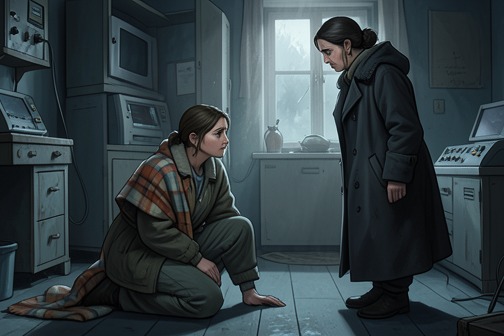
[Amaia Salazar](entity:character-recall-character-amaia-salazar-99849e02d251)’s discovery that [Sara Durán](entity:character-recall-character-sara-dur-n-68c748d8b3fe) is alive overturns [Xabier Markina](entity:character-recall-character-xabier-markina-b7c88f44ecba)’s account of his family history and brings the investigation into infant deaths into direct contact with the private grief beneath his polished public manner. The encounter does more than correct a false fact: it shows how a bereaved mother’s altered memory and a son’s estrangement have preserved different versions of the same loss, while forcing Amaia to face her own habit of concealing her mother’s institutionalization.
## The Investigation and Its Medical Context
The discovery comes amid inquiries into babies whose deaths had been classified as sudden infant death syndrome. The diagnosis applied when a child died unexpectedly during sleep and an autopsy found no other explanation. In [Navarra](entity:location-recall-location-4f91a2876b8d), seventeen children had died from the syndrome over five years, four of them in [Baztán](entity:location-recall-location-bazt-n-b5321a4399fc); the reported figures matched the wider average. The classification was therefore both familiar and uncertain: it described deaths for which the examination had failed to identify a cause, not a cause in itself.
Amaia’s attention had been drawn to earlier cases in which autopsies found no signs that the deaths were unnatural, although a forensic doctor recalled troubling behavior by parents. In one interview, a father fixated on whether his dead daughter’s organs would remain in her body and spoke not of organ donation but of a black market in corpses. Separately, two families had been investigated by social services after infant deaths, but the surviving records gave no indication of what those inquiries found before they were closed. These details made the official classifications an uncertain starting point rather than a complete account of what had happened.
The broader inquiry also exposed a different procedural exception. [Lisa Tremond](entity:character-recall-character-lisa-tremond-c0e3bd8f7545), head of pediatrics at the hospital where two other children died, said they had suffered from pulmonary deficiencies present from birth and denied that their deaths were sudden infant death syndrome. She explained that no autopsies had been performed because the children’s mother, [Yolanda Berrueta](entity:character-recall-character-yolanda-berrueta-a229211a5262), had begged the family not to subject them to one. Tremond defended her decision as both a physician and their grandmother. The competing explanations and absent examinations sharpen the distinction between what records state and what investigators can establish.
## Sara Durán Is Found Alive
At the care facility, Amaia says she is looking for a former patient who had supposedly died: Sara Durán. A staff member corrects her immediately. Sara has lived there for many years and was alive when the employee last gave her medication. The correction makes the visit a discovery, not a confirmation of the story Amaia had been given. The staff member also warns that Sara’s perception of reality is profoundly confused, that her behavior can shift quickly from laughter to tears, and that she may lose track of a conversation.
Amaia shows Sara a photograph of [Markina](entity:character-recall-character-markina-7852f893b7e2). Sara recognizes the man, but not as her son. She identifies him as her husband and responds to the image with unmistakable tenderness, touching the screen as she describes his beauty and saying she still loves and desires him, although he no longer visits. When Amaia corrects her, Sara insists on her identification and becomes upset. The exchange reveals both the depth of her disorientation and the persistence of her attachment: in her account of the family, the son has disappeared into the role of the husband she still longs for.
## Markina’s Account Reopened
Sara’s response connects the present discovery to the loss Markina had described to Amaia. When he was twelve, his mother gave birth to a baby boy. The child died at three weeks old after his mother fed and changed him and put him back to bed. Markina remembered hearing her scream, then running upstairs with his father to find her trying to breathe life into the baby. His father struggled to pull her away from the body; the twelve-year-old watched, horrified and unable to help.
Markina recalled his mother’s cries continuing for hours, followed by a silence in which she stopped speaking to him and his father except to ask where her baby was. In his account, she blamed herself, attempted suicide, and was admitted to a psychiatric clinic. He described her grief as having erased her marriage and her surviving son from her awareness. The account explains the emotional history behind his claim, but not the claim’s truth: Sara did not die. The facility visit makes that difference concrete, while her present confusion helps explain how a living person could remain absent from Markina’s daily life and be represented to others as dead.
## The Confrontation and Its Consequences
After the visit, Amaia tells Markina plainly that he lied to her. He acknowledges saying his mother had died and explains that, from his perspective, he had been dead to Sara for years; he had repaid her absence by treating her as dead. He then turns the accusation back on Amaia. She, too, had spent years avoiding mention of her mother’s psychiatric hospitalization, allowing people to assume that her mother had died. Markina argues that she cannot demand openness from him while concealing a comparable part of her own history.
His response does not undo the deception, but it places it within a relationship shaped by mutually guarded pasts. He suggests that Amaia has fled into investigating the mysteries of his history rather than speaking with him, and asks what else she still needs to confront. Amaia says nothing during the call. Afterward, she recognizes the force of his comparison: she had hidden her own past behind an appearance of normality, while continuing to dream of the monster that came to her bed. The discovery therefore changes not only what she knows about Markina, but also how she understands her own silence.
The event’s significance lies in the collision of investigation and intimate memory. Records, medical judgments, and family testimony have all proved incomplete in the wider infant-death inquiry; here, a photograph and Sara’s recognition expose a truth that Markina’s account had obscured. Yet the scene offers no simple restoration: Sara remains confused and institutionalized, her attachment fixed on a husband she believes no longer visits, while Markina’s explanation reveals estrangement rather than reconciliation. For Amaia, learning the truth becomes inseparable from acknowledging the history she had kept hidden herself.
Event 35
Ros Forces Flora to Give Up Her Share in the Bakery
[Ros Forces Flora to Give Up Her Share in the Bakery](entity:event-recall-event-ros-flora-f36505d76bcb) turns a concealed safe into the instrument of a family ultimatum. [Ros](entity:character-recall-character-ros-e213120929a4) has read material [Flora](entity:character-recall-character-flora-c1b11a6eb9e1) hid there and uses its potential exposure to secure Flora’s share of the bakery, while Flora later describes the impending transfer as a voluntary decision. The contrast between the midnight confrontation and the polished explanation to the family makes the change in ownership both a practical settlement and a coercive bargain.
## The safe and the discovery
At two in the morning, Flora returns to the warehouse in [Elizondo](entity:location-recall-location-elizondo-4e0690247b99) to put back a key before Ros notices it is missing. Winter darkness and the near impossibility of meeting anyone on the street seem to make the hour safe. The warehouse entrance remains unlit: Flora has repeatedly asked the town council to install a streetlamp, but the land is privately owned by the neighbors and the council has resisted. She enters without switching on the lights, waiting until she reaches the office, where the light is less visible from outside except through the high openings near the ceiling.
Flora removes the painting by Ciga, climbs onto the sofa, and opens the safe with the code she devised herself. It is empty. She even reaches inside to touch its metal bottom, as if checking that the absence is real, before Ros speaks behind her. The return visit, undertaken to restore a key, thus becomes the moment when Flora learns that the safe’s contents are no longer under her control.
Ros explains that she had nearly forgotten the safe until Flora came into the office while Ros was away and left the painting slightly crooked. The displaced picture drew her attention to what lay behind it. Ros did not know Flora’s code, but, as the owner, she could call a specialist, claim to have forgotten the combination, and have the safe opened. The painting and the safe therefore preserve no lasting secrecy: a small sign of disturbance is enough to expose the hiding place, and ownership gives Ros a practical route around the lock.
## The ultimatum
Ros tells Flora that she has reviewed and understood the material, but will not return it. She says Flora need not fear that Ros intends to harm her, while also warning that she could go to prison and that Ros would rather not cause [Engrasi](entity:character-recall-character-engrasi-a3e51d66f12b) the suffering of visiting her there. Ros frames the threat as a last resort, not an immediate plan to report her, but makes clear that Flora’s safety depends on how she responds.
The confrontation is not presented as simple moral denunciation. Ros says she understands why Flora acted and does not reproach her; she even suggests that dying at the farmhouse may have been the best outcome for the poor man. She compares Flora’s conduct with her own history of serving as a pretext for a foolish, lazy husband, while distinguishing that experience from knowingly covering up a killing. If she had known her husband had killed someone, Ros says, that knowledge would have made her an accomplice. Her account recognizes the moral danger of complicity even as she chooses not to expose Flora.
That sympathy does not soften the demand. Ros says she will not hand Flora over unless Flora leaves her no alternative, and warns that understanding her is not the same as allowing her to hurt Ros. The terms are specific: Flora must sign a donation transferring her part of the bakery to Ros. Ros says she wants nothing else and tells Flora to take her money and live her own life. The offer of distance and silence is paired with a counter-threat: if Flora tries to damage Ros, Ros will damage her in return.
## The diary, the shoes, and Amaia
Ros has placed Flora’s diary and the precious red shoes in a box and taken it to a notary. She has also arranged for an envelope containing them to be delivered to Amaia if anything happens to her, whatever the cause of her death. The threat therefore extends beyond the immediate confrontation: Ros has made disclosure depend not only on Flora’s conduct but also on Ros’s survival.
Ros is certain that Amaia would act if she learned what the diary contained. She attributes this certainty to the childhood Amaia endured and to what the family allowed to happen to her. In Ros’s view, Amaia would neither approve of Ros’s present course nor show Flora mercy. By securing the material with a notary, Ros makes Amaia a potential future recipient and gives the demand force even if Ros can no longer enforce it herself. The diary and shoes are not merely things recovered from a safe; in Ros’s hands, they become the means to bind Flora to an agreement.
## The public account and transfer
Later, Flora tells the family that she has reconsidered the advantages and disadvantages of returning to manage the bakery. She says that resuming the work would take time away from other important projects, including television, and that Ros has already shown she can run the family business well. On that account, leaving Ros in charge is the most sensible choice. Flora says the paperwork will be completed in a few days, after which Ros will be the sole owner of [Salazar Bakery](entity:organization-recall-organization-b8b70ccf2c1f).
The public explanation reverses the pressure visible in the warehouse. Rather than describe the diary, the notary, or the threatened disclosure, Flora presents the transfer as a decision grounded in her own priorities and Ros’s proven ability. Amaia raises her eyebrows in disbelief. Ros confirms that Flora visited her the previous day and announced the decision, adding that she is as surprised as the others. The scene establishes the intended outcome and its timing, but the paperwork is still to be arranged; the transfer is announced, not yet described as completed.
## Significance
The episode moves control of the bakery through an intimate form of coercion rather than a public accusation. Ros’s access to the safe rests on ownership and observation; her leverage rests on what she has read and on the possibility that Amaia will receive it. The result is a bargain that protects Flora from immediate exposure while requiring her to surrender her share. The later family announcement preserves an appearance of voluntary business judgment, leaving the private threat and the public rationale side by side.
Event 36
Flora Reveals Anne Is Her Daughter
[Flora Reveals Anne Is Her Daughter](entity:event-recall-event-60b50d8a8e79) is the disclosure in which [Flora](entity:character-recall-character-flora-c1b11a6eb9e1) tells Amaia that [Anne Arbizu](entity:character-recall-character-anne-arbizu-3c4ce536c47f) was her biological child. The revelation recasts Flora’s long-hidden sorrow and her bond with [Anne](entity:character-recall-character-anne-8255533dffd4), while giving Amaia a new personal perspective on one of the victims in the [Basajaun](entity:character-recall-character-basajaun-8f4ba22b9697) case.
## The Disclosure
The truth emerges in Flora’s home, where Amaia has come to speak with her. Flora insists that she loved Anne as deeply as Amaia loves [Ibai](entity:character-recall-character-ibai-8322a92bd103), then states that Anne was her daughter. Amaia is left speechless. The confession overturns the assumption that Flora’s feelings for Anne were those of an aunt or family friend: the intensity Amaia has seen was rooted in a relationship concealed for decades.
Flora explains that she became pregnant at eighteen. She had told her family she would spend a summer with their aunts in [San Sebastián](entity:location-recall-location-ad5350645bef), but instead gave birth and relinquished the baby. The separation was not a simple, freely chosen adoption. Her mother required secrecy, forbade her from telling even her father, and described the child as one to be given away rather than adopted.
## Pregnancy, Secrecy, and Separation
Before the birth, Flora tried to end the pregnancy by visiting a doctor across the border, at a time when abortion was prohibited throughout the country. The procedure caused severe bleeding and lasting injury: Flora says the doctor removed her ovaries and left her unable to have children, yet the pregnancy continued. Her mother took her to [Nurse Hidalgo](entity:character-recall-character-hidalgo-c6928099017b), who stopped the bleeding. Flora was told that she would not raise the baby and that the birth and the child’s placement would be handled for her.
At six months pregnant, Flora went to a charitable home run by religious women in Pamplona. She stayed there until the birth, then gave up the baby on the promise that she would go to a good family. She says she knew no group and met only Nurse Hidalgo; she did not ask further questions about what would happen. Her account therefore distinguishes what she understood at the time from what Amaia fears the word given might have meant.
After returning home, Flora resumed her relationship with Víctor and continued her life without discussing the child. Her mother never forgave her and made her pay for the secret. When Flora later heard that the Arbizu family had adopted a girl, she recognized Anne at once. From then on, she watched her daughter grow up in another household while concealing that she was her mother, a silence that kept Flora emotionally bound to the place where Anne lived.
## Anne and Flora’s Late Relationship
The secrecy changed only when Anne sought Flora out at the bakery the previous year. Anne had investigated until she discovered who Flora was and understood their relationship. She did not reproach her birth mother. Instead, she asked to remain in contact without hurting the feelings of her elderly adoptive parents, and proposed that the truth could be made public after they had died.
Anne gave Flora a photograph of herself as a baby. Its resemblance to Ibai is so striking that Amaia had mistaken the picture for one of her own son. For Flora, the photograph holds both the brief closeness she had finally found with Anne and the years of separation that preceded it. She describes Anne as beautiful, self-assured, and intelligent, and says that the short period in which they were able to know one another brought her a happiness she had never imagined.
That happiness makes the news of Anne’s murder devastatingly personal. Flora says that the man who killed Anne killed her child. Her grief, previously held behind reserve, comes openly into view as she confesses; she no longer seems concerned that her sister can see her crying. The disclosure thus reveals not only Anne’s parentage but the cost of the silence that had governed Flora’s life and the brief reconciliation that made the loss newly immediate.
## Aftermath and the Basajaun Case
Amaia leaves Flora’s home unsettled. She doubts that Flora and [Ros](entity:character-recall-character-ros-e213120929a4) have suddenly become united without an explanation, but has no way to prove her suspicion. Rather than let that uncertainty end the night, she goes to the police station and reopens the Basajaun case files, arranging photographs of the crime scenes, victims, and autopsies on the board.
The disclosure changes the emotional frame through which Amaia studies Anne’s murder, but the investigation also places the killings beside the secret group’s beliefs about sacrifice. A witness had described children under two as being in a transitional state and therefore especially suitable as offerings; the group’s reported rules also required an unbaptized girl. Amaia recalls that testimony while reconsidering the crimes against the older girls. In those murders, the killer strangled his victims with a thin cord, carried them to the [Baztán River](entity:location-recall-location-f9e8ffffb336), tore their clothes, shaved their pubic hair, arranged their hair in two halves, and positioned their open palms upward. The staging returned the victims symbolically to childhood and innocence. The connection lies in the ritual language of purity and offering, not in evidence that Anne’s birth or Flora’s relinquishment made her part of the group’s infant-sacrifice practice.
Event 37
Anne Albisua Murder Case
The [Anne Albisua Murder Case](entity:event-recall-event-26837bb01cb6) is revealed through [Flora](entity:character-recall-character-flora-c1b11a6eb9e1)’s confession to [Amaia Salazar](entity:character-recall-character-amaia-salazar-99849e02d251), which transforms a murder investigation into a painful family disclosure. [Anne](entity:character-recall-character-anne-8255533dffd4) was Flora’s daughter, and Flora believed [Víctor Oyarzabal](entity:character-recall-character-v-ctor-oyarzabal-140be163c52c) killed her because Flora had not handed her over. The account also changes Amaia’s understanding of the earlier killings: Flora says Anne’s death was when she recognized the logic by which Víctor chose his victims, a logic she connects to an unfinished offering.
## Background and the concealed relationship
For most of her life, Flora had watched Anne grow from a distance, bitterly aware of her presence and feeling bound to the town in order to remain near her. The separation was not total forever: the previous year, Anne came to see Flora late one afternoon at the bakery. She already knew who Flora was and understood their relationship, having investigated until she found her. Anne did not reproach Flora. Instead, she wanted to maintain contact without hurting the feelings of the elderly parents who had raised her, and suggested that the truth might be told publicly after their deaths.
Anne gave Flora a photograph of herself as a baby. In the present conversation, Amaia had mistaken the picture on the wall for one of [Ibai](entity:character-recall-character-ibai-8322a92bd103), because Anne and Amaia’s son looked strikingly alike. Flora says the resemblance made her love Ibai while also reminding her of Anne. The photograph therefore carries more than a family likeness: it records a connection Flora had been denied for years, and gives physical shape to a relationship she could only briefly experience openly.
## Flora’s loss and Amaia’s recognition
Flora describes her short time with Anne as a period of happiness unlike anything she had known, and says she would never be happy in that way again. Her grief becomes unguarded as she speaks: she no longer tries to conceal her feelings from her sister. Amaia listens in astonishment, recognizing that among the possible relationships she had imagined between Flora and Anne, this one had not occurred to her. The revelation makes her understand several things differently, though the scene does not present that understanding as a resolution of the case.
Amaia asks whether Flora killed Víctor because he killed Anne. Flora denies it by shaking her head. When Amaia asks whether Flora had suspected that Víctor was killing the girls, Flora says she was not certain until she visited his house that night and he confirmed it. She also says she had not identified him as responsible for the [Basajaun](entity:character-recall-character-basajaun-8f4ba22b9697) crimes before Anne’s death. Her recognition is thus belated: Anne’s murder supplies the knowledge that earlier events had not, and the family connection makes that knowledge personally devastating.
## The disputed pattern of the killings
Amaia offers the investigators’ working explanation: the victims appeared to be girls at the boundary between childhood and adolescence, but their encounters with danger seemed accidental. Carla had got out of her boyfriend’s car in the hills, [Ainhoa](entity:location-recall-location-7667df1f7cdc) had missed the bus, and Anne had kept a secret life and relationships from her parents. In Amaia’s account, each had simply been alone in the wrong place at the wrong time. Flora rejects this explanation with a bitter smile. She says the way Víctor chose the girls became clear to her when he killed Anne, although she does not claim to know why he selected all the others.
Amaia then wonders whether Víctor’s victims were failed offerings, acts that had not been completed. Flora’s answer gives that possibility a specific, personal meaning: she says Víctor killed Anne because Flora had not given her up, and that he did it for her because another woman had told him to. The exchange leaves the exact scope of that explanation unsettled. Flora makes a claim about Anne and an instruction, not a complete account of Víctor’s motives in every killing.
## Consequences and significance
The disclosure places Anne’s death at the intersection of Flora’s concealed motherhood, Víctor’s violence, and the family’s history of hatred toward their mother. Amaia recognizes that Flora has resented their mother for most of her life, perhaps even more than Amaia herself has. That realization arises directly after Flora describes Anne as an offering she refused to surrender, linking the murder to a larger family wound without making the connection a settled explanation for every crime.
The case’s decisive change is therefore not a new procedural detail about how Anne was killed, which this account does not provide, but a changed understanding of who Anne was to Flora and what her death meant to the people around her. The photograph, the visit to the bakery, and Flora’s account of Víctor’s confirmation turn the murder into the moment when private knowledge and the investigation’s suspected pattern meet. Anne’s death gives Flora an explanation for the selection of at least one victim; it also reveals how much remains uncertain about the others.
Event 38
Confrontation at Tabese's Tomb and Discovery of Remains
The [Confrontation at Tabese's Tomb and Discovery of Remains](entity:event-recall-event-65b3bbc6f3c7) is the decisive collision between [Amaia Salazar](entity:character-recall-character-amaia-salazar-99849e02d251)'s investigation and the sacrificial system behind the missing children. In the rain outside the crypt, Amaia tries to stop [Yolanda Berrueta](entity:character-recall-character-yolanda-berrueta-a229211a5262) from breaking into the tomb; inside, she finds the remains of at least twenty children. The discovery makes the investigation's suspicions tangible, while the confrontation with [Judge Markina](entity:character-recall-character-judge-markina-f914c84921ae) exposes the personal betrayal at its center.
## Ritual Logic and the Search
The beliefs surrounding the killings give the children's age and circumstances a specific ritual significance. [Jonan Etxaide](entity:character-recall-character-jonan-etxaide-e04928c45e0f) explains that some cultures regard children under two as moving between two worlds, able to perceive both and therefore suited, in the cult's view, to serve as conduits to spiritual forces. The explanation describes the perpetrators' belief, not proof of supernatural power; its importance lies in how it gives their actions an internal rationale.
A witness later describes the demanded victim as an unbaptized girl younger than two. Baptism was treated as an offering and commitment to another god, while the child's death was supposed to be dedicated to evil and to [Inguma](entity:character-recall-character-inguma-efe674e92e4c). The group believed that the child's body had to be surrendered as part of the offering. Its rules also tied the victim's sex and age to a cycle: sacrifices were made in groups of the same sex and age, under identical circumstances, until the cycle was complete. The language of transition thus furnished a ritual explanation for selecting children, even as the ease of concealing an infant's death made the practice harder to detect.
Amaia's investigation had already begun to turn scattered infant deaths into a geographical pattern. When she remapped the victims' towns, the locations traced the course of the [Baztán River](entity:location-recall-location-f9e8ffffb336) from [Erratzu](entity:location-recall-location-d66f35a619db) through [Elbete](entity:location-recall-location-9d8780bc7421) and [Elizondo](entity:location-recall-location-elizondo-4e0690247b99) to [Oieregi](entity:location-recall-location-8e76c5473d38). That line, rather than the road that first seemed a possible route connecting the cases, brought the river into focus as the organizing feature of the pattern. The map joined the missing children to the recurring language of cleansing and offering; at the tomb, that investigative inference would meet the physical evidence Yolanda had insisted was there.
## Yolanda’s Insistence and the Breach
Yolanda Berrueta’s attempt to open the tomb had long been treated as an extension of her grief. A priest who knew the family said she came to him every week insisting that her children were not inside and that, as their mother, she could feel their absence. He understood the force of maternal loss, but believed the children had been buried: he had officiated at the funeral and watched the coffins descend into the grave. That apparent certainty made Yolanda’s conviction seem to confirm her distress rather than point toward a crime.
The investigation eventually gave her claim a different meaning. Yolanda acknowledged that medication and confusion had led her to mistake the coffins, but maintained that she had been right about the essential fact: someone had taken her baby’s body. She also understood what a conventional inspection might have missed. If the tomb had been opened merely to reassure her that her other children were there, the missing girl might still have gone unnoticed, and another mother’s report that her own daughter was missing might never have been heard. Her insistence was not only an expression of bereavement; it had kept an unresolved absence in view.
At the cemetery, Amaia Salazar heard blows against the crypt door and Yolanda’s labored breathing over the rain. A small breach from an explosion had left the lock caught between the door and the wall, preventing it from opening. When Amaia reached her, Yolanda’s determination was unmistakable. She struck Amaia and knocked her against the steps; Amaia drew her weapon, but before she could control the situation, Judge Markina fired. Yolanda fell with a wound to the chest. [Markina](entity:character-recall-character-markina-7852f893b7e2) said he believed Yolanda was about to attack Amaia, but the shot abruptly turned an attempt to reach the grave into a fatal confrontation.
## The Tomb and the Collapse of the Cover Story
Judge Markina ordered Amaia Salazar to keep speaking to him but not look inside the tomb, holding her at gunpoint as though he could still control what the scene meant. Amaia refused to accept that boundary. She told him he would not shoot her and entered the crypt, where a plain structure—a central altar bearing a heavy, ornamented wooden coffin—held evidence no explanation could contain.
At least twenty children’s remains lay in an oval around the altar. Some had been reduced to old bones; at Amaia’s feet was the swollen, badly decomposed body of the Esparza girl. Beside it, on an old shawl, lay a very white skeleton missing an arm, recalling the remains already associated with Amaia’s own sister and her empty grave. The discovery transformed the tomb from the focus of Yolanda Berrueta’s desperate suspicion into the physical center of a much wider crime. Amaia dropped her flashlight, fell to her knees, and wept with rage and shame as Judge Markina entered behind her and raised the lamp to illuminate the remains.
The sight also made the personal betrayal impossible to evade. Amaia confronted Judge Markina with the accusation that he had known his father was responsible and had concealed it. He answered that his reputation mattered less than the force behind the acts, describing it as older and more powerful than those who had served it. His words framed the cult not as an excuse that absolved its members, but as a power he believed preceded them—and one he had helped keep hidden.
The confrontation then turned to Jonan Etxaide’s murder. When Amaia demanded to know whether Judge Markina had killed him, he admitted that he had. Amaia raised her Glock at him, while Markina lifted Jonan’s pistol and aimed it at her. [Iriarte](entity:character-recall-character-iriarte-888adecf0207) fired from the entrance before Markina could shoot. The close-range shots brought him down beside Amaia; she took Jonan’s gun from him, and Iriarte confirmed the charge that Markina had killed Jonan.
The immediate aftermath widened the consequences beyond the crypt. After the storm, officials and investigators arrived, and [Lejarreta y Andía](entity:organization-recall-organization-lejarreta-y-and-0babdc07819b)’s lawyers were arrested at their office. Police searched [Argi Beltz](entity:location-recall-location-argi-beltz-35d3971db8b9) in [Orabidea](entity:location-recall-location-orabidea-7f84bf336a72), where the first indications suggested [Rosario Salazar](entity:character-recall-character-rosario-salazar-f6de4b66c7ed) had hidden during her disappearance. The exposed remains, the confession about Jonan, and the arrests made the tomb the point at which the separate lines of the investigation converged: the missing children were no longer a pattern on a map or a mother’s feared absence, but victims placed together in a grave at the heart of the concealed network.
## Grief, Reckoning, and the River
After the confrontation, Amaia Salazar stopped at [Muniartea Bridge](entity:location-recall-location-muniartea-4e6004574cf1) while the sky still held a thread of silver light. The Baztán River had surged after heavy water ran down from Erratzu, sweeping its banks as far as [Hondarribia](entity:location-recall-location-25f547eb9fce); now it flowed quietly beneath her. At the bridge she wondered whether the river was clean at last and whether the offense had been washed away, but the question carried no certainty. Her tears fell onto the cold stone and slipped toward the water.
At home, [Engrasi](entity:character-recall-character-engrasi-a3e51d66f12b) embraced Amaia, who wept in her aunt’s arms as she had when she was a child. She cried over fear, anger, bitterness, regret, death, blood, and bones, until exhaustion brought sleep; when she woke, the grief began again. Engrasi lamented that the doors could not remain closed forever while Amaia mourned the evils of the world. The embrace offered shelter, but not an escape from what had been uncovered: Amaia knew she had to be ready to act.
She made four calls and received one. The first was to [Elena Ochoa](entity:character-recall-character-elena-ochoa-92478c49edc9)’s daughter, to tell her that Elena had not died by suicide. The letter Elena left had helped Amaia stop the dangerous child-killing sect, whose exposure was now leading the news. This first act after the tomb’s revelation turns the investigation outward from the recovered dead toward the living people left with unanswered loss: the discovery has not restored what was taken, but it allows one family to understand that Elena’s final act helped bring the hidden crimes to light.
Event 39
Dismantling of the Argi Beltz Cult Network
The dismantling of the [Argi Beltz](entity:location-recall-location-argi-beltz-35d3971db8b9) cult network is the culmination of an investigation that links a secretive group in [Orabidea](entity:location-recall-location-orabidea-7f84bf336a72) to ritualized infant deaths and concealed remains. What began as an inquiry into individual crimes reveals a network whose beliefs gave violence a prescribed age, manner, and purpose.
## Background and ritual logic
The group took root in a farmhouse in Orabidea in the late 1970s and early 1980s. Its members initially lived communally and held cultural and spiritual gatherings, but the meetings turned toward occult practice, including animal sacrifices and, eventually, proposals for human sacrifice. [Elena Ochoa](entity:character-recall-character-elena-ochoa-92478c49edc9), who had attended some of the gatherings with [Rosario](entity:character-recall-character-rosario-381ff2a9040d), left when the rites became too brutal; the group remained active for a time. Rosario, Amaia’s mother, had belonged to it, making the old history part of the present investigation rather than a distant local legend.
The cult’s ritual system treated children under two as especially suitable offerings because their souls were believed to be in transition between worlds. A witness explained that the rite required an unbaptized girl younger than two: baptism was understood as a competing offering to another god, while the child’s age marked a spiritually valuable threshold. The group’s rules also prescribed suffocation and the surrender of the body as an offering to [Inguma](entity:character-recall-character-inguma-efe674e92e4c). These were the members’ beliefs, not independently established supernatural facts, but they shaped the acts the investigation uncovered.
## From Pattern to Network
The group’s history became actionable when Amaia connected the old gatherings at Orabidea with the gap in the timeline surrounding Rosario’s disappearance. She believed Rosario and [Berasategui](entity:character-recall-character-berasategui-41d5fed3f8c7) had taken shelter somewhere between leaving the clinic and the attack in which [Ibai](entity:character-recall-character-ibai-8322a92bd103) was taken, and that the house where Rosario changed clothes might have served as a safe house. Elena Ochoa had identified the group’s former farmhouse; by the time Amaia found it, it had been renovated into a guarded mansion occupied by a wealthy couple who had belonged to the original group. A neighbor identified Berasategui’s car there on more than one occasion, and the couple admitted knowing him, though they refused to explain their relationship and referred Amaia to their lawyers, [Lejarreta y Andía](entity:organization-recall-organization-lejarreta-y-and-0babdc07819b).
The couple’s account of their young daughter’s death deepened the suspicion. They said she had died before the age of two during a trip to the United Kingdom, but investigators found no death certificate, hospital record, or evidence that the trip had taken place. At the time, taking a child abroad required documentation, often including a special government permit. The unexplained account mattered because the group’s ritual beliefs assigned particular significance to children younger than two, and because the couple’s claimed loss resembled a wider pattern.
Amaia’s review of sleeping deaths excluded boys and drew attention to her own sister and three other girls. Their deaths had initially been classified as cot deaths after routine examinations, but the parents’ behavior had seemed sufficiently troubling that social services recommended monitoring families with other children. The families shared a connection to the house and group, as well as to a wealthy lawyer couple in Pamplona who had also lost a daughter in the same way. These links did not by themselves establish what had happened to each child, but they turned isolated deaths into a pattern that could be investigated.
The case files and map work supplied another line of inquiry. Jonan’s scenario list included the addresses of babies whose deaths had been investigated and Amaia’s sister, while excluding the children of [Yolanda Berrueta](entity:character-recall-character-yolanda-berrueta-a229211a5262). When Amaia plotted the relevant towns and followed the line formed by the locations, she recognized that it traced the [Baztán River](entity:location-recall-location-f9e8ffffb336), from [Erratzu](entity:location-recall-location-d66f35a619db) through [Arraioz](entity:location-recall-location-4e82a980b26c), including [Elbete](entity:location-recall-location-9d8780bc7421) and [Elizondo](entity:location-recall-location-elizondo-4e0690247b99) and extending to [Oieregi](entity:location-recall-location-8e76c5473d38). The geographic pattern brought the buried and missing remains, the old group, and the suspected use of Argi Beltz into a single investigative frame.
## Discovery and dismantling
Inside the tomb, the scale of the violence became undeniable. Around a central altar stood a heavy, intricately decorated wooden coffin, encircled in an oval by the remains of at least twenty children. Some had been reduced to old bones; near Amaia lay the swollen, badly decomposed body of Esparza’s little girl. Beside it, on an old shawl, was a very white skeleton missing one arm. Amaia dropped her flashlight and sank to her knees, overcome by grief and revulsion. The coffin at the center of the offering, investigators later established, was empty.
After the confrontation, the response spread across the network’s locations and associates. The Policía Foral searched Argi Beltz in Orabidea, where investigators’ first indications suggested Rosario had hidden during her disappearance. The lawyers Lejarreta y Andía were arrested at their office amid protests and threats of lawsuits. [Fina Hidalgo](entity:character-recall-character-fina-hidalgo-0b74a6a75163) was found hanged from a rope on the branch of her walnut tree, while [Inma Herranz](entity:character-recall-character-inma-herranz-e0898a4fe178) wept in Pamplona and claimed she had acted under coercion. Forensic specialists in [San Sebastián](entity:location-recall-location-ad5350645bef) faced weeks of work identifying and dating the girls’ remains gathered around the empty coffin. Authorities also issued a search order for [Xabier Markina](entity:character-recall-character-xabier-markina-b7c88f44ecba), identified as Tabese; the raid and arrests exposed the network’s reach, but Rosario’s whereabouts remained unresolved.
## Accountability and unresolved aftermath
The arrests and searches did not bring the investigation to a clean personal reckoning. Despite the fact that Amaia and [Iriarte](entity:character-recall-character-iriarte-888adecf0207) had fired on a judge, the [Internal Affairs Department](entity:organization-recall-organization-968386365338)’s review was briefer than expected: Iriarte faced somewhat more questioning, while Amaia was left alone after submitting a written report. Her report omitted nothing about the investigation, but deliberately left out her intimate relationship with Xabier Markina. The distinction leaves the network’s exposure alongside a private truth Amaia withheld, separating the official account of the case from the personal entanglement that had shaped it.