Cajeiri and his human friends: friendship reaffirmed after a clash over identity
PeacemakerCajeiri and his human friends—Gene, Artur, and Irene—build a friendship that must survive more than a change of surroundings. At Bujavid, a misunderstanding over clothes exposes the unequal worlds they have come from; a remembered introduction lets them affirm that their identities and attachment have not changed. Later, when a Guild alert unsettles the household, Cajeiri translates what he can, promises that his friends will be protected, and shares a bedchamber with them. The relationship is marked by the work of making different customs intelligible, and by care expressed in concrete acts.
A friendship carried from the ship
Cajeiri’s bond with the children reaches back to their first meeting in the ship’s corridors, when they had stared at one another and introduced themselves across a language and cultural divide. At Bujavid, he deliberately recalls that beginning: he lays a hand on his chest, repeats his solemn self-introduction, and names himself again as Cajeiri. Gene answers with the same gravity, giving his name and then identifying Irene and Artur as human. The gesture turns the room into a reenactment of their first encounter, but now the children know one another well enough to recognize what the ritual means.
Their friendship also has a material history. During the station-folk’s time on the ship, they had little control over their food: rations were calculated according to age, sex, and height, and hunger could not be answered by asking for more. Cajeiri remembers bringing his associates sweets from his mother’s kitchen, along with sausages and bread. He distinguishes them from the other station-folk in that memory: they were not left to go hungry. The recollection gives the friendship a history of care that predates their arrival at Bujavid and helps explain why he feels responsible for their comfort now.
Clothes, gifts, and unequal worlds
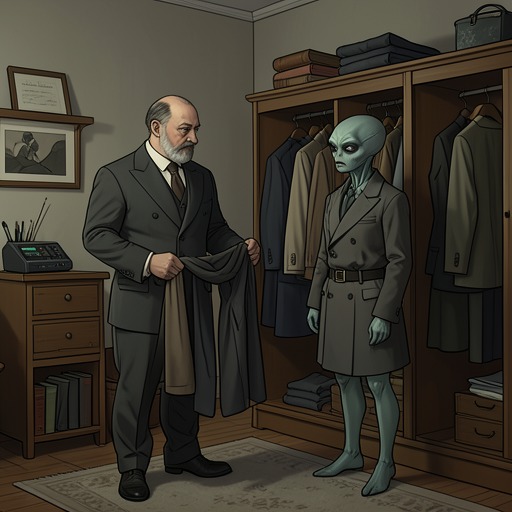
At Bujavid, Cajeiri sees Gene and Artur looking at the floor and assumes their distress concerns the clothes. He insists that the children’s clothes fit them and that Master Kusha makes them properly. Gene corrects him: that is not the problem. Cajeiri tries to explain that their baggage might arrive that night, but might not, and that the clothes they have are country clothes, unsuitable for the Bujavid. He is trying to solve an immediate practical problem, yet his explanation also reveals the social difference between the children’s present circumstances and the standards of the household around them.
Gene explains the hurt more directly: it is Cajeiri’s birthday, and they brought presents, but nothing comparable to what he has received. Their difficulty is not simply that their clothes look wrong; it is that they have arrived with very little and cannot match the abundance surrounding his celebration. Cajeiri understands that the Reunioners had almost nothing when they came onto the ship and may still have little, since few station-folk could earn extra. He thinks of them as his people and believes they have a right to be dressed well enough to stand beside him, as far as lords can arrange it. Their appearance matters to him as a matter of pride and of how others will look at them, though he recognizes that he cannot simply tell them he fears they will embarrass him.
The contrast is sharpened by the different ways the children measure fairness. Cajeiri recalls that Gene is fair, one of the strongest things about him, even though sometimes he has to argue with him. His own impulse is to use the resources of his household to make his friends fit its expectations; Gene’s response makes visible what that solution cannot erase. Cajeiri’s offer to provide clothes and gifts can express welcome, but it cannot make the children’s unequal starting points disappear. The scene makes their friendship more than easy affection: it requires Cajeiri to hear that his first interpretation of their discomfort was wrong.
Naming what has not changed
Once the misunderstanding has been aired, Cajeiri returns to the ritual of their first meeting. He calls for attention, touches his chest, and says, “Cajeiri. I’m Cajeiri.” Gene responds with his own name and identifies the others as human. Cajeiri names his own side as Atevi and insists, “No change!” Gene answers, “No change, us.” In a few words, the exchange holds together difference and continuity: they remain human and Atevi, but the change in setting has not undone their friendship.
Cajeiri makes that bond public rather than keeping it between the children. With Madam Saidin, Master Kusha, his valets, and the rest of the room present, he declares their friendship in ship-speak. He then argues in Ragi that an adult may give birthday presents, so he may give his friends gifts as well. This is his answer both to their meagre offerings and to the awkwardness around accepting what he can provide. Gene gives a nervous smile; the children touch hands in the ship-human manner and laugh. Artur repeats the word “Friends,” while Irene observes that they are not supposed to say it. Her qualification does not undo the declaration: the friends say it where the household can hear.
Protection and shared safety
The relationship is tested again after a night of danger at the Assassins’ Guild. When Artur asks what is being said, Cajeiri summarizes the update: everyone is back, an alert continues, but things are all right. He switches to Ragi to assure his guests that his father will see that they have no trouble, and that he will remind both his father and his great-grandmother. He promises not to let them be sent away. The promise makes his affection a form of advocacy: he is not merely reassuring the children in the moment but asserting that their place with him matters.
Antaro adds, in words the guests know, that good people now run the Guild and are hunting the bad ones. Irene has been quiet, holding her robe close and shivering. She admits that she is scared, then apologizes. Cajeiri tells her not to be sorry and revives their old challenge, asking who is afraid. His response meets her fear with a familiar game rather than a lecture. He offers tea, too, noting that someone is on duty even at night; when she says she is scared rather than cold, he accepts the truth of what she says without making her apologize for it again.
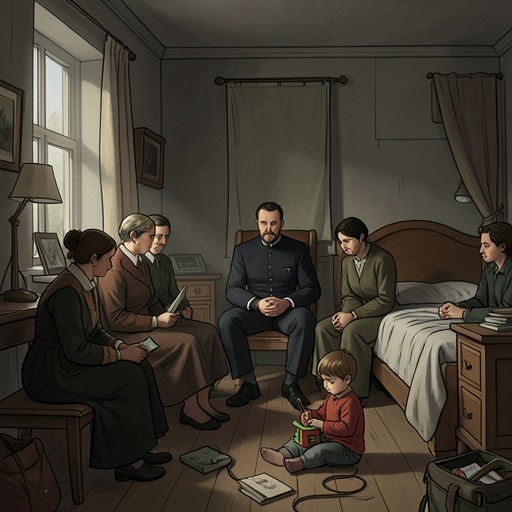
When bedtime comes, Cajeiri recognizes that he and Irene would otherwise be left to sleep alone amid everything that has happened. He proposes that all the friends sleep in the same room, in the huge bed, layering the bedding as people do when they have only one bed. His aishid arrange proper beds for the remainder of the night, while Cajeiri and his associates settle among the satin comforters together. The arrangement recalls the countryfolk and visitors of the machimi plays, but its significance is immediate and personal: Cajeiri says he has hardly ever felt so safe. Their friendship, first renewed through names and a shared word, ends this episode as shared shelter.