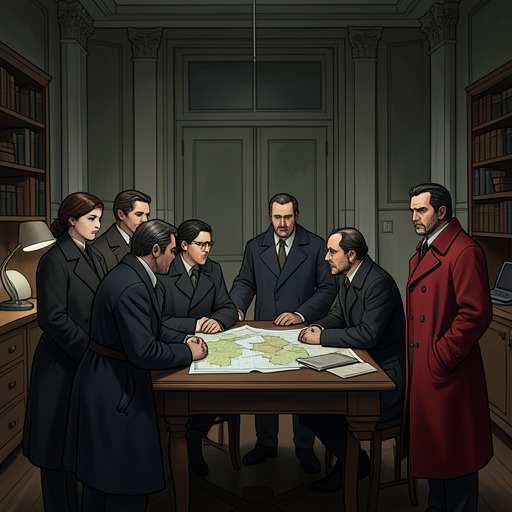
Dojisigi Hostage Crisis and Village Rescue
PeacemakerThe Dojisigi Hostage Crisis and Village Rescue revealed how the Shadow Guild could exploit confusion inside the Assassins’ Guild to threaten a village and coerce its members. Ilisidi freed the hostages through her own forces rather than relying on central Guild command, turning a rescue into both an exposure of the network’s methods and a legal basis for action against the Kadagidi in the north.
Covert pressure in Dojisigin Marid
The crisis grew from a maneuver carried out in the mountainous province of Dojisigin Marid. During the preceding month, Shadow Guild operatives still active there had acted under an order ostensibly issued by the legitimate Guild. The order disarmed the best of the native Guild units and then sent them to defend rural areas without returning their equipment. Who had issued the order remained uncertain, leaving the Guild’s authority itself open to suspicion.
The disarmed units were thus left responsible for protection without the means they had previously been given. The tactic also created an opening for the Shadow Guild to act against local people while making the chain of command difficult to trust. The hostage crisis brought that hidden pressure into view.
Hostages and the rescue
The Shadow Guild took an entire village hostage to force two Dojisigi Guild members to undertake a mission against Lord Tatiseigi. If they refused, their relatives would be murdered. Rather than carry out the demanded mission, the two surrendered and appealed to Ilisidi for help.
The presence of Lord Tatiseigi, Ilisidi, Cajeiri, and foreign children formed the immediate setting for their surrender and appeal. Ilisidi freed the village the previous night. She did not carry out the rescue personally: she acted through her own forces, rather than through central Guild command, which she feared might be compromised. Her response bypassed the very institution whose questionable order had helped make the crisis possible.
Aftermath and political significance
The rescue was part of a broader operation against the Shadow Guild’s remaining southern network. Ilisidi’s forces also seized two surviving members of its southern leadership. What she learned from them gave her the legal cause she needed to move against the Kadagidi in the north the following morning.
That move brought the crisis directly into the confrontation with Lord Aseida, who was being questioned aboard the train. Aseida claimed innocence; his chief bodyguard, Haikuti, was identified as the Shadow Guild’s chief tactician and as the power who had ruled behind Murini for two years. The village’s release therefore did more than end the immediate hostage threat: it helped connect covert coercion in the south to the political reckoning underway in the north.
The rescue also exposed a larger security problem. Jago described the need to protect Tabini and Cajeiri from counterattack, secure the Bujavid’s service passages, and keep potentially compromised staff and guards away from the protected floor. The contingency plan included moving them by freight train to the spaceport and, only if necessary, taking them off the planet. That proposed evacuation carried political danger of its own, since removing Tabini from the planet could weaken the aijinate and suggest that he had abandoned his people. Against that background, Ilisidi’s decision to act through her own forces was both an immediate means of freeing the village and a response to a crisis in confidence over who within the Guild could safely be trusted.