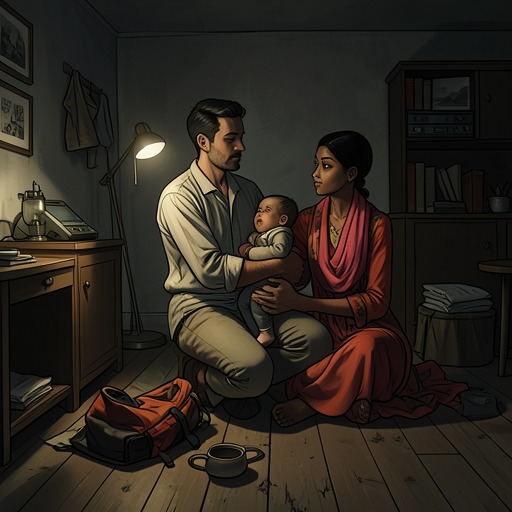
Marriage of Tabini and Damiri
PeacemakerTabini’s marriage to Damiri was both a political realignment and a deliberate personal choice: although advisers urged him toward a safer contract marriage, he wanted Damiri as a lifelong ally and married her despite the risks they identified.
Political Conditions
Ilisidi’s return to Shejidan, and the close engagement of both Ilisidi and Bren Cameron in its affairs, changed the political landscape. It drew Lord Tatiseigi, though reluctantly, into Tabini’s camp, making a match with Damiri possible. The marriage thus connected Tabini to a powerful house through a relationship that had consequences beyond the couple themselves.
The possibility was not uncomplicated. Damiri had repeatedly clashed with her uncle, Lord Tatiseigi, and had sometimes left him to go to her father. Her family’s position also drew public attention: the Ajuri clan was minor. Tabini responded by writing to Damiri, her father, and her uncle. He asked Damiri to live with him in Shejidan, proposed reconciling the Ajuri clan with Lord Tatiseigi, and sought a formal marriage.
The Choice Against Advice
Tabini’s advisers considered the match unwise. They argued that the Northern Association was small and often faction-ridden, while Lord Tatiseigi had enemies among Tabini’s strongest supporters. Some of those supporters had eligible daughters who could have served as sensible partners in contract marriages. In their view, those alternatives offered a more secure political bargain.
They also warned that a close association with Lord Tatiseigi could look like a concession to Ilisidi, as though Tabini were yielding to the aiji-dowager’s influence. Damiri’s youthful conduct, meanwhile, had earned her a public reputation for flightiness, shallowness, and a hot temper. Tabini ignored the objections and married her. His decision rejected the advisers’ preference for political convenience in favor of the enduring bond he wanted with Damiri.
Marriage and Its Public Echo
The marriage did not erase conflict. Tabini’s quarrels with Damiri became part of his reputation, alongside his disputes with Ilisidi. The account says that servants, an old source of information, let those quarrels become known; the news services did not report them. Private friction therefore became political rumor, even as the marriage remained a consequential alliance.
Significance
The match joined Tabini’s personal commitment to the political work of drawing Lord Tatiseigi into his camp and reconciling the Ajuri clan with Tatiseigi. Yet the account distinguishes this marriage from a conventional arrangement made simply to secure an heir or alliance: Tabini wanted Damiri as a lasting partner and lifelong ally. Its significance lies in that combination of intimate intention and public consequence, as well as in the visible disagreements that followed rather than disappearing under the marriage contract.