Pyrenees
PerfumeThe Pyrenees, the great mountain range separating France from Spain, appear in Patrick Süskind's Perfume not as a mere geographical backdrop but as the stage for the most extreme and absurd application of the Marquis de la Taillade-Espinasse's pseudo-scientific theories. It is here that the marquis, having already used the cave-dweller Grenouille to "prove" his theory of the earth's lethal gas, the Fluidum Letale, undertakes a final, suicidal experiment to demonstrate the power of its opposite, the Fluidum Vitale. The mountains become the site of his disappearance and the birthplace of a legend that persists into the nineteenth century.
The Marquis's Fatal Expedition
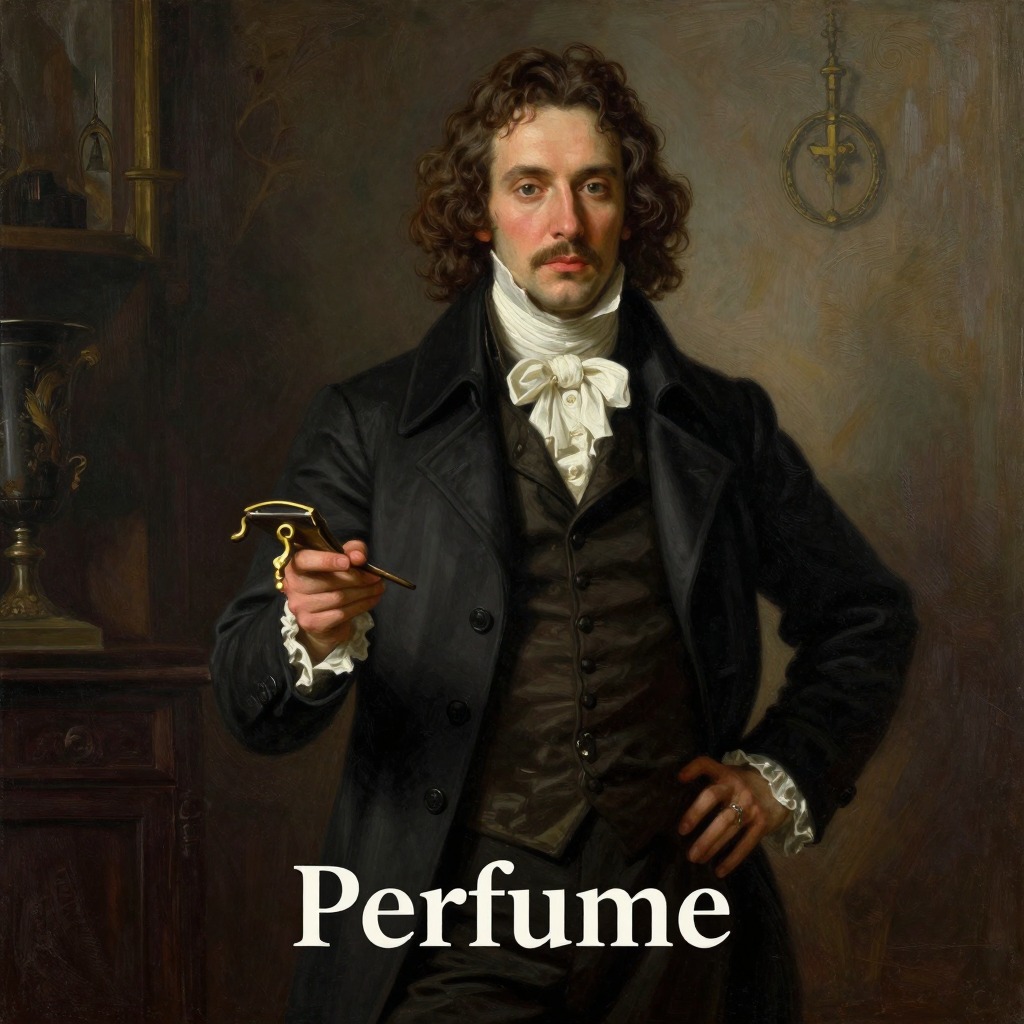
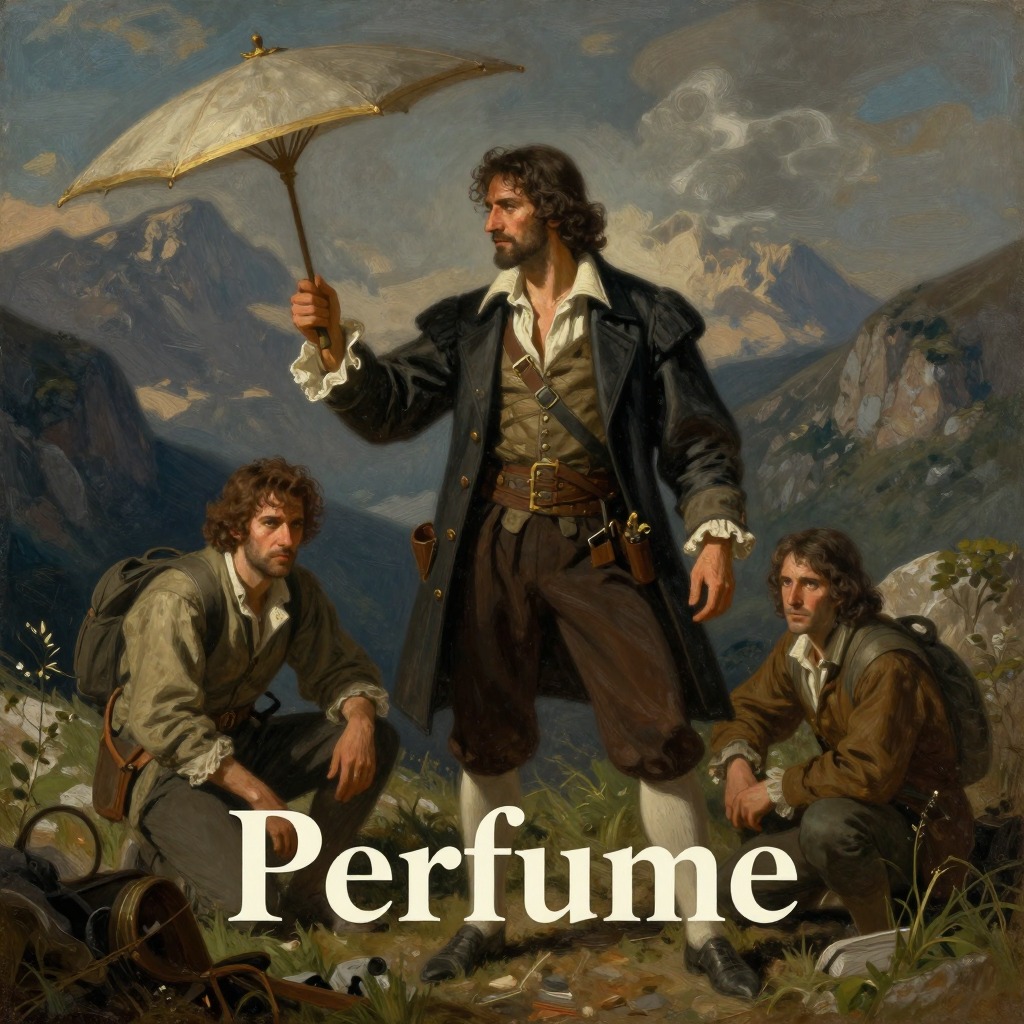
In early December 1765, the Marquis de la Taillade-Espinasse, now in his senescence, organized an expedition to the Pic du Canigou, which he believed to be the highest mountain in the Pyrenees and which lay on the same longitude as Paris. His plan was to be carried to the summit at nine thousand feet and left there in the purest, finest vital air for three whole weeks. He announced that he would descend from the mountain precisely on Christmas Eve as a strapping lad of twenty. His disciples gave up shortly beyond Vernet, the last human settlement at the foot of the fearsome mountain. Undaunted, the marquis cast his garments from him in the icy cold and, whooping in exultation, began the climb alone. The last that was seen of him was his silhouette: hands lifted ecstatically to heaven and voice raised in song, he disappeared into the blizzard. His followers waited in vain that Christmas Eve for his return. He returned neither as an old man nor a young one. When the most audacious of them went in search of him the following early summer, scaling the still snowbound summit, they found no trace of him: no clothes, no body parts, no bones.
The Legend of the Eternal Fluidum
The marquis's teachings, however, suffered no damage at all from his disappearance. On the contrary, a legend soon spread that there on the mountain peak he had wedded himself to the eternal Fluidum Vitale, merging with it and it with him, and now forever floated—invisible but eternally young—above the peaks of the Pyrenees. It was said that whoever climbed up to him would encounter him there and remain untouched by sickness or the process of ageing for one full year. Well into the nineteenth century, Taillade's Fluidal Theory was advocated from many a chair at faculties of medicine and put into therapeutic practice by many an occult society. Even today, on both sides of the Pyrenees, particularly in Perpignan and Figueras, there are secret Tailladic lodges that meet once a year to climb the Pic du Canigou. There they light a great bonfire, ostensibly for the summer solstice and in honour of St John—but in reality it is to pay homage to their master, Taillade-Espinasse, and his grand Fluidum, and to seek eternal life.
Narrative and Thematic Significance
The Pyrenees episode serves as a darkly comic culmination of the marquis's intellectual vanity and the credulity of the age. His theory, which had briefly elevated Grenouille from a beast to a man, ultimately consumes its own creator. The mountains, a place of supposed purification and eternal life, become the site of an absurd death and the source of an enduring myth. The legend of the marquis's apotheosis in the Pyrenees mirrors, in a grotesque and hollow way, the genuine power Grenouille achieves through his perfume. Both men create a fiction that others desperately want to believe, but while Grenouille's power is real and terrifying, the marquis's is a pathetic delusion that nonetheless outlives him, demonstrating the human hunger for transcendence and the ease with which a compelling story can replace reality.