Porte du Cours
PerfumeThe Porte du Cours is the principal gate of the walled town of Grasse, a point of passage that connects the city to the surrounding countryside and the road to Grenoble. It is the gate through which Antoine Richis and his daughter Laure depart on the morning of their ill-fated flight, and it is the gate through which Grenouille, after his arrest, is led to the scaffold. The gate also marks the boundary between the town and the parade grounds where the execution is staged, and it is the site where the watchman Gabriel Tagliasco, who later identifies Grenouille, is stationed.
The Gate of Departure and Return
On the morning of their flight, Richis and his daughter Laure ride out through the Porte du Cours in a carefully staged departure meant to deceive the murderer. The watch presents arms as the procession passes, and children run behind the mules. The gate is also the point through which Grenouille, having sensed that Laure's scent has vanished from the town, rushes to confirm the direction of her flight. He stops to sniff in the square before the gate and, in the pure west wind, finds the golden thread of her scent again, leading him south toward La Napoule rather than north toward Grenoble.
The Site of the Execution
The parade grounds outside the Porte du Cours are the location of Grenouille's scheduled execution. A scaffold nine feet square and six feet high is built, along with a wooden grandstand for local notables and a fence to separate them from the common people. Places at the windows of buildings flanking the gate are rented out at exorbitant rates. The executioner, Monsieur Papon, has a heavy iron rod forged for the occasion and practices on carcasses at the slaughterhouse. The citizens prepare for the event as for a high holiday, with women ironing their holiday dresses and men dusting off their frock coats.
The Scene of the Orgy
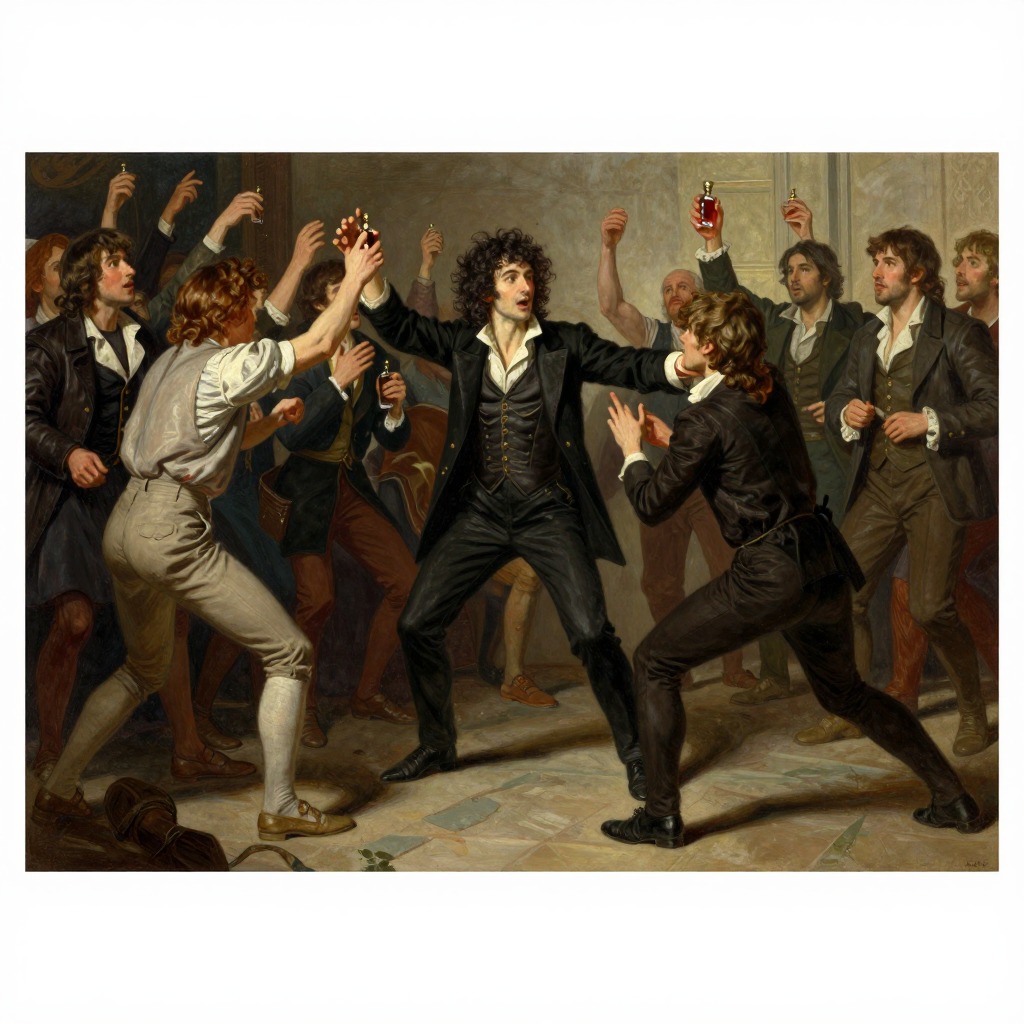
When Grenouille arrives at the parade grounds in a carriage, wearing a blue frock coat and white silk stockings, the crowd of ten thousand is transformed by the power of his perfume. The scheduled execution degenerates into a mass orgy, with respectable women baring their breasts, men copulating in impossible combinations, and the entire assembly overcome by a powerful sense of love and adoration for the condemned man. The Porte du Cours, which had been the gateway to justice, becomes the gateway to a collective frenzy that erases the very memory of the crime.
The Aftermath
The morning after the orgy, the parade grounds are littered with drunken, naked bodies. The townspeople, ashamed and unable to explain what happened, erase the event from their memories. The town council meets and resolves to have the scaffold and grandstand dismantled and the trampled fields restored. The Porte du Cours returns to its ordinary function as a city gate, but the events that took place there leave no trace in the official record. The gate itself, like the town, forgets what it witnessed.