Rue de la Mortellerie
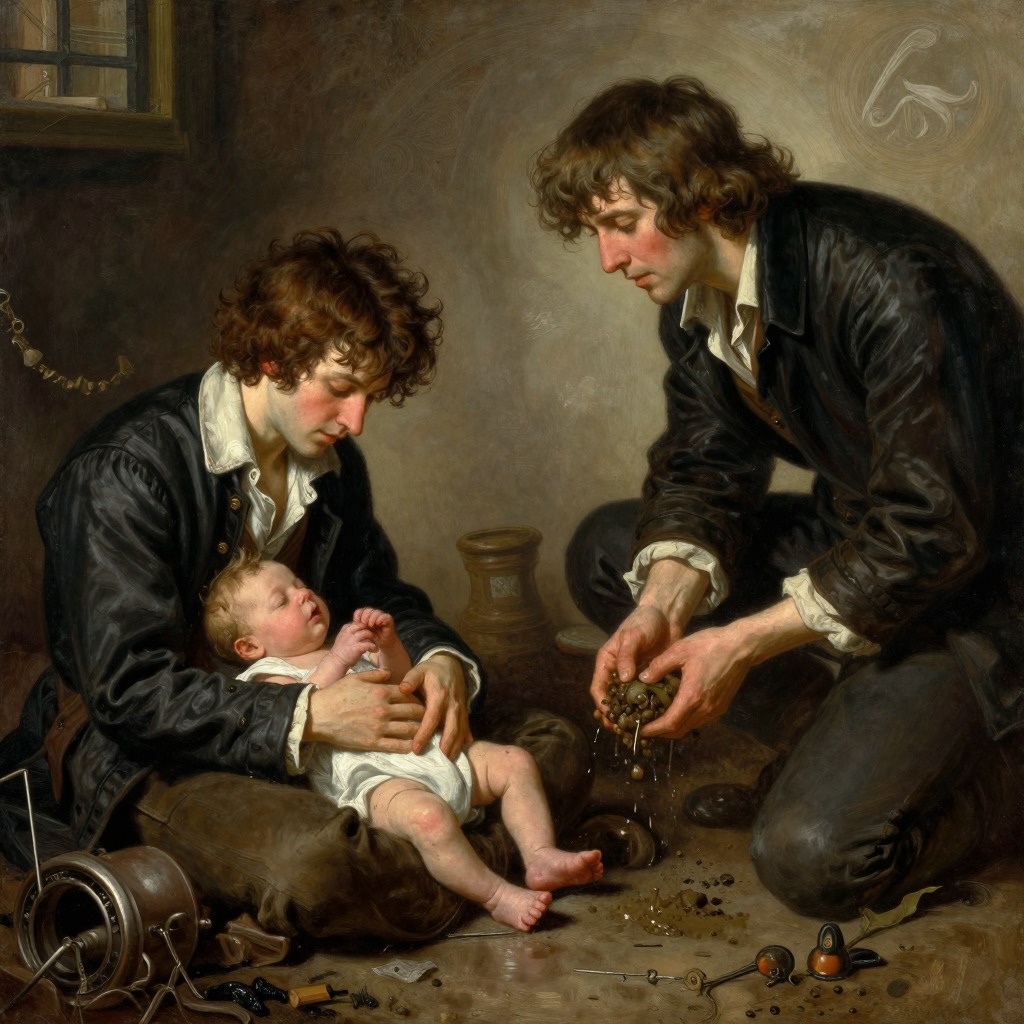
PerfumeRue de la Mortellerie, a street near the river in eighteenth-century Paris, was the site of the tannery owned by Grimal, a man notorious for his need for cheap, expendable young labourers. It was to this address that Madame Gaillard brought the eight-year-old Grenouille after the cloister of Saint-Merri ceased paying for his keep, effectively selling him into a life of gruelling, dangerous work. The street itself was part of a city defined by overwhelming stench, where the air was thick with the odours of manure, urine, rotting matter, and the caustic fumes of industry, a sensory environment that would shape Grenouille's entire existence.
Grimal's Tannery and Grenouille's Apprenticeship
Grimal's tannery was a place of peril, where the most hazardous jobs—scraping meat off rotting hides, mixing poisonous tanning fluids and dyes, and producing caustic lyes—were reserved for unemployed riff-raff, tramps, or stray children about whom there would be no inquiry in dubious situations. Grenouille, recognizing from his first breath that Grimal was capable of thrashing him to death for the least infraction, became a paragon of docility, frugality, and diligence. He slept on the hard, bare earthen floor of a closet off the tannery floor, where raw, salted hides were hung, and worked from dawn until dusk, hauling water from the river in two buckets, hundreds of bucketfuls a day, for months on end. After one year, he contracted anthrax, a disease feared by tanners and usually fatal, but he survived, bearing scars that left him disfigured and immune to reinfection, which increased his value to Grimal.
Grenouille's Survival and Liberation
Grenouille's life in the rue de la Mortellerie was one of pure survival, a tick-like existence where he bottled up his defiance and expended his energies solely to endure. He was a useful house pet to Grimal, who, after Grenouille's survival of anthrax, allowed him a plank-bed, straw, a blanket, and eventually half of Sunday off. At thirteen, he was even permitted to go out on weekend evenings for an hour after work. This small quantum of freedom marked the end of his hibernation; the tick stirred again, and he began to hunt the vast preserve of odours that was the city of Paris. The rue de la Mortellerie, therefore, was not just a place of suffering but the crucible in which Grenouille's resilience was forged, the necessary prelude to his emergence as a creature of pure olfactory ambition.
Narrative Significance
The rue de la Mortellerie represents the lowest rung of Grenouille's social and physical existence, a place where his life was worth precisely as much as the work he could accomplish. It was the antithesis of the refined world of perfumery he would later enter, a world of raw, animalistic stench and brutal labour. His time there, however, was essential: it taught him the value of inconspicuousness, the power of endurance, and the necessity of hiding his true nature. The street and its tannery are a foundational layer in Grenouille's biography, the dark, stinking soil from which his monstrous genius would eventually grow.