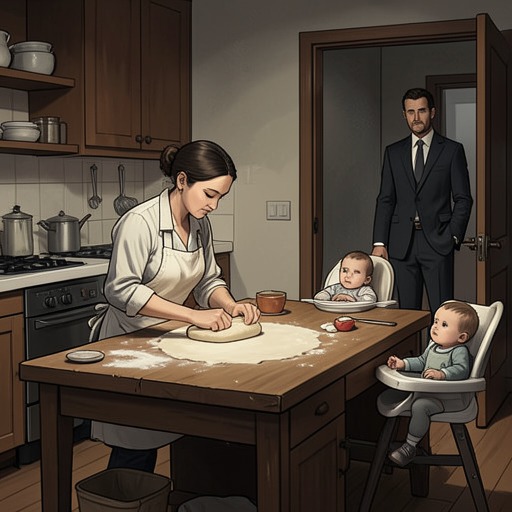
Yoko and Rie
PiercingYoko and Rie are mother and daughter, joined in the novel through the practical routines of caring for a newborn. Rie is four months old in the opening scenes, and Yoko looks after her while maintaining a busy teaching schedule. Their relationship is presented less through extended exchanges than through the work of keeping a young child cared for, and through the sharp contrast between that ordinary family life and the danger Kawashima Masayuki conceals from Yoko.
Identity and Family Context
Rie is Yoko’s infant daughter and the child Yoko wanted to have. Kawashima Masayuki did not object when Yoko said she wanted a baby; he had resolved to support her choices. When Rie was born, he held her without being overwhelmed by the panic and terror that had troubled him before. That early calm makes the later crisis around the crib a rupture in the family’s apparent security, not a condition shown to define the relationship from the start.
Rie’s name was suggested by Yoko’s mother. The detail places the baby within a wider family network, though the evidence focuses on Yoko’s day-to-day care rather than on other relatives’ involvement.
Care and Daily Life
Yoko manages Rie’s care alongside a demanding working life. After leaving her job with a large baked-goods manufacturer when she married, she began giving bread and pastry lessons to people in the neighbourhood from the couple’s one-bedroom apartment. Her classes became popular, attracting dozens of students, including housewives, schoolgirls, elderly widowers, and middle-aged men. She taught almost every day, with only two fixed holidays a month, while still looking after Rie.
The arrangement is not presented as care performed by Yoko alone: most of her students are women and are eager to help with the baby. Their assistance helps make Yoko’s teaching schedule compatible with caring for a four-month-old. The apartment consequently serves as both her workplace and the setting of Rie’s everyday home life.
Vulnerability and Narrative Contrast
The novel places Yoko’s care for Rie beside a threat that Yoko does not see. For ten nights, Kawashima stands over the sleeping baby while Yoko sleeps nearby. On one of those nights, she wakes briefly to ask whether he is still working, then falls asleep again before noticing his distress or the danger he carries. The scene establishes a painful gap between the ordinary nighttime routine Yoko believes she shares with her husband and the private crisis unfolding beside their child.
This contrast gives the mother-daughter relationship its particular narrative weight: Rie depends on Yoko’s continuing care, while the apparent safety of their household is compromised by a concealed danger. The evidence does not describe a confrontation between Yoko and Rie or show Yoko learning about this episode; instead, it makes their vulnerability legible through the difference between Yoko’s routine and what Kawashima hides from her.