Kawashima Masayuki and Rie
PiercingKawashima Masayuki and Rie are father and daughter, but their early bond is shadowed by Kawashima’s recurring fear that he may hurt the infant he is trying to protect. At four months old, Rie is the focus of his nighttime attention: he watches her sleep, worries about her wellbeing, and tries to steady himself through repeated acts of reassurance. His care is real, yet it unfolds alongside a frightening thought he cannot simply dismiss, making the father-daughter relationship a site of both tenderness and intense self-scrutiny.
Identity and Early Bond
Rie is Kawashima’s infant daughter with Yoko. Yoko’s mother suggested her name. The baby’s arrival makes Kawashima’s anticipated fatherhood immediate and domestic: he considers what the child may inherit from him, including his longstanding insomnia, and worries that she might have difficulty sleeping. Because newborns are understood to sleep for much of the day, he imagines insomnia in a baby as a particular misfortune. His concern begins as an attempt to picture and protect his daughter’s needs, but it also reveals how quickly his own painful experience becomes a measure by which he fears her future may be affected.
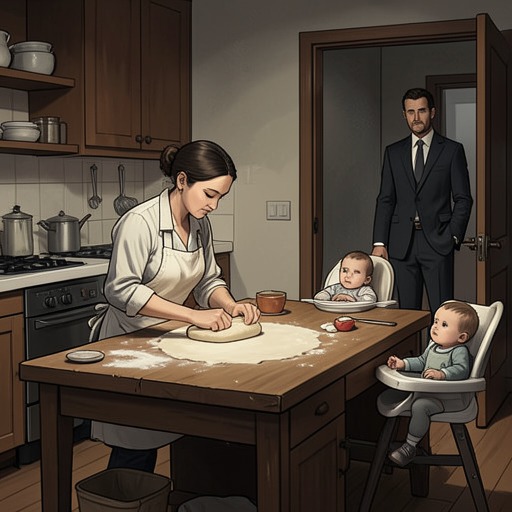
Rie is four months old when the nighttime scenes unfold. Yoko cares for her while maintaining a busy schedule of cooking lessons in the couple’s one-bedroom apartment. Kawashima’s attention to the sleeping child takes place within this shared family life, often while Yoko rests nearby. He looks in on both wife and baby, and the domestic routine around Rie gives his vigilance a recognizable caregiving form. Yet the child is not only someone to tend: her presence also focuses his anxieties about what he might do.
The Fear and Its First Appearance
Ten nights before the scene in which Kawashima stands over Rie’s crib, he is bathing her. After he hands her to Yoko, who is ready to dry her, he sits in the tub and watches them. A thought about whether he could ever stab the baby abruptly enters his mind. The thought is followed by a moment in which he is unsure of himself and does not properly register Yoko calling to him. He eventually responds by saying he had been daydreaming, but the episode leaves him shaken.
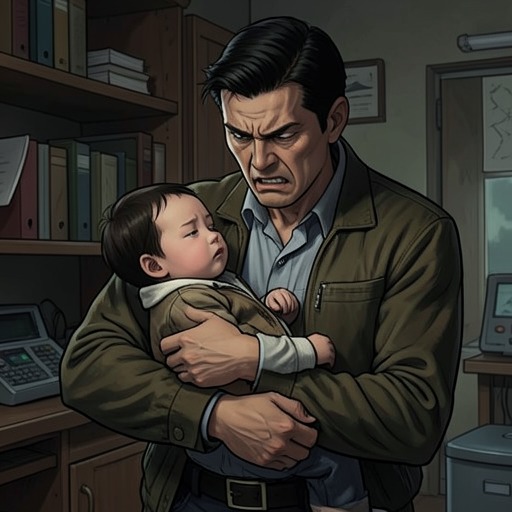
The image of an ice pick then becomes difficult for him to dislodge. Kawashima repeatedly tells himself that he would not use it against Rie, while an opposing thought insists that he might. The distinction between an unwanted possibility and an action is therefore central to their relationship: the evidence shows him frightened by the prospect of harming his daughter, not a stated intention to do so. But reassurance alone does not end the fear. From that night forward, he cannot go to bed until he has stood over her crib with the ice pick and checked that he will not hurt her. The nightly ritual is meant to confirm Rie’s safety, but it also brings the feared object into the very scene of his caregiving.
Nighttime Vigil
During the later crib scene, Kawashima shades a penlight so that its beam falls on Rie while the bedroom remains dark. He checks that she is asleep, then turns to see that Yoko is also sleeping. He has carried out this vigil for ten nights in a row. The repetition matters: what might have been a single disturbance has become a nightly routine, and his decision to delay going to bed until he has performed it binds his rest to a confrontation with his fear.
Kawashima takes the ice pick from his pocket and draws back Rie’s blanket. He brings its point close to her face, then touches the fine hair on her cheek first with a fingertip and then with the instrument. He tells himself that he will not stab her. This is a disturbing crossing of distance between protection and danger: he approaches the sleeping child to reassure himself, but the means of reassurance places the feared possibility physically beside her. The scene does not report an injury. Instead, it shows how the ritual makes Kawashima’s private terror part of his direct, intimate attention to Rie.
The episode also connects the present vigil to Kawashima’s childhood. A strip of moonlight across the crib recalls the narrow roads he used to draw as a boy in a room lit by the moon. That recollection places the nighttime scene beside an earlier image from his life, without resolving the fear now centered on his daughter. When Yoko’s voice interrupts the silence with a question about what he is doing, the private ritual is exposed to another person. The evidence does not give her response beyond that interruption, but the moment marks a limit to Kawashima’s solitary attempt to manage the fear.
Care, Reassurance, and Significance
Kawashima’s conduct around Rie holds contrasting actions together. He worries about her sleep, watches over her while Yoko rests, and touches her gently; he also brings the ice pick to the crib because he fears what he might do. The narrative does not present his repeated checking as proof that the danger has passed. Rather, his certainty has to be renewed each night, and the need to renew it shows how little security the ritual provides him.
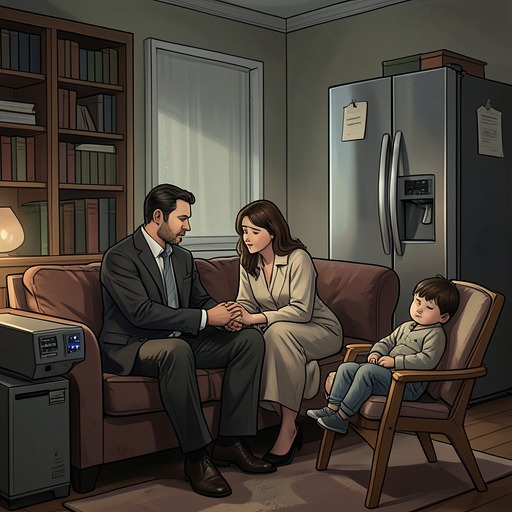
In another domestic moment, as Yoko tells Kawashima that they will need to pack and reminds him to keep in touch, he goes to the bedroom, bends over Rie’s crib, touches her cheek, and quietly assures her that things will be all right. The gesture is directed to the baby, although he speaks softly so Yoko will not hear. It echoes his earlier attempts to calm himself, but now his reassurance takes the form of a tender farewell-like exchange; the passage does not specify more about the circumstances or duration of the impending change.
The relationship’s significance lies in this unresolved opposition. Kawashima’s repeated attention to Rie is an expression of care, while the object he carries and the thought he cannot silence make that care fearful and precarious. Rie, too young to understand the vigil, becomes its unknowing center. By placing paternal tenderness beside the effort to control an intrusive fear, the narrative makes the ordinary acts of watching, touching, and reassuring carry a double meaning: they protect the bond, but they cannot by themselves make Kawashima feel safe within it.