Matthew Rose Sorensen(Piranesi)—Valentine Ketterley
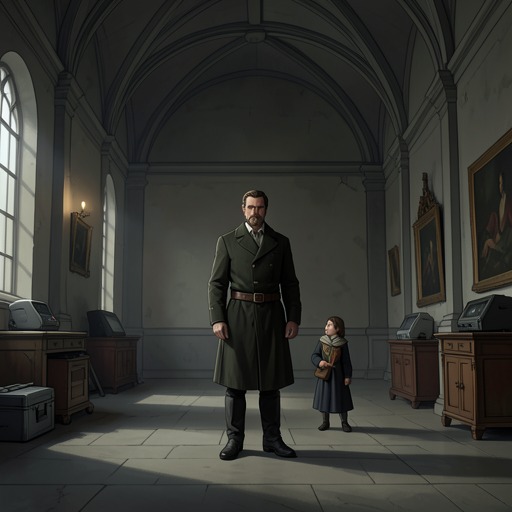
PiranesiMatthew Rose Sorensen and Valentine Ketterley’s relationship is a concealed exploitation disguised as friendship. Ketterley brings Matthew into the House for his own advantage, then leaves him to endure the place’s danger and memory-eroding effects while he returns to the Other World. The betrayal becomes legible only when Matthew’s memories return: the man he had known as the Other had not forgotten him, but had cultivated his trust while guarding against the possibility that he might remember.
Identity and the concealed relationship
For much of Matthew’s life in the House, he understands himself as Piranesi and treats Ketterley, whom he calls the Other, as a companion in their investigations. That apparent intimacy rests on an asymmetry of knowledge. Ketterley knows who Matthew was before the House and remembers the relationship between them; Matthew, having forgotten Matthew Rose Sorensen, cannot recognize the history or danger that Ketterley is concealing. The name Piranesi itself serves that concealment: Matthew concludes that Ketterley uses it so he will not have to call him Matthew Rose Sorensen.
The relationship’s decisive reversal arrives when Matthew understands that the Other is not his friend and never has been. His discovery turns the old category of friendship inside out. The orderly meetings, shared measurements, photographs, and data-gathering that had seemed to belong to a cooperative inquiry are reinterpreted as work Ketterley arranged for his own purposes, performed by someone who could not remember why he should refuse.
Deception and unequal exposure to the House
The danger of the House does not fall equally on the two men. Ketterley’s meetings with Matthew never last longer than an hour; at the end of each, he walks away into the Other World. Matthew, by contrast, remains inside. The Prophet’s warning about the consequences of lingering there—amnesia and total mental collapse—helps Matthew recognize that Ketterley’s departures are not incidental: they keep Ketterley from undergoing the very loss of memory that makes Matthew vulnerable.
This uneven arrangement explains both Ketterley’s advantage and Matthew’s apparent compliance. Ketterley can retain his knowledge of the outside world and of Matthew’s former identity, while Matthew is made to inhabit and investigate the House without reliable access to his own past. Matthew’s eventual account of the scheme is blunt: Ketterley needed someone to live in the Halls and collect information, but dared not do that himself in case the House made him forget. The supposed companion was, in Matthew’s interpretation, being used as a slave.
The House as instrument and working ground
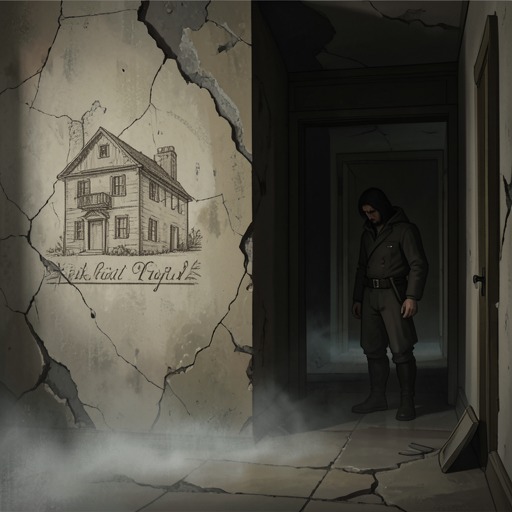
The House is not merely the backdrop to their association; its geography and hazards shape what each man can do. Matthew is determined to explore as much of the World as possible, travelling as far as the Nine-Hundred-and-Sixtieth Hall to the West, the Eight-Hundred-and-Ninetieth Hall to the North, and the Seven-Hundred-and-Sixty-Eighth Hall to the South. He also explores the Upper Halls, where clouds move through the spaces, the Drowned Halls, where dark water lies among white lilies, and the damaged Halls of the East, where ceilings, floors, and sometimes walls have collapsed. That accumulated knowledge is precisely the kind of information Ketterley can benefit from without taking on Matthew’s prolonged exposure to the House.
The costs of exploration are physical as well as mental. On the route to the One-Hundred-and-Ninety-Second Western Hall, Matthew explains that the path through the Seventy-Eighth Vestibule is subject to flooding. Although it is dry at that moment, tides carry debris up from the Lower Halls and scatter it nearby. Jagged pieces can cut bare feet, and bleeding wounds risk infection; passage through the broken marble is possible but laborious. When Ketterley asks what has changed, Matthew must admit that he once had shoes and now has none. The exchange makes their differences visible in the material details of their meeting: Ketterley is neat in a suit and shining shoes, while Matthew’s clothes are ragged, faded, and rotted by seawater. Even the investigative work that joins them has left Matthew to bear the bodily consequences.
Memory, messages, and the recovery of distrust
Matthew’s restored understanding also reclassifies the words Ketterley once used to test him. Ketterley said “Battersea” to see whether it would stir a memory; Matthew had dismissed the word as nonsense, but later recognizes that it meant something to Matthew Rose Sorensen. Ketterley’s test reveals his apprehension that Matthew might remember, and Matthew sees that the man who seemed to be asking casual questions was monitoring the return of a past he wanted kept inaccessible.
The contrast with 16’s careful route-marking offers Matthew another model for preserving knowledge. He follows her yellow-chalk marks back from the Sixth North-Western Hall toward the First Vestibule. She has marked doorways below his eye level and written directions again beneath each doorframe, so that a tide or accident destroying one copy will not erase the rest. Against the memory loss Ketterley exploits, her system embodies deliberate redundancy: information is made recoverable even when circumstances threaten to wipe it away.
Matthew has also damaged one of 16’s messages because Ketterley told him she was his enemy and that reading her writing would make him go mad. He erased it, but left enough behind because he still wanted to read what she had written. When 16 asks about the erased message, Matthew explains that he had obeyed Ketterley while resisting him at the same time; he admits he was not being logical. Her response—that Ketterley made things very hard for him—names the pressure behind that contradiction. Matthew’s mistaken treatment of 16 was not independent hostility but another consequence of Ketterley’s control over what he believed.
From recognition to resistance
Once Matthew understands the deception, his immediate response is physical shock and anger. He is shaking, vomits beside his journal and the fragments he is trying not to soil, and struggles to hold a cup steadily. Then he reconstructs how Ketterley maintained the imbalance: the Other remembered because he went back to the Other World, while Matthew forgot because he stayed in the House. Matthew resolves to leave himself warnings large enough to survive renewed amnesia, planning to collect marble pebbles in the Vestibules and form letters a metre high: a reminder that the Other tricked Matthew Rose Sorensen into entering the world for his own advantage.
That discovery does not make Matthew’s response simple. In the first rush of anger, he wishes he had kept the coming Flood secret so he could have watched Ketterley destroyed from a high place, and considers pretending that he made a mistake. But his later priority is not revenge alone. He recognizes that Ketterley has probably set a trap for 16 by promising to meet her and tell her how to find Matthew. The Prophet’s warning that Ketterley will become more dangerous as 16 gets closer shapes Matthew’s decision: his most important task is to find her and keep her safe, preferably before she reaches Ketterley.
At the eventual departure, Matthew leaves the House with Raphael rather than continuing to live under Ketterley’s arrangement. He carries his journals and favourite pens in a messenger bag, pauses for one last look at the House, and walks with Raphael through the passage suggested by the shadows between two Minotaurs in the South-Eastern Corner. His altered appearance also records a degree of self-possession: before Raphael arrives, he spends hours restoring the seashells, coral beads, pearls, tiny pebbles, and fishbones he wears in his hair. The exit does not erase the relationship’s damage, but it marks a change in who directs his next passage. Ketterley had brought Matthew into the House and made his memory serve an investigation; Matthew now leaves with his records and with Raphael beside him.
Narrative significance
The relationship is built out of a stark difference between access and exposure. Ketterley can cross back into the Other World and preserve the knowledge Matthew loses; Matthew’s long residence makes him an effective observer of the House, but also leaves him dependent on the very man who benefits from that observation. The story therefore turns exploration into a question of who bears its costs and who controls its results.
Memory functions as the unstable ground of their supposed friendship. While Matthew cannot remember his former identity, Ketterley can present himself as a companion and shape Matthew’s beliefs about 16. Once memory returns, repeated details acquire a different meaning: “Battersea” becomes a probe, the brief meetings become a means of avoiding the House’s effects, and Matthew’s measurements and photographs become evidence of exploitation rather than shared curiosity. The relationship’s final significance lies in this retrospective reversal. Matthew’s recovered identity does not merely supply a name; it restores the ability to interpret Ketterley’s conduct and to act against the story Ketterley had made him live.