Ashla
PleasureAshla is Trace’s wife and beloved, a shy woman whose pregnancy makes her the target of a planned assassination. She does not appear directly in the supplied scenes, but the threat against her and her child sets Guin on a dangerous search through the city’s clandestine assassin guilds. Her place in the story is defined both by an intimate bond with Trace and by the brutal attempt to turn that bond into a weapon against him.
Identity and Relationship
Ashla is described through the love she shares with Trace. Guin contrasts their restrained intimacy with the more openly passionate relationship of Magnus and Daenaira: Ashla is shy, and Trace is careful not to expose her to the possibility of being discovered. What they show instead is a quiet, complete devotion, with each belonging to the other in heart. The contrast does not make their love lesser; it gives it a more guarded expression, shaped by Trace’s protectiveness and Ashla’s reserve.
That bond has particular weight because Trace has survived prolonged torture and carries scars that reach beyond the visible ones. Malaya recognizes that only Ashla has managed to reach him past those deeper injuries. Ashla is therefore not simply the person Trace might lose: she is the person who has been able to touch the part of him left inaccessible by his suffering. Her threatened absence would wound a survivor whose resilience has not erased what was done to him.
The Threat Against Ashla and Her Child
The danger emerges from an assassination legacy linked to Acadian and her daughter Nicoya. Nicoya’s actions have set a campaign in motion against Trace’s beloved mate, and Guin believes the hired clan will not abandon its assignment until it has completed the killing. Ashla is specifically in the assassins’ sights; her pregnancy turns the plot into a threat against both a woman and the child she is carrying.
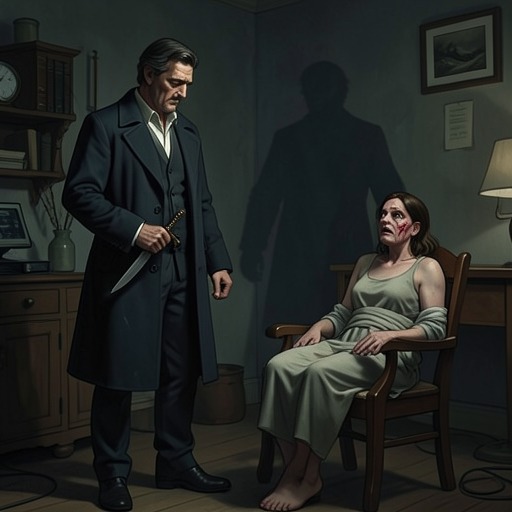
The contract’s intended violence is more specific than a simple killing. Guin tells Talon that the accepted mark is a woman and a newborn baby, and that the murder is planned for two months after the woman gives birth. The killers are to leave the family in pieces so that the husband and father will come home to find what remains. The plan makes Trace’s expected grief part of the cruelty: the contract targets Ashla and the baby while preparing to make him witness its aftermath.
The timing also gives the threat a narrow and uncertain horizon. Guin estimates that he has six to eight months to act, provided Ashla does not miscarry; elsewhere, he anticipates that her birth will trigger the hunt in about a year. The evidence thus presents the pregnancy as both a source of vulnerability and a clock against which the search must proceed, without confirming the eventual outcome for Ashla or her child.
Guin’s Search and the Guilds
Guin’s response is shaped by his earlier experience rescuing Trace from Acadian. During the civil war, Rika believed Trace had died, while Acadian had taken him prisoner, healed his wounds, and then tortured him for the better part of a year. Guin found Trace in a condition that made him fear little remained beyond a damaged body, though Trace eventually recovered. That history gives Guin a direct understanding of what violence against Trace’s family could mean, and helps explain why he refuses to treat Ashla’s contract as an ordinary political threat.
The old assassin clans have since been dissolved, but those that did not reform have continued as illegal, secret guilds. Guin knows their world from the inside, although he has been away from his former clan for fifty years and is infamous among them for leaving his people to stand beside a queen. He judges that only a few guilds would accept a contract on a child, making the assignment a clue to where the killers may be found. The search may require travel beyond the city, dangerous for Shadowdwellers aboveground; Shadowscape offers a safer route, where moonlight is the only light and does not harm them.
Guin asks Talon to identify the guild that accepted the contract and to uncover its members. He is candid about the stakes: the investigation could make Talon a betrayer in the eyes of his own kind, and the work may require killing every assassin involved. Talon’s scruples matter here. Although he is a professional killer, he rejects contracts on children, pregnant women, and innocents; Guin appeals to that boundary, while offering him the possibility of lawful work afterward. The proposed hunt is therefore not presented as indiscriminate vengeance but as an effort to stop a specific atrocity and prevent another husband from losing the woman he loves.
Narrative Role and Unresolved Outcome
Ashla’s danger turns a concealed criminal network into an immediate personal crisis for Trace and Guin. Guin says he will leave once the matter is resolved, intending to live in the human world, far from the Shadowdweller city or New Zealand, and seek other causes that need a warrior. Later, when Malaya asks whether he has made progress for Ashla, he reports that someone inside the guilds can resolve the problem. He trusts that person’s ability, as well as the prospect of earning money from him, and possibly from Malaya too; he does not identify the person in that exchange or confirm that the threat has ended.
The available evidence therefore leaves Ashla’s fate open. She remains the central intended victim of a contract whose planned timing and method are known, but the account stops at the pursuit of those responsible. Her narrative importance lies in the stakes her attackers create: a loving marriage and an unborn child are placed against a secret trade that treats both as targets, while the effort to protect them tests whether former assassins can turn their knowledge of violence toward preventing it.