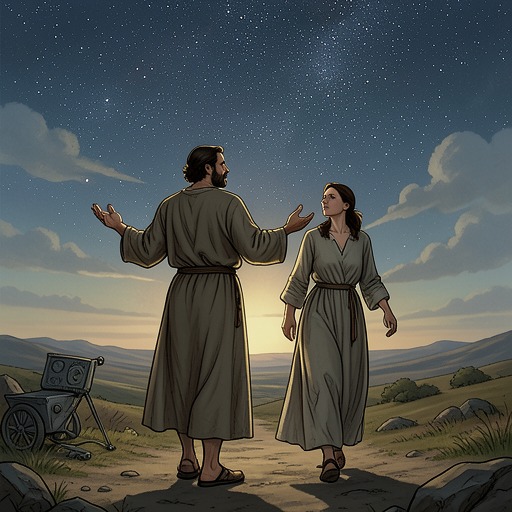
M’gnone
PleasureM’gnone is the god of Light and one of the gods whom Sanctuary’s priestly handmaidens serve. The novel gives him a limited but consequential presence: Sagan wonders whether M’gnone helped bring him to Valera, and later considers whether their meeting might carry religious meaning. That possibility links M’gnone to a turning point in how Sagan understands both his desire and the treatment of magic-users.
Identity and Religious Place
A glossary identifies M’gnone as the god of Light and gives the associated meaning as Light in Hell. The name appears alongside religious kinship terms, but the narrative evidence establishes his place most clearly through Sanctuary’s worship: Sagan regards M’gnone and Drenna as his gods, and the handmaiden tradition is described as service to both of them, as well as to Sanctuary itself.
The handmaiden role is presented as a demanding religious calling, not simply a personal attachment. It requires a particular devotion and an inner power suited to Sanctuary. This standard matters to Sagan because he has believed that a mortal human woman could not possess what the calling requires. His attraction to Valera therefore conflicts with both his assumptions about the tradition and the social disapproval surrounding relationships between his kind and humans.
M’gnone as a Possible Guide
When Sagan tries to understand why he has found Valera, he considers the place she chose: a secluded home near the Shadowdweller city. He wonders whether Drenna or M’gnone led him there. His own account remains uncertain. He allows that the gods may have arranged the encounter, but also recognizes that this interpretation may simply be what he wants to believe as he faces the consequences of breaking convention.
Sagan characterizes the possible influence of M’gnone as mischievous and tempting, in contrast with the purity and insight he associates with Drenna. The contrast does not establish that M’gnone actually intervened; it reveals Sagan’s divided effort to interpret an unexpected attraction. Religious providence offers a possible meaning for his choice, while his suspicion that he is using that meaning to excuse himself keeps the question unresolved.
A Calling That Changes the Stakes
The possibility that Valera could become a handmaiden takes on greater force when Sagan recognizes her magic as good. He concludes that her existence has implications beyond his private relationship: other peoples of the night must be warned, because the discovery challenges the presumption that necromancers should be killed without exception. In his reasoning, Valera demonstrates that a stained soul may be reclaimed through time and guidance.
When Sagan tells Magnus that he believes the gods led him to Valera, Magnus cautiously entertains the possibility that she is meant to become Sagan’s handmaiden and asks what power she possesses. Sagan answers that it is magic. Magnus’s shock at the idea of a human magic-user makes the conflict plain: the proposed calling would cross assumptions about humanity, magic, and religious service at once. M’gnone’s importance lies not in a confirmed act of intervention, but in the religious possibility Sagan invokes as his encounter with Valera begins to unsettle those assumptions.