Trace
PleasureTrace is a royal vizier whose influence places him near the center of Shadowdweller rule, but whose history also exposes the bodily cost of its political and clandestine conflicts. Captured and tortured by Acadian for nearly a year, he survived wounds that remain visible long after his recovery. In the present, he serves the royal household while a contract against his wife, Ashla, and their child threatens to turn the violence he endured toward his family.
Identity and Public Role
Trace holds a position of substantial political authority: Malaya's enemies have targeted him, and he is one of the figures whose removal could weaken the twins' hold on power. At the Senate, he stands behind the chairs of office, alive and well despite two attempts on his life. His presence there makes the danger concrete; the threat against the royal household has already reached its trusted officials and allies.
His work also involves practical administration. When Senator Helene approaches Malaya about the Children's Activities Foundation, Malaya directs her to Trace, who is arranging her schedule and her brother Tristan's. Malaya expects him to organize a full committee meeting by the end of the following week. This small exchange shows him carrying responsibility beyond security and high politics: he is part of the machinery through which the rulers make time for civic obligations.
Trace has also shaped the law that governs violence within his society. He created the law making it a high crime for one Shadowdweller to kill another without provable and imperative cause. In the aftermath of the dissolution of the old clans, that legal prohibition helps distinguish lawful order from the secret guilds formed by those who did not reform. The rule does not end clandestine violence, but it gives the surviving assassin networks their illegal status and defines the danger they pose.
Captivity and Survival
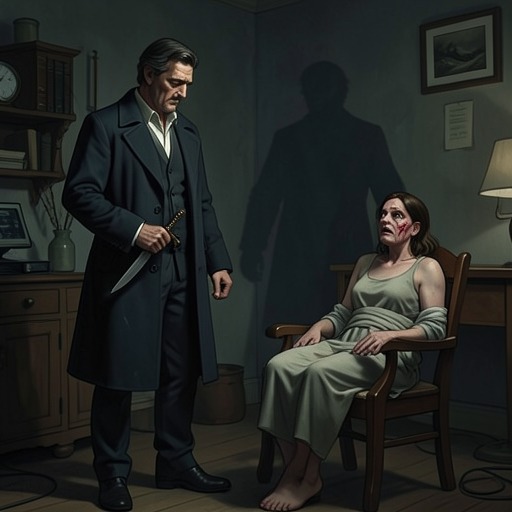
During the civil war, Acadian took Trace prisoner on the night of the invasion of the twins' household. Rika believed she had seen him die, and for much of the following year the people around him likewise thought he was dead. Acadian first healed his wounds so that he would be physically fit for the torture she intended to inflict. She then tormented him for the better part of a year, inflicting scars that remain a visible record of what happened.
Guin's rescue of Trace was one of the best and worst moments of Guin's life. When he found Trace, he initially thought that little remained of him beyond his damaged body. That first impression proved wrong: Trace recovered, and his strength of will and character became part of how others understood his survival. His escape did not erase the injury. Malaya later considers the contrast between Trace's lasting scars and Guin's more recent wounds, noting that Trace's were inflicted repeatedly over eleven months and that his suffering reached deeper than the marks on his skin.
The captivity also left a crucial gap in what Trace could reveal. Acadian never let him see her face, so he could not identify the woman who had tortured him. Because no one else seemed to know her appearance either, Guin concludes that she must be living under another identity. The man who endured her violence therefore cannot directly unmask her; his experience establishes the scale of her cruelty, while her hidden identity keeps the threat active.
Service and Political Conflict
Trace's survival matters to the twins' political position as well as to his personal history. During Malaya's confrontation with the Senate over an old marriage law, she recites the law accurately and rejects the Senators' attempt to catch her unprepared. Trace stands alive behind the chairs of office as Malaya mocks the law's age and points out that the challengers who openly confronted the twins have already been defeated. The scene contrasts their visible political confidence with the covert campaign against them: attacks on Trace and Magnus have accompanied efforts to turn the Senate against Malaya and Tristan.
The danger does not end with attacks on Trace himself. Nicoya's coup attempt against Sanctuary, the religious house and education center run by Magnus, forms part of the same wider pattern of violence. Nicoya had helped set assassins against Trace's wife and baby, and she was Acadian's daughter. After Nicoya's death, the threat carries forward through a contract on Ashla's family. Trace is thus both a survivor of Acadian's earlier campaign and a target of the violence her network leaves in motion.
Ashla and the Threat to His Family
Trace's relationship with Ashla gives the political danger an intimate consequence. The book's framing presents him as a powerful Shadowdweller drawn to a human woman who heals him, despite the distance between their worlds. Ashla, a damaged woman who wakes after a car crash to find the New York she knew deserted, encounters him in the realm of Shadowscape. Her courage and care become the basis of a bond that neither initially understands. In later events, she is identified as his beloved mate and the mother of the child threatened by the contract.
The planned attack is precise and cruel: Ashla and the baby are to be killed two months after she gives birth, with the scene arranged so that Trace will come home to the pieces of his family. Guin explains the terms to Talon, emphasizing that the contract targets a woman and a newborn. He also says that its arranger has already killed a baby. This is not an abstract danger to Trace's household but a timed threat against Ashla and the child she is carrying.
Guin asks Talon to identify the guild that accepted the contract and eliminate its members. Talon hesitates because he considers the killing of a child, a pregnant woman, or another innocent beyond the limits of his work. Guin gives him six to eight months at minimum, provided Ashla does not miscarry, and warns that only three guilds would accept such a job. Finding the responsible group will require research and may make Talon a traitor to his former kind; Guin offers him the possibility of lawful work afterward. Trace's family is therefore protected through an investigation that reaches into the same assassin world whose violence once nearly destroyed him.
Character and Narrative Significance
Trace's story binds public authority to private vulnerability. He is a lawmaker and trusted official, yet neither office nor political standing prevented his capture; the scars that remain show the duration of that failure in a way a simple account of his rescue could not. His survival is not presented as a return to an untouched former life, but as recovery that coexists with lasting physical and psychological consequences.
His place in the larger conflict also changes over time. First he is believed dead, then found and rescued, and later seen again at the center of government, alive and carrying the effects of his captivity. Meanwhile, the danger shifts from his own body to Ashla and their child. That recurrence makes protection, rather than rescue alone, the continuing problem: Trace has survived Acadian's direct violence, but the hidden networks associated with her still threaten the family he has built.