Sanctuary’s Doctrine of Confession and Atonement
PleasureSanctuary’s Doctrine of Confession and Atonement binds wrongdoing to an obligation to acknowledge it, repent, and accept penance before forgiveness can follow. The doctrine’s decisive tension is that confession does not settle what counts as sin: when Sagan admits breaking his priestly vow, he accepts responsibility for the breach but rejects the institution’s demand that he condemn his love for Valera. Elsewhere, repentance and faith offer language for grief and judgment, yet they do not automatically console those who suffer or resolve the claims of justice.
Confession, Repentance, and Forgiveness
Sanctuary’s teaching is presented as both a spiritual principle and an institutional procedure. Sagan has spent ages teaching religious law and its consequences, and he believes that concealing wrongdoing would itself be sinful. When he returns to Sanctuary, he does not remain silent about his breach: at the threshold between the temple’s holy ground and the larger Sanctuary complex, he recognizes that omission would make him a hypocrite. He admits that he has done wrong by breaking his vow, while distinguishing that offense from everything that followed it.
Magnus gives the doctrine its practical terms. He tells Sagan that repentance for the whole act is required before he can assign penance and forgive the sin. In this account, confession alone is not absolution: the offender must accept the religious judgment of the act and submit to a remedy determined by the priestly authority. Magnus’s insistence that vows and religious law cannot be treated casually reflects the doctrine’s institutional force, not merely his personal disapproval.
The system also depends on a shared definition of sin. Sagan’s admission cannot secure the forgiveness Magnus offers if Sagan refuses that definition. Their dispute is therefore not about whether a vow was broken; Sagan acknowledges that it was. It is about whether breaking the rule makes the love that followed sinful, and whether repentance requires him to deny the meaning he finds in that relationship.
Sagan’s Confession and Refusal
Sagan’s return makes the doctrine a test of conscience. After surviving exposure and exhaustion on the journey back to the Shadowdweller city, he enters Sanctuary and seeks out Magnus in private. He is prepared to confess before his superior, but not to conceal the relationship or recast it as a mistake. His honesty follows the very moral seriousness that makes the confession dangerous: silence would be an act of deception, while speaking plainly may cost him his place.
Magnus initially responds without condemnation. He recognizes that powerful circumstances can tempt anyone, and invokes his own relationship with Daenaira as an experience that has revealed parts of himself he cannot always control. But when he understands that Sagan has been with Valera, a human and a magic-user, his concern sharpens into a question of doctrine and priestly obligation. He treats Sagan’s relationship as a breach that must be repented of, and suggests that Sagan needed a companion to keep him from such temptation.
Sagan refuses that account. He says he regrets violating the oath, not loving Valera, and argues that the meeting between them was not mere coincidence but a moment in which fate and free will converged. He also challenges the consistency of the rules: priests kill Sinners without receiving penance, although taking a life would otherwise be a grave violation. His objection exposes a tension between absolute religious law and the exceptions made for priestly duties. Magnus answers that faith requires commitment to the work and rules of the priesthood; if Sagan doubts them, he should renounce his position. Sagan instead draws a firm boundary: he will not repent of loving Valera, even if that refusal costs him his place in Sanctuary. The doctrine requires a confession that, in this case, would also require him to deny the moral truth he believes he has found.
Penance, Authority, and Justice
The demand for repentance recurs in a different setting when Magnus confronts Acadian. Her crimes include the torture of Trace, whom she had kept alive and healthy so that she could torture him; he bears lasting scars from his captivity. Yet the postwar pardon of acts committed during the war prevents Acadian from being tried for those crimes as war crimes. Malaya and Tristan consequently look for evidence of other charges, including treason or sedition. The distinction matters: religious judgment and political or civil prosecution operate alongside one another, but neither automatically supplies what the other requires.
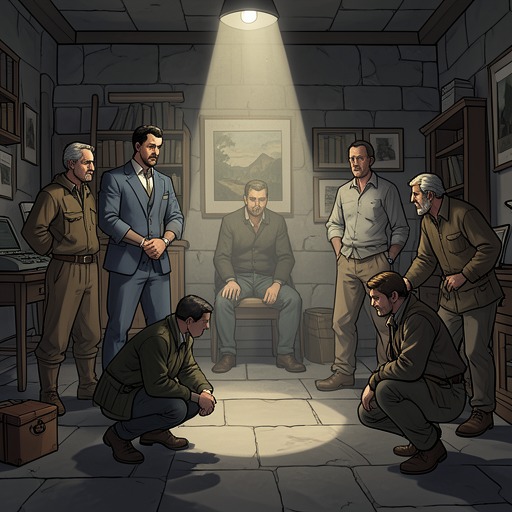
When Magnus reaches Acadian, she is wounded and kneeling, with his blade at her neck. He invokes his third power to compel truthful answers and asks whether she regrets her crimes and repents of her sins. Acadian answers yes, apparently believing that the declaration will suffice. Magnus tests the substance of that answer by asking whether she will accept any penance he assigns, including a year serving Daenaira on her knees for the crime against her. The exchange turns repentance into more than a formula: the professed admission must be measured against willingness to accept a consequence. The scene also shows the doctrine operating as an instrument of authority, while the earlier amnesty demonstrates that spiritual accountability and public accountability do not neatly coincide.
Faith in Grief and Guilt
The doctrine’s language appears beyond formal confession, in moments when characters struggle to interpret loss. After Daenaira miscarries, she refuses Malaya’s proposed visit because she is not ready for consolation framed by faith about where her child has gone. She insists that she knows the child is gone because she saw the blood spread across their sheets. Her response marks a limit to religious comfort: belief may provide a language for death, but another person’s reassurance can feel unbearable when it contradicts the mourner’s immediate knowledge of loss.
Magnus tries to relieve Daenaira’s self-accusation. She believes Acadian targeted her because she killed Nicoya, and therefore connects her necessary act to the danger that reached her unborn child. Magnus rejects that chain of blame, placing responsibility on Acadian for poisoning and attacking them. He argues that Daenaira’s action against Nicoya saved hundreds of lives and futures because Nicoya’s influence had nearly consumed the institution. His appeal to the gods’ eventual judgment offers moral reassurance, but it does not erase Daenaira’s grief or make her stop grieving the child.
Malaya’s plea during Guin’s grave injury gives guilt another form. Fearing that she may lose him, she begs the gods to save him and asks not to be punished for vanity and self-centeredness that led her to waste his love. Guin, struggling to speak, tells her that their days together were worth everything to him. Malaya repeats that she loves him and knows he loves her. The scene is not a formal confession before a priest, but it echoes the doctrine’s moral pattern: she names what she believes she did wrong and appeals for mercy in the face of a consequence she fears may be final.
The Doctrine’s Limits
Across these episodes, confession and atonement are shown as consequential but not self-executing. Sagan can acknowledge his breach without accepting the institution’s judgment of his love; Acadian can profess repentance while Magnus probes whether she will accept penance; and those grieving a child or a threatened beloved can turn to faith without finding immediate relief. Sanctuary’s doctrine supplies a structure for naming wrongdoing and seeking forgiveness, but the narrative repeatedly tests who has authority to define sin, what repentance demands, and whether religious judgment can answer the distinct claims of conscience, grief, and public justice.