Shadowdweller Light Prohibitions and Survival Restrictions
PleasureShadowdweller Light Prohibitions and Survival Restrictions make illumination a direct bodily hazard for Shadowdwellers, not simply an inconvenience or cultural taboo. A 40-watt bulb across a room can blister exposed skin and raise smoke; magical light and the flash of a firearm can also turn an ordinary encounter into a threat. The rule governs where Shadowdwellers can safely live and travel, and how easily another person’s ignorance can put them in mortal danger.
The Bodily Danger of Light
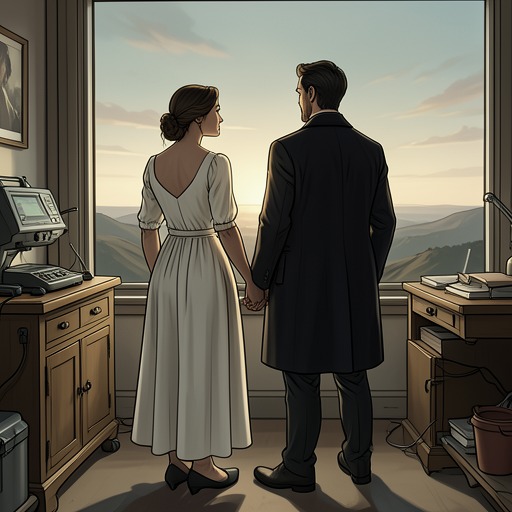
Sagan’s experience establishes the severity of the restriction. When Valera switched on a kitchen light out of habit, the soft illumination struck him with immediate, explosive pain. He shouted for it to be turned off and tried to roll away. Although Valera extinguished it at once, she saw blister burns on his exposed hands and smoke rising from them. He had reflexively shielded his head and face; she understood that those areas would have burned too. The source was not a powerful lamp or a beam directed at him, but a 40-watt soft-white bulb an entire room away.
Sagan’s understanding of his people’s vulnerability extends beyond that brief injury. He knows that even slight contact with light can severely burn a Shadowdweller and that continued or more intense exposure can ultimately reduce one to dust and ash. Valera connects this fragility to the fate of other Shadowdwellers who had burned in brilliant stasis fields: if they were like Sagan, the fields would have seared them almost instantly. The danger is therefore not confined to sunlight or to deliberate attacks. A commonplace source, activated without hostile intent, can produce serious injury, while sufficiently intense exposure can be fatal.
Magic, Weapons, and Unintended Harm
The restriction also makes magic dangerous across species. Sagan tells Valera that her power radiates light when she calls it and can sear Shadowdwellers almost instantly, whether or not she means to harm them. Valera explains that the light accompanies only certain spells, usually aggressive ones. To demonstrate a different kind of use, she makes muffins rise from their pan and drift onto a plate with a small sweep of her fingers. The contrast shows that her abilities do not all present the same visible danger, even though their use can demand careful judgment around a Shadowdweller.
That distinction matters because intent alone cannot make a bright spell safe. Sagan recognizes that Valera’s magic could kill his people accidentally, while Valera’s earlier switching on of the kitchen light demonstrates how ordinary habits can cause injury before anyone understands the risk. The restriction thus makes knowledge and caution consequential: the person producing light may not realize what it does to a Shadowdweller until the harm is already visible.
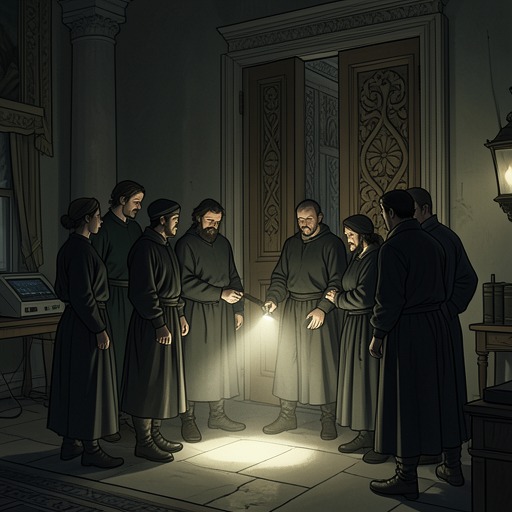
Firearms create a related danger in combat. Their use is rare among Shadowdwellers because a muzzle flash is painful to the light-sensitive person wielding the weapon as well as to the target. Yet during an attack on Malaya’s rooms, the enemy fires shots despite that cost. The flash does not prevent the weapon from being used; rather, it adds a bodily hazard to a moment when the attackers are desperate to achieve their objective. Light is both a vulnerability imposed on the Shadowdwellers and a risk that can accompany their own means of resistance.
Darkness, Travel, and the Shadowscape
The restriction shapes Sagan’s survival during his return across Alaska. Without supplies or proper clothing, he must also be careful to find places where sunlight cannot reach him during the short winter days. A storm worsens the journey, and on one day he finds no shelter. He crosses into the Shadowscape to remain safe from the sun, whose darkness—apart from moonlight—makes it the safest environment for a Shadowdweller.
That refuge has a strict limit. Sagan can remain in the Shadowscape for two days; beyond that, its euphoria begins to make Shadowdwellers somewhat crazy. Time also moves differently there than in the Realscape, so shifting between the two planes can leave him hours or days out of schedule. Darkness protects him from one immediate danger but cannot serve as an unlimited or uncomplicated shelter. Survival requires balancing exposure to light against the psychological and temporal risks of remaining in the safer realm too long.
When Sagan reaches the research station guarding the entrance to the exhausted mines transformed into the Shadowdwellers’ winter city, he is exhausted and exposed to the cold. His priest’s uniform identifies him to the guards, who try to take him into the nearest building for care. He refuses to stop and walks directly into the city, continuing until he is about to enter Sanctuary. The warmer city finally begins to thaw his near-frozen body. His arrival makes visible the practical reach of the rule: the journey is organized around avoiding sunlight, finding safe darkness, and reaching a protected settlement.
Consequences for Encounters and Conflict
For Sagan, light sensitivity shapes his first encounter with Valera. He wakes bound in a strange room, recognizes that its darkness makes it safe for him, and notices lamps and other lights that suggest the room is not ordinarily kept dark. He wonders how a human woman could know what he was and how vulnerable his kind were. The dark setting initially appears deliberate, but Valera’s later mistake reveals that she did not understand the danger: she turns on the kitchen light from habit and immediately sees the consequences.
The scene distinguishes preparation from knowledge. Darkness does protect Sagan, but the presence of a dark room does not prove that its human occupant understands why it matters. Valera’s shock and apology follow the injury; Sagan, despite his pain and confusion, tells her that his hands will heal. The near accident makes the rule a source of tension grounded not in malice but in a dangerous mismatch between ordinary human surroundings and Shadowdweller survival needs.
Across private rooms, battle, wilderness travel, and the winter city, the same constraint changes what safety means. Darkness can shelter a Shadowdweller, but light can injure or destroy one, and avoiding it affects movement, weapons, and access to refuge. The rule gives everyday objects and conditions—one bulb, a muzzle flash, a stretch without shelter—immediate stakes, while the Shadowscape offers protection only at a cost. For Shadowdwellers, light is not neutral scenery: it is an environmental force that others may unleash without understanding its consequences.