Springton High School Library
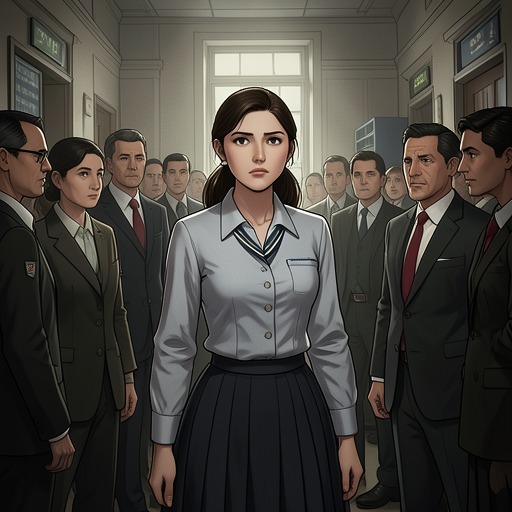
RESprington High School Library is more than a school facility in the story: it is Tabitha Moore’s chosen refuge from an alienating student body, the setting where Alicia Brooks first encounters her on her own terms, and the meeting place in which a fragile private network begins to form around her. Its bookshelves, computer lab, and corner tables provide physical shelter, but the library’s deeper importance lies in the tension between safety and invisibility. Tabitha can disappear there from the social life of Springton High School, yet the very retreat that protects her also makes her isolation unmistakable.
Setting and Physical Character
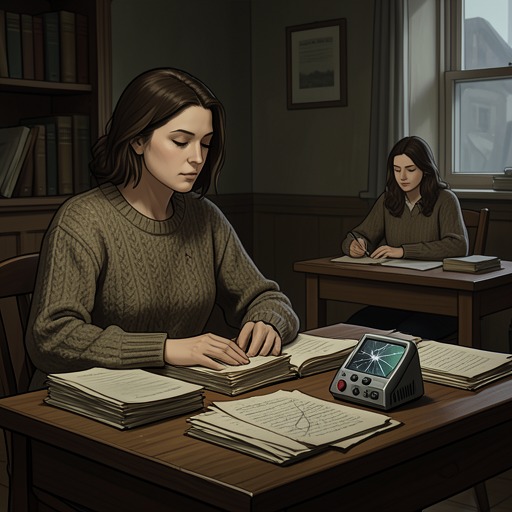
Springton High School Library occupies a large library center with a small computer lab at its middle, long student tables, and tall rows of bookshelves extending in every direction. During lunch, several students play Oregon Trail or solitaire on the computers, creating a background of routine that contrasts with Tabitha’s more urgent use of the room. She repeatedly chooses a corner table and surrounds herself with a comical stack of books more than a foot high, turning an ordinary study space into a makeshift barricade.
The library is therefore both public and secluded. Other students are present, and the room remains accessible through the school’s metal detector, but Tabitha’s position behind the books allows her to be physically among her classmates while remaining socially apart from them. The setting gives concrete form to her school experience: she is not literally hidden from view, yet she occupies a marginal space that most students scarcely register.
Tabitha’s Refuge and Research Space
Tabitha spends lunch in the library because the ordinary cafeteria routine has become unbearable and mechanical. She is not simply seeking quiet for its own sake; she is trying to avoid the harassment and rumors surrounding her while preserving enough control over her day to think. Her corner table becomes a dependable location in a school environment that otherwise offers little security.
The books also reveal how intensely she uses the library as an instrument of preparation. When she begins contemplating the possibility of a future shooting, she studies gunshot wounds and emergency medical treatment. The research is not presented as casual curiosity. It records her fear that an event she anticipates may occur and her uncertainty about whether intervention could save the intended victim. The library thus becomes a place where dread is converted into information, even though knowledge cannot guarantee that causality will yield to preparation.
Alicia Brooks notices this pattern and points out that Tabitha’s research makes her supposed time-traveler identity harder to conceal. Tabitha answers that she never checked the books out and that they never left the library, a detail that emphasizes the room’s function as both archive and concealment. The evidence remains in plain sight, but its meaning is legible only to someone who connects the books with Tabitha’s warnings and subsequent involvement in the shooting.
Alicia, Elena, and the Formation of a Social Circle
Alicia Brooks is the first important person to cross the library’s threshold for Tabitha’s sake. She finds Tabitha behind the tall stack of books, and Tabitha visibly brightens at her arrival. Alicia’s visit transforms the corner table from a hiding place into a site of recognition. She also sees the discrepancy between Tabitha’s public image and her behavior: the girl surrounded by hostile rumors is friendly, but her friendliness lacks the confidence Alicia expects. The library allows Alicia to test those rumors against direct experience rather than accepting the school’s assumptions.
Alicia later brings her sketchbook to the table and asks whether the harassment is beginning to affect Tabitha. Their conversations move between concern, skepticism, and companionship. Alicia cannot determine whether Tabitha truly believes her own time-travel explanation or is using it to avoid revealing the real source of her knowledge, but she remains engaged enough to challenge the inconsistencies. The library supports this unusually intimate form of friendship because it gives the two girls time away from the cafeteria and from the audience that would otherwise shape their behavior.
Elena Seelbaugh eventually enters the same social space, approaching Tabitha and Alicia in the hope of finding allies after her former friendship with Carrie has collapsed. Tabitha initially suspects that Elena’s timing is opportunistic, yet she also recognizes that her own first approach to Alicia had included ulterior motives. When Elena begins to explain her conflict with Carrie, Tabitha interrupts the tension and insists that Elena be allowed to speak. The library therefore becomes a place where damaged or displaced students negotiate entry into a new group rather than simply inheriting the school’s existing hierarchy.
Invisibility, Surveillance, and Narrative Significance
As lunch periods continue, Tabitha becomes increasingly desperate. She notices that the computer lab is full of students but worries that none of them has truly noticed her repeated presence. She deliberately makes eye contact and offers friendly smiles, hoping that these small gestures will establish her as a visible member of the community. Her fear is not only that she will be attacked; it is that she might remain socially nonexistent until a crisis makes her impossible to ignore.
The library’s apparent safety is consequently unstable. It shelters Tabitha from immediate exposure, but it also confirms her exclusion from the wider student body. Her untouched books and vacant corner table suggest how little connection she has made beyond Alicia and the emerging group. Even when Alicia arrives, she finds Tabitha absorbed enough in fear and medical research not to notice her entrance. The room’s quiet enables concentration, but it can also deepen dissociation and isolation.
Later institutional attention gives the library another significance. Tabitha’s notes are returned to her by Pamela Cribb, who retrieves the blue binder during the school’s escalating crisis. Although the binder is not itself confined to the library, the recovery resonates with the library’s earlier role as the place where Tabitha stores, studies, and organizes knowledge that others fail to understand. After the Halloween assault leaves Tabitha in a persistent vegetative state, Channel 7 News and the Springton school system turn the wider pattern of violence into a public issue, leading schools to lecture students on teen violence and adopt stricter anti-bullying measures. Against that later public response, the library scenes show the earlier, quieter stage of the crisis, when the danger is already present but remains visible only through a lonely girl, a stack of books, and the friends willing to sit beside her.