Yokohama village
ShōgunYokohama village is a fishing settlement beside the harbor Blackthorne chooses as the Erasmus’s refuge from the approaching storm season. Its deep, protected anchorage makes the village more than a coastal landmark: it joins maritime safety, Toranaga’s military preparations, and Blackthorne’s new responsibilities as lord of the fief containing it.
Harbor and Setting
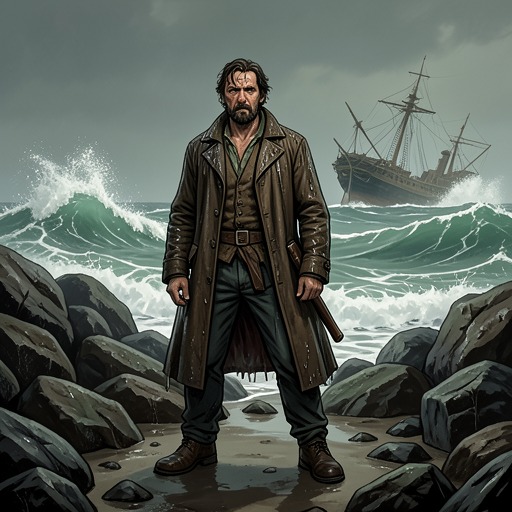
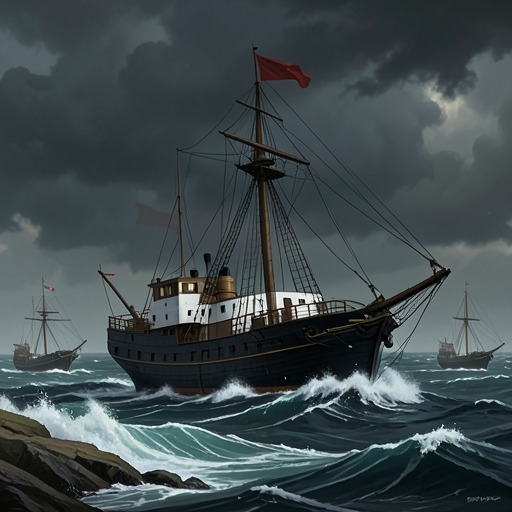
Blackthorne selects Yokohama as the Erasmus’s safer berth when storm season approaches. The anchorage lies across the harbor, a few leagues south of the ship’s previous position. Blackthorne explains to his crew that the existing berth is unsafe and that the Erasmus can ride out the great storms near Yokohama.
The harbor’s protection is unusually strong. The Erasmus anchors far enough from shore to have ample sea room, over six fathoms of clear water and a firm seabed. High land surrounds the harbor except for its narrow entrance, sheltering ships from the force of the open ocean. Blackthorne considers it the best storm harbor he has ever seen.
The Erasmus and the Village
After the journey from Yedo, the Erasmus lies at anchor while a galley is moored half a ri northward at a pier near Yokohama fishing village. Blackthorne and his Dutch and Japanese crew are aboard the ship. The arrangement puts the vessel within reach of the settlement while leaving it in deep water and a defensible anchorage.
Yokohama is also part of the fief Toranaga has granted Blackthorne. Seeing the village and the surrounding headlands from the ship, Blackthorne takes pride in his new domain and recognizes the harbor’s importance. His sense of possession is grounded in the practical value of the place: it offers safe water for a ship and a substantial base within his fief.
Military Presence and Violence
The harbor sits beside an active military landscape. Hundreds of thatched lean-tos belonging to the Musket Regiment cover the foothills near the village. Yabu and Naga are ashore inspecting the regiment while Blackthorne remains aboard the Erasmus, a reminder that the fief’s peaceful anchorage is embedded in Toranaga’s preparations for conflict.
The ship’s stay is not free of danger. During an inspection aboard the anchored Erasmus, samurai stamp on a Christian icon one by one. A man then avoids the icon, draws his sword, and charges Blackthorne. Other samurai intervene; the attacker turns on Uraga-noh-Tadamasa, fights off those who rush him, and throws himself overboard. Four swimmers pursue him with short stabbing knives. The episode makes the harbor a place of political and religious tension as well as refuge.
Maritime Significance
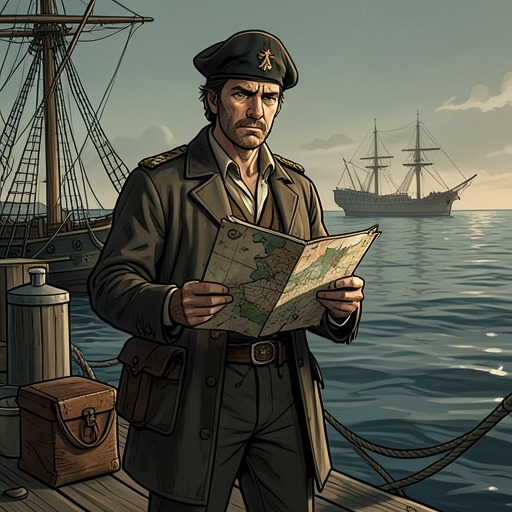
The choice of Yokohama reflects the practical knowledge on which ocean travel depends. In a world where charts are vague and longitude cannot be fixed, a pilot relies on accumulated observations: courses, depths, currents, winds, safe anchorages, and hazards. A harbor such as Yokohama matters because its shelter and approach can determine whether a ship survives a season of storms.
The surrounding coast also belongs to a larger network of difficult passages. On an earlier voyage, a galley travels south along the east coast of the Izu Peninsula before turning west from Cape Ito toward a distant landfall. Yokohama’s role in the narrative is more local and immediate: it is a protected base where Blackthorne can keep the Erasmus afloat, oversee his crew, and inhabit the territory Toranaga has placed under his authority.