About a quarter-century before Smith’s return to Earth
The Lost Envoy
The first human expedition to [Mars](entity:location-recall-location-mars-9c3dea7f998c) departed on the "Messenger" ship, carrying four married couples who were selected because of their skills and compatibility. Members included pilot Michael Brent and engineer [Mary Jane Lyle Smith](entity:character-recall-character-mary-jane-lyle-smit-e8ca2b2f6de5), whose son later became known as [Valentine Michael Smith](entity:character-recall-character-valentine-michael-s-ea1223e72e97). The ship landed near Sol Lake, and then
From infancy until the Champion expedition
Smith’s Martian Upbringing
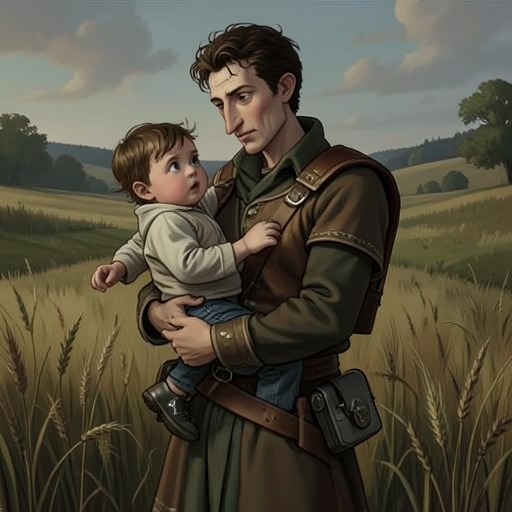
After the "Messenger" was lost, [Martians](entity:creature-recall-creature-martians-180be163d498) found and raised this human infant. Smith grew up among the Martians, learning their vastly different language, discipline, and ways of thinking. Before he could speak English, he already thought in terms of Martian concepts. His upbringing made him physically adapted to
Twenty-five years after the Envoy expedition departed
The Champion Finds a Survivor
The [Earth](entity:location-recall-location-earth-a6b883af9147) [Federation](entity:organization-recall-organization-federation-154a07277239) ship "[Champion](entity:object-recall-object-champion-0ee2801400b5)" arrived at [Mars](entity:location-recall-location-mars-9c3dea7f998c) using the [Lyle Drive](entity:object-recall-object-lyle-drive-7ff017351824) and landed near the last known position of "Messenger". The crew found the wreckage, reported that no one survived, and was shocked to discover that there were residents on Mars. A subsequent correction announced that one survivor existed
During the return voyage of the Champion
The Secret of Smith’s Parentage
The expedition's records show that Smith was not the biological son of [Ward Smith](entity:character-recall-character-ward-smith-abfac0113770), although he retained the surname. Genetic evidence indicates that Mary Jane Lair Smith was his mother and Michael Brent his father; the circumstances aboard the "Messenger" suggest that Ward Smith discovered this affair and killed Brent before committing suicide
Immediately after the Champion returns to Earth
Arrival at Bethesda
"When the [Champion](entity:object-recall-object-champion-0ee2801400b5) returned Smith to [Earth](entity:location-recall-location-earth-a6b883af9147), Vanterlop insisted on providing him with quiet and specialized medical care. Smith had never experienced Earth's gravity or normal atmospheric pressure; the heaviness and intense sensory stimuli almost overwhelmed him, so he slowed his heartbeat and breathing, entering a state resembling death. The
During Smith’s first days at Bethesda Medical Center
Jill Meets the Man from Mars
Gillian Bodman avoided the guard, defied the order prohibiting women from visiting, and walked into Smith's. He recognized her as female; because of misunderstanding her gesture of offering water according to Martian customs, he took the exchange as a solemn invitation to become water brothers. Their meeting established an
During Smith’s confinement at Bethesda
Caxton Uncovers the Stakes
Reporter Ben Kekstun explained to [Jill](entity:character-recall-character-jill-c58a30f04db5) that Smith's legacy is only part of the danger. According to the Raking Planet Occupation Judgment, his continuous occupation of [Mars](entity:location-recall-location-mars-9c3dea7f998c) could make him a claimant to sovereignty, and the human colonists of "[Champion](entity:object-recall-object-champion-0ee2801400b5)" have made any possible planetary sovereignty claim
A few days after Smith’s arrival
Douglas Tries to Secure Mars
Douglas met alone with Smith, trying to get him to press his thumbprint, transferring the claim to [Mars](entity:location-recall-location-mars-9c3dea7f998c) to the government. Smith did not understand legal terms; when Douglas tried to take his hand, he was startled and then recoiled into a state of rigid confusion. This failed meeting exposed the
After Douglas’s attempted interview
Jill and Ben Share the Hospital Record
Gill placed a miniature wire recorder near Smith's hospital room and gave the recording to Caxton. The transcript confirmed that Douglas tried to get Smith to abandon his claim, and Smith's retreat caused the conversation to break off, not a normal medical crisis. Subsequently, the hospital arranged a television
The morning after the fake broadcast
Caxton Visits the Wrong Smith
Caxton forced entry into [Bethesda Medical Center](entity:location-recall-location-bethesda-medical-cen-8f68bf814e02) with attorney and notary [James Oliver Cavendish](entity:character-recall-character-james-oliver-cavend-47c88f229426). The hospital staff took him to a patient who claimed to be Smith, but the man's answers and behavior did not match the private recording and Gill's firsthand experience. Cavendish carefully reported what he
The day after Caxton disappears
The Hidden Patient
Gill found that Smith had been transferred to a room, hidden behind the hospital room of an elderly patient. Doctor Brash's frightened behavior and the locked inner door confirmed that the hospital was hiding the real Smith from both its staff and the public. Gill disguised herself again and re-entered, finding
During the escape from Jill’s apartment
Smith Makes the Pursuers Disappear
Gill took Smith to Caxton's apartment, where the government agent found them. An agent beat Gill, and Smith then took action at the [Mars](entity:location-recall-location-mars-9c3dea7f998c) decision point, making the attackers disappear; when Burkequist threatened them with a gun, he used the same method to make Burkequist disappear. Later
The day Jill escapes Washington
Harshaw Takes Them In
Gill drove Smith to the house of Hajosh in the Pocono Mountains, arriving exhausted and thinking that Smith may have already died. Hajosh felt Smith's pulse, woke him up, and took in the two fugitives, while arranging a false leave of absence to keep her nursing license. Haj
Soon after Smith settles at Harshaw’s home
Harshaw Tests Smith’s Powers
Haxio and [Jill](entity:character-recall-character-jill-c58a30f04db5) asked Smith to explain how the two officers disappeared. Smith believed that a box was an error in the situation, so it vanished; a ashtray stopped in mid-air; later, before Haxio could aim his gun at him, Smith made the gun disappear. These
A few days after Smith arrives at Harshaw’s home
The Raid on Harshaw’s Home
An officer from the Federal Special Enforcement Division arrived here with arrest warrants for Smith, [Jill](entity:character-recall-character-jill-c58a30f04db5), Haxo, and the missing Borkowski. Haxo insisted they show their credentials and follow legal procedures to gain time for Smith to hide beneath the pool water. Smith detached from his body in a
The day of the Special Service raid
Harshaw Forces a Negotiation
With help from [Madame Alexandra Vesant](entity:character-recall-character-madame-alexandra-ve-9362d901a759), Harshaw reached Douglas and announced that he represented Smith. He demanded that the government stop pursuing them and agree to public talks; Douglas eventually accepted and issued a news release acknowledging that Smith was back in the [United States](entity:location-recall-location-united-states-2f533bc8d0b9).
Harshaw also insisted that Smith choose his own advisers and that [Ben Caxton](entity:character-recall-character-ben-caxton-de3e7b39bf9f) be present. The agreement converted a clandestine struggle into a public diplomatic contest, while giving Smith a measure of protection by treating him as a sovereign visitor rather than a ward of the state.
The day after Harshaw’s first call with Douglas
Caxton Returns from Captivity
Douglas located Caxton in [Sonora](entity:location-recall-location-c6b969320559), where he had been drugged and made to appear to have spent the week drunk. The government sent him to Harshaw’s home in poor condition, unable to prove that he had been held against his will.
After medical treatment, Caxton recovered enough to join Smith’s circle. [Jill](entity:character-recall-character-jill-c58a30f04db5) and Caxton renewed their commitment to one another, but Jill explained that she felt responsible for Smith and could not yet accept marriage.
The following day
The Public Summit
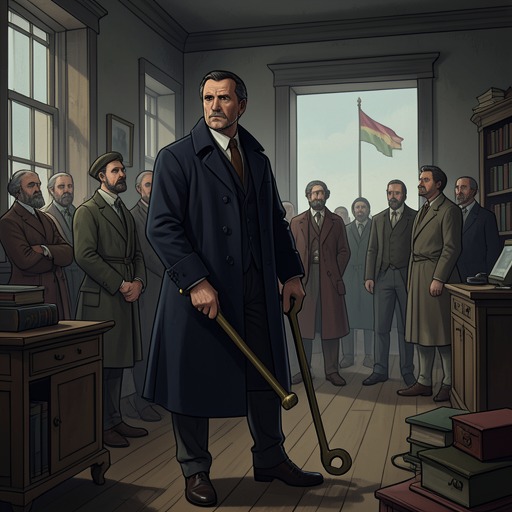
Harshaw led Smith, Caxton, [Jill](entity:character-recall-character-jill-c58a30f04db5), and a small delegation to the [Executive Palace](entity:location-recall-location-executive-palace-63c578033960). He insisted that the meeting be treated as a diplomatic encounter between equals, demanding space at the main table, a symbolic Martian flag, and the [Mars movement](entity:expression-recall-expression-the-ten-planets-sy-7d4bddce5cb7) of a planetary symphony.
Smith greeted Douglas in both Martian and English. Harshaw then proposed that Douglas personally manage Smith’s immense estate, with Caxton as an alternate, because Smith wanted to learn [Earth](entity:location-recall-location-earth-a6b883af9147)’s culture rather than conduct business. The public acknowledgment of Smith’s sovereign standing strengthened his position and removed the immediate threat of a government seizure.
At the close of the Palace conference
Harshaw Settles the Mars Claim
When an assemblyman raised the [Larkin Decision](entity:rule-recall-rule-larkin-decision-7c190ec1034d), Harshaw argued that it could not properly govern an inhabited planet. He reframed Smith’s status as that of an emissary of [Mars](entity:location-recall-location-mars-9c3dea7f998c) rather than a human squatter claiming an empty world.
Harshaw had little certainty about the true Martian position, but his bluff gave Douglas and the rival political blocs a way to avoid a dangerous ruling. Smith’s estate and the question of Martian concessions passed into a stewardship arrangement rather than becoming tools for an immediate political contest.
During the public summit
Mahmoud Joins the Family
Smith reunited with [Dr. Mahmoud](entity:character-recall-character-dr-mahmoud-3f9a581bafb0), the [Champion](entity:object-recall-object-champion-0ee2801400b5)’s semantician, and presented him to [Jill](entity:character-recall-character-jill-c58a30f04db5), Harshaw, Caxton, and the household as a water brother. Jill used a cup of water to welcome [Mahmoud](entity:character-recall-character-mahmoud-f9fe7bcbc1d2), who accepted the relationship and treated the others as family.
Mahmoud explained that the Martian word grok could not be translated by a single English equivalent: it joined drinking, understanding, love, identity, and participation. The exchange deepened Smith’s circle of trust and gave the [Earth](entity:location-recall-location-earth-a6b883af9147)-born characters a first glimpse of how radically language shaped his experience.
During the first weeks at Harshaw’s home
Smith Learns Earth’s Religions
Smith read voraciously, learned English rapidly, and began asking Harshaw about religion and the origin of the world. He could recite definitions but could not understand why humans divided questions of existence among conflicting faiths, or why they treated truth and falsehood as opposites when he knew no concept of deliberate lying.
Harshaw tried to explain human belief without claiming certainty himself. Smith concluded that God was the word for the shared act of grokking and told Harshaw, [Jill](entity:character-recall-character-jill-c58a30f04db5), and [Anne](entity:character-recall-character-anne-8255533dffd4), “Thou art God.” His formulation unsettled his teachers but became the seed of the teaching he would later carry into the world.
A few weeks after the Palace conference
The Fosterite Service
At [Senator Tom Boone](entity:character-recall-character-senator-tom-boone-28237c1b8cb2)’s invitation, Smith and Harshaw visited the [Archangel Foster Tabernacle of the Church of the New Revelation](entity:location-recall-location-archangel-foster-tab-22e5ce1f9d66). They saw gambling machines, revival-style worship, and the preserved body of [Foster](entity:character-recall-character-foster-4639a2569b0d), which Smith recognized as neither an Old One nor a source of wisdom.
During the service, Smith was swept up by its collective intensity and mistook the congregation’s ecstatic behavior for a kind of communal growing-closer. [Supreme Bishop Digby](entity:character-recall-character-supreme-bishop-digb-444c4d2d837b) then met him privately and tried to draw him toward Fosterism, leaving Smith emotionally troubled and unable to explain what he had experienced.
After returning from the Fosterite service
Smith Establishes His Selfhood
Back at Harshaw’s home, Smith withdrew to consider the contradiction between [Jill](entity:character-recall-character-jill-c58a30f04db5)’s warning and his own judgment at a cusp. He realized that no water brother could make the choice for him: moral responsibility belonged to the self that acted.
That realization marked his passage from Martian-raised nestling to an adult self. He also came closer to understanding human religion, finding that the phrase [“Thou art God”](entity:rule-recall-rule-thou-art-god-24dc8f5060d9) expressed a shared reality even when different traditions gave it different names.
The night after Smith’s decisive withdrawal
Smith and Jill Unite
[Jill](entity:character-recall-character-jill-c58a30f04db5) and Smith sat together beneath the stars and spoke about [Mars](entity:location-recall-location-mars-9c3dea7f998c), loneliness, and the human world. Smith admitted that he had been homesick and alone, but told Jill that he no longer feared loneliness because he had found his water brothers.
They kissed and then joined sexually, an experience Smith understood as an additional form of growing-closer, beyond the Martian water ceremony. Their intimacy became a central part of his human education and confirmed Jill’s place as his closest companion.
Several months after the Palace conference
The First Permanent Colonists
The first mixed group of permanent colonists arrived on [Mars](entity:location-recall-location-mars-9c3dea7f998c), where the [Martians](entity:creature-recall-creature-martians-180be163d498) helped them build pressure domes. The [Old Ones](entity:character-recall-character-old-ones-4bd114c49835) allowed the settlers to proceed without either assisting or opposing their plans.
On [Earth](entity:location-recall-location-earth-a6b883af9147), Smith’s public appearances faded from the news, but the political and religious forces interested in him remained. His life at Harshaw’s home continued to be a gradual education in Earth’s customs and conflicts.
After Smith’s stay at Harshaw’s home
Smith and Jill Leave Harshaw’s Home
Smith announced that he and [Jill](entity:character-recall-character-jill-c58a30f04db5) were leaving to learn how ordinary people lived. Harshaw was hurt but agreed that Jill should go with him, while making clear that his home would remain open to them.
Smith called Harshaw his father, a relationship for which Martian had no exact word. The farewell confirmed that the household had become a family through shared trust rather than blood or formal law.
During the months after leaving Harshaw’s home
The Failed Carnival Act
Smith and [Jill](entity:character-recall-character-jill-c58a30f04db5) joined a traveling carnival, where Smith performed magic while Jill helped with the act. His tricks were technically remarkable, but the carnival manager told him that he lacked the showmanship needed to understand what the audience wanted to believe.
The failure taught Smith to observe ordinary people rather than merely imitate their behavior. He and Jill moved through a series of jobs and libraries, using the life of the road as an informal education.
During the carnival years
Smith Disrupts a Courtroom
When local authorities arrested women from the carnival’s posing show, Smith attended the hearing with [Jill](entity:character-recall-character-jill-c58a30f04db5). As the sheriff described the alleged indecency, Smith made the sheriff and judge suddenly lose their clothes, interrupting the proceedings and allowing the women to leave.
Jill understood that Smith had again acted at a cusp, but she had taught him not to reveal his abilities casually. The incident showed how his powers could turn an ordinary humiliation into a public reversal, even as it risked exposing him.
After Smith and Jill leave the carnival
Patricia Joins the Water Brotherhood
[Patricia Paiwonski](entity:character-recall-character-patricia-paiwonski-865ffb8f1fd0), the carnival’s tattooed snake handler and a devoted Fosterite, visited Smith and [Jill](entity:character-recall-character-jill-c58a30f04db5). Smith made her costume disappear, revealing that his apparent magic was real; Patricia interpreted the event as a miracle and believed Smith might be a holy man.
After Jill explained the gravity of water-sharing, Patricia accepted. The ceremony joined her to Smith and Jill as family, while Patricia gave them her cherished copy of the New Revelation as a token of trust.
The morning after Patricia’s first night with Smith and Jill
Patricia Receives Smith’s Mark
Before leaving, Patricia gave Smith and [Jill](entity:character-recall-character-jill-c58a30f04db5) the scripture [Foster](entity:character-recall-character-foster-4639a2569b0d) had given her when he initiated her. Smith kissed her in gratitude and, through a precise act of bodily control, left a pair of lip-shaped marks on her skin beside Foster’s kiss.
The marks became a personal sign that Patricia had been welcomed into a new kind of spiritual kinship. She returned to the carnival with her faith intact but with Smith’s teaching woven into it.
The morning after the transition service
Caxton Leaves the Nest
Caxton fled the Nest in shock, embarrassed by his jealousy and by his own response to [Jill](entity:character-recall-character-jill-c58a30f04db5)’s shared intimacy with others. Harshaw challenged him to distinguish moral conviction from inherited sexual reflexes and pointed out that Caxton had accepted intimacy with [Dawn](entity:character-recall-character-dawn-b9eb9d743a80) while condemning a similar freedom for Jill.
Caxton admitted that jealousy, rather than abstract concern about propriety, had driven him away. Harshaw urged him to return and examine the community honestly before judging it, reminding him that Smith’s followers seemed happier and more disciplined than the society around them.
About a week after his departure
Caxton Returns to the Nest
Caxton returned to the Nest, met its members, and began studying Martian rather than dismissing Smith’s community from outside. He saw that the organization was not simply a church service but a demanding discipline built around language, self-control, and shared responsibility.
His return restored his relationship with [Jill](entity:character-recall-character-jill-c58a30f04db5) and allowed him to become part of the community on its own terms. He remained skeptical in places, but he no longer treated that skepticism as a substitute for understanding.
After Caxton returns to the Nest
The Temple Is Attacked
Authorities charged the [Church of All Worlds](entity:organization-recall-organization-church-of-all-wo-cfe8ed218b5e) with public lewdness and related offenses, while [Supreme Bishop Short](entity:character-recall-character-0aaa3e9cd52b) denounced Smith as an Antichrist. The Temple was empty when an explosion and fire destroyed it, but the Nest’s members escaped unharmed.
Smith had been held in jail and was not physically present with them; through rapport, he moved the group and their essential belongings to a hotel refuge. The destruction forced the community to abandon its public base and begin a wider dispersal.
The day after the Temple fire
Smith Escapes and Disarms the City
Smith escaped custody and disarmed the local police and other forces, removing their weapons and vehicles without physically fighting them. He then used his judgment of wrongness to discorporate about 150 violent people he considered dangerous, including criminals and public officials.
The action was not revenge in his understanding but a removal from the human game, leaving them to return and begin again. [Jill](entity:character-recall-character-jill-c58a30f04db5) came to accept his judgment, while Caxton and the others prepared to leave the city before the authorities could mount another attack.
After the Temple fire and escape
Jubal Joins the Nest
Harshaw finally traveled to the community’s temporary refuge, where he was welcomed by Patricia and the others. He shared in the family’s ordinary life and began to see the Nest not as a spectacle but as a disciplined community built on mutual care.
He encountered his goddaughters, Abby and Fatima, and discovered that the members were already treating his home as a second Nest. He resisted the idea that he needed saving, but accepted their hospitality and began learning more about the discipline that had changed Smith.
During the Nest’s retreat at the hotel
The Martian Dictionary Project
[Mahmoud](entity:character-recall-character-mahmoud-f9fe7bcbc1d2) and Smith organized an intensive effort to record Martian language, using trained speakers, phonetic transcriptions, and specially modified typewriters. The work was demanding because Martian concepts could not be translated directly into English; the dictionary had to preserve relationships among ideas rather than merely substitute words.
The project became both a practical safeguard and a means of spreading the discipline beyond Smith’s direct teaching. Mahmoud and [Miriam](entity:character-recall-character-miriam-ffeb402f344f) planned to continue the work elsewhere, while Smith accelerated his own contribution before the group dispersed.
The night after Harshaw arrives at the refuge
Harshaw Accepts the Sharing-Water
Harshaw took part in the Nest’s formal Sharing-Water ceremony, joining the community as a full water brother. He found that its meaning exceeded the sexual ritual he had expected: it was a solemn act of mutual recognition and responsibility.
Afterward he spoke with Smith about the discipline and its limits. Smith confessed that he had been observed by the [Martian Old Ones](entity:organization-recall-organization-martian-old-ones-088a132fb53b) and that they had taken a record of his [Earth](entity:location-recall-location-earth-a6b883af9147) experience, without his knowing until the process was complete.
During the conversation after Harshaw’s Sharing-Water
Smith Fears a Martian Judgment
Smith told Harshaw that the [Old Ones](entity:character-recall-character-old-ones-4bd114c49835) had sent him to observe humanity and that they might eventually judge [Earth](entity:location-recall-location-earth-a6b883af9147) as a diseased civilization. He feared that they could destroy the planet or try to remake humans in the Martian image, an effort that would be as destructive as a direct attack.
Harshaw counseled patience. Smith had been on Earth only a short time, and his own teaching had already produced a small community capable of living differently. Harshaw argued that the movement’s early failures did not prove that humanity could not change.
Later in the same conversation
Smith Explains the Discipline
Smith explained that he had once believed his mission was to make humans live like [Martians](entity:creature-recall-creature-martians-180be163d498). He now understood that human beings were not Martians and that the same underlying discipline could produce different forms in different species.
The discipline’s purpose was not to abolish all competition or impose one culture, but to help people become self-aware and responsible. Smith’s community could demonstrate a more peaceful way of life, but its success would depend on people choosing to learn it rather than being converted or compelled.
Shortly after Smith’s conversation with Harshaw
The Mob Gathers Outside
A large crowd gathered outside the hotel, stirred by hostile religious leaders, public anger, and news coverage. Smith prepared to meet them in person rather than hide, dressing carefully and taking [Anne](entity:character-recall-character-anne-8255533dffd4) and [Duke](entity:character-recall-character-duke-3caca367e857) with him as witness and photographer.
Harshaw feared the crowd’s violence, but Smith believed the encounter had reached its proper fullness. The community watched the live broadcast, understanding that Smith intended to offer the crowd the same teaching he had given his followers, even at terrible personal risk.
The final day of the novel
Smith Faces the Crowd
Smith walked from the hotel toward the crowd and told them to look at him: he was a son of man. He preached that hatred and fear could be refused, offered the water of life, and urged people to recognize their shared divinity.
The crowd answered with rocks, insults, and gunfire. Smith continued speaking as he was beaten and mutilated, offering love to those attacking him. When a grasshopper landed near his face, he recognized it as God and discorporated.
Immediately after Smith’s discorporation
Harshaw’s Suicide Attempt
While listening to a broadcast about the death of Smith, Haxio thought he had pushed his son toward a pointless martyrdom. He was devastated, ran back to his room, and swallowed the pills he had carried, which were meant for himself when he decided to end his life. Smith arrived at
After Harshaw is rescued
The Community Plans Its Return
Surviving communities began to discuss their next plans. Some members planned to return to the children, some intended to establish a new temple, and a few prepared to continue compiling the [Martian dictionary](entity:object-recall-object-martian-dictionary-976dd83b7514) and bring their training to new places. Hoshio accepted Smith's movement even without the founder's presence, and
After Smith’s death on Earth
The Old Ones Review Smith’s Record
On [Mars](entity:location-recall-location-mars-9c3dea7f998c), the ancient ones extracted Smith's records of his life on [Earth](entity:location-recall-location-earth-a6b883af9147), reflecting on what these experiences meant. Their exploration of Earth continues slowly, and whether this planet will be destroyed remains a distant question. Their decision shows that Smith's mission did not end with his physical death. The ancient ones
After the Martian Old Ones complete their extraction
Smith Joins the Angels’ Work
[Foster](entity:character-recall-character-foster-4639a2569b0d) told Digby that the [Martians](entity:creature-recall-creature-martians-180be163d498) had released Smith, and he could accept another mission. He introduced Smith as a new colleague and clearly stated that Digby would assist him in his work. Smith greeted Digby on equal terms, and then began to consider how to change the work around him